
Before graphic novels lined bookstore shelves and creator-owned comics were the norm, there was the underground. In an era defined by strict censorship and corporate-owned superheroes, a rebellious movement of artists armed with ink, paper, and a healthy dose of defiance tore up the rulebook. This was the age of underground comix—a raw, unfiltered, and often controversial art form that didn’t just break the rules; it redrew the entire map for the comics industry. The shockwaves of this revolution are still felt today, influencing everything from the indie comics you love to the very concept of creator rights.
Breaking Free from the Code: The Birth of a Counterculture Medium
To understand the explosion of underground comix in the late 1960s, you have to understand what came before. For over a decade, the American comics industry was shackled by the Comics Code Authority (CCA), a self-censoring body established in 1954. The CCA effectively banned any depiction of sex, excessive violence, drug use, or questioning of authority. Mainstream comics were sanitized, kid-friendly, and creatively stifled.
But beneath the surface, a different kind of energy was brewing. Influenced by the irreverent satire of Harvey Kurtzman’s MAD Magazine and the illicit, anonymously produced pornographic comics known as “Tijuana bibles,” a new generation of artists was ready to rebel. They started calling their work “comix” to distinguish it from the CCA-approved mainstream, with the “x” proudly emphasizing their adult, X-rated content. As legendary comix creator Robert Crumb later said, the appeal was simple: “We didn’t have anybody standing over us saying ‘No, you can’t draw this’ or ‘You can’t show that’. We could do whatever we wanted.”
The San Francisco Scene: Ground Zero for the Comix Explosion
While the seeds of the movement were scattered across the country, its heart was in the Haight-Ashbury district of San Francisco, the epicenter of 1960s counterculture. In 1968, the revolution found its catalyst when Robert Crumb, a visionary artist with a distinctively neurotic and satirical style, self-published Zap Comix #1. He famously sold the first copies out of a baby carriage on the streets of Haight-Ashbury, an act that has become legendary in comics history.
Zap was a sensation. It was smart, funny, psychedelic, and utterly unapologetic. It quickly became an anthology, attracting a roster of groundbreaking artists who would become the Mount Rushmore of the underground: the hyper-violent and surreal S. Clay Wilson, the master of stoner comedy Gilbert Shelton, the politically charged Spain Rodriguez, and the psychedelic poster artist Victor Moscoso, among others. These creators weren’t just making comics; they were documenting the hippie lifestyle, with all its sex, drugs, and rock & roll.
Distribution was as unconventional as the content. Instead of newsstands, comix were sold in head shops, alternative bookstores, and through a network of underground newspapers like the East Village Other. This direct-to-fan system bypassed the corporate middlemen and the CCA, creating a new, independent market that had never existed before.
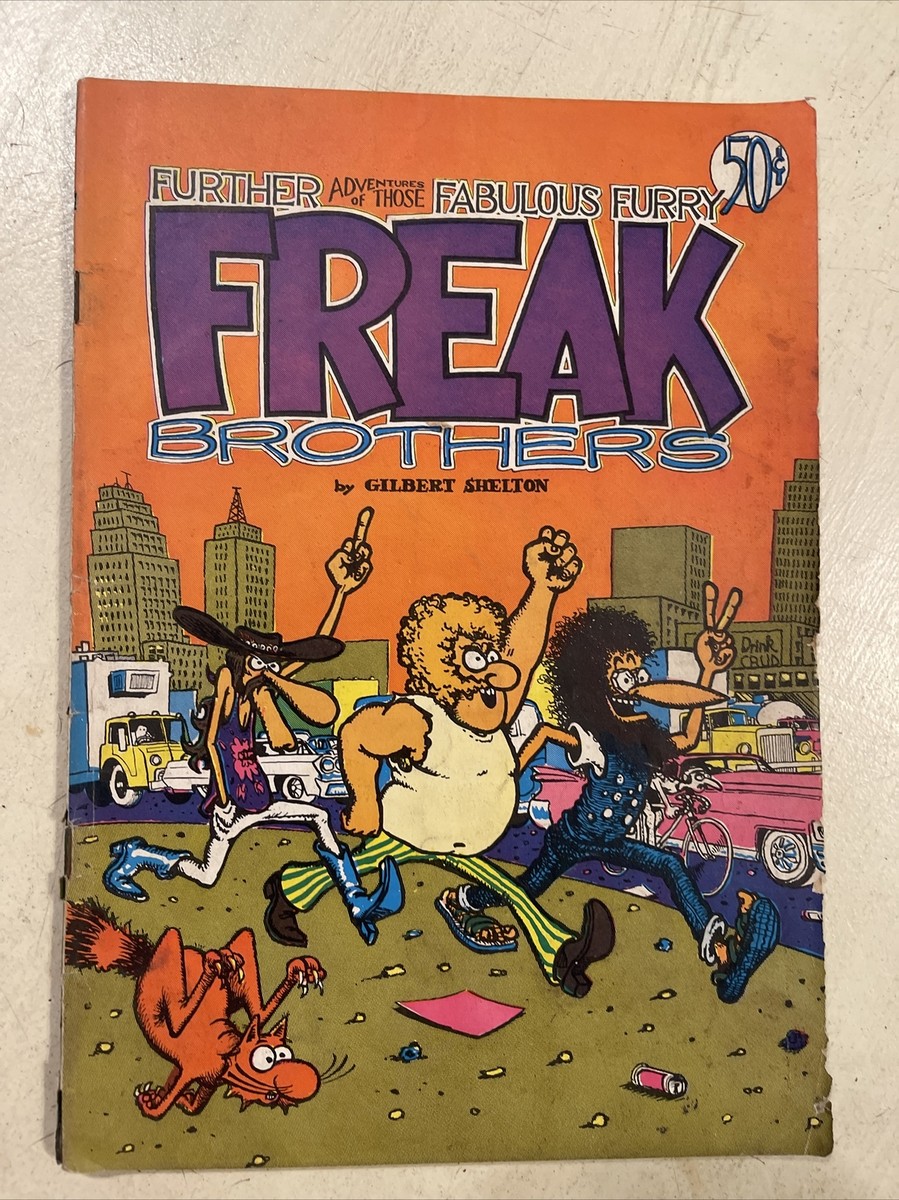 Caption: Gilbert Shelton’s “The Fabulous Furry Freak Brothers” became one of the most popular underground comix series, following three hippie characters in their quest for drugs and adventures.
Credit: Cover art by Gilbert Shelton / Rip Off Press
Source: Rip Off Press
Caption: Gilbert Shelton’s “The Fabulous Furry Freak Brothers” became one of the most popular underground comix series, following three hippie characters in their quest for drugs and adventures.
Credit: Cover art by Gilbert Shelton / Rip Off Press
Source: Rip Off Press
A Voice for the Voiceless: Women of the Underground
The underground scene was a boy’s club, and much of the work was rife with unapologetic misogyny. However, the movement’s spirit of self-expression also empowered female artists to create their own spaces and tell their own stories. Frustrated by the male-dominated landscape, cartoonist Trina Robbins spearheaded the creation of It Ain’t Me, Babe Comix in 1970, the first-ever comic book created entirely by women.
This landmark publication opened the floodgates. It was soon followed by other all-female anthologies like Wimmen’s Comix and Tits & Clits Comix. These books were revolutionary, tackling subjects that mainstream culture—and even the male-dominated underground—refused to touch. As Robbins stated, “We tackled subjects that the guys wouldn’t touch with a ten-foot pole—subjects like abortion, lesbianism, menstruation, and childhood sexual abuse.” These women weren’t just making comics; they were building a platform for feminist voices and paving the way for generations of female creators.
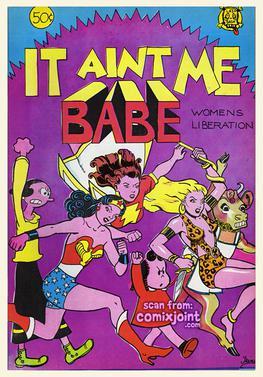 Caption: “It Ain’t Me, Babe” (1970) was the first all-female underground comic, edited by Trina Robbins and featuring work by pioneering women cartoonists.
Credit: Cover art by Trina Robbins / Last Gasp
Source: Last Gasp
Caption: “It Ain’t Me, Babe” (1970) was the first all-female underground comic, edited by Trina Robbins and featuring work by pioneering women cartoonists.
Credit: Cover art by Trina Robbins / Last Gasp
Source: Last Gasp
The End of an Era and the Dawn of an Alternative
By the mid-1970s, the golden age of underground comix was fading. The hippie counterculture was winding down, and a 1973 Supreme Court ruling in Miller v. California made it easier for local authorities to prosecute publications for obscenity. Head shops, the primary distribution channel, were targeted by anti-paraphernalia laws, and the network that had supported the movement began to dry up.
Yet, the end of the underground was not the end of its influence. It was the beginning of something new: alternative comics. Creators like Art Spiegelman and Bill Griffith, who had cut their teeth in the underground, sought to create a new space that moved beyond the “sex, dope, and cheap thrills” stereotype. Their 1975 anthology, Arcade: The Comics Revue, was a self-aware magazine that aimed to connect comics to the broader world of art and literature. It served as a crucial bridge between the raw energy of the underground and the more artistically ambitious alternative scene that would follow.
The Lasting Legacy of the Comix Revolution
The underground comix movement may have been short-lived, but its impact on the comics industry is immeasurable. It fundamentally changed what comics could be, who could create them, and how they could be made. Its legacy is not just a collection of psychedelic, X-rated books; it’s woven into the DNA of modern comics.
One of its most significant contributions was the establishment of creator rights. Unlike the work-for-hire system at Marvel and DC, where creators were paid a flat fee and the company owned the characters, underground cartoonists owned their work. They retained their copyrights and profited directly from their success. This radical idea laid the groundwork for the creator rights movement of the 1980s and the birth of creator-owned powerhouses like Image Comics. The fight for creator ownership, a cornerstone of the underground, is a battle that continues in the digital comics revolution today.
Furthermore, the underground’s independent spirit shattered the myth that comics could only exist through mainstream publishers. It proved that a direct market of dedicated fans would support personal, artist-driven work. This paved the way for the entire independent and alternative comics industry, creating a space for publishers like Fantagraphics and Drawn & Quarterly to thrive.
The movement also unlocked the potential of comics for deep, personal storytelling. Autobiographical works like Harvey Pekar’s American Splendor and Justin Green’s Binky Brown Meets the Holy Virgin Mary used the medium to explore the complexities of everyday life, neurosis, and trauma. This introspective style was a direct precursor to the modern graphic novel. The ultimate proof of this legacy is Art Spiegelman’s Maus. What began as a three-page strip in a 1972 underground anthology evolved into a book-length masterpiece that used the visual language of comics to tell the story of the Holocaust. In 1992, Maus was awarded a Pulitzer Prize, a moment that forever legitimized comics as a serious literary art form.
From the evolution of comic book art to the business of how comics are made, the fingerprints of the underground are everywhere. It was a messy, chaotic, and often offensive movement, but it was also a necessary one. It was the revolution that comics needed, a big bang of creative freedom whose echoes continue to create new worlds.
Resources
- Art History Teaching Resources: Comics: Underground and Alternative Comics in the United States (https://arthistoryteachingresources.org/lessons/comics-underground-and-alternative-comics-in-the-united-states/)
- Lambiek Comiclopedia: Underground comix and the underground press (https://www.lambiek.net/comics/underground.htm)
- The Comics Journal: The 50th Anniversary of Underground Comix (https://www.tcj.com/the-50th-anniversary-of-underground-comix/)
- Wikipedia: Underground comix (https://en.wikipedia.org/wiki/Underground_comix)


