In the world of comic books, death is rarely permanent, and continuity is always flexible. For decades, both DC and Marvel have used reboots, relaunches, and retcons to keep their stories fresh, attract new readers, and untangle decades of complicated history. But what exactly is a comic book reboot, and why do publishers rely on them so heavily? From universe-shattering Crises to bold new beginnings, we’re diving deep into the history of comic book reboots and why they’re a vital part of the industry.
What is a Comic Book Reboot, Relaunch, or Retcon?
Before we get into the biggest reboots in comic history, let’s break down the terminology. While often used interchangeably, these terms have distinct meanings:
- Reboot: A complete reset of a comic book universe or character. All previous continuity is discarded, and the story starts fresh. The most famous example is DC’s New 52, which wiped the slate clean for most of its characters.
- Relaunch: A less drastic measure where a comic book series is given a new #1 issue, often with a new creative team and a new direction. The existing continuity is usually preserved, but it’s a jumping-on point for new readers. Marvel is famous for its frequent relaunches, like Marvel NOW! and All-New, All-Different Marvel.
- Retcon (Retroactive Continuity): An alteration of previously established facts in a story. This can be a small change to a character’s backstory or a major revision of a key event. Retcons are often used to fix continuity errors or to update characters for modern audiences.
The Great DC Reboot Machine: Crisis, New 52, and Beyond
When it comes to reboots, no one does it bigger or more often than DC Comics. The publisher has a long history of resetting its universe to streamline its continuity and attract new readers. Here are some of the most significant DC reboots:
Crisis on Infinite Earths: The First Modern Reboot
By the 1980s, DC’s continuity was a mess. Decades of stories and multiple parallel Earths had created a tangled web that was impenetrable to new readers. To solve this problem, DC launched Crisis on Infinite Earths in 1985, a 12-issue maxiseries that changed the comic book landscape forever. The series, by Marv Wolfman and George Pérez, destroyed DC’s multiverse and merged its surviving Earths into a single, unified timeline. [1]
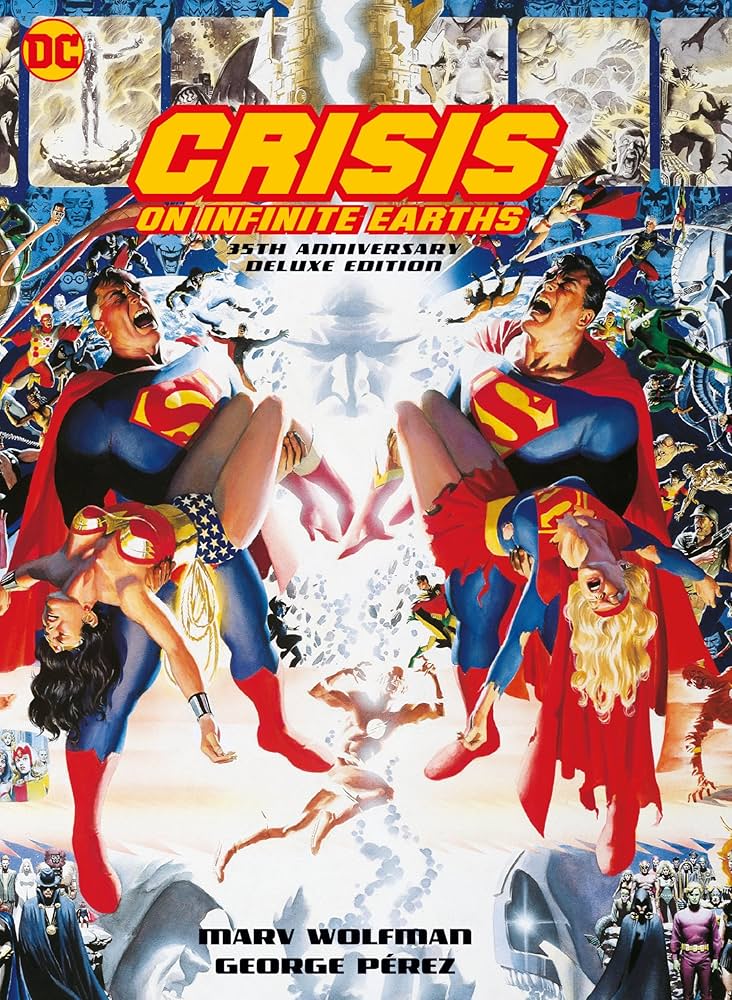 Caption: Crisis on Infinite Earths: 35th Anniversary Edition cover featuring the landmark 1985-1986 crossover event that reshaped DC Comics continuity
Credit: DC Comics / Amazon.com
Source: www.amazon.com
Caption: Crisis on Infinite Earths: 35th Anniversary Edition cover featuring the landmark 1985-1986 crossover event that reshaped DC Comics continuity
Credit: DC Comics / Amazon.com
Source: www.amazon.com
Crisis on Infinite Earths was the first modern comic book reboot, and it set the standard for all future universe-shattering events. The series was a massive success, both critically and commercially, and it successfully streamlined DC’s continuity for a new generation of readers. It also had a lasting impact on the DC Universe, with the deaths of major characters like Barry Allen and Supergirl, and the introduction of a new, modern age of heroes.
The New 52: A Bold and Controversial Relaunch
In 2011, DC took the reboot concept to a whole new level with the New 52. Following the events of the Flashpoint miniseries, DC canceled its entire line of comics and relaunched 52 new series, all starting with issue #1. The New 52 was a hard reboot, wiping the slate clean for most of DC’s characters and giving them new origins and updated costumes. [2]
The New 52 was a massive gamble, but it paid off in the short term. The relaunch was a huge sales success, and it brought a lot of new readers to DC’s comics. However, the New 52 was also controversial among longtime fans, who were unhappy with the changes to their favorite characters and the erasure of decades of continuity. The darker, edgier tone of the New 52 was also a point of contention for many readers.
Rebirth and Beyond: Course Correction and the “Omniverse”
In response to the backlash against the New 52, DC launched its Rebirth initiative in 2016. Rebirth was a course correction, bringing back many of the classic elements of the DC Universe that had been lost in the New 52. The initiative was a success, and it was praised by fans and critics for its return to a more optimistic and hopeful tone. [1]
Since Rebirth, DC has continued to play with its continuity, with events like Doomsday Clock and Dark Nights: Death Metal further reshaping the DC Universe. The current era of DC Comics is known as the “Omniverse,” where every story is considered to be part of a larger, interconnected multiverse. This approach allows for a greater degree of creative freedom, and it gives readers a wide variety of stories to choose from. For more on the DC Multiverse, check out our article on The Multiverse in DC Comics.
Marvel’s Method: How the House of Ideas Handles Reboots
Marvel Comics has a different approach to reboots than its distinguished competition. While DC is known for its universe-shattering Crises, Marvel has traditionally been more reluctant to hit the reset button. Instead, Marvel prefers to use soft reboots and relaunches to keep its stories fresh. Here are some of the most notable Marvel reboots:
Ultimate Universe: A Fresh Start for a New Millennium
In 2000, Marvel launched the Ultimate Universe, a new line of comics that reimagined its most popular characters for a modern audience. The Ultimate Universe was a separate continuity from the main Marvel Universe (Earth-616), and it gave creators the freedom to tell new stories without being tied down by decades of continuity. [3]
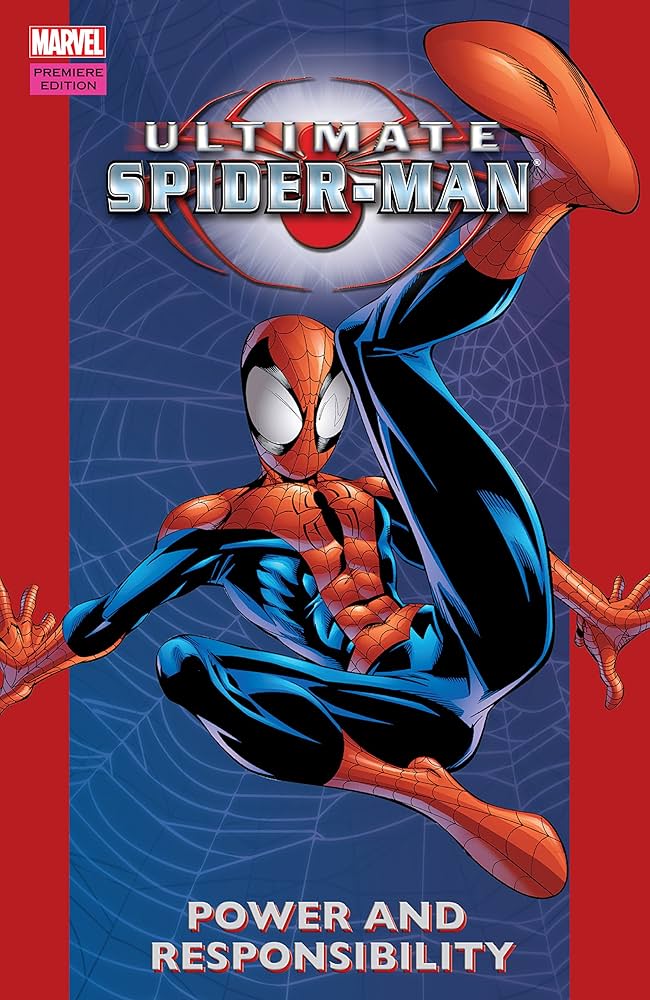 Caption: Ultimate Spider-Man Vol. 1: Power and Responsibility – The 2000 reboot that launched Marvel’s Ultimate Universe and brought Spider-Man to a new generation
Credit: Marvel Comics / Amazon.com
Source: www.amazon.com
Caption: Ultimate Spider-Man Vol. 1: Power and Responsibility – The 2000 reboot that launched Marvel’s Ultimate Universe and brought Spider-Man to a new generation
Credit: Marvel Comics / Amazon.com
Source: www.amazon.com
The Ultimate Universe was a huge success, and it introduced a new generation of readers to Marvel’s characters. The line was praised for its modern, cinematic storytelling, and it had a major influence on the Marvel Cinematic Universe. The Ultimate Universe came to an end in 2015 with the Secret Wars event, but its legacy lives on in the many characters and concepts that have been integrated into the main Marvel Universe.
Secret Wars and Relaunches: A Softer Touch
While Marvel has never had a full, line-wide reboot like DC’s New 52, it has had its share of universe-altering events. The 2015 Secret Wars event, for example, destroyed the Marvel Universe and the Ultimate Universe and replaced them with a new, patchwork reality called Battleworld. At the end of the event, the Marvel Universe was restored, but with some significant changes. [3]
Marvel is also famous for its frequent relaunches, which give its comics a fresh start with a new #1 issue. These relaunches, like Marvel NOW! and All-New, All-Different Marvel, are a way to attract new readers and to give creative teams a chance to take characters in a new direction. While these relaunches can be confusing for longtime readers, they’re a key part of Marvel’s strategy for keeping its comics fresh and exciting. For a deeper dive into Marvel’s cosmic hierarchy, check out our article on Beyond Galactus: Marvel’s Cosmic Hierarchy Explained.
Why Do Comic Books Reboot So Often?
So, why do comic book publishers reboot their universes so often? There are a few key reasons:
- To attract new readers: Comic book continuity can be incredibly intimidating for new readers. A reboot is a way to wipe the slate clean and to give new readers a fresh starting point.
- To streamline continuity: Over time, comic book continuity can become a tangled mess of contradictions and retcons. A reboot is a way to streamline the continuity and to make it more accessible to readers.
- To boost sales: A reboot is a major event that can generate a lot of buzz and excitement. This can lead to a significant boost in sales, as readers are eager to see what’s new.
- To allow for creative freedom: A reboot can give creators the freedom to tell new stories without being tied down by decades of continuity. This can lead to some of the most exciting and innovative comics on the market.
The Impact of Reboots on Readers and the Industry
Comic book reboots can have a major impact on readers and the industry as a whole. For readers, a reboot can be a double-edged sword. On the one hand, it can be a great way to jump into a new series or to see a favorite character in a new light. On the other hand, it can be frustrating to see decades of continuity erased and to have to relearn a character’s history.
For the industry, reboots are a vital tool for keeping comics fresh and relevant. They’re a way to attract new readers, to boost sales, and to give creators the freedom to tell new and exciting stories. While reboots can be controversial, they’re a necessary part of the ever-evolving world of comic books.
Conclusion
Comic book reboots are a complex and often controversial topic. But whether you love them or hate them, there’s no denying that they’re a vital part of the comic book industry. From universe-shattering Crises to bold new beginnings, reboots are a way for publishers to keep their stories fresh, to attract new readers, and to ensure that their characters remain relevant for generations to come.
References
- Screen Rant. (2024, September 18). All 8 Reboots of DC Comics Lore, Explained. https://screenrant.com/every-dc-comics-reboots-explained-complete-guide/
- CBR. (2024, February 13). Best Comic Book Reboots of All Time, Ranked. https://www.cbr.com/best-comic-book-reboot-relaunch-retcon-ever/
- Book Riot. (2018, February 27). What Fresh (Start) Hell? A Brief History of Marvel Reboots. https://bookriot.com/marvel-reboots/