In the world of comics, death is less of a final destination and more of a revolving door. For every heartbreaking demise, there’s a shocking return, leaving fans to wonder if anyone truly stays dead. While we’ve explored why superheroes never stay dead from a storytelling and business perspective, the in-universe explanations are often just as fascinating. From mystical pools to cosmic entities and super-science, the methods for cheating the Grim Reaper are as varied as the heroes and villains themselves. So, how exactly do they pull it off? Let’s dive into the weird and wonderful science of comic book resurrections.
The Lazarus Pit: DC’s Demonic Fountain of Youth
When it comes to resurrection in the DC Universe, one method stands above all others in its iconic and infamous status: the Lazarus Pit. These mystical, bubbling green pools of liquid have been the go-to for Ra’s al Ghul for centuries, allowing the head of the League of Assassins to extend his life and cheat death time and time again. But what exactly are they, and how do they work?
First discovered by Ra’s al Ghul hundreds of years ago, the Lazarus Pits are a concoction of chemicals found at the intersection of Earth’s magical ley lines. According to DC’s official lore, the pits’ restorative properties come from the heavy metal element Dionesium, which was sent to Earth by the multiversal bat demon Barbatos. This same element, in its raw meteoric form, is what granted Vandal Savage his immortality, making the pits a refined, albeit volatile, version of that power.
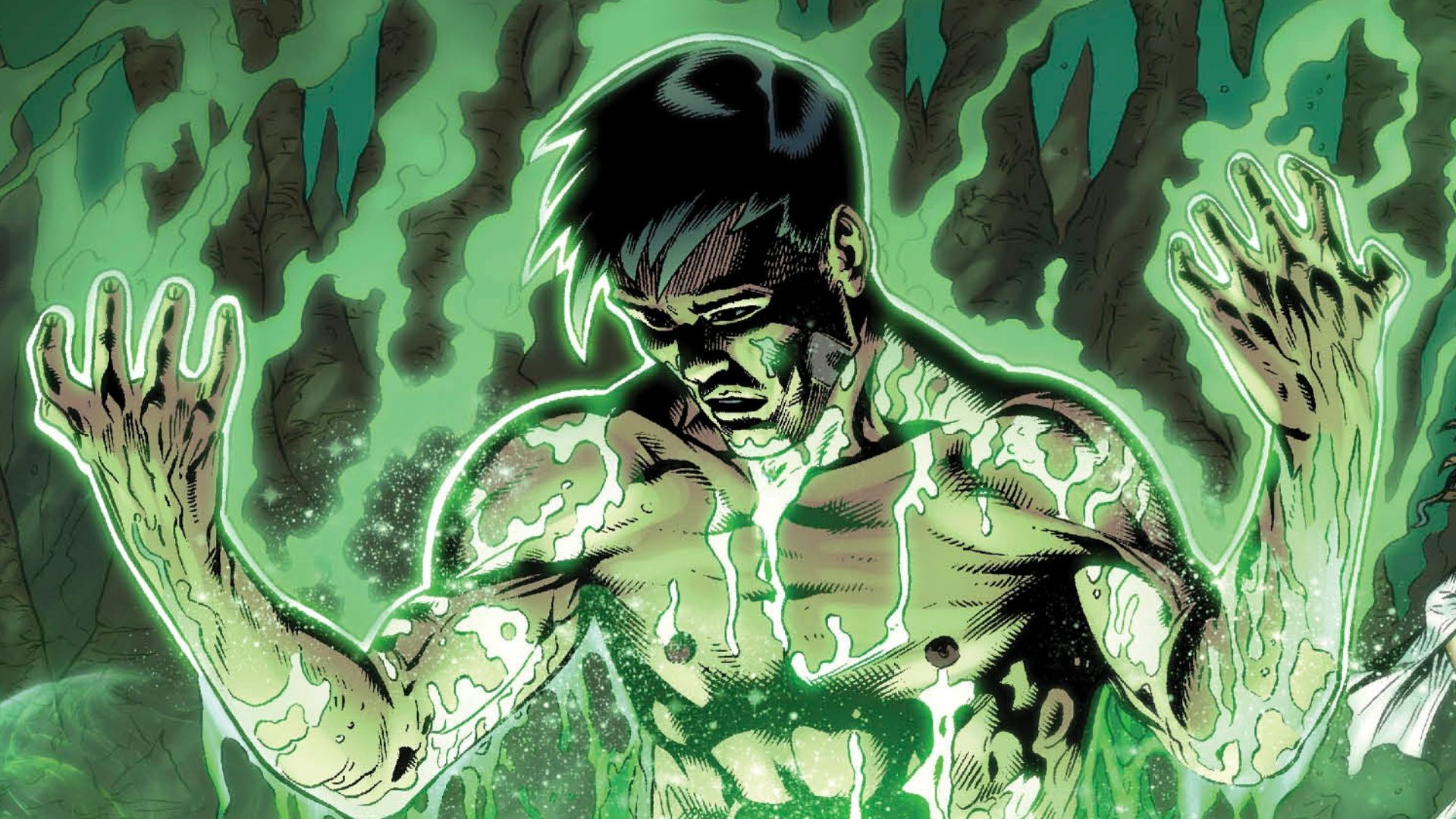 Caption: The Lazarus Pit has been DC’s most iconic resurrection method for decades, bringing characters like Ra’s al Ghul and Jason Todd back from the dead. Credit: DC Comics Source: DC Comics
But using a Lazarus Pit isn’t as simple as taking a dip. There are rules. The most important one is that the user must be dead or on the brink of death; a healthy person who enters a pit will be killed. The pits also have a time limit. If a person has been dead for too long, or if not enough of their remains are submerged, the process will fail. And then there are the side effects. The most well-known is a temporary, and sometimes prolonged, bout of madness. This insanity is said to be worse the more one uses the pit, or the further from life they were upon entering. Jason Todd’s resurrection as the Red Hood is a prime example of this, as he returned with a violent, anti-heroic streak. In some cases, users also gain a temporary boost of superhuman strength and, occasionally, a shock of white hair.
More recently, the pits have been revealed to have a demonic connection, with the risk of the resurrected individual becoming possessed. As if the madness wasn’t enough of a drawback, the pits are also a finite resource. Once a pit is used, that specific location is spent and can never be used again, making them a highly sought-after and jealously guarded secret by the al Ghul family.
Marvel’s Cosmic Reset Button: The Phoenix Force and Beyond
While DC has its mystical pools, Marvel often looks to the stars for its resurrections. Cosmic entities with god-like powers have frequently intervened to bring characters back from the dead, often with a few upgrades. The most famous of these is the Phoenix Force, a cosmic entity of life, death, and rebirth that has a particularly strong connection to Jean Grey of the X-Men.
Jean Grey’s history is a cycle of death and resurrection, almost always tied to the Phoenix Force. The entity has resurrected her on multiple occasions, sometimes by creating a duplicate body, other times by healing her fatal wounds. The Phoenix Force is the embodiment of life and passion, and its resurrections are often dramatic, fiery, and transformative. It’s not just a simple return to life; it’s a rebirth, often with a significant power boost and a new cosmic purpose.
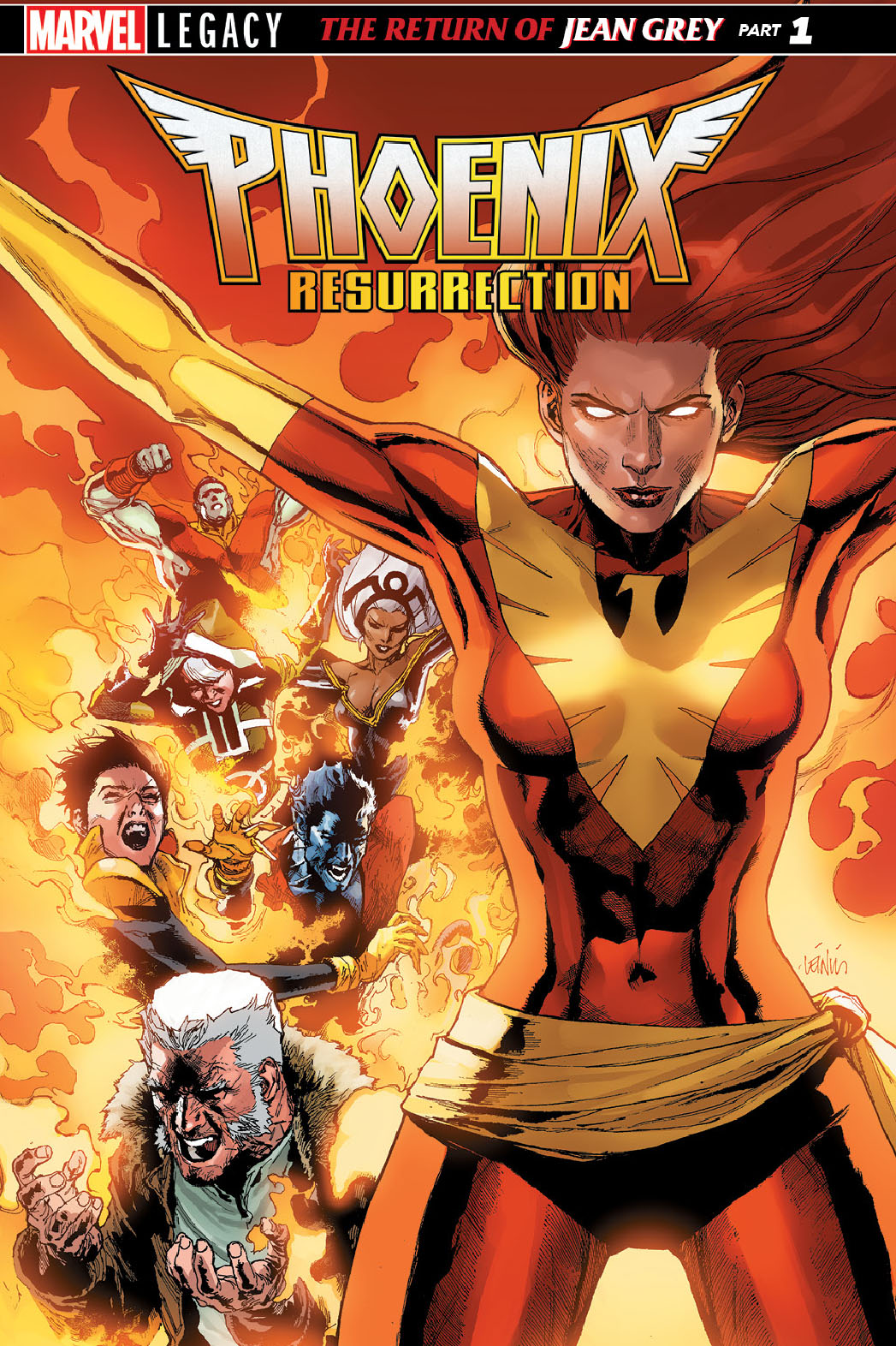 Caption: Jean Grey’s connection to the Phoenix Force has made her one of Marvel’s most frequently resurrected characters, embodying the cycle of death and rebirth. Credit: Marvel Comics Source: Marvel Comics
But the Phoenix Force isn’t the only cosmic being in the resurrection business. Roma, the Omniversal Guardian and daughter of Merlin, resurrected the entire X-Men team after they sacrificed themselves to defeat the Adversary. As a thank you, she not only brought them back to life but also made them invisible to electronic detection, a useful, if inconvenient, upgrade. This highlights a common theme in cosmic resurrections: they often come with a catch or a side effect, a cosmic “gift” from the being who brought them back.
Super-Science and Cloning: The Logical Approach to Immortality
Not all resurrections are mystical or cosmic. In the Marvel Universe, where super-geniuses like Reed Richards exist, even death can be treated as a scientific problem to be solved. When the Thing was killed, Reed Richards didn’t mourn; he built a machine to travel to the afterlife. In a classic Fantastic Four story, the team literally travels to heaven and, after a conversation with a being who appears to be Jack Kirby himself, convinces him to let Ben Grimm return to the land of the living. This is perhaps the most direct and audacious resurrection in comic history, a testament to the power of both science and storytelling.
The X-Men, under the guidance of Charles Xavier and with the help of Moira MacTaggert, have taken this a step further with the Krakoan resurrection protocols. This intricate process, a cornerstone of the recent X-Men comics, combines cloning with psychic backups. The process involves a group of five mutants—Hope Summers, Goldballs, Proteus, Elixir, and Tempus—who work in concert to grow a new body, age it to the correct age, and then implant a psychic backup of the deceased mutant’s mind, which is regularly updated by Cerebro. This has effectively made all mutants immortal, a concept that has been explored in depth in the pages of X-Men and has been a major plot point in recent years. It’s a fascinating take on resurrection, treating it as a repeatable, industrial process rather than a one-off miracle.
Cloning has also been a popular, if often messy, method of resurrection. The infamous “Clone Saga” in Spider-Man comics brought back Norman Osborn, the original Green Goblin, who was thought to be dead for years. It was revealed that he had orchestrated the entire saga, using clones to manipulate Peter Parker and sow chaos. This type of resurrection is often used for villains, as it allows for their return without diminishing the impact of their original death, and it often comes with the added twist of “who is the real one?”
Reality Warping and Time Travel: The Ultimate Get-Out-of-Jail-Free Card
When all else fails, there’s always reality warping and time travel. Characters with the ability to manipulate reality, like the Scarlet Witch, can simply rewrite history to bring someone back. In the “House of M” storyline, Wanda Maximoff created an alternate reality where mutants were the dominant species, and in this new world, Hawkeye, who had died in “Avengers Disassembled,” was alive and well. When reality was restored, he remained among the living. It’s the ultimate retcon, a way to undo death by simply saying “it didn’t happen that way.”
Time travel offers a similar, if slightly more complex, solution. Why accept a character’s death when you can simply travel back in time and prevent it from happening? This was the method used to save Scott Lang, the second Ant-Man, when his daughter Cassie traveled back to pull him from a fatal explosion. A more convoluted example is the resurrection of Cyclops by his time-traveling son, Cable. After Cyclops’s death, a younger version of Cable traveled back in time, had a device built to store a fragment of the Phoenix Force, implanted it in his father’s body, and then used the stored energy to bring him back to life. It’s a convoluted, head-spinning plot that shows just how far comics will go to bring back a beloved character.
The Revolving Door Continues
From the demonic waters of the Lazarus Pit to the cosmic fire of the Phoenix Force and the cold science of cloning, the methods of resurrection in comics are as creative as they are convenient. They allow for the return of fan-favorite characters, the exploration of new storylines, and the constant evolution of the comic book landscape. While death may be a constant, so too is the promise of return. As Professor X once said, mutant heaven doesn’t have pearly gates, just revolving doors. And in the world of comics, that seems to be true for everyone.
Resources
- Screen Rant – “How Do Marvel Superheroes Come Back From The Dead?” – https://screenrant.com/marvel-comics-heroes-back-from-dead/
- DC.com – “So You Want to Use a Lazarus Pit…” – https://www.dc.com/blog/2022/11/07/so-you-want-to-use-a-lazarus-pit
- CBR – “Beating Death: The Most Shocking Comic Book Resurrections” – https://www.cbr.com/15-most-shocking-comic-book-resurrections/