From the classic red and blue of Superman to the intimidating silhouette of Batman, a superhero’s costume is more than just a uniform—it’s a declaration. It’s the first thing we see, a visual shorthand that tells us who a character is, what they stand for, and what they can do. But have you ever stopped to think about the intricate design choices that go into creating these iconic looks? Superhero costume design is a fascinating art form, a blend of symbolism, psychology, and storytelling that transforms a character into a legend.
More Than Just Spandex: Why Superhero Costume Design Matters
A great superhero costume does two things perfectly: it communicates the character’s identity and it creates a visually appealing, memorable design. [3] It’s a delicate balance. A costume that’s all flash but no substance feels hollow, while a purely functional design might fail to capture the imagination. The most enduring costumes, the ones that have stood the test of time, are those that masterfully blend theme, color, and symbolism to create a cohesive and powerful whole.
These designs are so effective that they become a core part of the character’s identity, as inseparable from them as their powers or their origin story. Think about it: could you imagine Spider-Man without his web-patterned suit, or Captain America without his star-spangled uniform? These costumes are not just clothes; they are the visual embodiment of the heroes themselves.
The Core Principles: What Makes a Costume Iconic?
So, what are the secret ingredients that make a superhero costume truly iconic? While there’s no single formula for success, there are some fundamental principles that many of the greatest designs share. By understanding these principles, we can start to decode the hidden language of superhero costumes and appreciate the artistry that goes into their creation.
Guideline #1: The Power of Theme and a Focal Point
At the heart of every great superhero costume is a strong, clear theme. This theme is usually derived from the character’s name, their powers, or a combination of both. [3] The theme is the foundation of the design, the central idea that everything else is built around. For example, Batman’s theme is, of course, a bat. This is reflected not only in his name but also in his chest emblem, the shape of his cowl, and his overall dark and mysterious aesthetic.
But a theme alone isn’t enough. To truly elevate a design, it needs a focal point—a single, powerful element that draws the eye and anchors the entire costume. [3] Most often, this focal point is the character’s logo, proudly displayed on their chest. The logo acts as the character’s brand, their unique identifier. Superman’s “S” shield is perhaps the most famous example. It’s not just a letter; it’s a symbol of hope, a beacon of light that instantly communicates who he is and what he represents.
Color Theory: The Unspoken Language of a Hero’s Palette
Color is one of the most powerful tools in a costume designer’s arsenal. Different colors evoke different emotions and associations, and a well-chosen color palette can instantly communicate a wealth of information about a character. [2] Comic book artists have long understood this, using color to create a visual language that readers can understand intuitively.
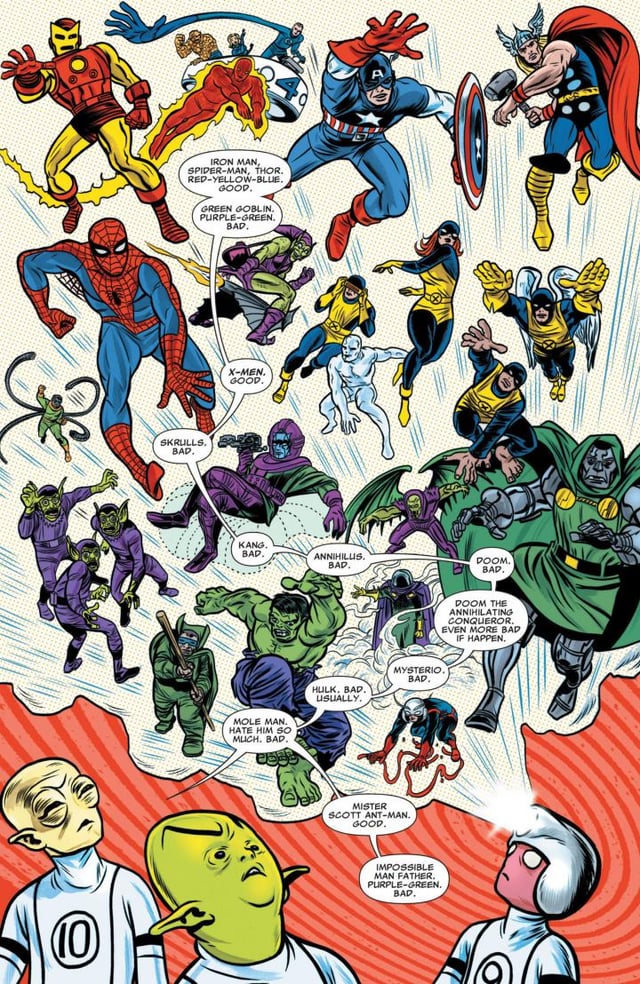 Caption: A panel from Fantastic Four #12 breaks down the color theory behind superhero costume design
Credit: Marvel Comics
Source: Reddit
Caption: A panel from Fantastic Four #12 breaks down the color theory behind superhero costume design
Credit: Marvel Comics
Source: Reddit
Here’s a quick breakdown of some of the most common colors used in superhero costume design and what they typically symbolize:
Color | Symbolism | Examples |
|---|---|---|
Red | Power, passion, courage, determination | Superman, Iron Man, The Flash |
Blue | Stability, trustworthiness, loyalty, justice | Superman, Captain America |
Black | Darkness, mystery, secrecy, intimidation | Batman, Black Panther |
Green | Growth, transformation, nature, willpower | Green Lantern, The Hulk |
Yellow | Optimism, energy, enlightenment, speed | The Flash, Shazam |
Of course, these are just general guidelines, and many of the most interesting designs play with these expectations. But by understanding the basic principles of color theory, we can gain a deeper appreciation for the subtle storytelling at play in our favorite superhero costumes.
From Page to Panel: The Evolution of Superhero Fashion
Superhero costumes are not static; they evolve over time, reflecting the changing tastes and values of society. From the simple, bold designs of the Golden Age to the complex, cinematic creations of today, the history of superhero fashion is a fascinating journey through the history of pop culture itself. [1]
The Golden Age: Bold, Bright, and Symbolic
The 1930s and 1940s, the Golden Age of comics, gave us some of the most enduring superhero designs of all time. Inspired by circus strongmen and pulp adventurers, these early costumes were characterized by their bright, primary colors and simple, powerful symbols. [1] Superman’s original costume, with its red and blue color scheme and iconic “S” shield, is the quintessential Golden Age design. These costumes were designed to be instantly recognizable, to pop off the page and grab the reader’s attention.
The Silver Age: Functionality Meets Sci-Fi
The Silver Age of the 1950s and 1960s saw a shift towards more complex and science-fiction-inspired designs. [1] Characters like the Fantastic Four, with their matching blue jumpsuits, and Spider-Man, with his intricate web pattern, showcased a new emphasis on functionality and team identity. Costumes became more detailed, reflecting the growing complexity of the comic book medium and the increasing sophistication of its audience.
The Bronze Age: Grit, Realism, and Darker Tones
The 1970s and 1980s, the Bronze Age, brought a darker, more realistic tone to comics, and superhero costumes followed suit. [1] The bright, optimistic colors of the Golden and Silver Ages gave way to a grittier, more muted palette. Characters like Wolverine, with his rugged brown and tan costume, and Daredevil, with his devilish red suit, embodied this new, more cynical era. Costumes became less about pure symbolism and more about reflecting the harsh realities of a world that was no longer so black and white.
The Modern Age: Sleek, Tech-Infused, and Cinematic
From the 1990s to today, the Modern Age has been defined by a fusion of styles and a heavy influence from blockbuster films. [1] Costumes have become more sleek, more detailed, and often incorporate technological elements. Captain America’s modern suit, for example, retains the classic red, white, and blue, but with a more militaristic, functional design. The rise of the Marvel Cinematic Universe has had a huge impact, with many comic book costumes being redesigned to more closely resemble their big-screen counterparts.
Beyond the Big Two: Cultural Influences and Evolving Symbolism
Superhero costume design is not just about looking cool; it’s also about reflecting the world we live in. As our society has become more diverse and inclusive, so too have our superheroes and their costumes. Modern designers are increasingly drawing inspiration from a wide range of cultures and traditions, creating costumes that celebrate diversity and challenge outdated stereotypes. [2]
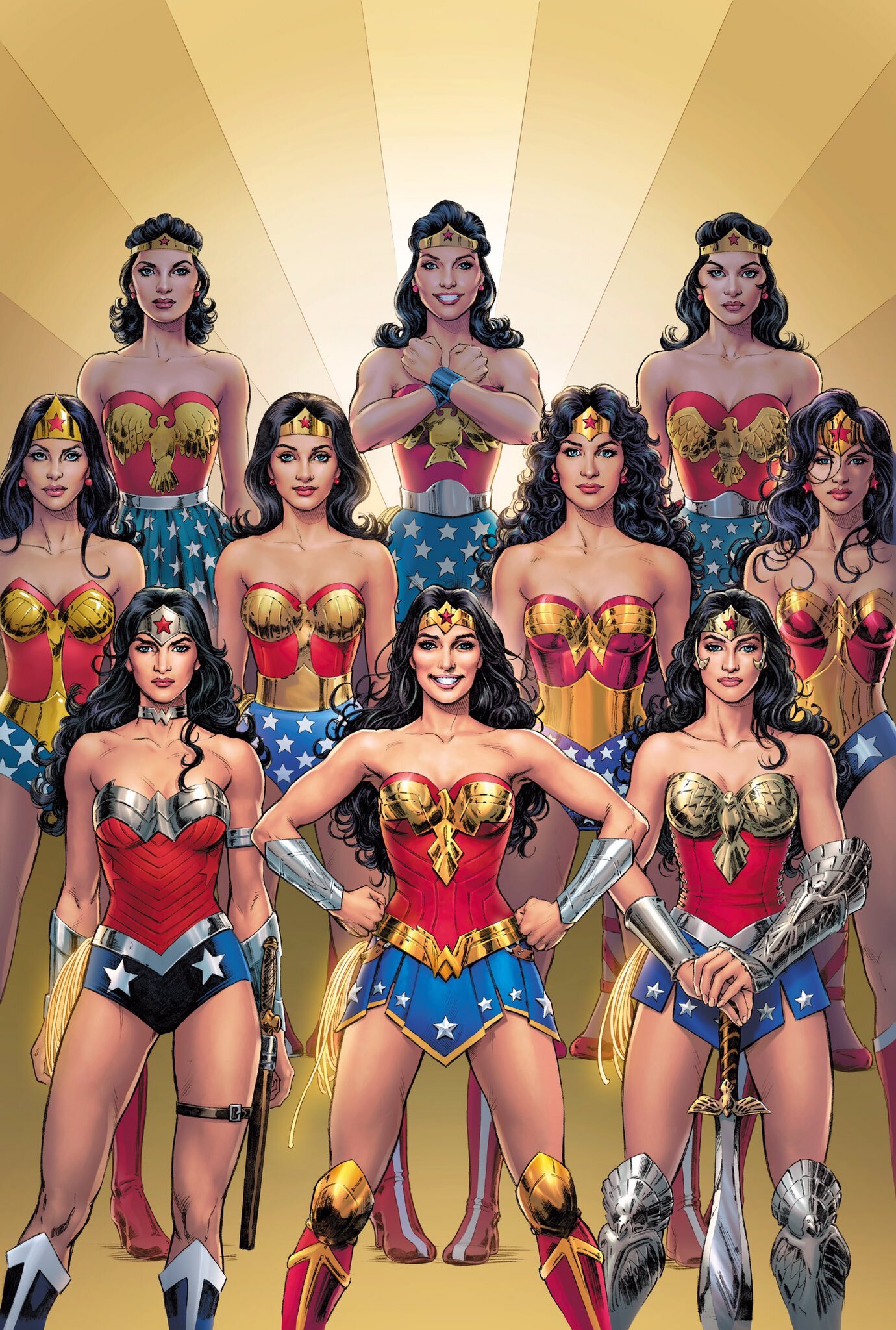 Caption: Wonder Woman’s costume has evolved significantly since her 1941 debut, reflecting changing cultural values while maintaining her iconic red, blue, and gold color scheme
Credit: DC Comics
Source: The New York Times
Caption: Wonder Woman’s costume has evolved significantly since her 1941 debut, reflecting changing cultural values while maintaining her iconic red, blue, and gold color scheme
Credit: DC Comics
Source: The New York Times
Characters like Black Panther, whose costume incorporates African tribal motifs, and Miles Morales’ Spider-Man, with his graffiti-inspired suit, are powerful examples of this evolution. These designs not only look amazing, but they also send a powerful message about representation and the importance of seeing ourselves reflected in our heroes. For a deeper dive into the importance of representation, check out our article on The Importance of Representation in Comics.
The Future of Superhero Style: What’s Next for Costume Design?
So, what does the future hold for superhero costume design? As technology continues to advance, we can expect to see even more innovation and experimentation. [1] Imagine costumes made from smart materials that can change color or shape, or suits that are seamlessly integrated with augmented reality displays. The possibilities are endless.
But no matter how much the technology changes, the fundamental principles of good costume design will remain the same. A great superhero costume will always be one that tells a story, that captures the imagination, and that inspires us to be the best versions of ourselves. For more on the evolution of comics, explore the Evolution of Comic Book Art.
Resources
- From Tailors With Love, “The Evolution of Superhero Costumes Through Time”
- The Costume Shop, “Decoding the Symbolism in Superhero Costumes”
- Carl Shinyama, “How to Design a Superhero Costume for Comics”