We love our heroes for their incredible powers, but what truly makes them compelling are their vulnerabilities. A hero without a weakness is just a god, and where’s the drama in that? The concept of superhero weaknesses is as old as the genre itself, a crucial storytelling tool that grounds god-like beings in relatable struggles and raises the stakes in every battle. From a glowing green rock to a simple sore throat, these vulnerabilities make our favorite characters more human and their triumphs all the more satisfying.
While everyone knows about Superman’s aversion to Kryptonite, the world of comics is filled with a fascinating array of weaknesses, ranging from the iconic to the downright bizarre. This guide will explore the different types of superhero weaknesses, how they define our heroes, and why they are so essential to the stories we love. So, grab your utility belt and get ready to dive into the fascinating world of what makes our heroes fallible.
The Obvious & Iconic: Elemental and Substance-Based Weaknesses
These are the classic, most well-known types of superhero weaknesses. They are often tied to a hero’s origin or physiology, creating a clear and present danger that writers can easily exploit for dramatic tension.
Superman & Kryptonite: The Gold Standard of Weaknesses
It’s impossible to talk about superhero weaknesses without starting with the most famous one of all: Superman and Kryptonite. These radioactive fragments from his home planet of Krypton are the ultimate equalizer, turning the Man of Steel into a vulnerable, pained mortal. The most common form is Green Kryptonite, which weakens him to the point of death with prolonged exposure. But the radioactive rainbow doesn’t stop there; there are various other forms of Kryptonite, from Red Kryptonite that causes unpredictable transformations to Gold Kryptonite that can permanently strip a Kryptonian of their powers.
Kryptonite is the perfect example of a weakness that is directly tied to a hero’s origin. It’s a constant reminder of his alien heritage and the loss of his home world. It’s a simple, elegant, and incredibly effective plot device that has been used in countless stories to level the playing field and put Superman in real peril. The impact of Kryptonite is so profound that the term itself has entered the popular lexicon as a synonym for a significant vulnerability.
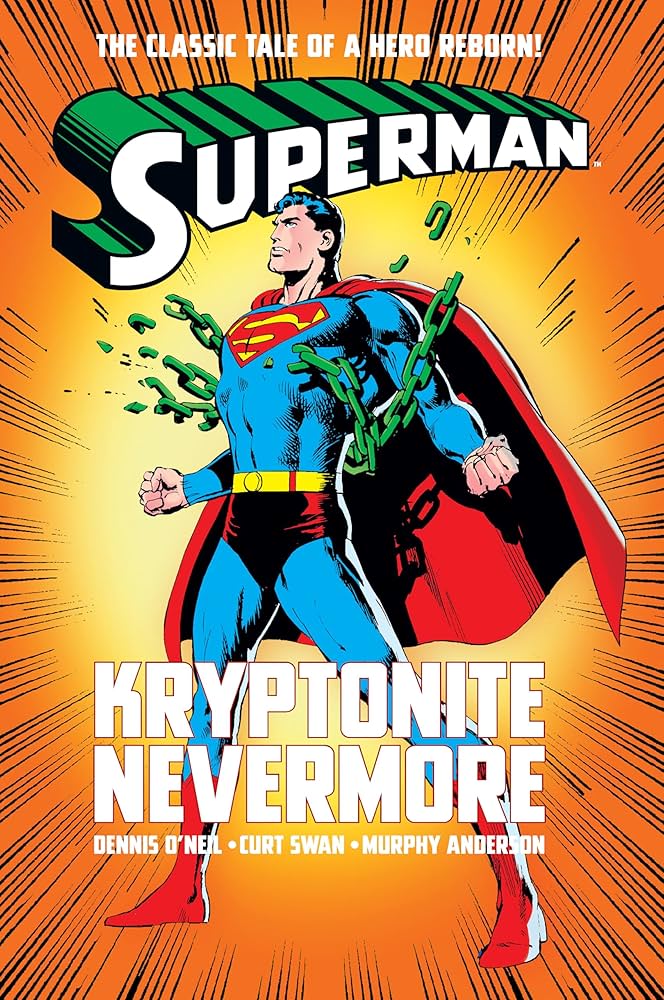
Caption: The cover of Superman: Kryptonite Nevermore, a classic tale exploring one of Superman’s greatest weaknesses. Credit: DC Comics Source: DC Comics
Martian Manhunter & Fire: A Deep-Seated Fear
J’onn J’onzz, the Martian Manhunter, is one of the most powerful members of the Justice League. With super strength, shapeshifting, telepathy, and intangibility, he’s a one-man army. But he has a crippling weakness to fire. This isn’t just a physical vulnerability; it’s a deep-seated psychological one. J’onn watched his entire race, including his family, perish in a fiery apocalypse on Mars. This traumatic event left him with an intense pyrophobia that can render him powerless at the mere sight of a flame.
Physically, fire causes his morphogenic structure to break down, making it difficult for him to maintain his form. But it’s the psychological aspect that makes this weakness so compelling. It’s a constant reminder of his tragic past and the immense loss he has suffered. While he has worked to overcome his fear in some storylines, fire remains a potent weapon against the last son of Mars, a physical and emotional scar that has never truly healed.
Green Lantern & The Color Yellow: A Quirk of the Past
For decades, the mighty Green Lanterns, wielders of the most powerful weapon in the universe, had a rather embarrassing Achilles’ heel: the color yellow. Their power rings, fueled by willpower, were completely ineffective against anything yellow. This was explained as an impurity in the Central Power Battery on Oa, the source of their power. The impurity was later retconned to be the result of the fear entity, Parallax, being imprisoned within the battery. Since fear is the opposite of willpower on the emotional spectrum, and yellow is the color of fear, the rings were powerless against it.
This weakness has since been largely written out of the comics, with experienced Green Lanterns now able to overcome the yellow impurity through sheer force of will. However, for a long time, it was a defining characteristic of the Green Lantern Corps and a source of much ridicule from fans. It’s a classic example of a comic book weakness that, while a bit silly in retrospect, provided a consistent and easily exploitable vulnerability for writers to work with.
Power-Related Weaknesses: When Strengths Become Flaws
Sometimes, a hero’s greatest strength can also be the source of their greatest weakness. These vulnerabilities are often a direct consequence of their powers, creating a fascinating and ironic twist on the superhero trope.
The Flash & The Calorie Conundrum
The Flash is the fastest man alive, capable of moving at speeds that defy the laws of physics. But all that running burns a serious amount of calories. The Flash’s super-speed is fueled by a hyper-accelerated metabolism, which means he needs to consume massive quantities of food to maintain his energy levels. If he doesn’t eat enough, he can become weak and disoriented, and his powers will begin to fail him.
This weakness is a fun and surprisingly realistic take on the consequences of having superpowers. It grounds The Flash in a very human need – the need to eat – and provides a simple but effective way to depower him. It also leads to some great comedic moments, with The Flash often seen scarfing down entire buffets in a matter of seconds. It’s a weakness that is both a logical extension of his powers and a source of great character moments.
Black Canary & The Sore Throat
Dinah Lance, the Black Canary, is a formidable hand-to-hand combatant, but her most powerful weapon is her voice. She possesses a metahuman ability called the Canary Cry, a high-powered sonic scream that can shatter objects and incapacitate enemies. But what happens when a singer gets a sore throat? The same thing that happens to Black Canary. Any damage to her vocal cords can render her Canary Cry useless.
This is another example of a weakness that is a logical consequence of a hero’s powers. It’s a simple, relatable vulnerability that makes her more human. And while she is still a skilled fighter without her Canary Cry, it’s a significant disadvantage in a world of super-powered beings. It’s a weakness that reminds us that even the most powerful heroes are still bound by the limitations of their own bodies.
Luke Cage & Indestructible Skin: A Double-Edged Sword
Luke Cage, the Hero for Hire, has superhuman strength and unbreakable skin. He’s a walking, talking tank, impervious to bullets, knives, and most other forms of physical attack. But what happens when the man with unbreakable skin gets an internal injury? That’s where his greatest strength becomes his greatest weakness. Doctors can’t operate on him because they can’t get through his skin. A simple case of appendicitis could be a death sentence for Luke Cage.
This is a brilliant and ironic weakness that turns his greatest asset into a potentially fatal flaw. It’s a clever twist on the invulnerability trope and a great example of how writers can find creative ways to challenge even the most powerful heroes. It’s a weakness that forces Luke Cage to be more careful and strategic, and it adds a layer of tension to every fight he’s in.
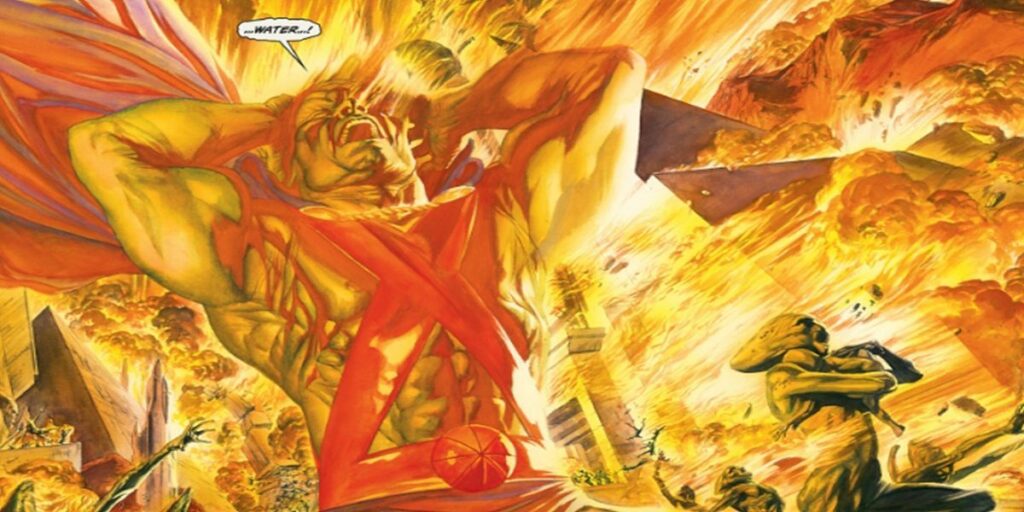
Caption: A comic panel depicting Martian Manhunter’s intense vulnerability to fire. Credit: DC Comics Source: DC Comics
Psychological & Emotional Vulnerabilities: The Human Element
Not all superhero weaknesses are physical. Some of the most compelling and complex vulnerabilities are psychological and emotional. These weaknesses are often rooted in a hero’s past trauma, their personality, or their relationships with others. They are what make our heroes truly human and relatable.
Batman & His Own Worst Enemy: The Psychology of the Bat
Batman is the epitome of human potential. He has no superpowers, but through sheer force of will, intelligence, and training, he has become one of the most formidable heroes in the DC Universe. But his greatest strength is also his greatest weakness: his mind. The same trauma that drives him to fight crime – the murder of his parents – also fuels his obsession, his paranoia, and his inability to trust others.
Batman’s psychological weaknesses are a central theme in many of his best stories. His arrogance and his belief that he is always right have often been his undoing. His inability to let others in and his tendency to push away those who care about him have left him isolated and alone. He is a man who is constantly at war with himself, and that internal conflict is often more dangerous than any external threat. As many fans know, the evolution of comic book villain archetypes is often tied to the hero’s own internal struggles.
Wonder Woman & The Power of Submission (A Relic of the Past)
Wonder Woman is a symbol of female empowerment, a warrior princess with the strength of a god. But in her early appearances, she had a rather… problematic weakness. If her Bracelets of Submission were chained together by a man, she would lose her powers. This weakness was a product of its time and the peculiar interests of her creator, William Moulton Marston, who had a fascination with BDSM.
Thankfully, this weakness has been long since retconned out of existence. But it’s a fascinating piece of comic book history and a reminder of how much the genre has evolved over the years. It’s also a testament to the enduring power of Wonder Woman as a character that she was able to overcome this rather embarrassing vulnerability and become the feminist icon she is today.
The Modern Hero’s Burden: Family and Friends
In the modern era of comics, one of the most common and effective superhero weaknesses is their love for their family and friends. Villains have learned that the easiest way to hurt a hero is to go after the people they care about. This is a weakness that is both deeply human and incredibly effective for creating dramatic tension. It forces heroes to make impossible choices and to confront the consequences of their double lives.
A prime example of this is Wally West, The Flash. His love for his wife, Linda, and their children, Irey and Jai, has always been his greatest strength and his greatest weakness. When he lost them during a multiversal crisis, it drove him to a point of desperation that had tragic consequences. The love for his family is what makes him a hero, but it’s also what makes him vulnerable. This is a common theme in modern comics, and it’s one of the reasons why stories about legacy heroes and their families are so compelling.
The Weird and The Wonderful: Bizarre Superhero Weaknesses
And then there are the weaknesses that are just plain weird. These are the vulnerabilities that make you scratch your head and wonder what the writers were thinking. But even these bizarre weaknesses can be a source of fun and creative storytelling.
Power Girl & Raw Materials
Power Girl, the Earth-Two version of Supergirl, has all the powers of her famous cousin. But for a time, she had a very strange weakness: she was vulnerable to raw, unprocessed materials. That’s right, a pointy stick or a rock could hurt her. It’s a weakness that was never fully explained and has since been quietly dropped from her character. But it’s a fun piece of comic book trivia and a great example of how even the most powerful heroes can have the most bizarre vulnerabilities.
Daredevil & Sensory Overload
Daredevil’s powers are a classic example of a weakness being turned into a strength. After being blinded by a radioactive substance, Matt Murdock’s other senses were enhanced to superhuman levels. He can hear a pin drop from a block away and his sense of touch is so acute that he can read by feeling the ink on a page. But this incredible gift is also a curse. Because his senses are so heightened, he is vulnerable to sensory overload. A loud noise, a strong smell, or a sudden flash of light can be debilitating, leaving him disoriented and in pain. This makes a loud concert or a bustling city street a potential minefield for the Man Without Fear. It’s a weakness that is a direct result of his powers, and it’s a constant challenge that he has to overcome.
Conclusion
From the iconic to the ironic, the psychological to the downright bizarre, superhero weaknesses are an essential part of what makes these characters so enduring. They are the chinks in the armor, the cracks in the facade of invincibility that allow us to connect with these larger-than-life figures on a human level. They are the source of conflict, the engine of drama, and the reason why we keep coming back to these stories, again and again. Because in the end, it’s not their powers that make them heroes; it’s how they overcome their weaknesses.
Resources
- Sideshow.com: Superman’s Weaknesses (Not Just Kryptonite!) – https://www.sideshow.com/blog/superman-weakness
- Collider: DC Superhero Weaknesses, Ranked From Weirdest to Best – https://collider.com/dc-superhero-weaknesses/
- CBR: 10 Most Powerful DC Heroes And Their Greatest Weaknesses – https://www.cbr.com/worst-weakness-strongest-dc-comics-heroes/
- ScreenRant: 20 Weirdest Hero Weaknesses In Marvel Comics – https://screenrant.com/marvel-comics-most-bizarre-superhero-weaknesses/