From the crackle of lightning in Storm’s hands to the impossible physics of Superman’s flight, superhuman abilities are the bedrock of comic book storytelling. But have you ever stopped to wonder how these powers actually work? It’s not just a random lottery of flight, strength, and laser eyes. Both Marvel and DC have spent decades building intricate, often surprisingly scientific, systems to explain the impossible.
These power systems aren’t just for nerdy debates on Reddit; they’re the narrative engine that drives character development, sets limitations, and creates the high-stakes drama we love. Whether it’s a mutant gene, a cosmic force, or a lab accident gone wrong, the origin of a hero’s power defines their journey. Let’s break down the science, the systems, and the cosmic rules that govern the most powerful beings in comics.
The Granddaddy of Power Sources: Genetic Mutation in Marvel Comics
When it comes to explaining the unexplainable, Marvel Comics struck gold with a single, elegant concept: the X-Gene. This genetic mutation is the cornerstone of Marvel’s power system, giving birth to the entire mutant race, from the X-Men to their most fearsome foes. It’s a beautifully simple idea: a small percentage of humanity is born with this latent gene, which activates during puberty and grants them extraordinary abilities.
This genetic lottery is what makes mutants so compelling—and so feared. They are the next stage of human evolution, a concept that creates a natural and perpetual source of conflict. Professor X sees it as a chance for peaceful coexistence, while Magneto views it as a clear sign of superiority. This fundamental disagreement over the meaning of their powers has fueled X-Men stories for over 60 years. The X-Gene explains everything from Cyclops’s optic blasts (a biological inability to process certain energies, forcing them out through his eyes) to Iceman’s ability to manipulate temperature on a molecular level.
How Marvel Classifies Power: From Alpha to Omega Level
Not all mutants are created equal. To bring order to the chaos of thousands of different powers, Marvel’s writers developed a classification system. While early comics were vague, the modern era, particularly the Krakoan Age launched in Jonathan Hickman’s House of X/Powers of X, gave us a definitive hierarchy: Omega Level Mutants.
An Omega Level Mutant is officially defined as “a mutant whose dominant power is deemed to register—or reach—an undefinable upper limit of that power’s specific classification.” In other words, they are the absolute masters of their domain. Magneto isn’t just a guy who can move metal; he’s an Omega Level Mutant in magnetism, meaning no one can surpass his control over that fundamental force. Similarly, Storm is an Omega in weather manipulation, and Jean Grey is an Omega in telepathy.
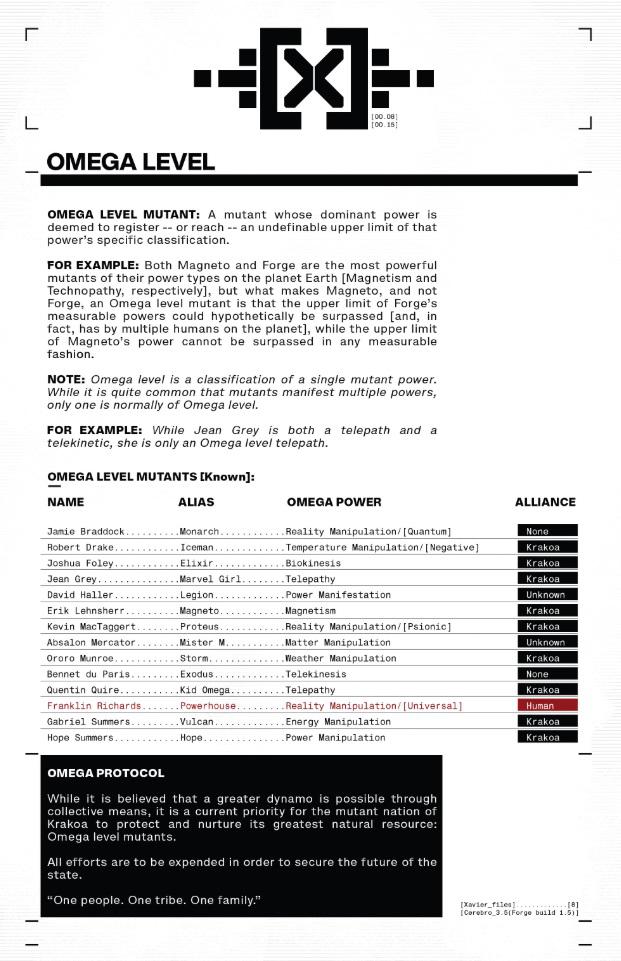
Caption: The official list of Omega Level Mutants as revealed in House of X #1. Credit: Marvel Comics Source: House of X #1
Below Omega, you have other classifications like Alpha Level, which includes incredibly powerful mutants who still have definable limits, and Beta Level, who are powerful but may have flaws in their abilities. This system creates a clear framework for understanding the sheer scale of power in the Marvel Universe and helps explain why some mutants are considered global threats while others are just trying to get by.
DC’s Cosmic Blueprint: The Seven Forces of Creation
Where Marvel often looks inward to genetics, DC tends to look outward to the cosmos. Many of its most powerful heroes are tied to fundamental forces of the universe. The most famous of these is the Speed Force, the cosmic energy that grants The Flash and other speedsters their incredible abilities. It’s not just about running fast; the Speed Force is a foundational part of reality that allows its users to bend the laws of physics, travel through time, and even outrun death itself. This is a great example of how DC turns an abstract concept into a tangible source of power.
More recently, DC expanded this idea with the introduction of the Seven Forces of Creation. These include the Speed Force, the Emotional Spectrum (which powers the Green Lantern Corps and other Lanterns), the Life Force, the Tear of Extinction, and more. This cosmic blueprint suggests that powers aren’t just random accidents but are instead tied to the very fabric of the DC Multiverse. It’s a top-down approach that gives characters like Green Lantern a direct connection to the universe’s emotional energy, making his willpower a literal force of nature.
Beyond Genes and Gods: The Other Ways to Get Powers
Of course, not everyone is born a mutant or chosen by a cosmic entity. The world of comics is filled with a rich variety of power origins, each with its own set of rules and consequences.
- Radiation and Lab Accidents: This is the classic Silver Age origin story. A bite from a radioactive spider, a blast of gamma radiation, or exposure to cosmic rays—these accidents rewrite a person’s DNA and grant them incredible powers. The Hulk, Spider-Man, and the Fantastic Four are all prime examples. These origins often explore themes of responsibility and the unpredictable nature of science.
- Technology and Armor: Some heroes aren’t born or made—they’re built. Iron Man’s suit is a testament to human ingenuity, a technological marvel that puts him on par with gods. Similarly, characters like Cyborg and Blue Beetle derive their powers from advanced alien technology that has bonded with them. For these heroes, their power is tied to their intellect and their ability to maintain and upgrade their gear.
- Magic and Mystical Artifacts: In a universe of science, magic still holds a powerful place. Characters like Doctor Strange and Zatanna tap into mystical energies, ancient spells, and powerful artifacts to bend reality to their will. Their powers are governed by ancient rules, pacts with supernatural beings, and the constant threat of a price to be paid. This adds a layer of mystery and danger that science-based powers often lack.
- Alien Biology: Sometimes, being super is just a matter of being from another planet. Superman’s powers are a result of his Kryptonian cells reacting to Earth’s yellow sun. It’s a simple, elegant explanation that establishes him as both an outsider and a natural-born protector. Martian Manhunter’s shapeshifting and telepathy are likewise just a normal part of his species’ biology.
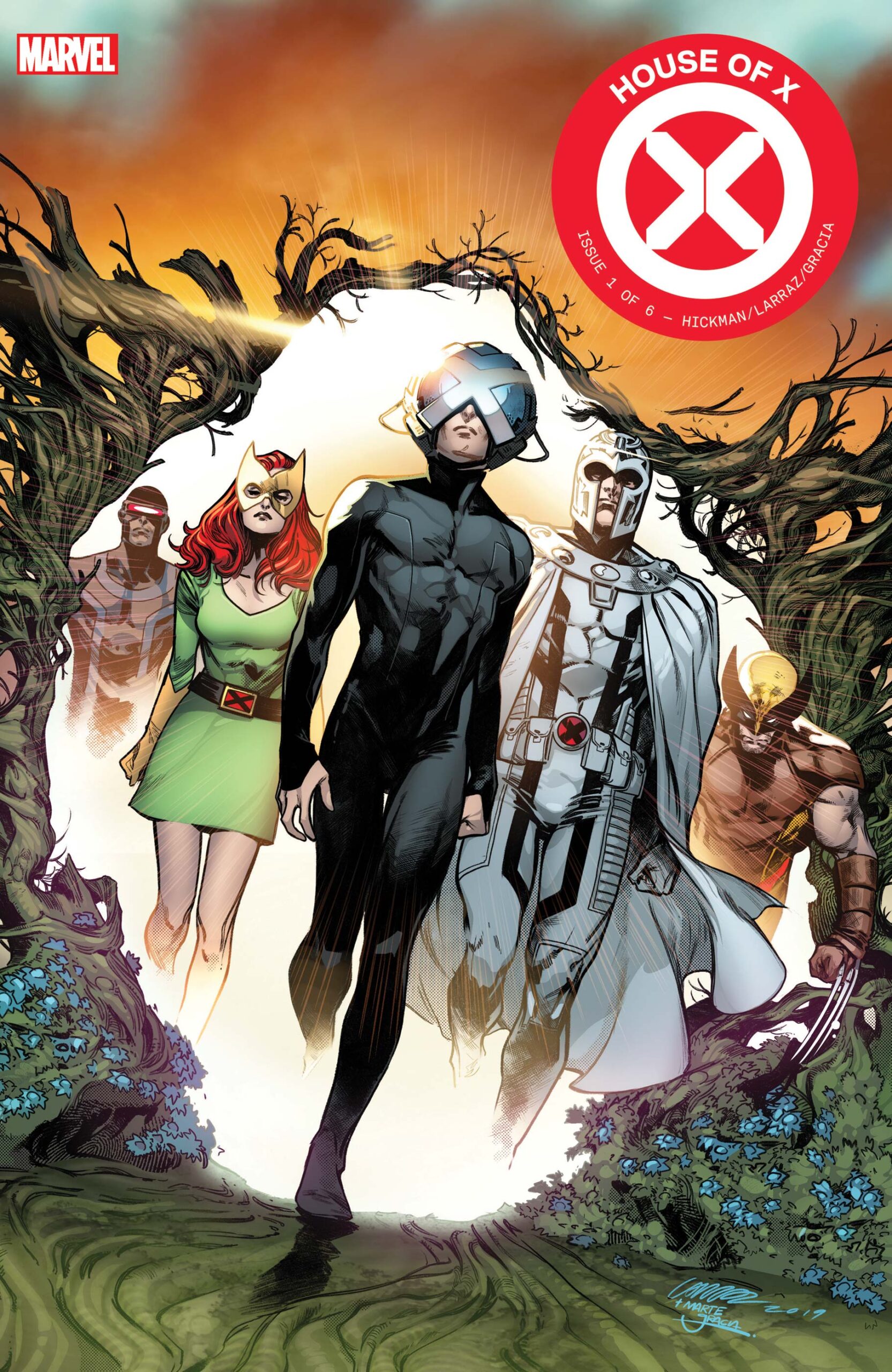
Caption: The cover of House of X #1, which redefined mutant power classifications for a new era. Credit: Marvel Comics Source: House of X #1
The Science of Superpowers: Does It Actually Make Sense?
Comic book writers have long tried to ground their fantastical stories in some semblance of scientific reality. In his series Irredeemable, writer Warren Ellis proposed that Superman-like powers couldn’t possibly be physical. He argued that a humanoid body simply couldn’t store enough energy to level a city block. His solution? The powers are psionic. It’s “mind over muscle,” with the hero’s mind subconsciously manipulating matter and energy to create the illusion of super strength and flight. This is a fascinating way to reverse-engineer an explanation for something so iconic.
This approach also helps explain the physical toll of powers. If the Hulk’s body is constantly absorbing and expelling massive amounts of gamma radiation, it makes sense that it would have a cancerous, tumor-ridden appearance, as depicted in the Ruins series. These “scientific” explanations add a layer of grit and consequence to the world of superheroes, reminding us that even the most powerful beings are bound by certain rules. While the real-world science may be shaky, these internal systems create a consistent and believable framework for storytelling. After all, the science of superpowers is more about narrative logic than academic accuracy.
Why Power Systems Matter
Ultimately, these power systems are more than just trivia. They are the engine of drama and character growth. A hero is defined by their limitations as much as their strengths. Spider-Man’s constant struggle to balance his personal life with his heroic duties is a direct result of his accidental powers. The X-Men’s fight for survival is intrinsically linked to their genetic identity. And the Flash’s connection to the Speed Force gives him a unique responsibility to protect the timeline itself.
By creating these rules, writers can explore themes of destiny, free will, prejudice, and responsibility. They can raise the stakes by threatening the very source of a hero’s power, or they can introduce new villains who exploit a loophole in the system. These intricate and fascinating systems are a testament to the creativity of the comic book medium, turning simple power fantasies into complex, multi-layered sagas. So the next time you see a hero lift a tank or outrun a bullet, remember: there’s a whole universe of rules making it all possible.
Resources
- Marvel.com, “A Guide to the Many Marvel Multiverses”
- Marvel Database, “Mutant Power Level Classification”
- Gotham Calling, “Explaining super-powers”
- DC Database, “Multiverse”