The best Teenage Mutant Ninja Turtles villains are, in order, Shredder, Krang, Bebop and Rocksteady, Baxter Stockman, the Rat King, Hun, and a deep bench of mutant muscle led by Tokka and Rahzar, Leatherhead, and Slash. Shredder tops every serious TMNT villains ranking because he is the one antagonist who has stayed lethal across every continuity, from the black-and-white Mirage comics of 1984 to the 1987 cartoon, the gritty 2003 series, the 2012 Nickelodeon reboot, and the IDW comics that run today. Below we rank the greatest TMNT bad guys by their threat level, cultural staying power, and the depth of their comic-book roots, then add the collector context and continuity comparisons that most “ninja turtles villains” lists skip. Buckle up for a wild ride through the Turtles’ rogues gallery.
TMNT Villains at a Glance
| Rank | Villain | First Appearance | Origin / Debut | Key Trait |
|---|---|---|---|---|
| 1 | Shredder (Oroku Saki) | Teenage Mutant Ninja Turtles #1 (Mirage, 1984) | Comics | Master ninja, leader of the Foot Clan |
| 2 | Krang | TMNT animated series (1987) | Cartoon | Alien warlord from Dimension X |
| 3 | Bebop & Rocksteady | TMNT animated series (1987) | Cartoon | Mutant warthog and rhino enforcers |
| 4 | Baxter Stockman | Teenage Mutant Ninja Turtles #2 (Mirage, 1984) | Comics | Mad scientist, creator of the Mousers |
| 5 | The Rat King | Mirage Comics (1980s) | Comics | Sewer-dwelling rat controller |
| 6 | Hun | TMNT animated series (2003) | Cartoon | Purple Dragons leader, brute enforcer |
| 7 | Karai | TMNT Vol. 1 #53 (Mirage, 1992) | Comics | Foot Clan heir, honor-bound rival |
| 8 | Tokka & Rahzar | Secret of the Ooze film (1991) | Film | Super-mutant snapping turtle and wolf |
| 9 | Leatherhead | TMNT Adventures (Archie, 1989) | Comics | Mutant alligator, raw power |
| 10 | Slash | TMNT Adventures (Archie, 1990) | Comics | Rogue mutant turtle, dark mirror |
How We Ranked the TMNT Villains
Half the fun of a rogues gallery this rich is arguing about it, so here is our logic. We weighed three things: threat level (how genuinely dangerous the villain is to the Turtles at full power), staying power (how many continuities and decades the character has survived), and comic-book pedigree (whether they were born on the page or invented for TV). A villain who checks all three, like Shredder, tops the list. A crowd-pleaser who leans on one strength, like the comic-relief tandem of Bebop and Rocksteady, still earns a high spot for sheer cultural staying power. This is why our ranking will not perfectly match a pure “strongest” list. Sheer muscle matters, but the Turtles have always been defined by the enemies who force them to grow.
1. Shredder: The Ruthless Nemesis
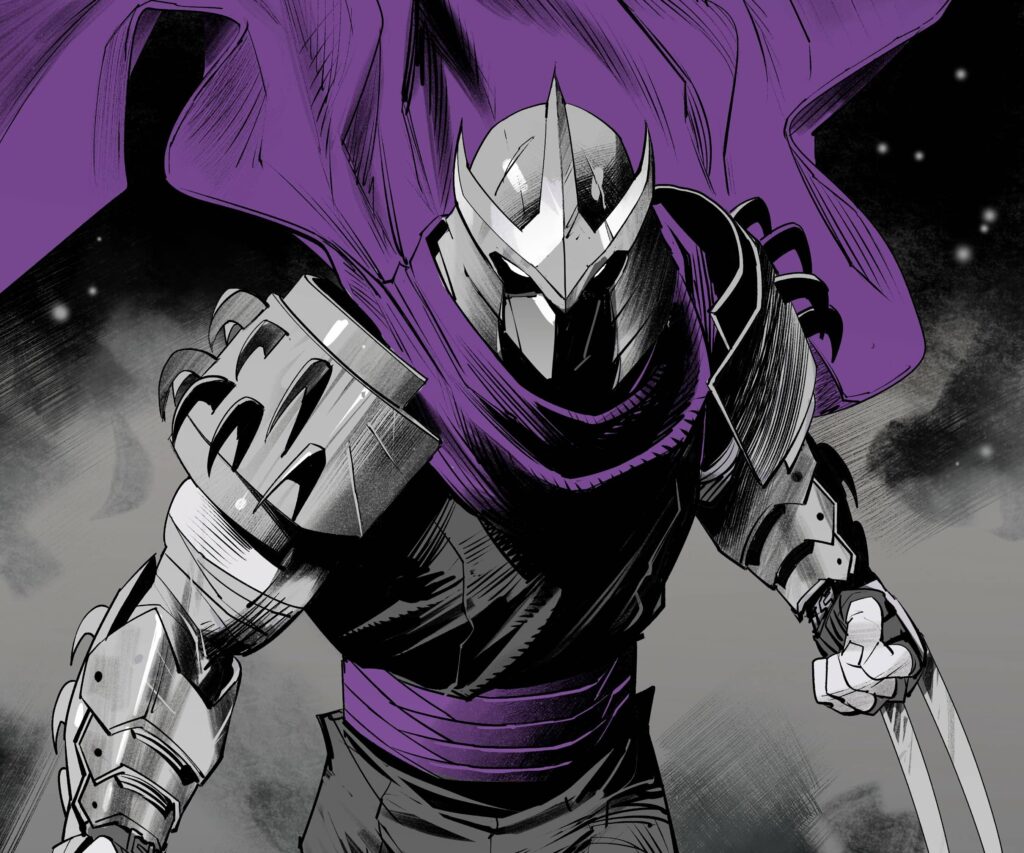
Shredder is the undisputed number one TMNT villain, and it is not close. Oroku Saki debuted in the very first issue of Kevin Eastman and Peter Laird’s Teenage Mutant Ninja Turtles (Mirage Studios, 1984), where he was killed by the Turtles in that same issue. That is how thoroughly he was built to be their nemesis: he was the reason the story existed. Every version since, from the armored despot of the 1987 cartoon to the terrifying war criminal of the IDW comics, keeps the same core: a master ninja whose hatred outlives his own body.
A Tale of Revenge: Oroku Saki’s Backstory
In the gritty underbelly of New York, a man named Oroku Saki built an empire on vengeance. His rivalry with Hamato Yoshi, the man who would become Master Splinter, is the engine of the whole saga. Ambition, betrayal, and a burning desire for power turned a gifted student of ninjutsu into the most feared crime lord the Turtles ever face. That personal grudge is what separates Shredder from a generic overlord. His war with the Turtles is inherited grief, not just crime.
The Foot Clan: A Ninja Empire in the Shadows
The Foot Clan is the backbone of Shredder’s empire, a secret order of ninja sworn to carry out his every command. They have been portrayed as lost teenagers looking for a family, as faceless robot foot soldiers in the 1987 cartoon, and as a genuinely sinister mystical order in IDW. However they are drawn, the Foot give the Turtles more fights than any other faction, and they are the reason Shredder never truly needs to lift a blade himself.
Epic Face-Offs with the Heroes in a Half Shell
No TMNT story is complete without a Shredder showdown. These clashes are a dazzling display of martial-arts skill, high-stakes danger, and the unbreakable bond between the brothers. The Turtles almost never beat Shredder alone; they beat him together, which is exactly the point. He is the villain who forces four very different personalities to fight as one.
2. Krang: The Alien Warlord with a Plan
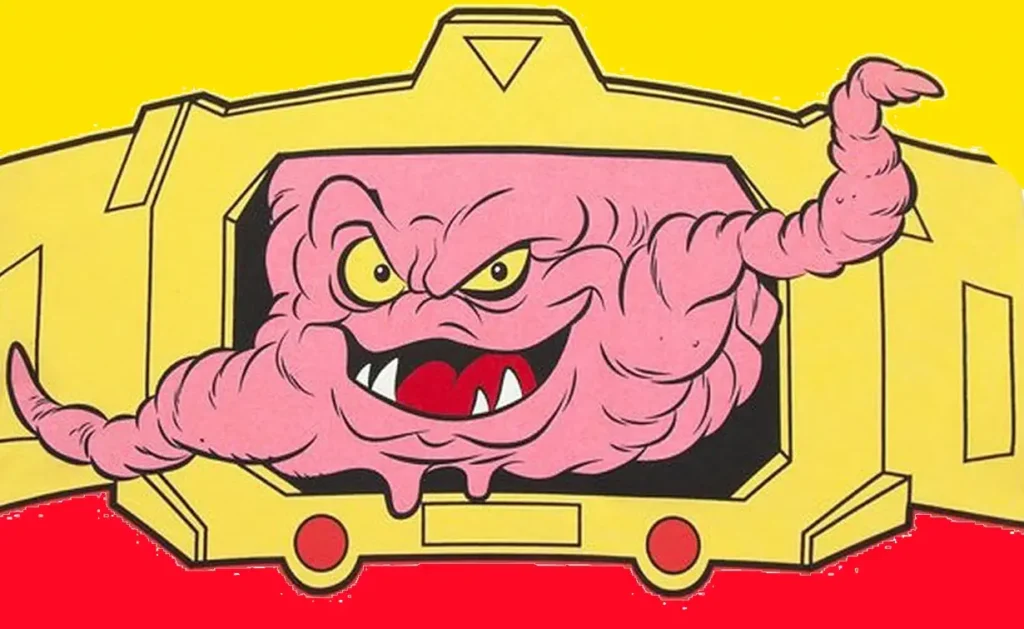
Krang’s Extraterrestrial Origins and Sinister Ambitions
Here is a fact that surprises casual fans: Krang was not in the original comics. He was created for the 1987 Fred Wolf cartoon, inspired by the alien Utroms of the Mirage series, and quickly became so iconic that later comics (including IDW) folded a version of him back into the canon. Hailing from the dangerous Dimension X, this brain-like warlord commands advanced technology and boundless cunning. Stripped of his body as punishment for military failure, Krang schemes to conquer Earth as a first step toward reclaiming everything he lost.
An Unholy Alliance: Krang and Shredder’s Partnership
When Krang and Shredder join forces, the Turtles face a new tier of danger. Shredder brings ruthless discipline; Krang brings alien firepower. Their partnership is also a study in mutual contempt, two egomaniacs who need each other and cannot stand each other, which is exactly why it makes for such great television.
The Technodrome: A Fortress of Doom
The Technodrome is Krang’s rolling mobile fortress, bristling with futuristic weapons and serving as the launch pad for his and Shredder’s worst schemes. Its sudden appearance on the horizon is one of the great “oh no” moments of the 1987 series, a visual shorthand for imminent doom that the Turtles must scramble to counter.
3. Bebop and Rocksteady: The Comical Duo of Destruction
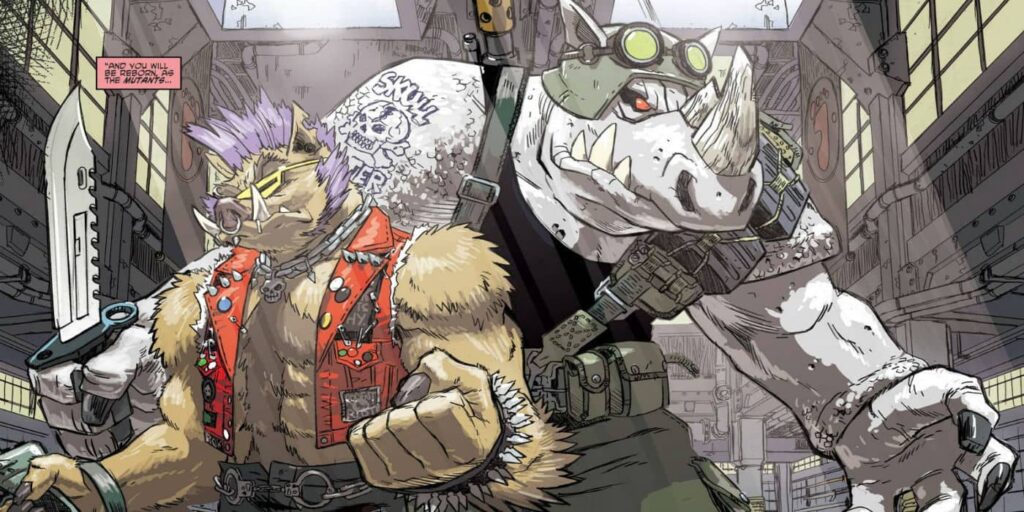
Mutant Mayhem: The Creation of Bebop and Rocksteady
Bebop and Rocksteady, the lovable-yet-dangerous mutant duo, began as street thugs before Shredder mutated them into a warthog and a rhinoceros. Created for the 1987 cartoon, they became the most iconic original mutants the franchise ever produced. Do not let the goofiness fool you, though. In the IDW comics these two are genuinely brutal, at one point cracking open Donatello’s shell with near-lethal results.
Why Do Fans Love These Bumbling Henchmen?
Their loyalty to Shredder and their sheer physical power make them a real threat, yet fans adore Bebop and Rocksteady for their endearing dimwittedness. They are the pressure valve of the TMNT universe, proof that even in the darkest sewer there is room for a laugh. That tonal balance, comedy and menace in the same scene, is a big reason the 1987 series aged as well as it did.
4. Baxter Stockman: Mad Scientist Extraordinaire
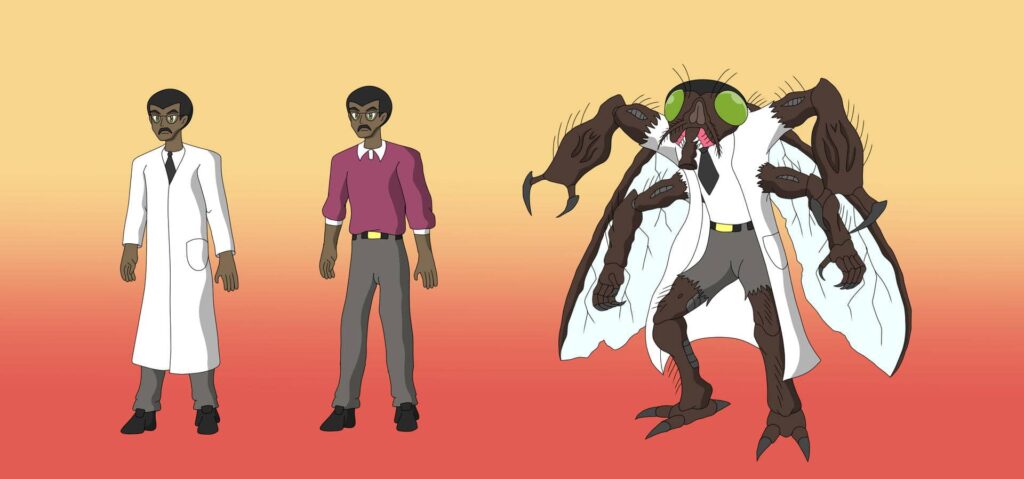
A Genius Gone Rogue: Baxter Stockman’s Fall from Grace
Baxter Stockman is the Turtles’ true original nemesis after Shredder, debuting in Teenage Mutant Ninja Turtles #2 (Mirage, 1984). A brilliant scientist whose ambition curdles into obsession, Stockman is the franchise’s great tragic villain: the smart man who could have done anything and chose spite. His arc across continuities is remarkable, escalating from petty inventor to, in the 2012 series, a recurring mad-science menace, and in IDW, all the way to Mayor of New York City.
Mousers: An Army of Mechanical Menaces
Stockman’s signature creation, the Mousers, are a legion of chomping robotic vermin built to swarm the sewers and the city. They are the reason the Turtles first cross paths with him, and they remain one of the most memorable menaces in the entire franchise, a low-tech nightmare that turns numbers into terror.
Unlikely Alliances: Stockman’s Villainous Collaborations
Stockman’s desperation to prove himself drives him into one uneasy alliance after another, with Shredder, with the Foot Clan, and with Krang. These partnerships never end well for him, which is the recurring joke and the recurring tragedy of the character. He is always the smartest man in the room and always the most disposable.
5. The Rat King: Master of the Sewer’s Dark Depths
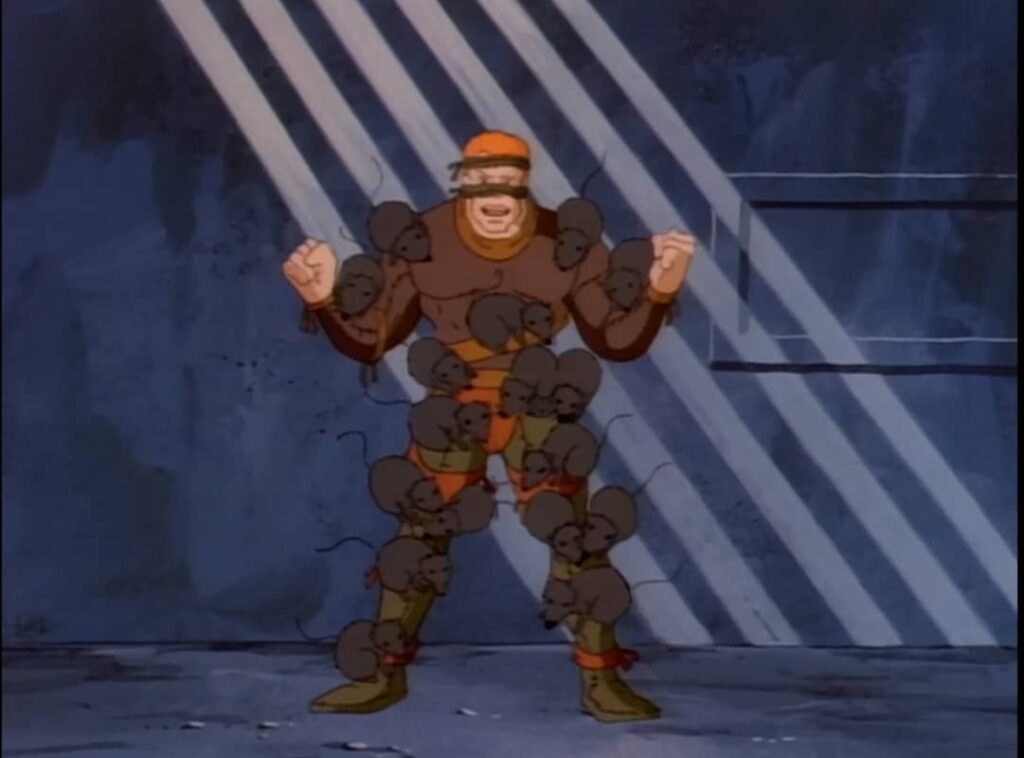
Unveiling the Enigmatic Rat King
The Rat King is the most underrated villain in the whole rogues gallery, and one of the creepiest. Originating in the Mirage comics and later popularized by the 1987 series, he lurks in the sewers commanding rats through what looks like genuine hypnotic control. Many fans argue his definitive version arrived in the 2012 Nickelodeon series, where he was reimagined as a nightmarish mutation of a familiar face. His mystery is his power; the show almost never over-explains him.
A Battle for Dominance: Rat King, Turtles, and Splinter
What makes the Rat King uniquely unsettling is that his fight is personal to Splinter. As a rat himself, Splinter is vulnerable to the Rat King’s influence in a way the Turtles are not, turning their confrontations into a battle of wills over the very rodents that share the sewers. It is one of the few TMNT conflicts where the sensei, not the students, is the real target.
6. Hun: The Iron Fist of the Purple Dragons
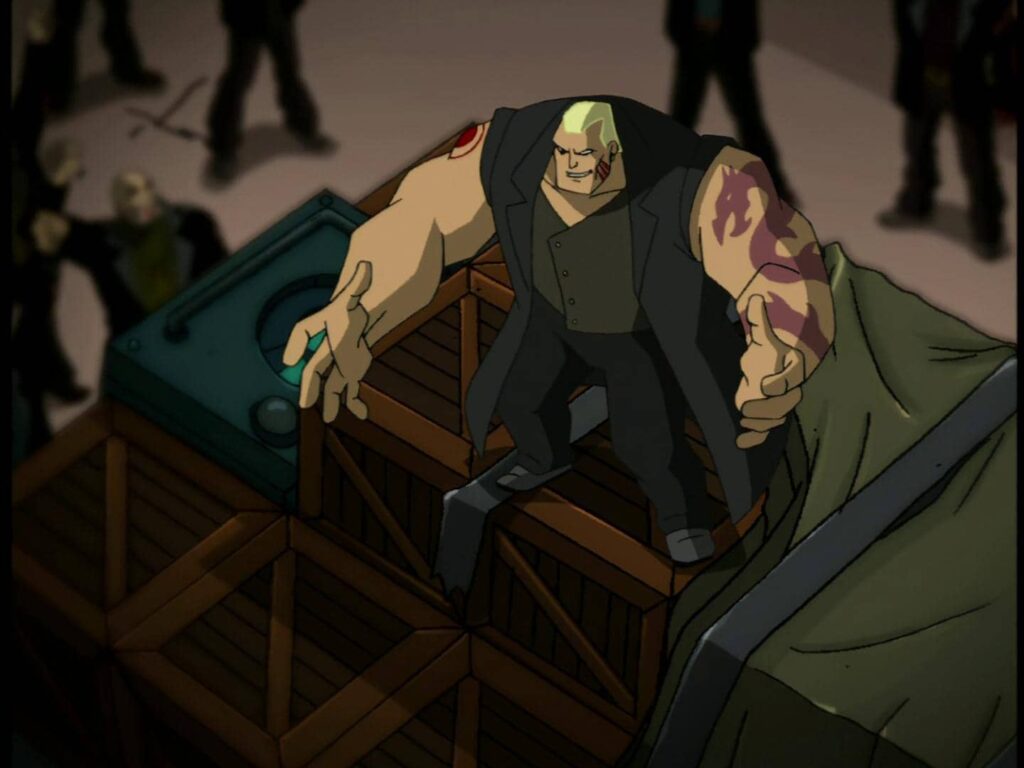
The Rise of the Purple Dragons
Created specifically for the acclaimed 2003 animated series, Hun leads the Purple Dragons, a street gang that gave the Turtles a grounded, ground-level threat to balance the cosmic villains. Where Krang plots from Dimension X, Hun rules the actual streets of New York, and that street-level menace is exactly why he resonated with fans of the darker 2003 continuity.
Street Fights and Rivalry: Hun, Casey Jones, and the Turtles
Hun’s hulking size, raw strength, and brutal combat skills make him a personal nemesis for vigilante Casey Jones as much as for the Turtles. Their gritty street brawls are some of the most physical fights in the franchise. Hun is not scheming to conquer worlds; he just wants to break you, and that simplicity makes him genuinely scary.
The Underdogs: Lesser-Known Villains You Can’t Miss
7. Karai: The Honor-Bound Rival
No modern TMNT villains list is complete without Karai, who first appeared in Mirage’s TMNT Vol. 1 #53 (1992). As the heir to the Foot Clan, Karai is defined by honor and duty rather than pure malice, which makes her the most morally complex figure in the gallery. Across the 2003 and 2012 series she drifts between enemy, reluctant ally, and tragic figure, and some fans argue that at her peak she is more dangerous than Shredder himself.
8. Tokka and Rahzar: The Monstrous Mutant Tag Team
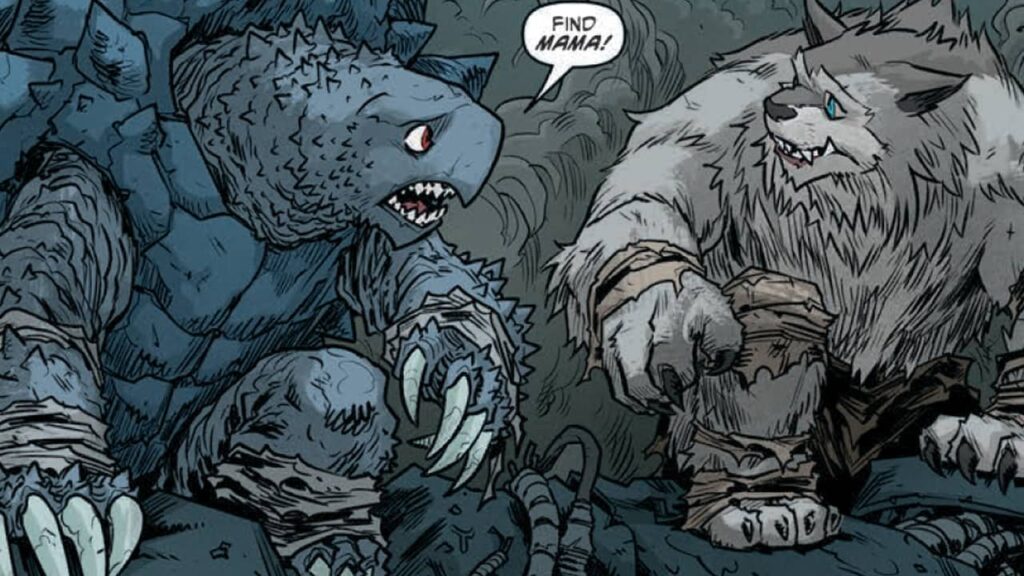
Introduced in the 1991 film Secret of the Ooze, Tokka and Rahzar were Shredder’s answer to Bebop and Rocksteady: a mutant snapping turtle and a ferocious wolf, dialed up for more strength but even less brains. The trade-off is the point. They hit harder than almost any henchmen in the franchise, but their childlike intelligence means the Turtles can outthink them. Pure muscle, minimal strategy, maximum property damage.
9. Leatherhead: The Bayou’s Most Fearsome Beast
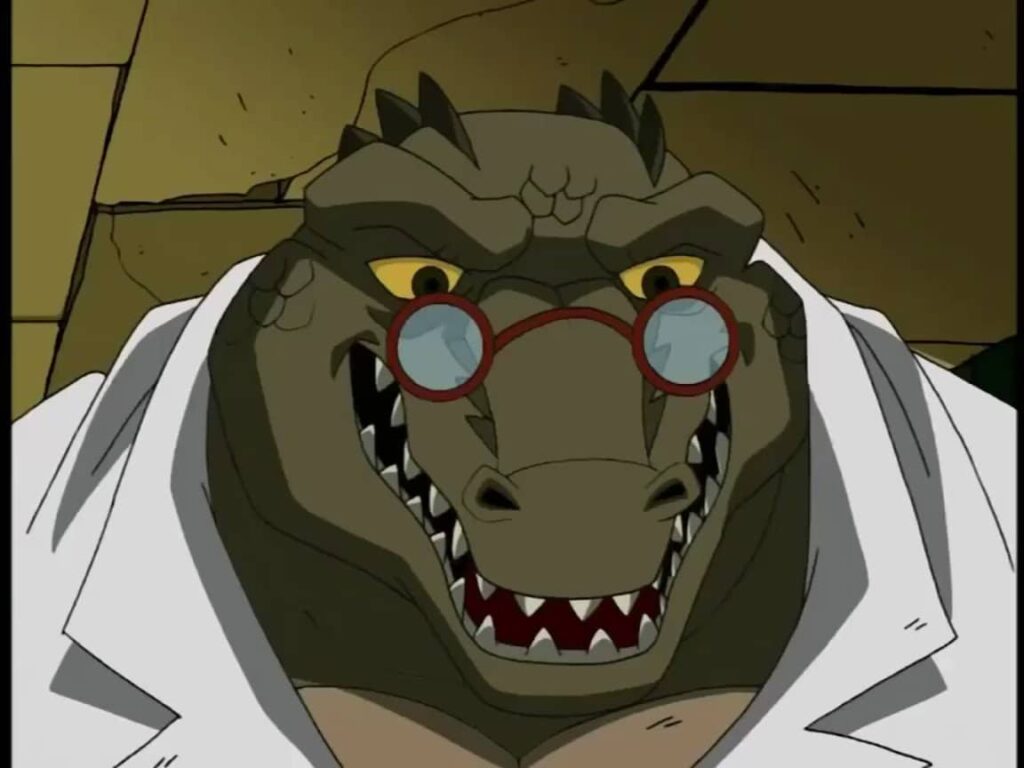
Leatherhead, a giant mutated alligator, is one of the great “is he a villain or not?” characters in the franchise. His devastating bite force and armored hide make him a physical match for the Turtles, but his story is more tragedy than villainy. Depending on the continuity, especially the 2012 series, Leatherhead is a wounded, unstable soul who becomes a fierce ally. Include him here as the reminder that TMNT antagonists are rarely pure evil.
10. Slash: The Ninja Turtle Gone Rogue
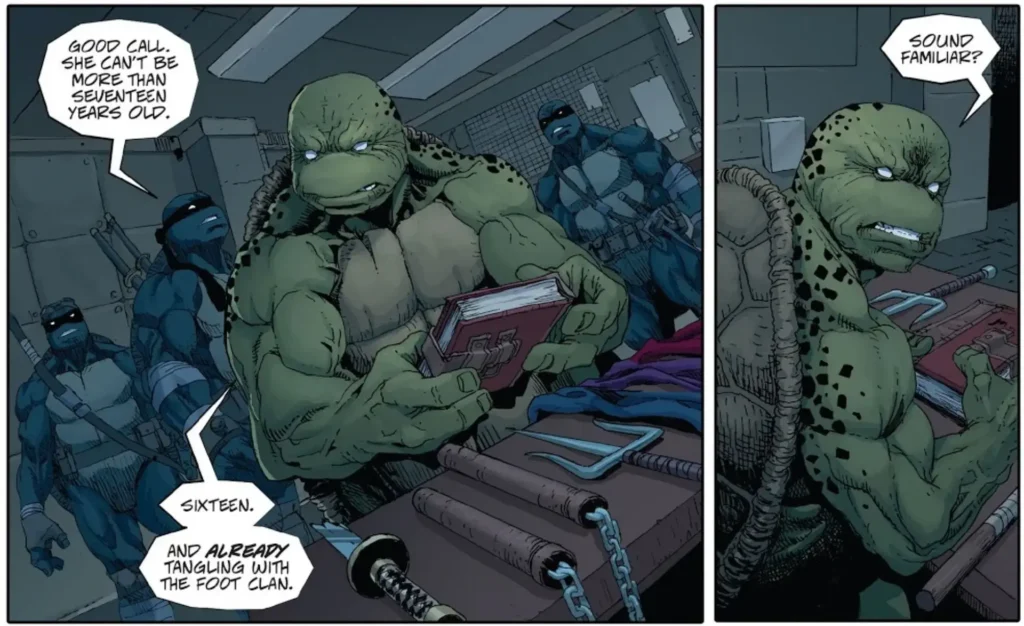
Slash is the dark mirror of the Turtles themselves: a mutated turtle with the same origins but none of the discipline. First appearing in Archie’s TMNT Adventures (1990), he embodies what our heroes could have become without Splinter’s guidance. That thematic weight is why he endures. A brute is scary, but a brute who looks exactly like the heroes and shares their story is genuinely disturbing. In later continuities Slash, like Leatherhead, softens into an anti-hero, but his origin as the Turtles’ shadow self is his lasting legacy.
The Expert Take: Why TMNT Has the Most “Redeemable” Rogues Gallery in Comics
Here is the angle most “ninja turtles bad guys” lists miss entirely. Compared to the rogues galleries of Marvel and DC, the TMNT roster is unusually full of villains who are not really evil, they are wounded. Look back over this list: Leatherhead is a traumatized victim of experimentation, Slash is a Turtle who never had a Splinter, Karai is bound by honor to a cause she outgrows, and even Bebop and Rocksteady are two dumb guys in over their heads. Only Shredder and the Rat King register as genuinely, irredeemably malevolent.
That is not an accident. Because the Turtles are themselves mutants, monsters that society would reject on sight, the franchise has always had empathy baked into its DNA. Its best villains are dark reflections of the heroes: what happens to a mutant with no family (Slash), no guidance (Leatherhead), or the wrong master (Karai). This is the same “villain as shadow-self” logic that powers the greatest antagonists across comics, and it is why so many TMNT enemies eventually switch sides. Contrast that with the pure, world-ending malice of a character like the symbiote god Knull in Marvel, and the difference is stark. TMNT does not really do cosmic evil; it does broken people. That thematic humanity, more than any single fight, is the secret to why these villains have outlasted four decades of reboots. For a look at villains built on the opposite principle, see our ranking of the most powerful comic book characters and the truly monstrous Marvel symbiotes ranked from Venom to Knull.
Collector’s Corner: Key First-Appearance Issues
For collectors, the TMNT rogues gallery is a fascinating case because the most valuable villain appearances are in small-print-run black-and-white indie comics, not glossy Big Two books. Here is the expert context on the key issues.
- Shredder and the Foot Clan first appear in Teenage Mutant Ninja Turtles #1 (Mirage Studios, May 1984). The true first-print run was famously tiny (around 3,000 copies), which is why a high-grade first print is one of the most coveted independent comics of the modern age.
- Baxter Stockman and his Mousers debut in Teenage Mutant Ninja Turtles #2 (Mirage, 1984), another low-print-run early issue that collectors chase alongside #1.
- Karai first appears in TMNT Vol. 1 #53 (Mirage, 1992), a key issue for fans of the character’s later prominence in the 2003 and 2012 series.
- Krang and Bebop and Rocksteady, being cartoon-original creations, have no single “key” comic first appearance in the way the Mirage characters do, which is a useful thing to know before you overpay for a “first Krang” listing.
A word of caution for new collectors: because early Mirage issues were reprinted many times, print run and printing (first vs. later) matter enormously to value. Always verify the specific printing before buying.
Frequently Asked Questions About TMNT Villains
Who is the most powerful TMNT villain?
By raw threat and consistency across every continuity, Shredder is the most powerful and most important TMNT villain. In terms of sheer destructive capability, however, the cosmic-tier threats, Krang with the Technodrome, alien invaders like the Triceratons, and mystical figures in the IDW comics, can arguably out-muscle him. Shredder wins the top spot because he combines danger with staying power and a deeply personal grudge.
Was Krang in the original TMNT comics?
No. Krang was created for the 1987 Fred Wolf animated series, inspired by the alien Utroms from the original Mirage comics. He proved so popular that later comics, including the modern IDW series, incorporated a version of him into the canon, but he did not originate on the page.
Who is Shredder’s most dangerous ally?
It depends on the continuity. In the 1987 cartoon, it is Krang, whose alien technology transforms Shredder from a street-level ninja into a world-threatening menace. In the 2003 series, Hun and the Purple Dragons give Shredder a grounded criminal army, while Karai serves as his most skilled and honorable enforcer.
Are any TMNT villains actually good guys?
Several. Leatherhead and Slash both began as antagonists but became allies or anti-heroes in various continuities, and Karai frequently shifts between enemy and reluctant ally. This redeemability is a defining feature of the TMNT rogues gallery, reflecting the franchise’s theme that mutants and outsiders are shaped by circumstance rather than born evil.
How many TMNT villains are there?
Across more than four decades of Mirage, Archie, and IDW comics plus the 1987, 2003, and 2012 animated series and multiple films, the Turtles have faced hundreds of named antagonists. This list ranks the ten most iconic and important, with honorable mentions to Triceratons, Agent Bishop, the immortal sorceress Kitsune (IDW), and Old Hob.
Read More: Top Comic Publisher Mashups: When Worlds Collide
If you enjoyed ranking these rogues, dive into our other power rankings: the definitive list of the most powerful comic book characters ranked, the Omega-level mutants of the X-Men, and elemental heavyweights in our guides to the best electricity superheroes and the top fire superheroes.