Disney’s iconic franchises are coming to mobile in a major new deal that could reshape how fans consume comic book content
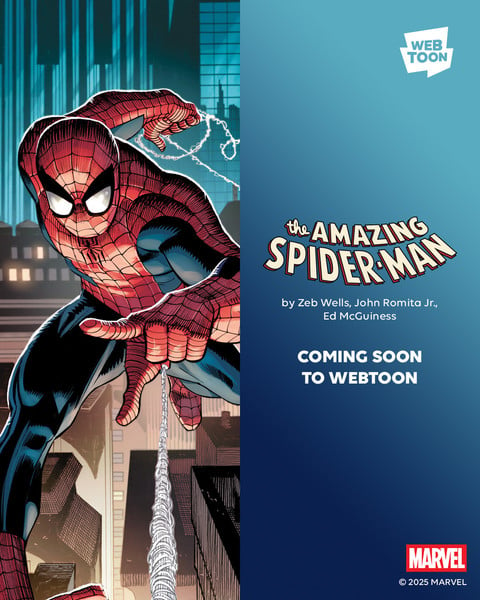
The Amazing Spider-Man will be one of the flagship titles coming to WEBTOON’s vertical-scroll format
Source: Anime News Network
In a move that signals a major shift in the digital comics landscape, Disney has announced a groundbreaking partnership with WEBTOON Entertainment that will bring over 100 comics from Marvel, Star Wars, 20th Century Studios, and Disney properties to the popular mobile-first platform. The collaboration, unveiled on August 12, 2025, represents one of the most significant expansions of major comic book IP into the vertical-scrolling format that has revolutionized how younger audiences consume sequential art [1].
The partnership immediately sent shockwaves through both the entertainment and financial sectors, with WEBTOON Entertainment’s stock price soaring 97% following the announcement [2]. This dramatic market response underscores the perceived value of bringing Disney’s legendary storytelling properties to a platform that has become synonymous with mobile-native comic consumption, particularly among Gen Z and millennial audiences.
A New Era for Digital Comics Distribution
The Disney-WEBTOON alliance represents more than just another content licensing deal—it’s a strategic recognition of how comic book consumption has fundamentally evolved in the digital age. WEBTOON’s vertical-scrolling format, optimized for smartphone reading, has attracted millions of users worldwide who prefer the seamless, mobile-friendly experience over traditional page-by-page comic layouts [3].
Under the terms of the agreement, WEBTOON will feature approximately 100 comics from Disney’s vast entertainment portfolio in a dedicated section of the English-language app. The initial launch lineup includes some of the most recognizable titles in popular culture: The Amazing Spider-Man (2022-present), Avengers (2012), Star Wars (2015), Alien (2021), and Disney As Old As Time: A Twisted Tale [4].
The collaboration will follow WEBTOON’s established freemium model, offering readers access to a selection of free chapters while requiring WEBTOON Coins—the platform’s virtual currency—to unlock additional installments. This approach has proven highly successful for WEBTOON’s existing library of original content, which spans genres from romance and fantasy to horror and slice-of-life stories.
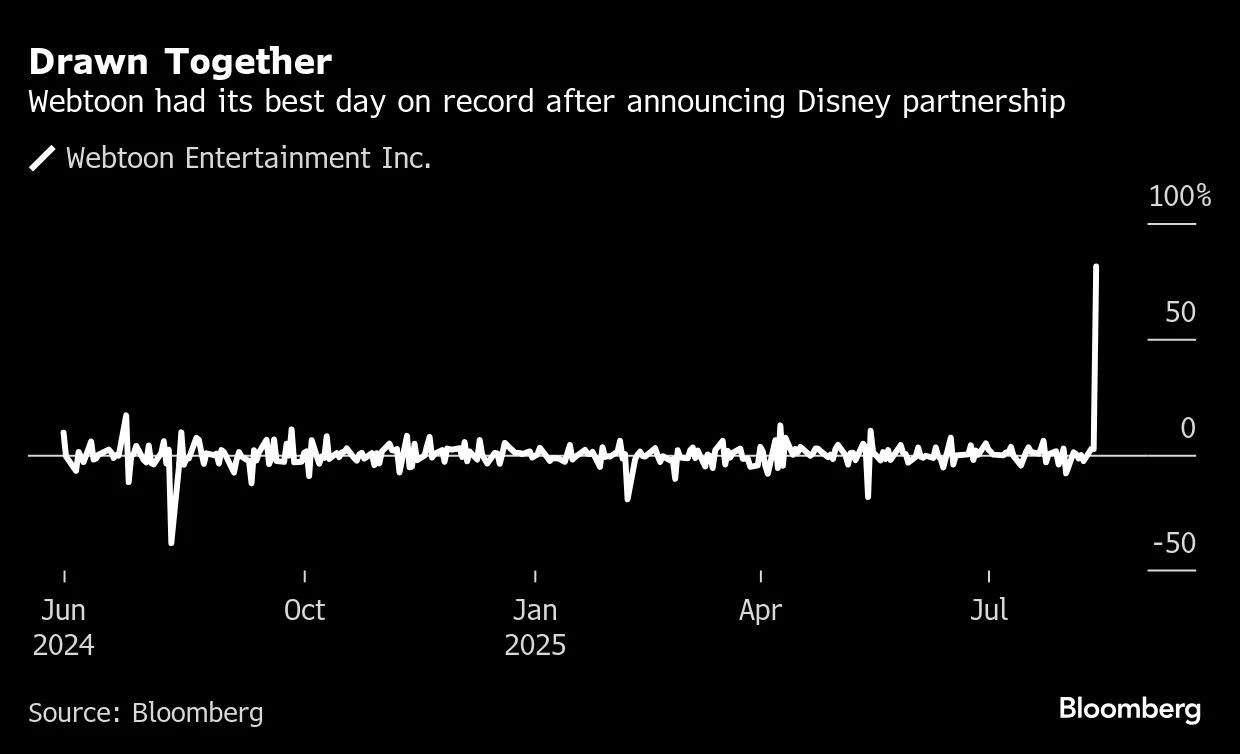
WEBTOON Entertainment’s stock soared following the Disney partnership announcement
Source: Bloomberg
Market Impact and Financial Implications
The financial markets’ enthusiastic response to the Disney-WEBTOON partnership announcement reflects broader industry recognition of the deal’s potential significance. WEBTOON Entertainment’s stock price surge of 97% in after-hours trading following the announcement represents one of the most dramatic single-day gains for a digital entertainment company in 2025 [5].
This market enthusiasm is grounded in solid financial fundamentals. WEBTOON’s Q2 2025 earnings report, released alongside the Disney partnership announcement, showed the company generating $348.3 million in revenue, representing an 8.5% increase year-over-year or 5.5% on a currency-adjusted basis [6]. Perhaps more importantly for investors, the company’s net losses narrowed dramatically to just $3.9 million from $76.6 million in the prior year, demonstrating improved operational efficiency and a clearer path to profitability.
The timing of the Disney deal couldn’t be more strategic for WEBTOON Entertainment, which has been working to demonstrate continued momentum since spinning off from its South Korean parent company Naver in an IPO last summer. The digital comics industry has faced headwinds as it contracted from pandemic-era highs, making high-profile partnerships like this one crucial for maintaining investor confidence and market position.
For Disney, the financial implications extend beyond immediate revenue generation. The deal represents an opportunity to monetize its vast comic book library through a new distribution channel while potentially reaching audiences that traditional comic book marketing has struggled to engage. Marvel Comics, despite being the longtime market-share leader in periodical comic sales, has historically catered to older superhero fans who purchase physical copies in comic shops or download complete issues through platforms like Marvel Unlimited or Amazon’s comiXology [7].
Bridging Generational and Cultural Divides
One of the most intriguing aspects of the Disney-WEBTOON partnership is its potential to bridge significant demographic and cultural gaps in comic book consumption. WEBTOON’s user base skews younger and more female than traditional comic book audiences, with content preferences that lean heavily into fantasy, romance, horror, comedy, and slice-of-life genres rather than the superhero-dominated landscape of conventional American comics [8].

WEBTOON’s mobile-first interface is designed for vertical scrolling comics
Source: Medium
This demographic shift represents both a challenge and an opportunity for Disney’s comic book properties. Superheroes have been notably absent from WEBTOON’s most popular content, with series like “Lore Olympus” and “Tower of God” dominating the platform’s bestseller lists through their focus on character-driven narratives, romantic relationships, and fantasy world-building rather than traditional action-adventure storytelling.
The introduction of Marvel’s superhero content to this audience could potentially expand the appeal of both platforms. WEBTOON gains access to some of the world’s most recognizable intellectual property, while Disney’s characters have the opportunity to reach a generation of readers who consume comics primarily on mobile devices and expect different narrative pacing and visual presentation than traditional comic book formats provide.
Yongsoo Kim, WEBTOON’s Chief Strategy Officer and Head of Global, emphasized this cross-pollination potential in the partnership announcement: “The Disney, Marvel, 20th Century, and Star Wars brands are among the most legendary, creative, and successful in the industry. Together, we’re bringing this legendary storytelling to a new generation of mobile-native comic fans, while giving existing fans a new way to experience series and characters they love” [9].
The Technical Challenge of Format Conversion
The Disney-WEBTOON partnership involves more than simply uploading existing comic book files to a new platform. The collaboration requires extensive reformatting of traditional page-based comics into WEBTOON’s signature vertical-scrolling format, a process that fundamentally alters how readers experience sequential art storytelling.
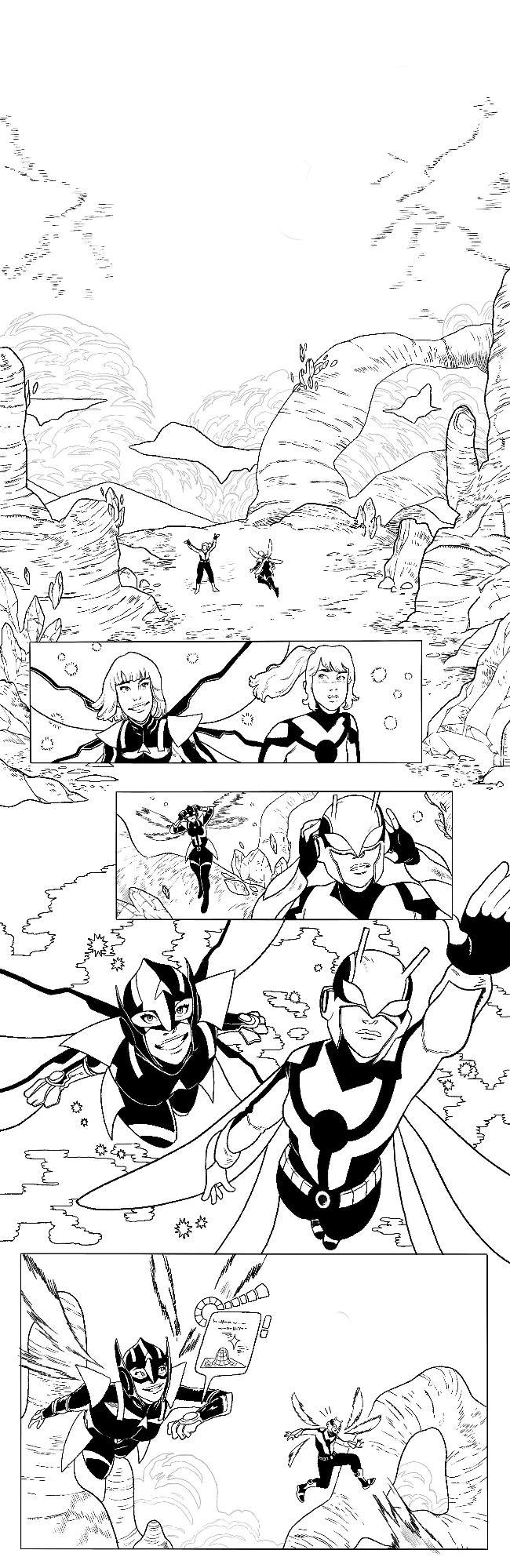
Traditional comics are being reformatted for WEBTOON’s signature vertical-scrolling format
Source: Josh Cornillon
Traditional comic books are designed around the concept of page turns and panel layouts that work within the constraints of physical or digital pages. WEBTOON’s format, by contrast, presents content in a continuous vertical stream optimized for smartphone screens and touch-based navigation. This conversion process requires careful consideration of pacing, panel sizing, and narrative flow to ensure that the storytelling remains effective in its new presentation format.
The technical challenges extend beyond simple reformatting. WEBTOON’s platform is built around a different economic model than traditional digital comics, with episodes released on a schedule that encourages regular engagement rather than complete issue consumption. This means that existing comic book stories may need to be restructured into episodic formats that work within WEBTOON’s release schedule and monetization strategy.
However, the partnership goes beyond reformatting existing content. According to the announcement, original webcomics based on Disney properties are already in development specifically for the WEBTOON platform [10]. This suggests a more comprehensive content strategy that recognizes the unique storytelling opportunities presented by the vertical-scrolling format and mobile-first consumption patterns.
The development of original content represents a significant investment in the partnership’s long-term potential. Rather than simply repurposing existing material, Disney and WEBTOON are creating new stories designed from the ground up for the platform’s specific technical requirements and audience preferences. This approach acknowledges that successful cross-platform content adaptation requires more than technical conversion—it demands understanding and embracing the unique characteristics of each medium.
Industry-Wide Implications for Digital Comics
The Disney-WEBTOON partnership arrives at a crucial moment for the digital comics industry, which has been grappling with questions about sustainable growth models and audience development in the post-pandemic landscape. The collaboration represents a potential template for how major entertainment companies might approach digital comics distribution in an increasingly mobile-centric media environment.
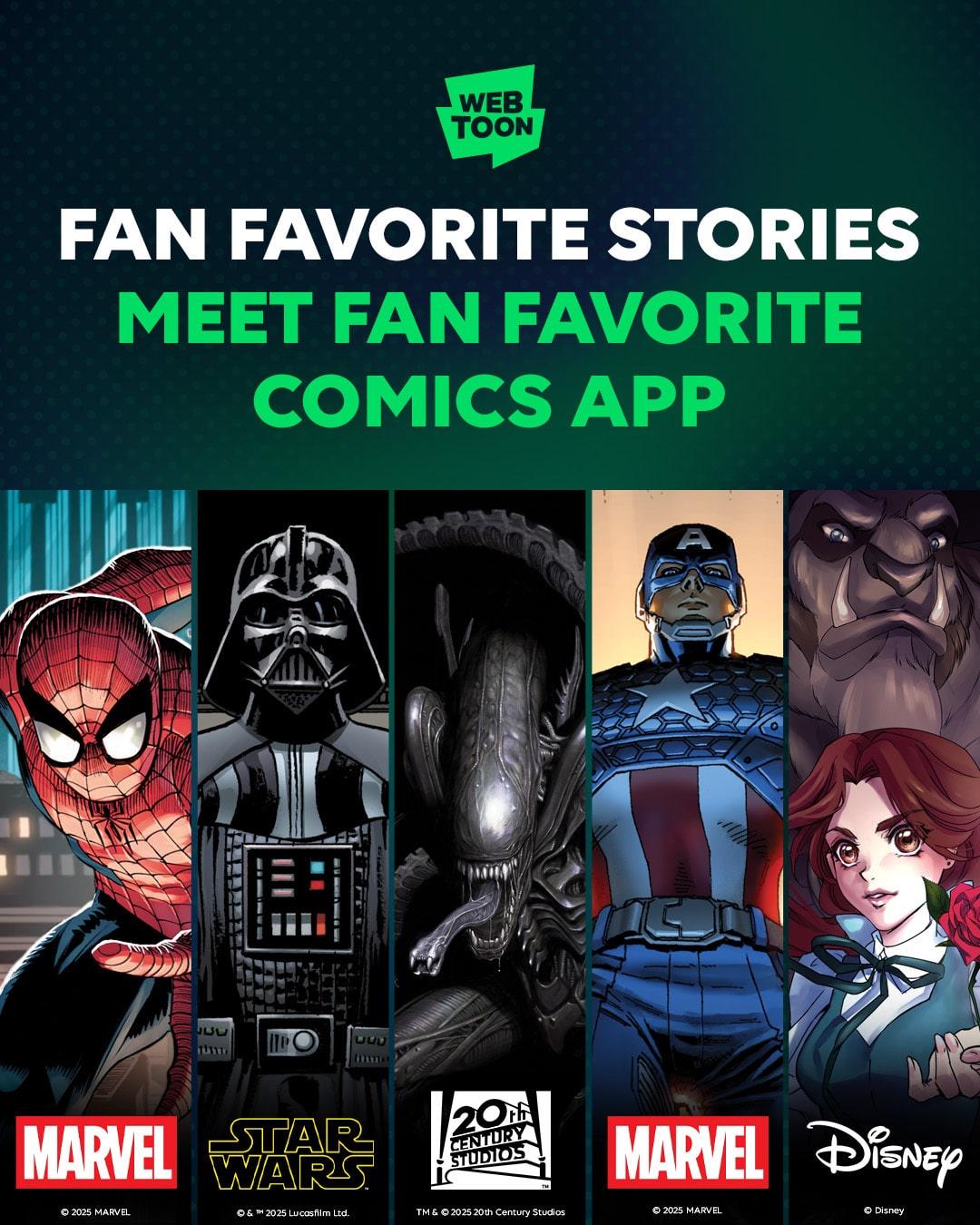
Disney’s major franchises including Marvel, Star Wars, and 20th Century Studios properties are coming to WEBTOON
Source: K-Comics Beat
The deal’s structure—combining reformatted existing content with original material developed specifically for the platform—could influence how other major publishers approach digital distribution partnerships. Rather than treating digital platforms as simple repositories for existing content, the Disney-WEBTOON model suggests a more integrated approach that recognizes the unique characteristics and opportunities of different digital formats.
For the broader comic book industry, the partnership raises important questions about audience development and market expansion. Traditional comic book publishers have struggled to significantly expand their readership beyond established fan bases, particularly among younger demographics and international audiences. WEBTOON’s success in attracting diverse, global audiences suggests that format and distribution method may be more significant barriers to comic book adoption than previously recognized.
The partnership also highlights the growing importance of mobile-first content strategies in entertainment. As smartphone usage continues to dominate media consumption patterns, particularly among younger audiences, content creators and distributors must adapt their approaches to meet audiences where they are rather than expecting audiences to adapt to traditional formats and distribution methods.
Global Expansion and Cultural Exchange
WEBTOON’s international reach adds another dimension to the Disney partnership’s potential impact. The platform has achieved significant success in markets across Asia, North America, and Europe, providing Disney with access to global audiences that may have limited exposure to American comic book properties through traditional distribution channels.
This global distribution capability is particularly significant for Disney’s non-superhero properties. While Marvel characters have achieved worldwide recognition through film and television adaptations, properties like “Disney As Old As Time: A Twisted Tale” and various 20th Century Studios franchises may find new audiences through WEBTOON’s international user base.
The partnership also represents a form of cultural exchange that could influence content development on both sides. WEBTOON’s success has been built largely on content that reflects different storytelling traditions and genre preferences than those dominant in American comics. The introduction of Disney properties to this ecosystem could lead to interesting hybrid approaches that combine American superhero storytelling with the character-driven, relationship-focused narratives that have proven successful on the platform.
Conversely, Disney’s exposure to WEBTOON’s content creation community and audience feedback could influence how the company approaches digital content development for its existing properties. The platform’s emphasis on regular reader engagement and community interaction provides valuable data about audience preferences and consumption patterns that could inform broader content strategies.
What This Means for Comic Book Fans
For comic book enthusiasts, the Disney-WEBTOON partnership represents both exciting opportunities and potential concerns about the future direction of digital comics. On the positive side, the collaboration promises to make beloved characters and stories more accessible to mobile-first readers while potentially introducing new storytelling approaches that take advantage of the vertical-scrolling format’s unique capabilities.
Existing Marvel and Star Wars fans will benefit from having another way to access their favorite characters, particularly through a platform that emphasizes regular content updates and community engagement. WEBTOON’s comment system and social features could provide new ways for fans to discuss and share their enthusiasm for Disney properties, potentially creating more vibrant online communities around these franchises.
The partnership also promises to introduce WEBTOON’s existing user base to characters and stories they may not have encountered through traditional comic book channels. For readers who discovered comics through WEBTOON’s original content, the arrival of Spider-Man, the Avengers, and Star Wars characters could serve as a gateway to broader exploration of superhero and science fiction storytelling.
However, some traditional comic book fans may have concerns about how the format conversion process will affect the storytelling and visual presentation of their favorite series. The transition from page-based layouts to vertical scrolling necessarily involves changes to pacing, panel composition, and narrative structure that could alter the reading experience in significant ways.
The freemium monetization model also represents a departure from traditional comic book purchasing patterns. While WEBTOON’s coin system allows for flexible consumption—readers can choose to wait for free episodes or pay to access content immediately—it creates a different economic relationship between readers and content than the traditional issue-based purchasing model.
Future Outlook and Industry Evolution
The Disney-WEBTOON partnership is likely just the beginning of a broader transformation in how major entertainment companies approach digital comics distribution. The deal’s success or failure will be closely watched by other publishers and platforms as they evaluate their own digital strategies and consider similar collaborations.
If the partnership proves successful in attracting new audiences and generating sustainable revenue, it could encourage other major publishers to explore similar format adaptations and platform partnerships. DC Comics, Image Comics, and other major publishers may find themselves under pressure to develop their own mobile-first distribution strategies to remain competitive in an evolving market.
The collaboration also highlights the growing importance of international markets in comic book industry planning. WEBTOON’s global reach and success in diverse markets demonstrates the potential for comic book content to find audiences far beyond traditional geographic boundaries, provided it’s presented in formats and through channels that resonate with local consumption preferences.
Technology will continue to play a crucial role in shaping the partnership’s evolution. As mobile devices become more powerful and internet connectivity improves globally, the possibilities for enhanced digital comic experiences will expand. Features like interactive elements, multimedia integration, and augmented reality components could eventually become standard parts of the digital comics experience.
The partnership’s emphasis on original content development specifically for the WEBTOON platform suggests that successful digital comics strategies will require more than simple format conversion. Publishers and platforms that invest in understanding and creating content optimized for specific digital formats and audience preferences are likely to be more successful than those that simply repurpose existing material.
Conclusion: A New Chapter for Digital Comics
The Disney-WEBTOON partnership represents a significant milestone in the evolution of digital comics, demonstrating how major entertainment companies are adapting to changing consumption patterns and technological capabilities. By bringing some of the world’s most recognizable characters and stories to a platform optimized for mobile consumption, the collaboration has the potential to introduce comic book storytelling to new audiences while providing existing fans with innovative ways to engage with beloved properties.
The partnership’s success will ultimately depend on how well Disney and WEBTOON navigate the challenges of format conversion, audience development, and content creation while maintaining the storytelling quality and character integrity that have made these properties enduringly popular. Early market reactions suggest significant optimism about the collaboration’s potential, but the true test will come as content begins rolling out and audiences have the opportunity to experience these legendary stories in their new digital format.
As the comic book industry continues to evolve in response to digital transformation and changing reader preferences, partnerships like this one may become increasingly common. The Disney-WEBTOON collaboration could serve as a template for how traditional entertainment companies and digital platforms can work together to expand the reach and impact of sequential art storytelling in the modern media landscape.
For fans, creators, and industry observers alike, this partnership represents an exciting experiment in the future of comics—one that could reshape how we think about the relationship between technology, storytelling, and audience engagement in the digital age.
References
[1] Anime News Network. “WEBTOON Partners with Disney to Bring Marvel, Star Wars, More to Vertical-Scroll Format.” August 17, 2025. https://www.animenewsnetwork.com/news/2025-08-17/webtoon-partners-with-disney-to-bring-marvel-star-wars-more-to-vertical-scroll-format/.227698
[2] Bloomberg. “Webtoon Soars 97% as Disney Pact Brings Marvel, Star Wars to Platform.” August 13, 2025. https://www.bloomberg.com/news/articles/2025-08-13/webtoon-wbtn-soars-as-disney-dis-pact-brings-marvel-star-wars-to-platform
[3] Forbes. “Disney Brings Marvel, Star Wars, Alien And Other Fan Favorites To Webtoon.” August 12, 2025. https://www.forbes.com/sites/robsalkowitz/2025/08/12/disney-brings-marvel-star-wars-alien-and-other-fan-favorites-to-webtoon/
[4] Anime News Network. “WEBTOON Partners with Disney to Bring Marvel, Star Wars, More to Vertical-Scroll Format.” August 17, 2025.
[5] Bloomberg. “Webtoon Soars 97% as Disney Pact Brings Marvel, Star Wars to Platform.” August 13, 2025.
[6] Forbes. “Disney Brings Marvel, Star Wars, Alien And Other Fan Favorites To Webtoon.” August 12, 2025.
[7] Forbes. “Disney Brings Marvel, Star Wars, Alien And Other Fan Favorites To Webtoon.” August 12, 2025.
[8] Forbes. “Disney Brings Marvel, Star Wars, Alien And Other Fan Favorites To Webtoon.” August 12, 2025.
[9] Anime News Network. “WEBTOON Partners with Disney to Bring Marvel, Star Wars, More to Vertical-Scroll Format.” August 17, 2025.
[10] Anime News Network. “WEBTOON Partners with Disney to Bring Marvel, Star Wars, More to Vertical-Scroll Format.” August 17, 2025.
This article was published on August 19, 2025. For the latest updates on the Disney-WEBTOON partnership and other comic book industry news, stay tuned to our ongoing coverage.