The best Spider-Man villains are not just power sets in loud costumes; they are dark mirrors of Peter Parker’s own life, and no one reflects him more cruelly than the Green Goblin. For more than sixty years, Spider-Man’s rogues gallery has been quietly regarded as the finest in superhero comics, precisely because its members attack Peter where he is weakest: his family, his friends, his science, and his conscience. A great Spidey villain does not simply try to kill him. He kills Gwen Stacy. He steals his body. He hunts him for sport and buries him alive. Below we rank the fifteen greatest Spider-Man villains of all time, weighing comic legacy, story impact, cultural reach, and how personally each one wounds the man behind the mask. Expect the classics near the top, a few underrated masterpieces in the middle, and one insight most lists miss entirely.
| Rank | Villain | Alias | First Appearance | Signature Story |
|---|---|---|---|---|
| 1 | Green Goblin | Norman Osborn | ASM #14 (1964) | The Night Gwen Stacy Died |
| 2 | Doctor Octopus | Otto Octavius | ASM #3 (1963) | Superior Spider-Man |
| 3 | Venom | Eddie Brock | ASM #300 (1988) | Lethal Protector |
| 4 | Kraven the Hunter | Sergei Kravinoff | ASM #15 (1964) | Kraven’s Last Hunt |
| 5 | Carnage | Cletus Kasady | ASM #361 (1992) | Maximum Carnage |
| 6 | Sandman | Flint Marko | ASM #4 (1963) | Marvel Knights: Spider-Man |
| 7 | The Lizard | Dr. Curt Connors | ASM #6 (1963) | Shed |
| 8 | Mysterio | Quentin Beck | ASM #13 (1964) | Guardian Devil |
| 9 | Vulture | Adrian Toomes | ASM #2 (1963) | The Gauntlet |
| 10 | Electro | Max Dillon | ASM #9 (1963) | Light the Night |
| 11 | Kingpin | Wilson Fisk | ASM #50 (1967) | Back in Black |
| 12 | Morlun | Morlun | ASM Vol. 2 #30 (2001) | Spider-Verse |
| 13 | Rhino | Aleksei Sytsevich | ASM #41 (1966) | Flowers for Rhino |
| 14 | Scorpion | Mac Gargan | ASM #20 (1965) | Sinister Spider-Man |
| 15 | Chameleon | Dmitri Smerdyakov | ASM #1 (1963) | “Red-Headed Stranger” (ASM #602–604, 2009) |
1. Green Goblin
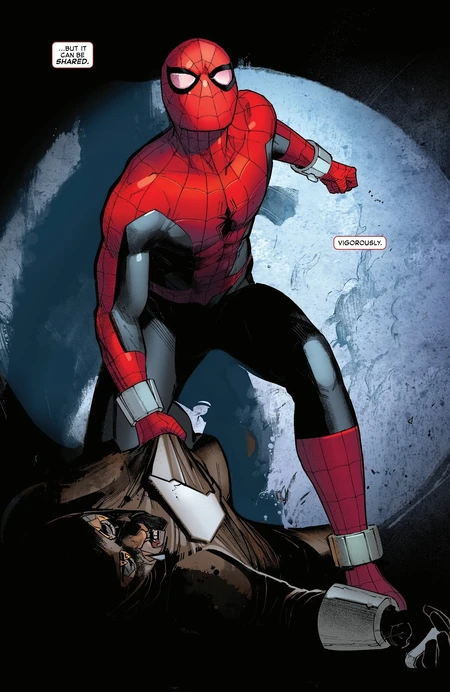
Norman Osborn is the definitive Spider-Man villain, and the gap between him and everyone else is wide. Introduced in The Amazing Spider-Man #14 (1964) by Stan Lee and Steve Ditko, the Goblin was the first foe to deduce Peter Parker’s secret identity, transforming an anonymous costumed menace into an intimate threat aimed at Peter’s civilian life. His masterstroke remains “The Night Gwen Stacy Died” (ASM #121-122, 1973), the story that ended the Silver Age of comics by murdering a hero’s love interest with permanence, then killed the Goblin himself on his own glider.
What makes Norman endure is that death did not stick, and neither did his menace fade. Resurrected in the 1990s, he was retconned into the architect of the Clone Saga and later seized control of the entire Marvel Universe during “Dark Reign.” He is Spider-Man’s Moriarty and his Joker at once: a wealthy, brilliant industrialist whose Goblin persona is pure sadistic id. He does not want to beat Peter. He wants to unmake him, one loved one at a time.
2. Doctor Octopus
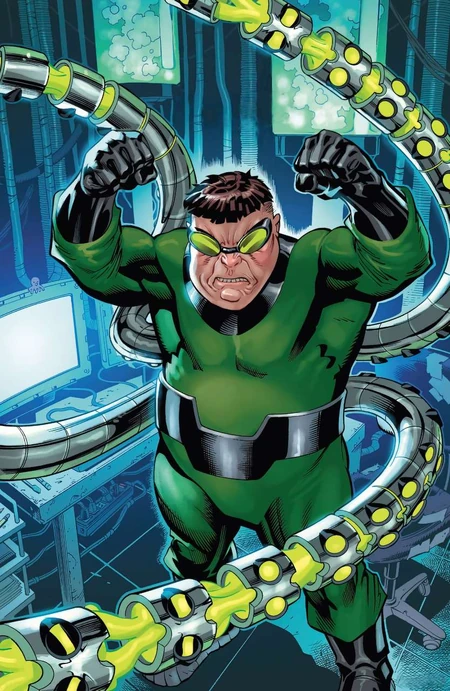
Otto Octavius is the only villain on this list who genuinely won. In Dan Slott’s “Dying Wish” and the subsequent Superior Spider-Man (2013), Doc Ock swapped minds with a dying Peter Parker, took over his body, his relationships, and his heroic identity, and then set out to prove he could be a better Spider-Man. He largely succeeded, which is the most chilling thing any Spidey villain has ever achieved. First appearing in ASM #3 (1963), Otto was reportedly Stan Lee’s own favorite.
The genius of Ock is that he is Peter’s intellectual equal without Peter’s humility. Four titanium tentacles make him a physical terror, but his real weapon is arrogance backed by a mind that can actually cash the check. As founder and repeated leader of the Sinister Six, he is also the rogues gallery’s chief strategist. Where the Goblin wounds Peter emotionally, Octavius attacks the thing Peter is proudest of: his brilliance.
3. Venom
No villain has grown from concept to icon quite like Venom. The alien symbiote debuted as Spider-Man’s black costume in Secret Wars (1984), and once Peter rejected it, it bonded with disgraced journalist Eddie Brock, who blamed Spider-Man for ruining his career. Their fusion, unveiled in David Michelinie and Todd McFarlane’s ASM #300 (1988), created a monstrous funhouse-mirror Spider-Man: same powers, no spider-sense warning, and a personal grudge.
Venom’s edge is that he knows everything the symbiote learned during its time on Peter, including his identity, while being immune to spider-sense. That combination makes him uniquely dangerous. Over time Brock drifted into antihero territory as a “Lethal Protector,” and the symbiote’s mythology exploded into cosmic significance with the King in Black. Few villains have carried three films and their own franchise; fewer still remain genuinely scary on the comic page.
4. Kraven the Hunter

Sergei Kravinoff spent decades as a colorful also-ran, a big-game hunter in a lion-mane vest, before J.M. DeMatteis and Mike Zeck reinvented him forever in “Kraven’s Last Hunt” (1987). In that story Kraven shoots Spider-Man, buries him alive, dons the costume to prove he can be a better Spider-Man than Peter, and then, having conquered his white whale, calmly takes his own life. It is widely considered the greatest Spider-Man story ever told.
Kraven works because his motivation is purity itself: he does not want money or power, only to prove his superiority over the ultimate prey. First seen in ASM #15 (1964) as a founding member of the Sinister Six, he was later resurrected in “Grim Hunt,” and his family, the Kravinoffs, has become a dynasty of hunters. His obsession gives Spider-Man’s animal symbolism a mythic, almost tragic weight no other foe supplies.
5. Carnage
If Venom is a dark reflection of Spider-Man, Carnage is what happens when the symbiote finds a host with no conscience at all. Serial killer Cletus Kasady bonded with the spawn of the Venom symbiote in ASM #361 (1992), producing a red-and-black nightmare that is stronger, faster, and utterly amoral. The 14-part “Maximum Carnage” crossover forced Spider-Man to team with Venom just to survive him.
Carnage matters because he stripped the anti-authority cool out of the symbiote and replaced it with pure horror. Kasady is a genuine monster whose philosophy is chaos for its own sake, which makes him nearly impossible to reason with or reform. Modern stories like “Absolute Carnage” elevated him into a cosmic threat capable of endangering the whole Marvel Universe, cementing a villain who began as a 90s edge experiment into a lasting force.
6. Sandman
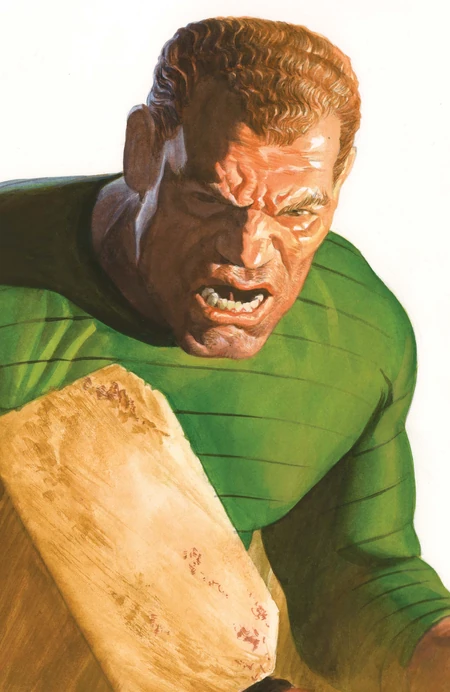
Flint Marko began in ASM #4 (1963) as a straightforward heavy, a small-time crook who gained the ability to become living sand. What lifts him into the upper ranks is the emotional depth later writers mined. Marko is a working-class ex-con who genuinely wants to go straight, repeatedly drifting toward reform before circumstance or old habits drag him back. Sam Raimi’s Spider-Man 3 famously gave him a dying daughter as motivation.
Powerwise, Sandman is deceptively formidable: he can be a fist the size of a car or a cloud of dust that reforms from nothing, making him one of the hardest villains for Spider-Man to actually defeat. But his real value is thematic. He is the rogue who keeps trying to be better and keeps failing, giving Peter a chance to embody the mercy and second chances that define him. Mark Millar’s Marvel Knights: Spider-Man put his menace back on the table.
7. The Lizard
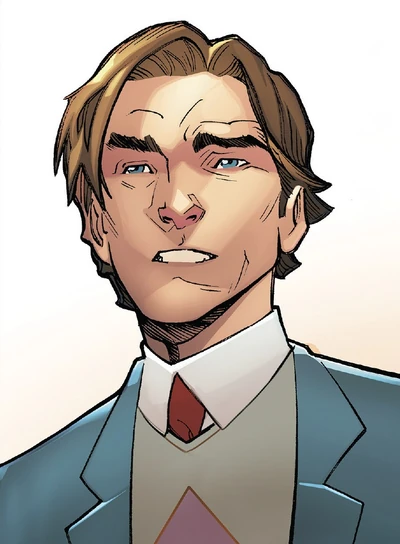
Dr. Curt Connors is one of Spider-Man’s most tragic enemies because, unlike Peter, he lost the gamble on science. A one-armed surgeon who tried to regrow his limb using reptilian DNA, Connors instead unleashed a savage, cold-blooded alter ego that wants to wipe out mammalian life. First appearing in ASM #6 (1963), he is Marvel’s Jekyll and Hyde, and the horror is that Connors is Peter’s friend and mentor in his lucid moments.
The Lizard’s finest hour is Zeb Wells and Chris Bachalo’s “Shed” (2010), which pushed the character to his darkest, having the reptile brain consume Connors entirely and commit an unforgivable act. That story reframed the Lizard from a rampaging monster into a genuine psychological tragedy about a man erased by his own creation. He is the cautionary tale Peter Parker could so easily have become.
8. Mysterio
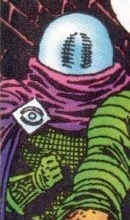
Quentin Beck is proof that you do not need superpowers to torment a superhuman. A failed actor and brilliant special-effects designer, Mysterio uses illusions, holograms, robotics, and hallucinogens to make Spider-Man doubt his own senses. He debuted in ASM #13 (1964) and has always been the thinking fan’s favorite, a villain whose gimmick is that nothing you see can be trusted.
Beck’s greatest showcase is Kevin Smith’s “Guardian Devil” (1998), where he masterminds an intricate psychological campaign not against Spider-Man but against Daredevil, proving his schemes could headline any hero’s book. His 2019 film incarnation, weaponizing drone illusions and disinformation, made him feel startlingly modern. Mysterio endures because he attacks the one thing a hero relies on most: the ability to believe his own eyes.
9. Vulture
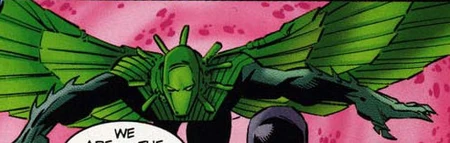
Adrian Toomes has the distinction of being Spider-Man’s second-ever supervillain, appearing in ASM #2 (1963), and he remains one of the most quietly vicious. An elderly electronics engineer cheated out of his company, Toomes built a flight harness that grants him superhuman strength and predatory speed, then turned to crime out of pure bitterness. He is the rogues gallery’s resident bird of prey, and he is meaner than his silly wings suggest.
The Vulture’s staying power comes from his ruthlessness and his refusal to quit despite his age; he has repeatedly restored his youth and dropped enemies from lethal heights without hesitation. The Spider-Man: Homecoming film reimagined him as a blue-collar salvage contractor pushed into crime by the system, widely praised as one of the MCU’s best-motivated villains and a career-best turn from Michael Keaton.
10. Electro
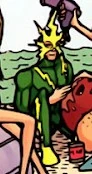
Max Dillon, a lineman transformed into a living capacitor after a freak accident in ASM #9 (1963), is one of Spider-Man’s most physically dangerous foes: he can hurl lightning, ride power lines, and overload the electrical grid of an entire city. On raw output, few in the gallery can match him. But his best writing leans into his sad, self-loathing interior.
Stories like “Light the Night” portray Dillon as a resentful nobody desperate to matter, a man with god-tier power and a small, wounded ego. That gap between what he can do and who he is makes him tragic rather than merely threatening. As a Sinister Six mainstay and the marquee villain of The Amazing Spider-Man 2, Electro proves that a great power set only becomes a great villain when there is a broken human behind it.
11. Kingpin
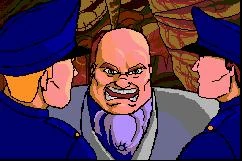
Wilson Fisk is not exclusively a Spider-Man villain; he is arguably better known as Daredevil’s nemesis. But he debuted in ASM #50 (1967), and his crossover into Spider-Man’s world produces some of the character’s most grounded, brutal stories. Fisk is a mountain of muscle disguised as fat, but his true power is control of New York’s entire criminal underworld through intelligence, patience, and terror.
His most devastating Spider-Man moment comes in “Back in Black,” when a sniper hired by Fisk shoots Aunt May, nearly killing her and setting in motion the events of “One More Day.” That single act made Kingpin feel personal in a way his crime-boss maneuvering usually does not. He grounds Spider-Man’s fantastical rogues gallery in real-world menace, a villain who never needs powers to be the most dangerous man in the room.
12. Morlun
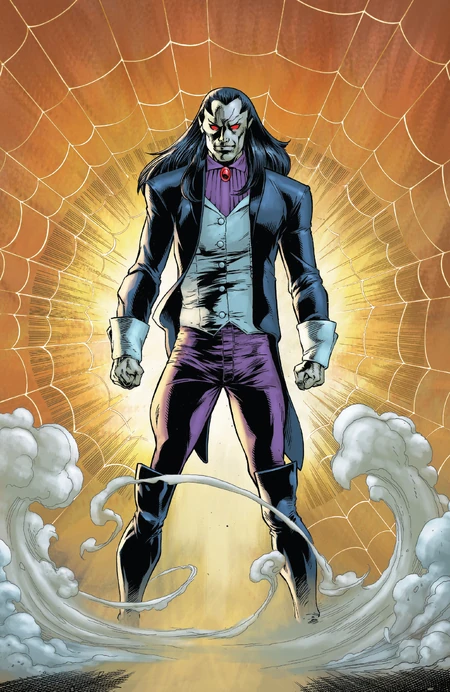
Morlun, introduced by J. Michael Straczynski in ASM Vol. 2 #30 (2001), reframed Spider-Man’s entire mythology. He is an Inheritor, a psychic vampire who feeds on the life force of totemic spider-heroes across the multiverse, and his arrival suggested Peter’s powers might be mystical in origin rather than purely scientific. Relentless, nearly unkillable, and terrifyingly calm, Morlun hunted Peter to the edge of death in his debut arc.
His true significance exploded in Dan Slott’s “Spider-Verse” (2014), where Morlun and his Inheritor family became an existential threat to every Spider-Man in every reality. That event turned a single eerie stalker into the engine of one of Marvel’s biggest crossovers and reshaped how the entire Spider-franchise understood itself. Few villains this young in publication history have had so large an impact on the character’s cosmology.
13. Rhino
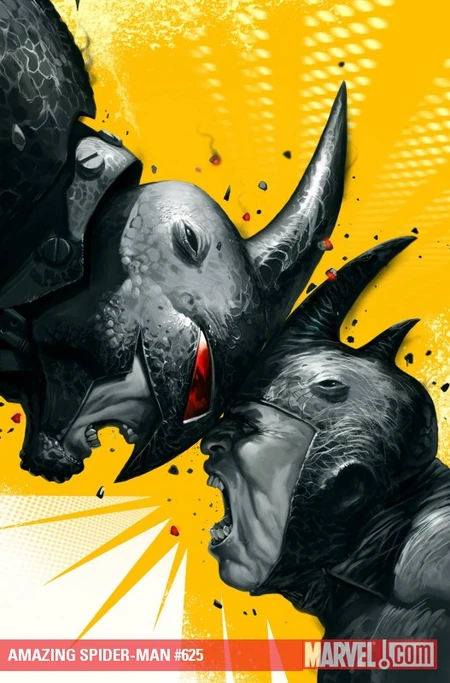
Aleksei Sytsevich, debuting in ASM #41 (1966), is often written as a lovable lug, a Russian bruiser bonded into an unbreakable rhinoceros hide who charges first and thinks never. On the surface he is a physical obstacle, a runaway truck for Spider-Man to outmaneuver. But the character has quietly accumulated real pathos over the decades.
The definitive Rhino story is Marvel’s Flowers for Rhino-style arc in The Gauntlet, in which Aleksei finally retires, finds love, and tries to live a peaceful life, only to be dragged back into violence when a new Rhino murders his wife. His subsequent grief-fueled rampage revealed genuine tragedy beneath the armor. Rhino endures because he embodies the villain who just wants out, and whom the world will not let go straight.
14. Scorpion

Mac Gargan was created, fittingly, as an experiment gone wrong: a private investigator subjected to a radiation treatment designed to produce a being capable of beating Spider-Man, first seen in ASM #20 (1965). The process granted him a powerful cybernetic tail and superhuman strength but also slowly drove him insane, a classic Silver Age tragedy of science overreaching.
Gargan’s most interesting era came when he became the third host of the Venom symbiote and later a monstrous member of Norman Osborn’s Dark Avengers, posing as a twisted “Spider-Man” in Dan Slott’s Sinister Spider-Man. That evolution kept a dated concept relevant by tying him to the symbiote mythos. As the villain literally engineered to be Spider-Man’s superior, Scorpion carries a built-in inferiority complex that fuels decades of rematches.
15. Chameleon
Dmitri Smerdyakov holds a unique title: he is Spider-Man’s very first supervillain, appearing in ASM #1 (1963), before the costumes and death rays. A master of disguise and impersonation, the Chameleon rarely wins on power, but he specializes in the one attack that unsettles Peter most, stealing his identity and mimicking the people he loves.
The Chameleon’s darkest showcase is “Red-Headed Stranger” (Amazing Spider-Man #602–604, 2009) by Fred Van Lente and Barry Kitson. He leaves Peter for dead in an acid trap, steals his face and voice, and walks around in his life: charming his roommate Michele Gonzales, toying with Mary Jane and taunting Flash Thompson while he scouts Mayor Jameson’s secret Shadow Command Center to plant a terrorist’s dirty bomb, as SpiderFan’s issue reviews detail. It exploits the intimacy that other villains only threaten. His half-brother relationship with Kraven ties him into the gallery’s most tragic family. He earns his place because he weaponizes trust itself, reminding readers that the scariest villain is sometimes the one wearing a familiar face.
Why Spider-Man’s Villains Attack the Man, Not the Mask
Here is the pattern most rankings never name: Spider-Man’s greatest villains almost never try to defeat Spider-Man. They try to destroy Peter Parker. The Green Goblin murders his girlfriend and menaces his aunt. Doctor Octopus and Kraven both conclude that the ultimate victory is not killing Peter but replacing him, proving they can wear the mask better than he can. Kingpin shoots Aunt May. The Chameleon literally moves into Peter’s apartment. Even Venom’s entire threat model is built on knowing the secret identity that other heroes’ foes never learn.
Compare this to Batman’s gallery, which largely fixates on Gotham as a philosophical battleground, or Superman’s, which tends toward raw power and world-conquest. Spider-Man’s rogues are domestic terrorists in the truest sense: they invade the home. This is a direct consequence of the character’s founding premise, that a hero can save the city and still lose the people he loves. The villains that rise to the top of this list are the ones who understand that a spider is easy to swat, but a man can be broken. That intimacy, more than any power set, is why this rogues gallery is the best in comics, and why these fifteen keep coming back.
Keep Reading
If you enjoyed this ranking, dig into our related deep-dives: see how these foes stack up in our list of the strongest Marvel villains, find out where Spidey himself lands among the most powerful comic book characters ranked, and if your tastes run darker, compare these rogues to the best anime villains of all time.
Frequently Asked Questions
Who is Spider-Man’s greatest villain?
The Green Goblin (Norman Osborn) is almost universally regarded as Spider-Man’s greatest villain. He was the first to discover Peter Parker’s secret identity and orchestrated “The Night Gwen Stacy Died,” the single most consequential tragedy in Spider-Man’s history, making him Peter’s ultimate personal nemesis.
Who is the most powerful Spider-Man villain?
In terms of raw power, Morlun and the Inheritors are among the deadliest, as they are nearly unkillable multiversal predators. Carnage and Venom rank highly for physical threat, while Electro possesses the most destructive energy output of the classic street-level rogues.
Which Spider-Man villain actually defeated him?
Doctor Octopus is the only major villain to fully defeat Spider-Man. In the “Superior Spider-Man” storyline, Otto Octavius swapped minds with a dying Peter Parker, taking over his body, his life, and his heroic identity for over a year of comics.
Who founded the Sinister Six?
Doctor Octopus assembled the original Sinister Six, first appearing in “The Amazing Spider-Man Annual” #1 (1964). The founding lineup included Doc Ock, Vulture, Electro, Kraven the Hunter, Mysterio, and Sandman, and Octavius has reassembled the team many times since.
Is Venom a villain or a hero?
Venom is both. Eddie Brock began as a pure villain in ASM #300 (1988), driven by hatred of Spider-Man, but over the years he evolved into an antihero known as the “Lethal Protector” and has even fought alongside Spider-Man against greater threats like Carnage and Knull.