Batman: Bad Seeds is DC’s ten-week Gotham-wide crossover event beginning August 26, 2026, led by showrunners Matt Fraction and G. Willow Wilson. It launches with Batman: Bad Seeds – Sunset #1 alongside a prelude in Poison Ivy #47, and runs through October across the core Bat-family titles.
The hook is structural as much as it is narrative: the entire event takes place over a single long night in Gotham City. That one decision changes how the crossover reads, and it fixes a problem DC events have had for decades.
What is Batman: Bad Seeds?
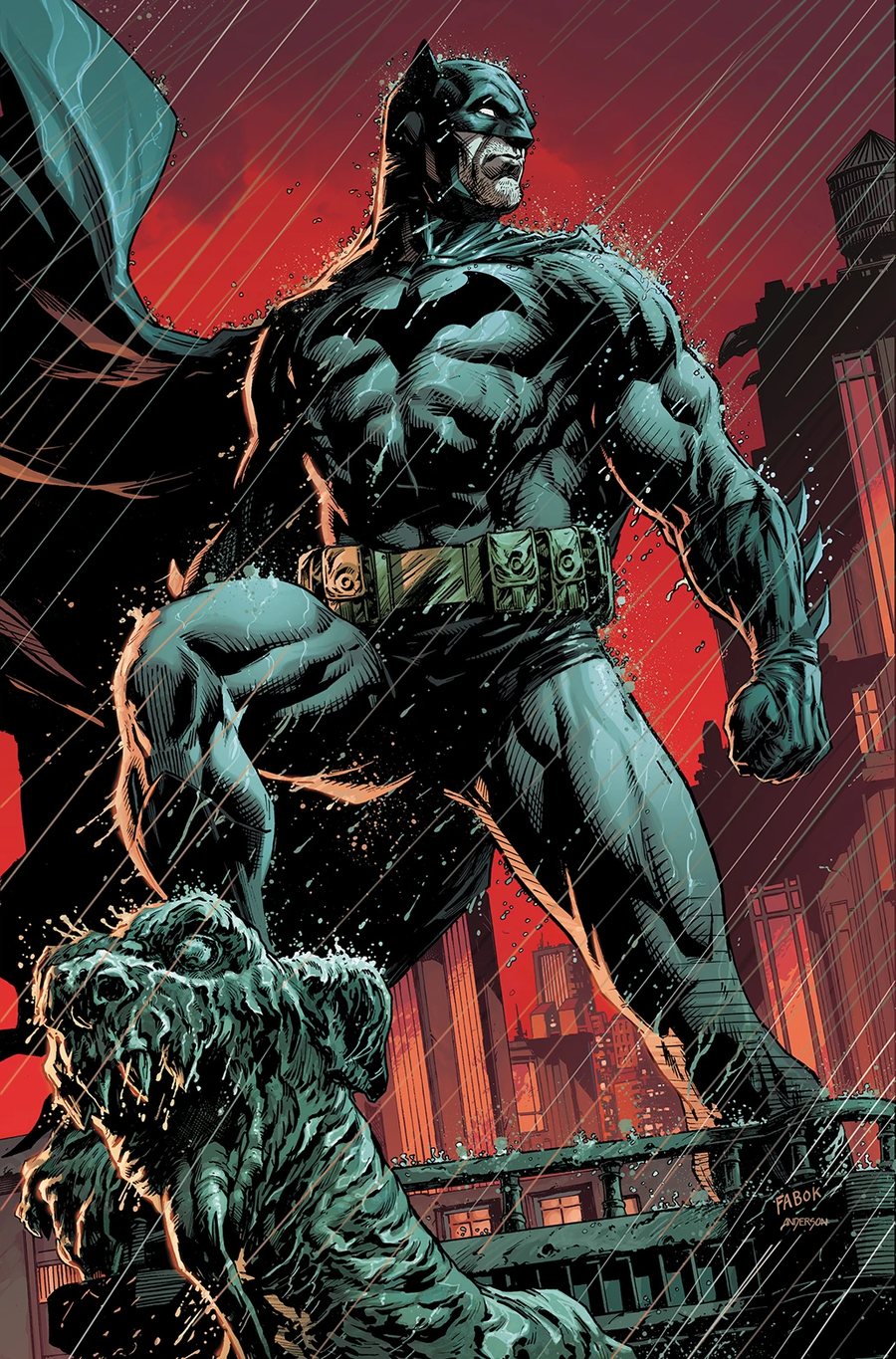
Announced by DC in May 2026 and expanded on at San Diego Comic-Con, Bad Seeds is a line-wide Gotham crossover rather than a standalone miniseries. Fraction — currently writing Batman — and Wilson — currently writing Poison Ivy — steer the central story, while the regular creative teams on the surrounding books each deliver a chapter.
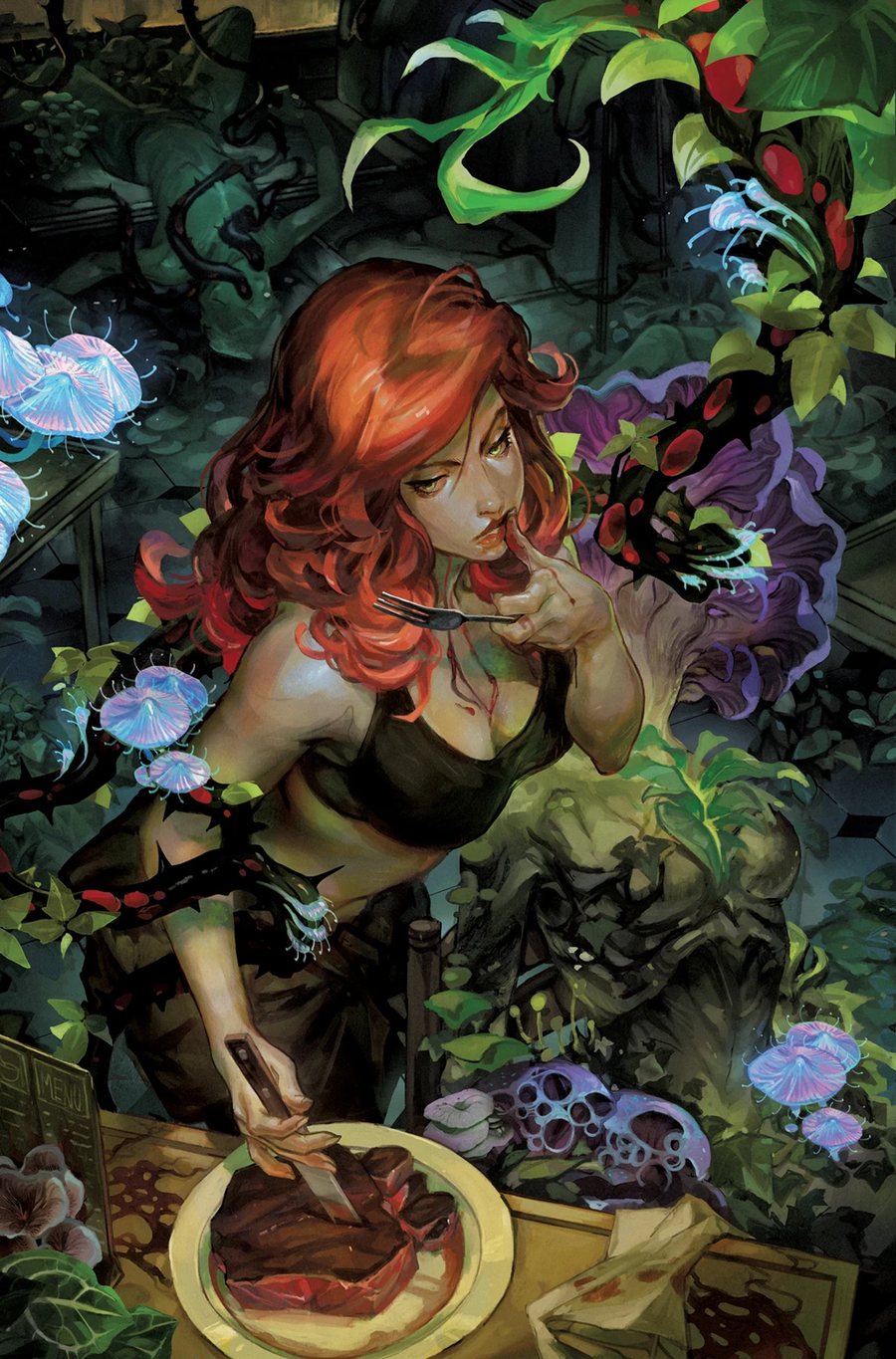
The premise: Poison Ivy unleashes prehistoric plant life across Gotham, some of it carnivorous. Buildings vanish under vines. Streets are overtaken. Whole neighborhoods revert to a primordial state as the city physically mutates around its residents.
Meanwhile, the Bat-Family is being hunted, and the GCPD has fractured under the militarized rule of Commissioner Vandal Savage. Civilians are trapped in a city actively turning against them.
Batman: Bad Seeds release schedule
The event runs roughly ten weeks from late August through October 2026. Here is what is confirmed for the launch:
| Issue | Date | Role |
|---|---|---|
| Poison Ivy #47 | August 26, 2026 | Prelude — art by Leandro Fernandez |
| Batman: Bad Seeds – Sunset #1 | August 26, 2026 | Event opening chapter |
| Detective Comics | Aug–Oct 2026 | Tie-in chapter |
| Batgirl | Aug–Oct 2026 | Tie-in chapter |
| Batwoman | Aug–Oct 2026 | Tie-in chapter |
| Catwoman | Aug–Oct 2026 | Tie-in chapter |
| Nightwing | Aug–Oct 2026 | Tie-in chapter |
| Harley Quinn | Aug–Oct 2026 | Tie-in chapter |
Poison Ivy #47 ships with a main cover by Jessica Fong and variants from Noobovich, Kyuyong Eom, and Manny Vincent Carbonilla. Per DC’s official announcement, individual issue numbers for the later weeks are being rolled out as the event approaches.
The single-night structure is the real innovation
Here is the part worth paying attention to, and it has nothing to do with plants.
Line-wide crossovers have a chronic design flaw: the tie-ins. In a normal event that spans weeks or months of in-story time, every ongoing series has to freeze its own plot, awkwardly slot its issues into the event’s timeline, and then resume — often having lost momentum. Readers get stuck reverse-engineering a reading order. Books that were in the middle of a good arc get derailed for a quarter.
Compressing everything into one night dissolves that problem. If Nightwing, Catwoman, and Batgirl are all happening simultaneously between sunset and sunrise, then:
- Reading order stops being load-bearing. Each chapter is a parallel slice of the same night, not a sequential link in a chain. Miss one and you lose a perspective, not the plot.
- No book surrenders its identity. A single night is a manageable detour, not a three-month hijack of an ongoing story.
- Escalation is built in. A city physically mutating hour by hour gives every issue a natural clock without requiring the writers to coordinate beat-for-beat.
Hence the “showrunner” credit rather than “writer.” Fraction and Wilson are being positioned the way a TV series positions its showrunners — setting the architecture and the rules, then letting individual episode writers work inside them. That is a deliberate borrow from television structure, and it is a better fit for line-wide comics events than the traditional model.
Vandal Savage is the sleeper threat
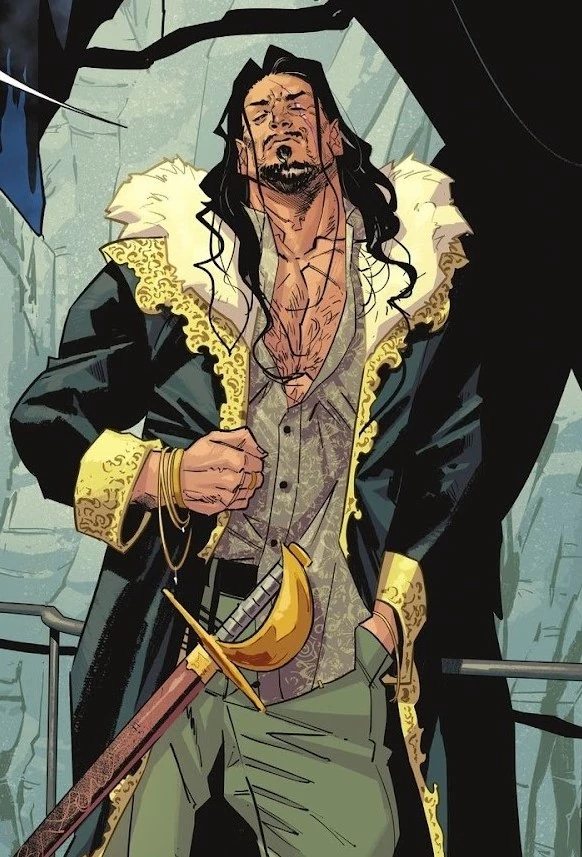
Most of the coverage has focused on Ivy, understandably — the imagery of Gotham being swallowed by carnivorous prehistoric flora is the marketing hook. But the more interesting piece of the setup is Vandal Savage running a militarized GCPD.
Consider the matchup. Ivy’s advantage is speed: explosive, uncontrollable growth that transforms a city in hours. Savage’s advantage is the exact opposite — he is an immortal whose entire characterization is built on patience, on having outlasted everything. Putting him in command of the city’s institutional power during a crisis that resolves in a single night is a genuinely sharp pairing, because it strips away the one asset that normally makes him formidable.
A one-night event is the worst possible battlefield for a man whose superpower is time. Whether the story does anything with that tension is the thing I would watch for in Sunset #1.
Do you need to read the tie-ins?
Based on the announced structure, no — but you will get a materially different experience.
The core spine appears to run through Batman: Bad Seeds – Sunset and the Poison Ivy chapters, which makes sense given Fraction and Wilson write those books. Those are the mandatory purchases.
The Bat-family tie-ins look designed as perspective chapters — the same night seen from Nightwing’s rooftops, Catwoman’s angle, Harley’s chaos. Skippable if you are budget-conscious, valuable if you want the full picture of the city transforming.
If you are new to Gotham’s rogues and want context on why Ivy carrying an event is a big deal, our rundown of the greatest Batman villains of all time covers where she sits in the hierarchy — and our guide to how Poison Ivy’s powers actually work explains the biology the event is built on. For broader reading, see our picks for the best Batman comics to start with.
Frequently asked questions
When does Batman: Bad Seeds start?
Batman: Bad Seeds begins on August 26, 2026, with two books shipping the same day: a prelude in Poison Ivy #47 and the event’s opening chapter, Batman: Bad Seeds – Sunset #1. The event runs approximately ten weeks through October 2026.
Who is writing Batman: Bad Seeds?
Matt Fraction and G. Willow Wilson are credited as showrunners, steering the core narrative. Fraction writes Batman and Wilson writes Poison Ivy. The regular creative teams on Detective Comics, Batgirl, Batwoman, Catwoman, Nightwing, and Harley Quinn each contribute chapters.
Which comics are tie-ins to Bad Seeds?
The announced tie-in titles are Detective Comics, Batgirl, Batwoman, Catwoman, Nightwing, and Harley Quinn, alongside the core Batman: Bad Seeds – Sunset series and Poison Ivy.
What is Batman: Bad Seeds about?
The event takes place over a single night in which Poison Ivy unleashes prehistoric, partly carnivorous plant life that consumes buildings and neighborhoods, mutating Gotham into a primordial landscape. The Bat-Family is hunted while the GCPD, under Commissioner Vandal Savage’s militarized rule, fractures.
Update, August 27: both launch issues are out
Poison Ivy #47 and Batman: Bad Seeds – Sunset #1 both shipped as scheduled on August 26, confirming the event is officially underway. Poison Ivy #47 reveals Ivy has been secretly running Gotham as Mayor Pamela Isley, and the issue opens on a dream sequence of Ivy and Harley Quinn lying in the grass together — a detail that lines up with Harley Quinn #67, later in the event, officially reuniting the two as a couple. Early reviews from AIPT and GateCrashers are positive on both issues, with GateCrashers specifically praising how Sunset #1 sets up the one-night structure discussed above.
The bottom line
DC has taken a familiar setup — Poison Ivy goes green-apocalyptic on Gotham — and wrapped it in the smartest crossover architecture the publisher has tried in years. The one-night compression is not a gimmick; it is a direct fix for why line-wide events usually damage the books they touch. Whether the story earns the structure starts on August 26. For more detail on the announcement, see the Comics Beat breakdown and ICv2’s report on the creative team.