
If you’ve been a comic book fan for more than five minutes, you’ve felt it. That bewildering moment when a character you saw die is suddenly back, a hero’s well-known origin story gets a shocking new twist, or an entire universe-shattering event is wiped from existence. Welcome to the wild, wonderful, and often infuriating world of the comic book retcon.
This powerful storytelling tool, short for “retroactive continuity,” is how comic book publishers like Marvel and DC keep their decades-old characters and sprawling universes from collapsing under the weight of their own history. It’s a way to hit the refresh button, fix past mistakes, and keep stories fresh for new generations. But for every brilliant fix, there’s a change that leaves fans screaming into the void. Let’s dive into what retcons are, why they happen, and explore the best and worst examples in comic book history.
What Is a Comic Book Retcon, Anyway?
A retcon is a literary device where writers change, add to, or simply ignore previously established facts in a story’s history. The term itself, as noted by Merriam-Webster, was officially added to the dictionary in 2021, but its roots in comic fandom go back to the early 1980s. It’s the magic wand writers wave to make the impossible possible.
Think of it like this: Marvel and DC have been telling stories about characters like Spider-Man and Batman since the 1960s. If they aged in real-time, Peter Parker would be collecting social security and Bruce Wayne would be long retired. To avoid this, publishers use a “sliding timeline,” where characters perpetually exist in a floating “10-15 years ago” past. Retcons are essential to maintaining this illusion, allowing writers to modernize origins and prune away the tangled vines of continuity.
There are generally three flavors of retcon:
- Addition: This is the friendliest type. New information is added that doesn’t erase the past but instead enriches it, filling in gaps or revealing a new perspective. Think of a surprise mentor or a long-lost sibling appearing.
- Alteration: This is where things get spicy. An alteration directly contradicts what came before. A character who was definitively dead is revealed to have been a clone all along, or a hero’s motivation is completely changed.
- Subtraction: The most drastic of all. This involves completely erasing events or characters from the timeline. This often happens during massive, universe-rebooting events or when a storyline is so unpopular that the publisher pretends it never happened.
Why Do Retcons Happen? The Good, The Bad, and The Ugly
Publishers don’t retcon their universes on a whim (usually). There are often strategic, creative, or even financial reasons behind these massive changes. Sometimes, it’s to fix genuine continuity errors—the inevitable result of countless writers working on the same characters for over 60 years. Other times, it’s a chance to breathe new life into a stale character by reviving them or giving them a fresh start.
But not all retcons are created equal. For every change that strengthens a character, another feels like a betrayal to long-time readers. The worst offenders are often driven by editorial mandates to align comics with blockbuster movies or to erase storylines that have become inconvenient or controversial, leaving a trail of angry fans and confusing plot holes in their wake.
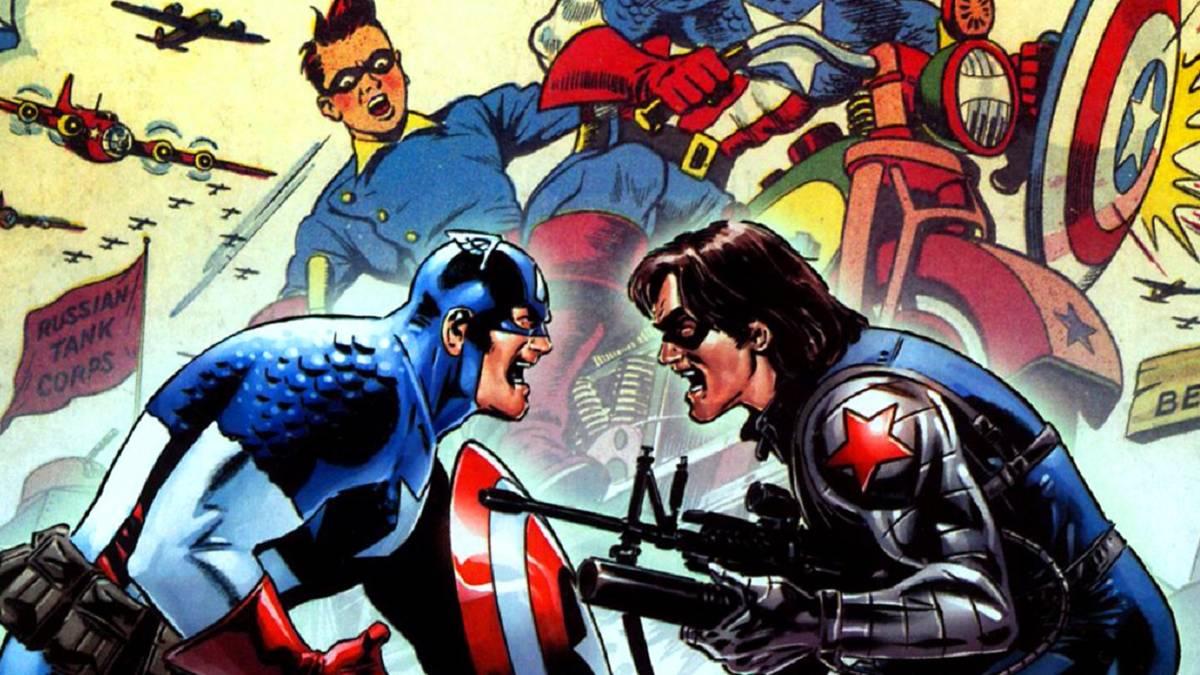 Caption: From bringing heroes back from the dead to erasing entire timelines, retcons are a powerful and controversial tool in comics. Credit: Marvel Comics / DC Comics Source: CBR.com
The Retcon Hall of Fame: 5 Times Publishers Got It Right
When done well, a retcon can elevate a character or an entire universe to new heights. These are the changes that were so good, it’s hard to imagine the comics without them.
1. Captain America: The Man Out of Time
Originally, Captain America and his sidekick Bucky Barnes were thought to have died in the final days of World War II. But in The Avengers #4 (1964), Stan Lee and Jack Kirby performed one of history’s greatest retcons. They revealed that Cap had been frozen in ice after his supposed death, allowing him to be thawed out in the modern era and lead the Avengers. This masterstroke not only brought back a beloved character but also gave him a compelling new hook: being a man out of his time.
2. The Multiverse Is Born
In the 1950s, DC rebooted characters like The Flash and Green Lantern with new, science-fiction-based origins. But what about the original Golden Age heroes? In the classic story “Flash of Two Worlds,” DC revealed that the Golden Age heroes existed on a parallel world called Earth-Two. This retcon didn’t just solve a continuity problem; it created the DC Multiverse, a concept that has fueled countless epic stories, including the legendary Crisis on Infinite Earths, and remains central to DC’s identity today.
3. Alan Moore Reinvents Swamp Thing
When Alan Moore took over The Saga of the Swamp Thing in the 1980s, the character was a b-lister with a simple origin: scientist Alec Holland was transformed into a plant monster. Moore’s groundbreaking retcon, revealed in “The Anatomy Lesson,” was that Holland had actually died. The Swamp Thing was a plant that had absorbed Holland’s consciousness and thought it was him. This single change added incredible depth and horror to the character, turning the book into a philosophical, critically acclaimed masterpiece.
4. The Winter Soldier
For decades, Bucky Barnes’s death was considered one of the few permanent deaths in comics. But in 2005, writer Ed Brubaker brought him back as the Winter Soldier, a brainwashed Soviet assassin. This wasn’t just a cheap revival; it was a brilliantly crafted story that respected the past while creating one of Marvel’s most complex and popular modern characters, adding a layer of tragedy and guilt to Captain America’s legacy.
5. Hal Jordan’s Redemption
In the ‘90s, DC made the shocking decision to turn Green Lantern Hal Jordan into the villain Parallax, who went on a murderous rampage. Fans were outraged. A decade later, writer Geoff Johns masterfully retconned this in Green Lantern: Rebirth. He revealed that Parallax was actually an ancient entity of pure fear that had possessed Hal, forcing him to commit those evil acts. This retcon not only redeemed a classic hero but also revitalized the entire Green Lantern mythology for a new era.
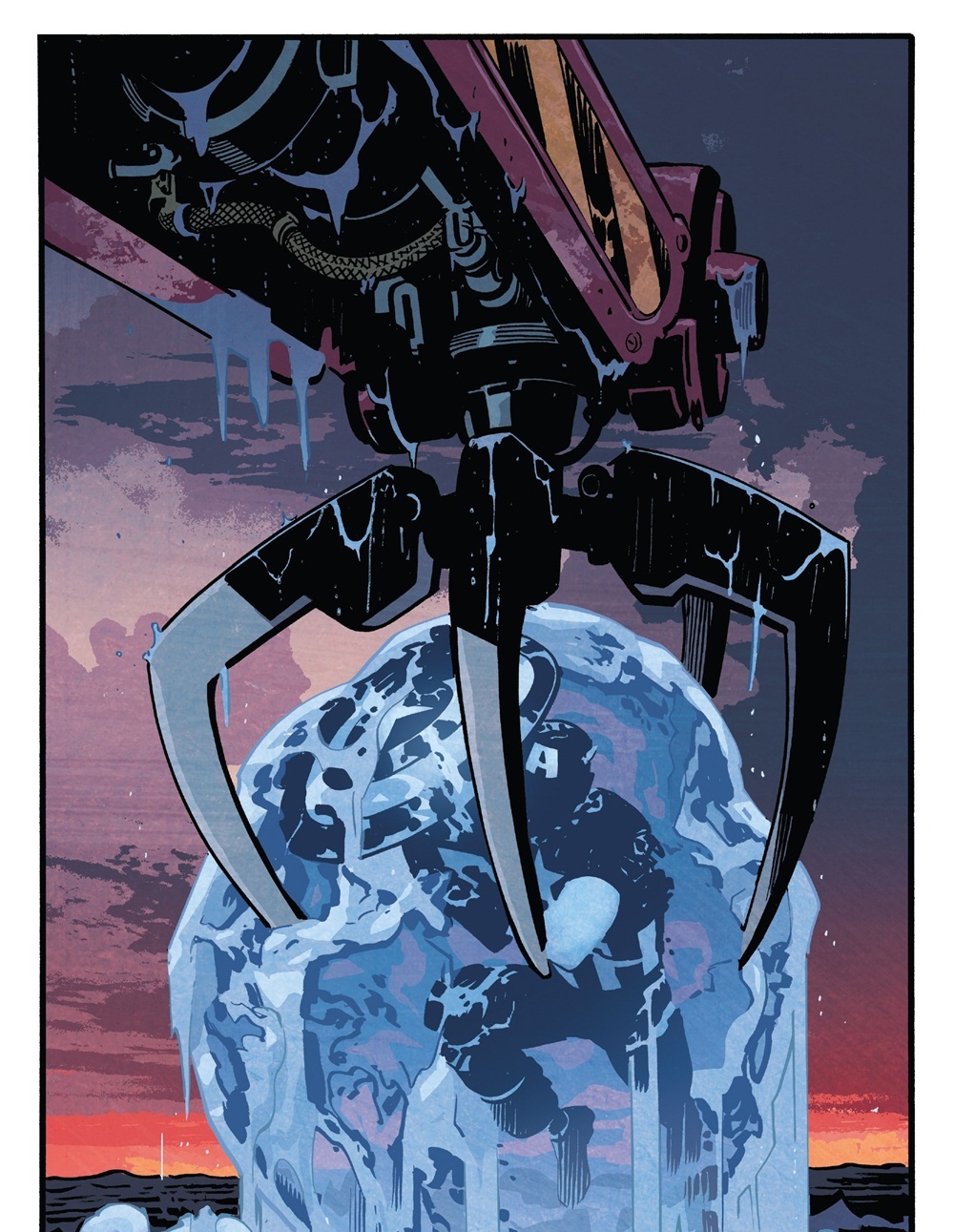 Caption: The Avengers discovering Captain America frozen in ice is one of the most famous and successful retcons in comic book history. Credit: Marvel Comics Source: CBR.com
The Retcon Hall of Shame: 5 Times Publishers Messed Up Big Time
And then there are the retcons that live on in infamy. These are the changes that ignored character development, erased beloved stories, and left fans feeling like their years of investment were for nothing.
1. Spider-Man: “One More Day”
Arguably the most hated retcon of all time. To save a dying Aunt May, Peter Parker and Mary Jane Watson make a deal with the demon Mephisto to erase their marriage from history. The move, intended to de-age Peter and make him more “relatable,” was met with widespread fan fury. It wiped out decades of character development and remains a sore spot for Spider-Man fans to this day.
2. The Sins of Gwen Stacy
In a truly bizarre and unnecessary retcon, the 2004 storyline “Sins Past” revealed that Spider-Man’s famously pure-hearted first love, Gwen Stacy, had a secret affair with his arch-nemesis, Norman Osborn (the Green Goblin), and gave birth to his twin children before her death. The revelation was so out of character and gratuitous that it’s been almost universally ignored by subsequent writers.
3. No More Mutants
For years, Scarlet Witch and Quicksilver were the mutant children of the X-Men villain Magneto. It was a core part of their identity. However, likely due to movie rights issues between Marvel Studios and Fox (who owned the X-Men at the time), a 2014 retcon revealed they were never mutants at all, but rather genetic experiments by the High Evolutionary. The change severed a classic family dynamic and felt driven purely by corporate synergy.
4. The New 52
In 2011, DC Comics rebooted its entire line with “The New 52,” erasing most of its previous continuity. While the goal was to attract new readers, the execution was messy. Beloved character histories were wiped out, relationships were erased (like Superman and Lois Lane’s marriage), and the new timeline was often just as confusing as the old one. DC has spent the better part of the last decade trying to fix the problems created by this line-wide retcon.
5. Identity Crisis and Sue Dibny
While a popular and best-selling story, 2004’s Identity Crisis introduced a dark retcon that has aged poorly. It revealed that years prior, the Justice League villain Doctor Light had brutally assaulted Sue Dibny, the Elongated Man’s wife, and that a faction of the League had voted to magically mind-wipe him and other villains. This retroactive darkening of the Silver Age heroes was seen by many as a cheap shock tactic that violated the spirit of the characters.
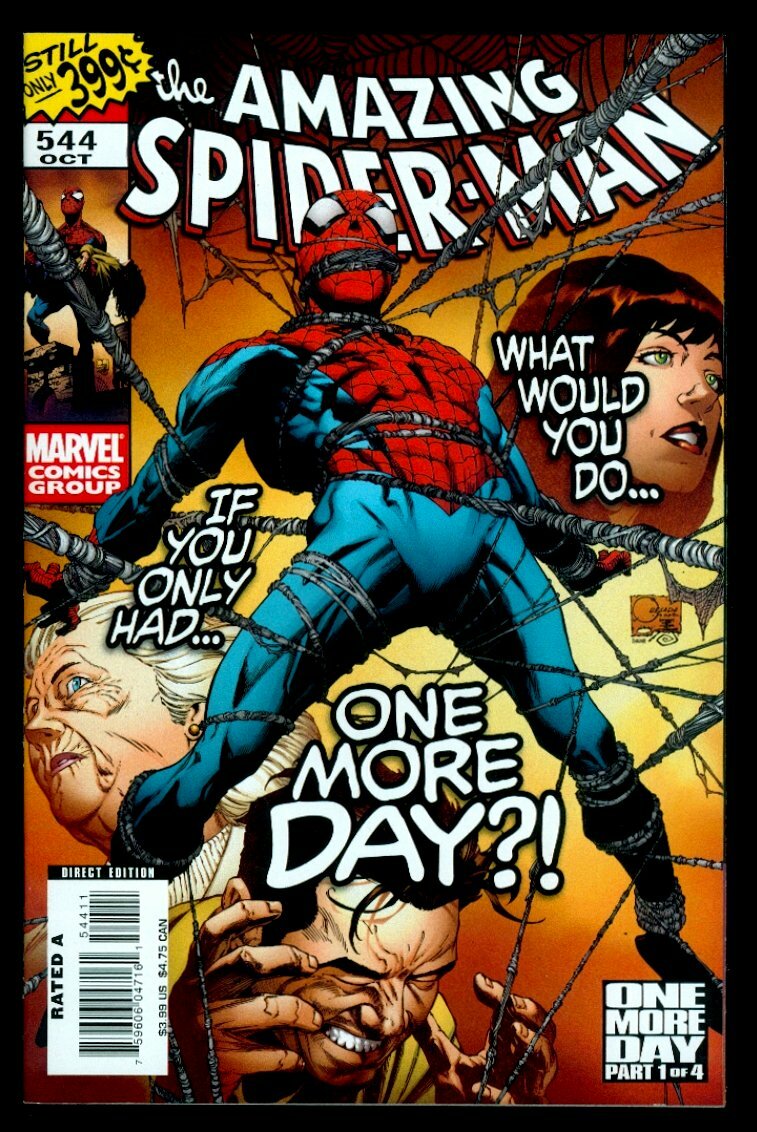 Caption: The “One More Day” storyline, which erased Spider-Man’s marriage, remains one of the most controversial retcons among fans. Credit: Marvel Comics Source: Marvel.com
Do Retcons Help or Hurt Comics?
So, are retcons a necessary evil or a creative crutch? The truth is, they’re a bit of both. In the never-ending story of superhero comics, change is the only constant. Retcons are the mechanism that allows these modern myths to evolve, much like the ancient myths they’re based on, which were retold and altered by countless storytellers over centuries. They are the reason why superheroes never stay dead and how their greatest superhero origin stories can be updated for new audiences.
For readers, a good retcon can be thrilling, adding a new layer of intrigue to a familiar character. A bad one can feel like a slap in the face. At the end of the day, the success of a retcon depends on its execution. Does it respect the core of the character? Does it tell a compelling new story? Or does it simply erase a story fans loved for reasons that have nothing to do with storytelling?
Love them or hate them, retcons are woven into the very fabric of the comic book medium. They are the ultimate proof that in the world of superheroes, nothing is ever truly set in stone.
Resources
- www.merriam-webster.com/wordplay/retcon-history-and-meaning
- www.tckpublishing.com/retroactive-continuity/
- www.cbr.com/the-15-best-comic-book-retcons-of-all-time/
- www.ign.com/articles/2018/01/31/15-craziest-marvel-and-dc-comic-book-retcons


