Isekai (異世界, “different world”) is a Japanese genre in which a character from the modern world is transported, reincarnated, or summoned into another world — usually a fantasy setting — and uses knowledge from their old life to succeed in the new one. That last part is what separates isekai from ordinary portal fantasy.

What isekai actually means
The word breaks down simply. I (異) means “different” or “other.” Sekai (世界) means “world.” Put together, isekai literally means “different world,” and in practice it describes any story where someone crosses from our reality into another one.
That definition is where most explanations stop, and it’s why most explanations are unsatisfying. Because by that definition, The Lion, the Witch and the Wardrobe is isekai. So is Alice in Wonderland, The Wizard of Oz, and Edgar Rice Burroughs’ A Princess of Mars from 1912.
Those are portal fantasies, and Western literature has had them for well over a century — Burroughs’ A Princess of Mars is free to read in full. So what makes isekai its own thing?
The real defining feature: knowledge arbitrage
Here’s the distinction that actually holds up, and it isn’t about the portal at all.
In classic portal fantasy, the protagonist arrives in the new world as a disadvantaged outsider. Dorothy doesn’t know the rules of Oz. The Pevensie children are children. Their ignorance is the source of the tension, and the story is about learning enough to survive.
In isekai, the protagonist arrives as an advantaged outsider. What they carry from Earth — industrial chemistry, germ theory, mass-production logic, modern management, an encyclopedic memory of video game systems — is worth more in the destination world than anything native to it.
That’s the engine. Isekai is fundamentally a genre about arbitrage between two knowledge economies. The hero isn’t strong because the story granted them a sword; they’re strong because they know how soap works in a world that doesn’t.
Once you see it, the genre’s stranger corners stop looking strange. Restaurant to Another World works because modern cuisine is the advantage. Ascendance of a Bookworm works because paper-making is. Reincarnated as a Vending Machine is an absurdist reduction of the same principle to its limit. The fantasy world is the market; the protagonist is the only importer.
The other ingredient: RPG literacy
The second thing separating isekai from portal fantasy is that isekai assumes its reader speaks fluent video game.
Stats, levels, skill trees, party composition, guilds, quest boards, status screens, “grinding,” classes and respawns are used as narrative furniture with no explanation, because the genre emerged for an audience that grew up on JRPGs and MMOs. A 1950s reader would need a glossary. A 2010s reader needs nothing.
This is why isekai exploded specifically when it did rather than being a constant of Japanese fiction. It required a generation for whom RPG mechanics were common cultural grammar. Portal fantasy plus gamer literacy equals isekai.
The four main types of isekai
| Type | How they arrive | Examples |
|---|---|---|
| Transported / summoned | Pulled bodily into the new world, often by magic or ritual | KonoSuba, Re:ZERO, The Rising of the Shield Hero |
| Reincarnation | Die on Earth, reborn as an infant or creature with memories intact | Mushoku Tensei, That Time I Got Reincarnated as a Slime |
| Game world | Enter a video game, or a world governed by explicit game rules | Overlord, Sword Art Online |
| Reverse isekai | A fantasy character arrives in the modern world instead | The Devil Is a Part-Timer! |
The reincarnation branch is worth a note. Being reborn as a baby gives the protagonist something the transported hero never gets: time. Fifteen years to train, learn the local magic system from scratch, and build relationships before the plot starts. That’s why reincarnation isekai tends to produce the genre’s most overpowered protagonists — the structure hands them a head start no summoned hero can match.
Why the genre gets criticised
Isekai attracts more eye-rolling than almost any other anime category, and the criticism isn’t baseless. Three complaints come up repeatedly:
- Wish fulfilment. An unremarkable protagonist becomes special by relocation rather than by effort. The knowledge-arbitrage engine can double as a cheat code.
- Volume. The web-novel-to-light-novel-to-anime pipeline produces enormous quantities of near-identical premises, and the weak entries vastly outnumber the strong ones.
- Titles. The genre’s habit of using an entire plot summary as a title has become self-parody.
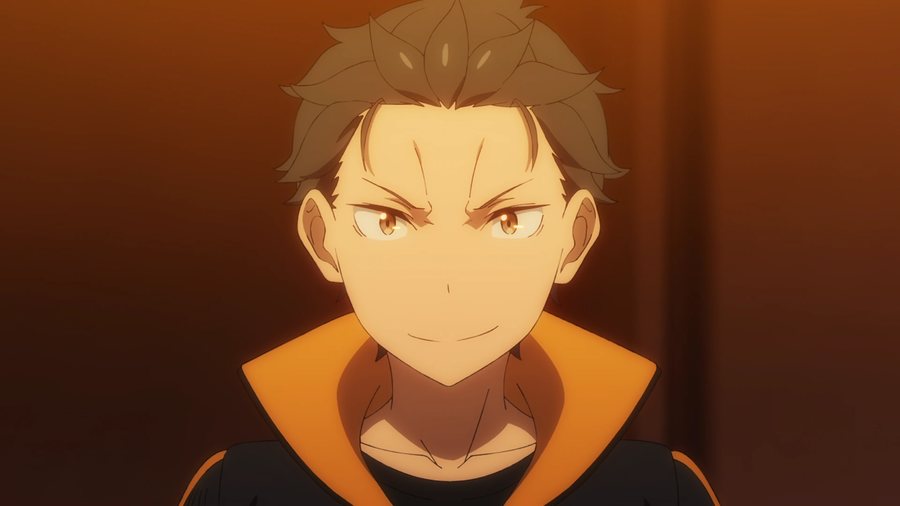
All fair. But the criticism describes the genre’s floor, not its ceiling. Re:ZERO uses its premise to interrogate trauma and repetition rather than to deliver power fantasy — we broke down exactly how Return by Death works and why it costs its protagonist so much. Mushoku Tensei opens with a protagonist who is genuinely contemptible and treats his improvement as the actual story. Ascendance of a Bookworm is a patient procedural about manufacturing.
The honest summary: isekai is a format, not a quality tier. It’s the fantasy equivalent of the police procedural — enormously productive, mostly formulaic, occasionally excellent.
Where to start
If you want to sample the genre without wading through the middle of the pack:
- For comedy — KonoSuba. It parodies every convention listed above while being a fully functional example of them. Season 4 is confirmed for 2027.
- For drama — Re:ZERO. The most emotionally punishing entry in the genre, currently mid-run on its fourth season.
- For scale — Mushoku Tensei. Widely credited with setting the modern template; its third season is airing now.
- For something quieter — Ascendance of a Bookworm, if the idea of a fantasy series about paper manufacturing appeals.
For the broader anime landscape, our ranking of the strongest anime characters of all time and our guide to how anime power systems work both cover territory isekai draws on heavily. For further reading on the genre’s history, Anime News Network maintains extensive coverage of light novel adaptations.
Frequently asked questions
What does isekai mean in Japanese?
Isekai (異世界) literally translates to “different world” or “other world,” combining i (different) and sekai (world).
Is isekai the same as portal fantasy?
Not quite. Portal fantasy protagonists arrive disadvantaged and must learn the new world’s rules. Isekai protagonists arrive advantaged, applying modern knowledge and video game literacy the destination world lacks.
What was the first isekai anime?
Stories about crossing into other worlds are centuries old in Japanese folklore, and 1990s series like Fushigi Yuugi and The Vision of Escaflowne used the structure. The modern genre as recognised today consolidated in the 2010s through the web novel boom.
Why are isekai titles so long?
Most originate as free web novels competing for attention on crowded aggregator sites, where a title describing the entire premise functions as advertising. The convention carried over into print and anime.