Ranking Makoto Shinkai’s movies means ranking twenty years of variations on a single question: can the distance between two people ever actually be closed? Your Name is where he changed his answer. Here is every Shinkai film from Voices of a Distant Star to Suzume, ranked, with the thread that connects them.
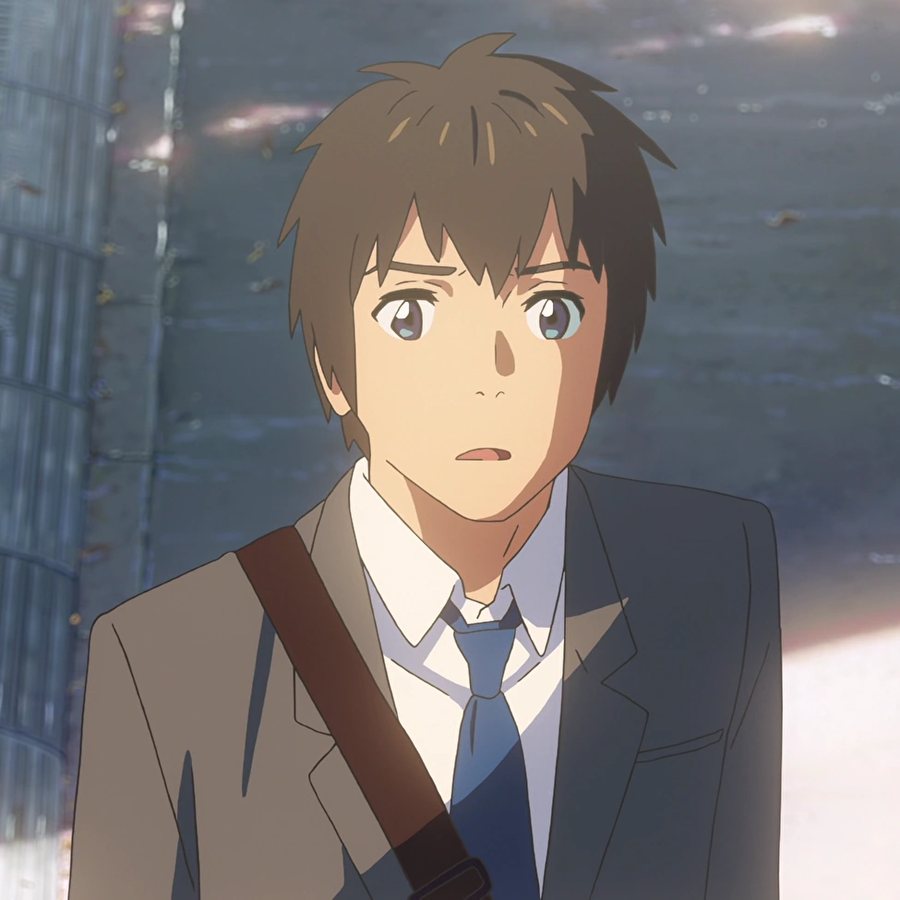
Every Makoto Shinkai film, ranked
| # | Film | Year | In one line |
|---|---|---|---|
| 1 | Your Name | 2016 | The one where everything he had been practising finally locked together |
| 2 | 5 Centimeters per Second | 2007 | His most honest film, and his most quietly devastating |
| 3 | Suzume | 2022 | A road movie that turns grief into geography |
| 4 | The Garden of Words | 2013 | Forty-six minutes, almost no plot, astonishing rain |
| 5 | Weathering With You | 2019 | The angriest thing he has made |
| 6 | Voices of a Distant Star | 2002 | The famous near-solo debut — rough, and remarkable for it |
| 7 | Children Who Chase Lost Voices | 2011 | The experiment that proved what he isn’t |
| 8 | The Place Promised in Our Early Days | 2004 | Ambition outrunning craft |
The thesis: one question, asked eight times
Most directors have themes. Shinkai has a single, unusually specific preoccupation, and watching the films in order makes it almost embarrassingly legible.
Every Shinkai film is about two people separated by something they cannot argue with — light-years, train timetables, years, weather, the shape of the earth itself. The drama is never who they are. It is whether the gap between them can be closed.
And for the first half of his career, his answer was no.
Voices of a Distant Star separates its couple by interstellar distance so that text messages take years to arrive. 5 Centimeters per Second removes the science fiction entirely and separates its couple by nothing more exotic than train schedules and time — and is far crueller for it. That film ends with two people who genuinely loved each other simply not being in each other’s lives anymore, because that is what happens. No villain, no accident, nothing to blame.
Then Your Name arrived and he changed his mind.
Your Name is the hinge
The reason Your Name works — and the reason it became one of the highest-grossing anime films ever made — is not the body-swap premise or the comet imagery. It is that Shinkai spent fourteen years perfecting a machine for generating longing and then, for the first time, let it resolve.
An audience that had been trained by 5 Centimeters per Second to expect the gap to win watched it get closed. That reversal is the entire emotional payload.
Everything after it operates on the new answer: distance can be beaten, but it costs something real. Hodaka pays in Weathering With You by choosing one person over a city. Suzume pays by going back to the worst day of her life and sitting in it.
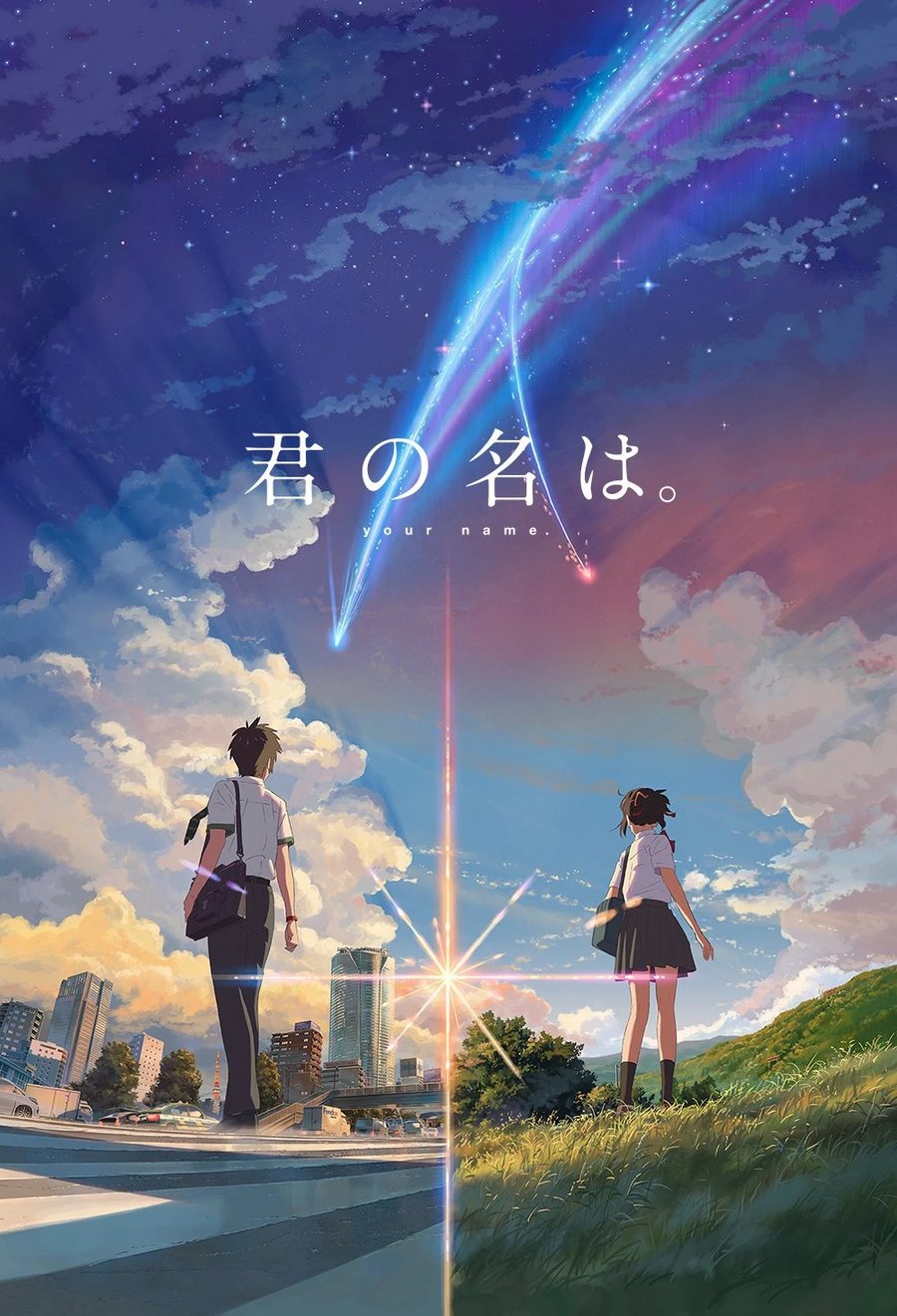
The disaster trilogy
Your Name, Weathering With You and Suzume are frequently discussed together as a loose trilogy, and the grouping holds up: each is built around a natural disaster, and each has been widely read as engaging with the 2011 Tōhoku earthquake and tsunami and the long national aftermath.
What separates them is the posture each takes toward catastrophe:
- Your Name — disaster as something that can be undone, if someone remembers hard enough.
- Weathering With You — disaster as an acceptable price. Its ending is genuinely provocative: a teenager chooses a girl over Tokyo and the film refuses to condemn him.
- Suzume — disaster as something already survived, which must be revisited rather than prevented.
Suzume grossed more than $300 million worldwide and earned a Golden Globe nomination for Best Animated Feature.
The one that doesn’t fit
Children Who Chase Lost Voices sits at seven on this list, and the reason is instructive rather than dismissive.
It is Shinkai’s attempt at a Ghibli-style adventure fantasy: an underground world, a quest, creature design, a scope far beyond anything else he had made. It is technically accomplished and largely hollow, because the machinery he is genuinely world-class at — small human distance, weather, the precise ache of a specific place at a specific hour — has almost nothing to grip in an epic fantasy.
It is the most useful film in his catalogue for understanding him, precisely because it is the one where he tried to be somebody else. Every film after it goes back to two people who cannot reach each other, and they are all better.
Where to start
- New to Shinkai — Your Name. It is his most complete film and the best argument for the rest.
- Want to know if he’s for you in 46 minutes — The Garden of Words. Barely a plot, extraordinary rain animation, and the whole sensibility in miniature.
- Ready to be upset — 5 Centimeters per Second. Do not start here.
His next film has just been picked up for worldwide distribution — we covered the Crunchyroll and Sony deal, which was signed before a title or plot was even announced.
For more anime film coverage, see our guide to Demon Slayer: Infinity Castle and our look at Made in Abyss: Awakening Mystery. Anime News Network’s Shinkai profile lists full credits.
Frequently asked questions
What is Makoto Shinkai’s best movie?
Your Name (2016) is his most complete and most acclaimed film, though 5 Centimeters per Second has a strong claim for those who prefer his bleaker early work.
How many movies has Makoto Shinkai made?
Eight major works, from Voices of a Distant Star in 2002 through Suzume in 2022, though two of those are short features rather than full-length films.
What order should I watch Makoto Shinkai films in?
They are all standalone with no shared continuity, so any order works. Starting with Your Name and working outward is the easiest entry point.
Is Makoto Shinkai connected to Studio Ghibli?
No. He has often been compared to Hayao Miyazaki, and Children Who Chase Lost Voices was a deliberate move toward Ghibli-style adventure, but he has never worked at the studio.