Demon Slayer breathing styles are swordsmanship disciplines built on Total Concentration Breathing, which floods the body with oxygen to reach superhuman speed and strength. All fourteen known styles descend from Sun Breathing, created by Yoriichi Tsugikuni — five fundamentals branched from it, and every other style branched from those.
How the breathing style family tree works
The system has a strict shape, and understanding it makes the whole Demon Slayer Corps legible.
Roughly five centuries before the Taisho era, during the Sengoku period, Yoriichi Tsugikuni — the strongest demon slayer who ever lived — created Sun Breathing. He tried to teach it and failed. Nobody else had the innate ability to perform it. So he adapted it, building five weaker versions around each student’s individual strengths:
- Water — versatile and flexible, adaptable to any situation.
- Flame — powerful single strikes that “burn.”
- Thunder — strength channelled into the legs for blinding speed.
- Wind — purely offensive, built on swift rotational movement.
- Stone — forceful offence and immovable defence using the ground.
Separately, Yoriichi’s brother Michikatsu also tried and failed to learn Sun Breathing. His failed attempt became Moon Breathing — not a branch of the five, but a corrupted offshoot of Sun itself, later carried by the demon Kokushibo.
All 14 breathing styles
| Style | Derived from | Known forms | Colour | Notable users |
|---|---|---|---|---|
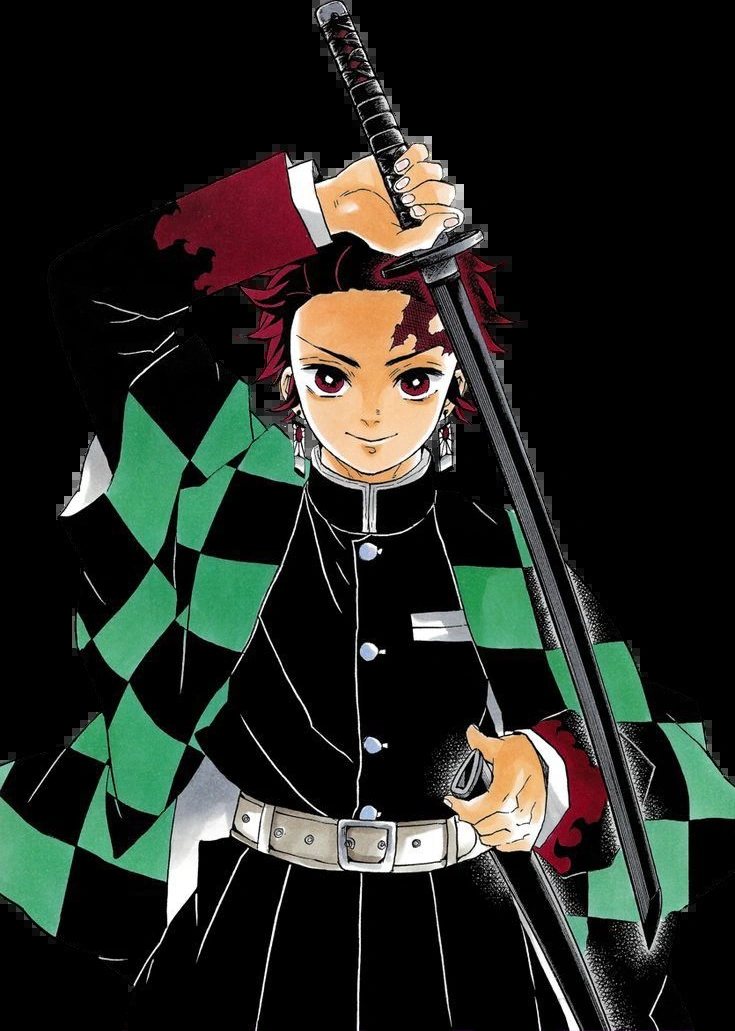
| Sun (Hinokami Kagura) | — the original | 13 | Black | Yoriichi Tsugikuni, Tanjuro Kamado, Tanjiro Kamado |
| Moon | Sun (corrupted) | 16 | Light purple | Kokushibo |
| Water | Sun | 11 | Blue | Sakonji Urokodaki, Giyu Tomioka, Sabito, Tanjiro Kamado |
| Flame | Sun | 9 | Orange-red | Kyojuro Rengoku, Shinjuro Rengoku |
| Thunder | Sun | 7 | Yellow | Jigoro Kuwajima, Zenitsu Agatsuma, Kaigaku |
| Wind | Sun | 9 | Green | Sanemi Shinazugawa, Masachika Kumeno |
| Stone | Sun | 5 | Gray | Gyomei Himejima |
| Mist | Wind | 7 | White | Muichiro Tokito |
| Beast | Wind | 11 | Indigo gray | Inosuke Hashibira |
| Flower | Water | 7 | Light pink | Kanae Kocho, Kanao Tsuyuri |
| Insect | Water | 5 | Lavender blue | Shinobu Kocho |
| Serpent | Water | 5 | Lavender | Obanai Iguro |
| Love | Flame | 6 | Dark pink | Mitsuri Kanroji |
| Sound | Thunder | 5 | Amber | Tengen Uzui |
The elements are not real
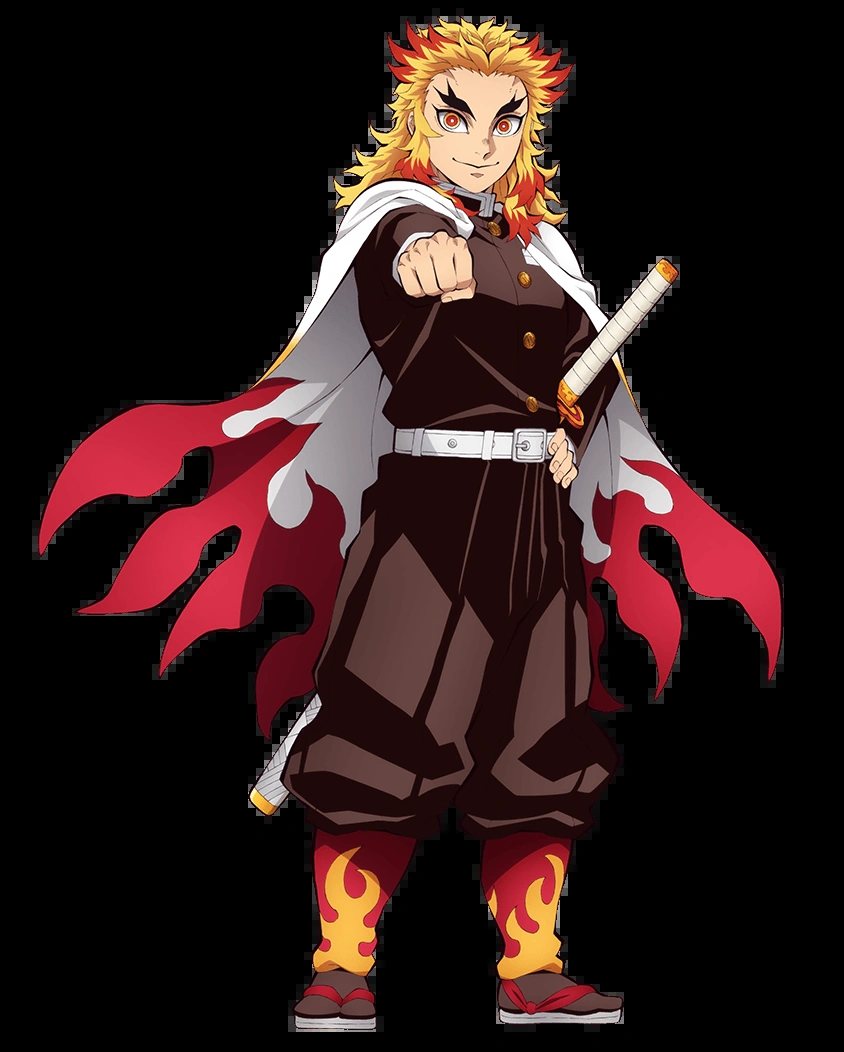
This is the single most misunderstood thing about the system, and the series is explicit about it: breathing styles do not produce fire, water, lightning or mist. No slayer is generating an element. The swordsman moves in a way that mimics the concept, and the visual is what observers perceive — a supplementary image, not a projectile.
There are near-exceptions that prove the rule. Thunder Breathing users mimic lightning with such fidelity that the air genuinely vibrates and their footsteps produce a thunderclap. But the damage is still a sword doing sword things at an inhuman speed.
That constraint is why Demon Slayer fights read the way they do. Compare this to a system like cursed energy in Jujutsu Kaisen or chakra in Naruto, where the power leaves the body and becomes an independent effect. In Demon Slayer, everything happens within arm’s reach of a blade. There is no ranged option, no defensive barrier, no way to win a fight you are not physically inside.
The real reading: a power system that is really a class system
Every breathing style in the Corps is, by construction, a downgrade. The five fundamentals exist because ordinary humans could not perform Sun Breathing; the nine derivatives exist because slayers needed styles that fit their own limitations. Nothing in four hundred years of the Demon Slayer Corps improved on what one man could do in the Sengoku period.
That makes the entire institution an elaborate, multi-century workaround for a single unrepeatable talent — and it reframes the Hashira. They are not the pinnacle of a system that trains people upward. They are the best available approximations of a lost original. The Corps has been managing decline since the day it was founded.
It also explains why Tanjiro’s arc is structured so oddly for a shonen protagonist. He does not power up his Water Breathing to surpass Giyu. He switches — away from the style he was taught and back toward the ancestral Hinokami Kagura carried in his family, eventually blending the two because he could master neither alone. Growth in Demon Slayer is framed as recovery of inheritance rather than accumulation of strength, which is close to the opposite of how the genre usually works. For where the strongest practitioners land, see our ranking of the strongest Demon Slayer characters.
Total Concentration Breathing and Total Concentration Constant
Underneath every style is Total Concentration Breathing: a technique that maximises oxygen intake to temporarily push muscles, reflexes and healing beyond human limits. The advanced state, Total Concentration Constant, means sustaining it every moment of the day rather than in bursts — the threshold that separates a competent slayer from a Hashira-level one. It is exhausting, must be trained into the body over months, and is the actual prerequisite for everything else on this page.
Frequently asked questions
How many breathing styles are there in Demon Slayer?
Fourteen are known: Sun, Moon, Water, Flame, Thunder, Wind, Stone, Mist, Beast, Flower, Insect, Serpent, Love and Sound.
What is the strongest breathing style?
Sun Breathing, the original created by Yoriichi Tsugikuni. Every other style is an adaptation made because slayers could not perform it, and it is uniquely effective against demons.
What are the five main breathing styles?
Water, Flame, Thunder, Wind and Stone. All five were adapted directly from Sun Breathing, and every later style branches from one of them.
Do breathing styles actually create fire or water?
No. The elemental imagery is a perceived visual effect accompanying the swordsman’s movements, not a real element being generated. Thunder Breathing is the partial exception, producing genuine sound and air vibration through sheer speed.
Sources: Kimetsu no Yaiba Wiki, Demon Slayer: Kimetsu no Yaiba manga (Koyoharu Gotouge, Shueisha).