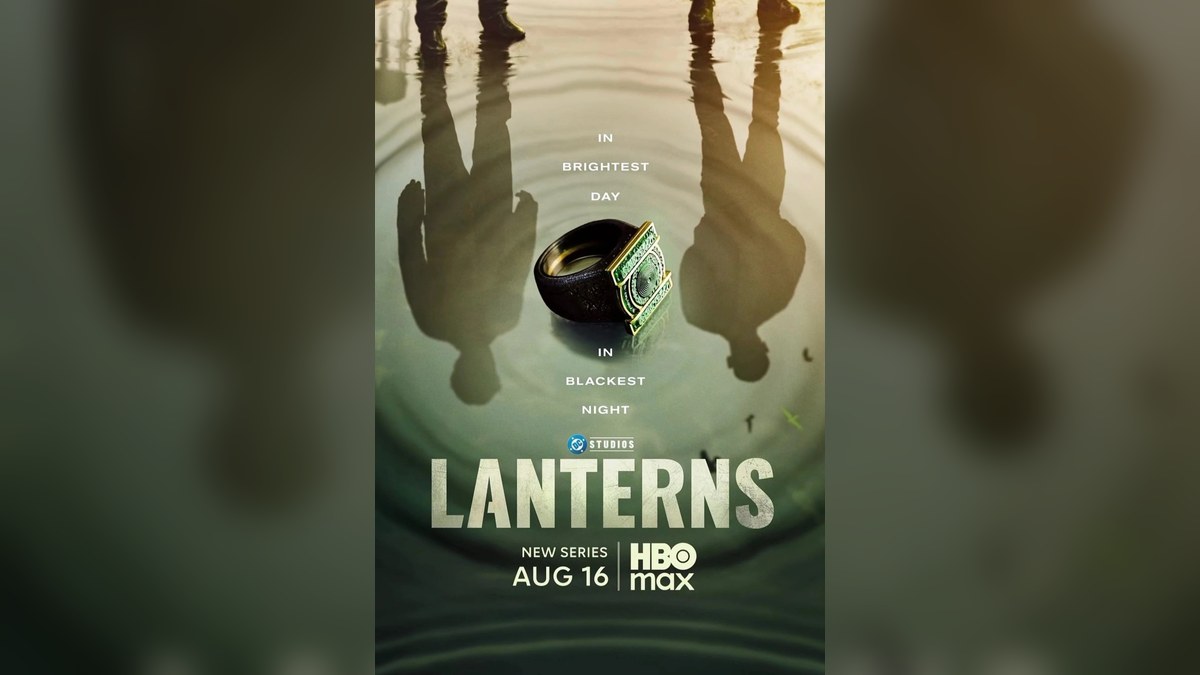
Lanterns episode 1 is a confident, deliberately unglamorous hour of television that treats Hal Jordan as a problem rather than a hero. Directed by James Hawes and written by creators Chris Mundy, Damon Lindelof and Tom King, the premiere borrows the shape of a prestige crime drama and, for the most part, earns the loan.
Comic readers: the section headed “The ending is the most faithful thing in the episode” separately spoils 1990s and 2000s Green Lantern comics. It is flagged again where it starts, so show-only viewers can skip that part without losing the argument.
The short version
Here is the argument in one line: the premiere earns its closing gut-punch because it spends the previous hour refusing to make Hal Jordan likeable — and then flinches by handing the audience an undo button in the same episode.
That is a compliment with a caveat attached, not a shrug. The refusal is the hard part, and Lanterns gets it right. The flinch is a choice the show did not have to make, and the comics it is drawing on are the clearest available evidence of why it matters.
A note on scoring: we are not attaching a number to this. A rating means something only if it is applied consistently across a defined scale, and this is the first episode of a first season — there is nothing yet to be consistent with. We would rather tell you what works and what does not than invent a decimal.
What happens in the premiere
The episode is built in three time periods. It opens in 1996, with a boy watching Hal Jordan explain the Green Lantern Corps on 60 Minutes, and then being put through a fear test by his military father — an apple shot off his head. That boy is John Stewart (Aaron Pierre).
The bulk of the hour is set in 2016. The Guardians have selected John as a backup Lantern and Hal (Kyle Chandler) has been saddled with training him. Hal’s teaching method is to take off his ring, step out of a moving car and let John work out the rest. A holographic message sends them to Rushville, Nebraska — the town where the alien who gave Hal the ring came down — where a mass shooting at the high school football field has left Sheriff Kerry Kane (Kelly Macdonald) with a case she cannot explain. Hal thinks it is aliens. Kerry does not.
They pull in a drifter. Meanwhile the Macon family closes around them: Billy (Jason Ritter), a local lawyer, and his father Will (Garret Dillahunt), a militia leader who has spent decades preparing for an alien invasion everyone else treats as a hobby. John sleeps with Zoe (Poorna Jagannathan) before working out that she is married into that family.
In the interrogation, Hal needles the suspect about football and Harry Potter until the man drops the act, recites Lantern lore back at him, says he is there for vengeance and to start a war, mocks the oath and detonates a bomb he was carrying inside his own body. Hal contains the blast. In the aftermath John learns that every Lantern’s consciousness is uploaded to their ring weekly — and a younger, digital Hal steps out of it to tell him so.
Then the episode jumps to 2026. John drives — does not fly — through the snow back to Rushville, where Kerry walks him to the same bleachers. Hal is sitting there dead, a bullet in his head and no ring on his hand. The full beat-by-beat is laid out in TVLine’s premiere recap.
Kyle Chandler is playing a man you would not want to work with
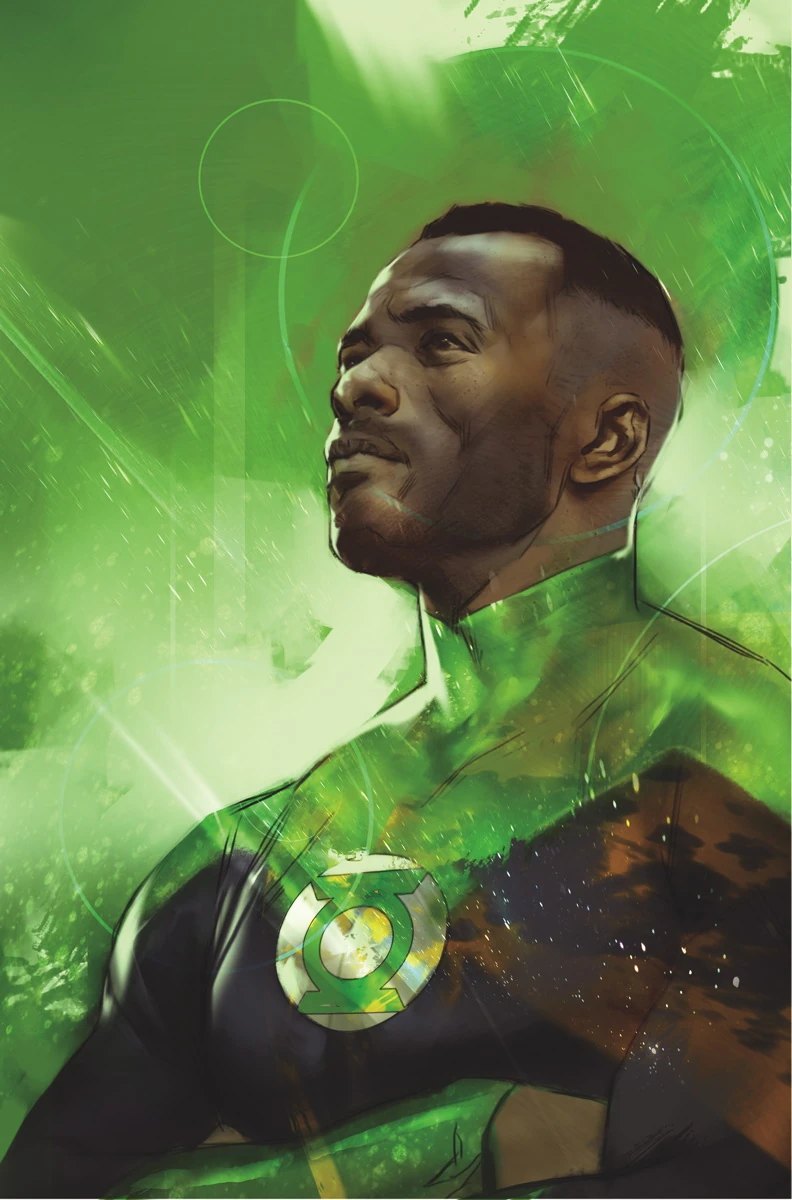
The best decision in the premiere is that Hal Jordan is not charming. He is not the roguish-but-lovable mentor the structure invites. Read his behaviour as a list and it is genuinely ugly: he abandons a moving vehicle to make a point at a trainee’s expense, he withholds basic information about the job, he has legal trouble serious enough to need a lawyer on call, and his interrogation technique is to amuse himself in front of a man he suspects of killing children. Den of Geek’s Joe George called him “the most incredible jerk in superhero history”, which is close, but the more precise charge is negligence. Hal is not cruel. He is bored.
That matters structurally, not just tonally. A mentor-and-rookie show normally asks you to enjoy the mentor and worry about the rookie. Lanterns inverts it. John is introduced as the disciplined one — the Marine, the recruit who does the work — and then the 1996 flashback reframes that discipline as something closer to damage, a childhood of fear tests administered by his own father. By the midpoint the question is not whether John can keep up with Hal but whether he ought to want to. That is a real argument, and it is why the ending lands rather than merely startles.
It is also why the Rushville material works better than it has any right to. A superhero show that opens on a school shooting is one bad instinct away from tastelessness. The premiere survives it by keeping Hal — the man with the magic ring — visibly useless at the human part of a crime scene, and by giving the town’s paranoia a face in Dillahunt’s Will Macon, whose alien-invasion obsession the audience knows to be correct and whose politics the show is plainly not endorsing.
The ending is the most faithful thing in the episode
Source-material spoilers from here to the end of this section. Show-only viewers can skip to “Where the premiere flinches” without missing the review’s argument.
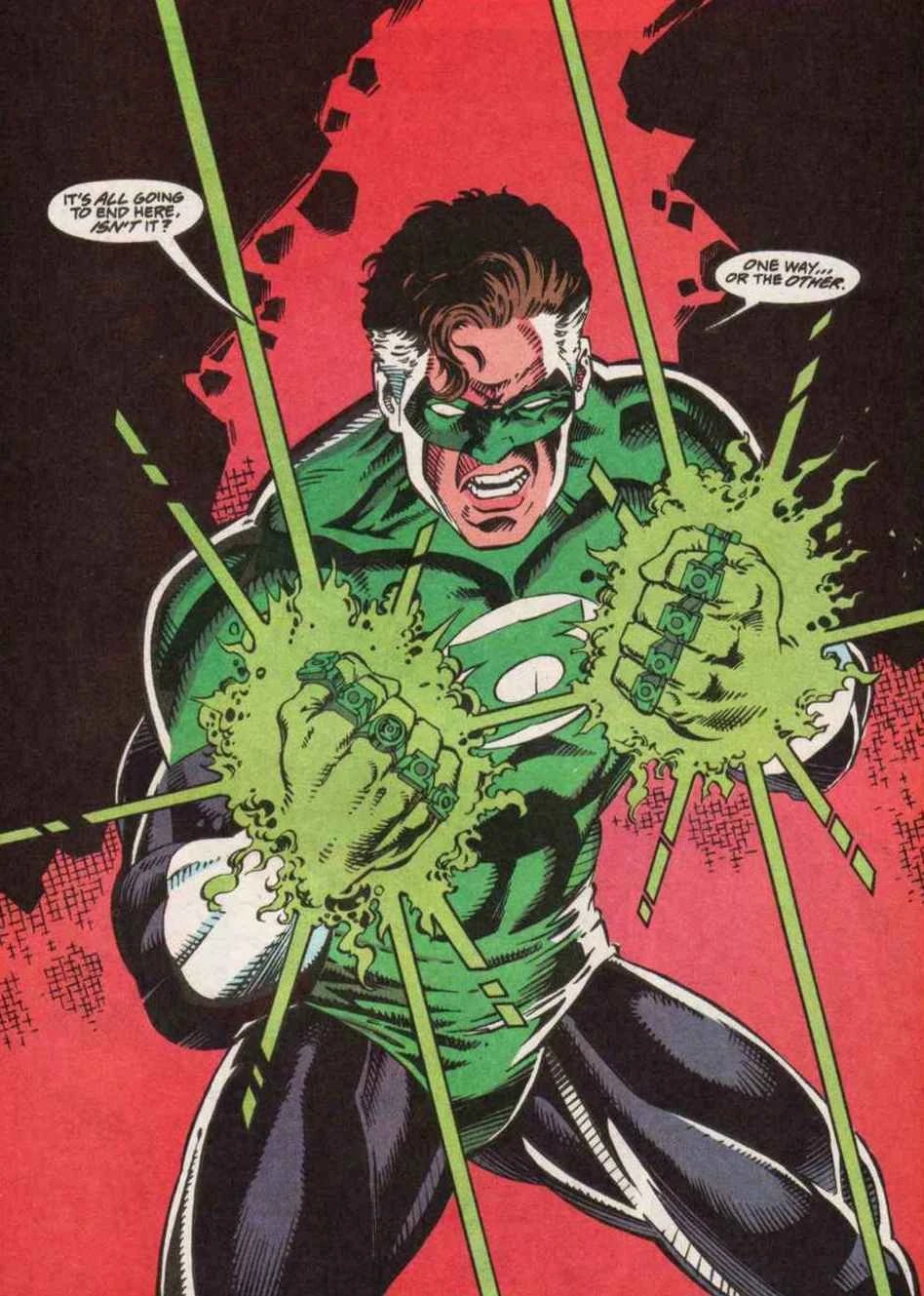
Killing Hal Jordan is not a subversion of Green Lantern. It is the most consequential thing DC has ever done with the character. In 1994’s Emerald Twilight (Green Lantern vol. 3 #48–50), Ron Marz had Hal, unhinged by the destruction of his home city, tear through the Corps, take rings off the dead and drain the Central Power Battery. He died in The Final Night in 1996, reigniting the sun. He was not properly restored until Geoff Johns and Ethan Van Sciver’s Green Lantern: Rebirth across 2004–05.
That is roughly a decade in which the flagship Green Lantern book belonged to somebody else: Kyle Rayner, the last one left, carrying the entire mythology on his own. And that decade is exactly why the death worked. DC did not kill Hal Jordan for a cliffhanger. It killed him and then lived in the world that produced, for ten years, with a successor who had to be worth reading.
Lanterns is running the same play — Hal dies, John inherits — and the show’s ten-year jump between the 2016 case and the 2026 body happens to be almost exactly the gap the comics ran. We are not claiming anyone planned that. We are pointing out that the show has chosen the one structure Green Lantern history has already stress-tested, which makes the comparison unusually informative rather than merely decorative.
Where the premiere flinches
Now the problem. In the same episode that kills Hal Jordan, Lanterns establishes that every Green Lantern’s consciousness is uploaded to their ring every week, and then puts a talking backup of Hal on screen to prove it. The body in the bleachers arrives with its own workaround pre-installed.
You can defend that. The backup is a good engine for a murder mystery — the victim helping to investigate his own death is a genuinely fresh shape — and it keeps Chandler, the most interesting performer here, available for eight episodes. Damon Lindelof has said the creators expect the backlash and asked to be judged on “where they’re sitting at the end of the eighth episode”, which is a fair thing to ask for.
But the cost is real, and it is precisely the cost the comics avoided. A death you are told is reversible within the same hour is not a death, it is a reconfiguration. The premiere spends its entire running time carefully establishing that Hal is a bad influence John needs to get out from under, and then supplies a mechanism by which Hal never has to leave. If John spends the season with a digital Hal in his ear, the show has kept the character and thrown away the consequence, which is the reverse of what Emerald Twilight did. We will know by October 4. On the evidence of episode 1, this is the one place the show blinked.
One more thing worth flagging, because the headline numbers are being read too generously. Lanterns is sitting at 94% on Rotten Tomatoes and 72 on Metacritic. Those measure different things: the first counts how many critics were positive, the second averages how positive they were. Ninety-four percent of critics liked it, and on average they liked it a good deal rather than enormously. That gap is roughly where this premiere honestly sits.
What Lanterns changes from the comics
The show is not adapting a specific storyline. It is picking and re-sorting, and most of the changes are load-bearing rather than cosmetic.
| Element | In the comics | In the Lanterns premiere |
|---|---|---|
| Hal Jordan’s civilian life | Test pilot for Ferris Aircraft from his 1959 debut; a travelling toy salesman for a stretch of the 1970s | No visible job. Introduced behind the wheel of a battered sedan, with a lawyer on call |
| Secret identity | Guarded for decades of publication | Public. He explained the Corps on 60 Minutes in 1996 |
| John Stewart’s background | Debuted in 1971 as an architect; the Marine-sniper history is a later addition, popularised by the 2001 Justice League cartoon | A Marine, with a militarised childhood shown directly in the 1996 flashback |
| The Green Lantern Corps | A 7,200-strong intergalactic police force with a whole emotional spectrum of rivals | Almost entirely offscreen. The premiere never leaves Earth |
| Hal’s death | Emerald Twilight (1994) into The Final Night (1996); undone by Rebirth (2004–05) | Found dead in the 2026 timeline, ring missing, with a consciousness backup already established |
The public-identity change is the smartest of them. A secret Green Lantern makes Will Macon a crank. A famous one, who went on network television in 1996 and told America that aliens are real and he works for them, makes Will Macon a man who has been paying attention for thirty years. That single change converts the militia subplot from a cliché into the episode’s most uncomfortable idea. If you want the history the show is compressing, we have a longer explainer on the Green Lantern Corps and the emotional spectrum, and a ranking of the strongest Green Lanterns if you want to know where Hal and John actually place.
The real template is not a Green Lantern comic
Most coverage has reached for the obvious comparison. James Gunn himself pitched the show as True Detective with space cops, and the 1996/2016/2026 braid makes that hard to argue with. But the closer template is sitting in the credits.
Co-creator Tom King wrote Strange Adventures with Mitch Gerads and Evan “Doc” Shaner across 2020–21: twelve issues in which a beloved spacefaring hero is investigated for atrocities committed offworld, told across two braided timelines rendered in two different art styles — the clean, bright adventure the hero says happened, and the flat, granular present in which somebody methodically checks. That is not a tone Lanterns shares. That is its architecture. Swap Adam Strange for Hal Jordan and Mister Terrific for John Stewart and the premiere is recognisably the same object.
This is the thing a general TV outlet cannot tell you, and it is the most useful predictor available for where the season goes. King’s version of this story is not a whodunit. It is about what a heroic public account is built to conceal, and it does not end with the investigator feeling good about the answer. If Lanterns is following that shape — and episode 1 follows it closely — then the question the season is really asking is not who killed Hal Jordan. It is what Hal Jordan did.
Is Lanterns worth watching?
Yes, with one honest caveat. If what you want from a Green Lantern show is the Corps, Oa, elaborate ring constructs and a rogues’ gallery, episode 1 will disappoint you, and the show is not pretending otherwise — the most common complaint in the aggregated critical response is that its comic-book elements are underpowered. This is a crime drama with two aliens in it.
If you want a series willing to take a superhero seriously enough to suggest he may not have been a good man, this is the strongest first hour a DC television show has had in years. It is grim, it is slow in the places prestige drama is always slow, and it is genuinely about something. Whether it holds depends entirely on how seriously it means its ending — and it has already shown us the exit. New episodes land weekly through October 4; our full Lanterns episode schedule has every date and drop time, and the Lanterns premiere guide covers the cast and setup if you are starting cold.
Frequently Asked Questions
How many episodes are in Lanterns season 1?
Eight. The season premiered on HBO and HBO Max on August 16, 2026, with new episodes weekly on Sundays through the finale on October 4, 2026.
Do you need to read Green Lantern comics to follow Lanterns?
No. The premiere assumes no prior knowledge and explains the ring, the oath and the Corps as it goes. Comic readers get an extra layer, because the show draws on 1990s Green Lantern material and on co-creator Tom King’s own DC work, but nothing in episode 1 requires homework.
Who created Lanterns and who is the showrunner?
Lanterns was created by Chris Mundy, Damon Lindelof and Tom King, with Mundy as showrunner. The premiere was directed by James Hawes. James Gunn and Peter Safran executive produce for DC Studios.
Is Lanterns part of James Gunn’s DCU?
Yes. It sits inside DC Studios’ Chapter One: Gods and Monsters, the same continuity as the 2025 Superman film, and Nathan Fillion is credited as Guy Gardner in the series cast.
Is Lanterns a superhero show or a crime drama?
Structurally it is a crime drama. The premiere stays on Earth, centres on a murder investigation in rural Nebraska and uses its science-fiction elements sparingly. Viewers expecting large-scale Green Lantern Corps action will not find it in episode 1.