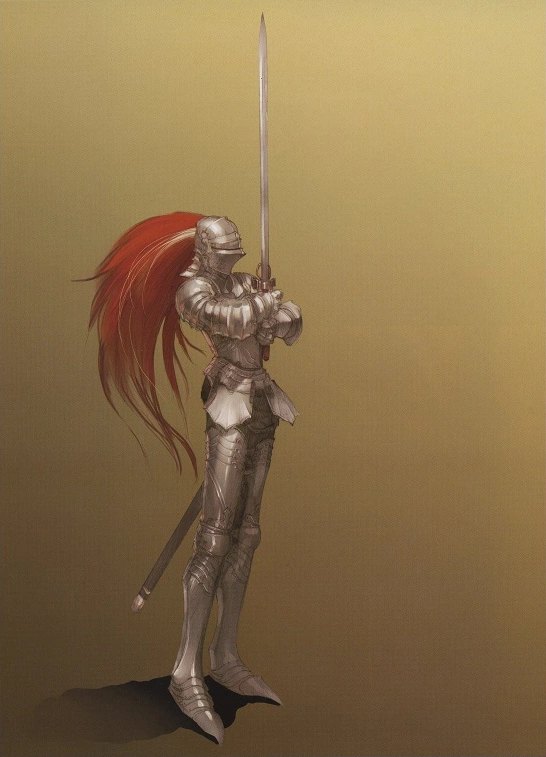
The Fate series watch order that works best for newcomers is: Fate/Zero, then Fate/stay night: Unlimited Blade Works, then the Heaven’s Feel film trilogy. Those five entries are the complete Fuyuki storyline. Everything else in the franchise — and there is a lot of it — is optional, standalone, and set in a different timeline.
The short answer: your Fate watch order
If you want to stop reading here and just start watching, this is the path:
- Fate/Zero (2011–2012, ufotable) — 25 episodes
- Fate/stay night: Unlimited Blade Works (2014–2015, ufotable) — 26 episodes
- Fate/stay night: Heaven’s Feel I — Presage Flower (2017)
- Fate/stay night: Heaven’s Feel II — Lost Butterfly (2019)
- Fate/stay night: Heaven’s Feel III — Spring Song (2020)
That is roughly 26 hours. It is a complete, self-contained story with a beginning, a middle and an ending. If you finish it and want more, the second half of this guide covers the spin-offs — but you genuinely do not need any of them.
Why the Fate series is so confusing (it isn’t the timeline)
Almost every guide tells you Fate is confusing because it has 25-plus entries across two decades. That is true, but it is not the actual problem. Plenty of franchises are that big without generating this much anxiety.
Here is the real reason, and it is one thing: the recommended watch order skips the first chapter of the source material.
Fate/stay night began as a 2004 Type-Moon visual novel with three routes meant to be played in a fixed sequence — Fate, then Unlimited Blade Works, then Heaven’s Feel. Each route unlocks only after the one before it, and each retells the same three weeks from a different angle.
The anime adaptations did not arrive in that order, and they were not made by the same people. Route one, Fate, was adapted by Studio Deen as a 24-episode series in 2006 and is widely considered the weakest Fate anime. Routes two and three were adapted years later by ufotable at a far higher production standard.
So the community consensus became: skip route one, start at route two. That single piece of advice is why the watch order feels broken. You are being told to begin a trilogy at part two, which sounds absurd until you understand that part two’s adaptation was built to work without part one, and part one’s adaptation was not built to compete.
This is our read after mapping the release history against the source structure, and it reframes the whole question. You are not solving a timeline puzzle. You are routing around one weak adaptation.
Fate watch order options compared
There are three defensible ways in. Here is what each actually costs you.
| Order | Start with | Best for | The trade-off |
|---|---|---|---|
| Zero-first (recommended) | Fate/Zero | Almost everyone | Zero is a prequel written for people who already know stay night. It quietly gives away answers that Heaven’s Feel treats as revelations. |
| UBW-first | Unlimited Blade Works | Purists who want every twist intact | The opening episodes assume familiarity with a route you have not seen. The first two hours are harder work. |
| Deen-first (release order) | Fate/stay night (2006) | Completionists only | 24 extra episodes of the franchise’s weakest adaptation before you reach the strongest material. Most viewers quit here. |
We recommend Zero-first anyway, and it is worth being honest about why. Fate/Zero is the most immediately gripping thing in the franchise — it opens with adults, clear stakes and no school setting — so it converts newcomers at a much higher rate. The spoiler cost is real but back-loaded: it dulls a few late beats in Heaven’s Feel, three films away. A watch order only works if you finish it, and Zero-first is the order people finish.
The core five, explained
1. Fate/Zero (2011–2012)
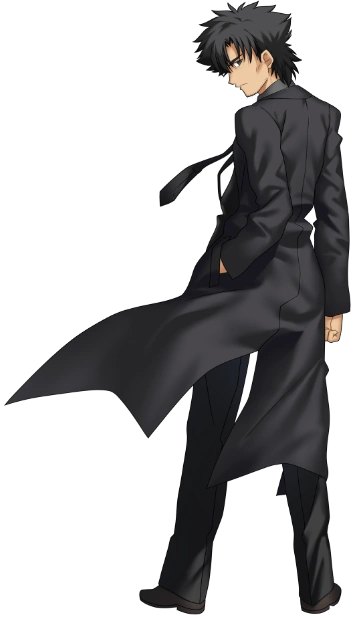
A prequel set ten years before stay night, adapted by ufotable from Gen Urobuchi’s light novels. It covers the Fourth Holy Grail War and follows Kiritsugu Emiya, a mercenary magus fighting on behalf of the Einzbern family. Two seasons: October to December 2011, then April to June 2012.
It requires no prior knowledge, which is exactly why it works as an entry point.
2. Fate/stay night: Unlimited Blade Works (2014–2015)
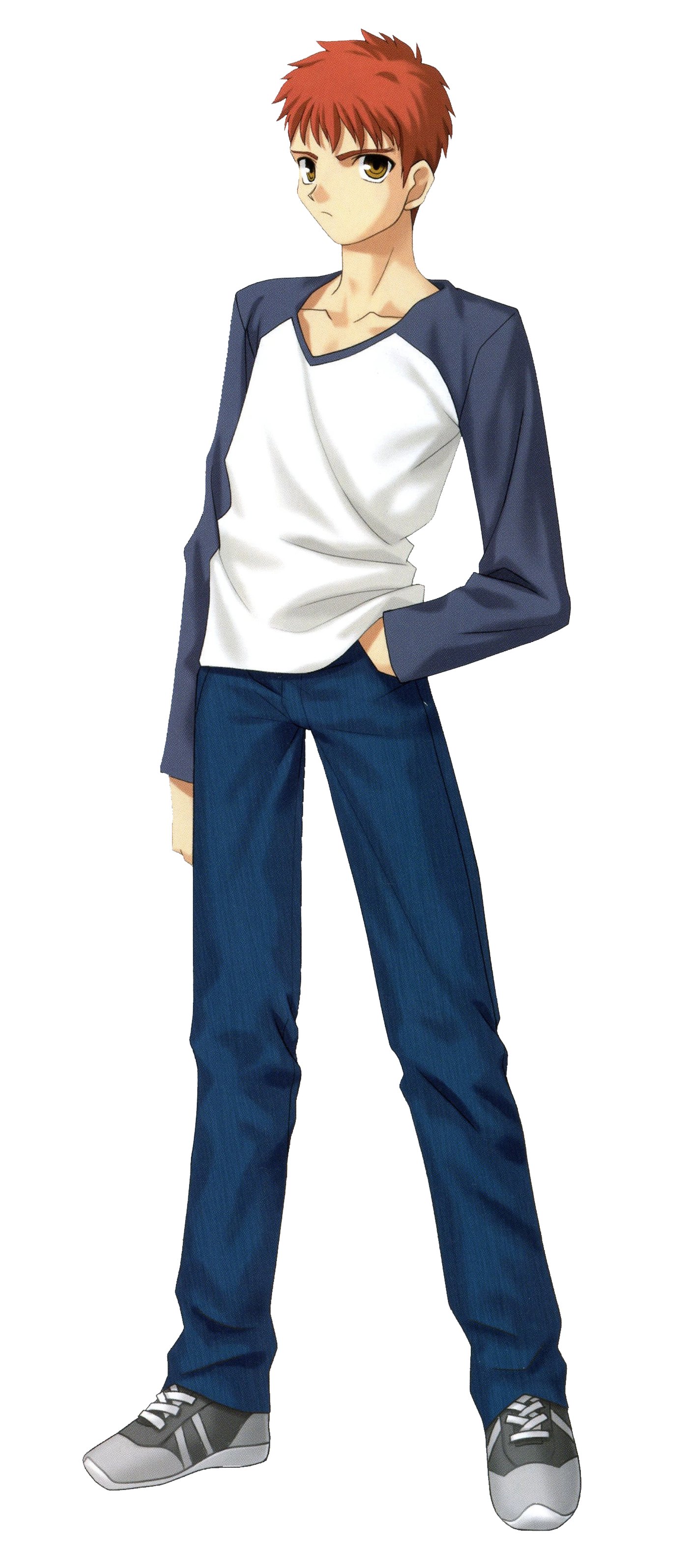
ufotable’s 26-episode adaptation of the visual novel’s second route, split across two cours — October to December 2014, then April to June 2015. It follows Shirou Emiya through the Fifth Holy Grail War alongside Rin Tohsaka.
This is the franchise’s real centre of gravity, and the entry most people mean when they say “Fate.”
3 to 5. The Heaven’s Feel trilogy (2017–2020)
Three ufotable films directed by Tomonori Sudō, with music by Yuki Kajiura, adapting the visual novel’s third and final route through Sakura Matou. Presage Flower premiered in Japan in October 2017, Lost Butterfly in January 2019 and Spring Song in August 2020.
Watch these last regardless of which order you chose. Heaven’s Feel is written to land as the finale, and it does.
Everything else is a different story (literally)
Here is the second thing most guides bury. The Fate franchise is not one continuity that grew — it is a shared premise reused across unconnected timelines. Once you finish the Fuyuki five, the rest is an anthology. You can watch any of it, in any order, or none of it.
- Fate/Apocrypha (A-1 Pictures, July to December 2017) — a different Grail War entirely, with fourteen Servants instead of seven. Fully standalone.
- Fate/Grand Order – Absolute Demonic Front: Babylonia (CloverWorks, October 2019 to March 2020) — adapted from the mobile game. Strong on its own, though it drops you mid-story.
- Fate/Extra Last Encore (Shaft, January to July 2018) — based on the 2010 RPG but, by its own description, an alternate continuation rather than a faithful adaptation. The most divisive entry in the franchise.
- Fate/kaleid liner Prisma Illya — an alternate-universe magical-girl spin-off starring Illyasviel. Tonally nothing like the main line.
- Fate/strange Fake — see below. This one has a catch.
Fate/strange Fake: the entry every guide gets wrong
If you search for Fate/strange Fake right now, most results will tell you it premiered in January 2026. That is not what happened, and the difference matters if you tried to watch it.
The television series aired episode 1 on 31 December 2024, as part of the annual Fate Project New Year’s Eve TV Special, following a live broadcast at the Fate 20th Anniversary Showcase in Hollywood that November. Episodes from the second onward were originally scheduled for 2025, were delayed, and eventually aired from 10 January to 28 March 2026.
So there was a gap of more than a year between episode one and episode two, in the middle of a 13-episode season. A lot of people watched the premiere in December 2024, heard nothing for over a year and assumed it had been shelved. It was not. The season is complete, and a sequel was announced after the broadcast ended.
Watch the Whispers of Dawn special first — it premiered in July 2023 and functions as the prologue. Then the 13-episode series. It is set in Snowfield, America, and needs no knowledge of the Fuyuki story at all, which makes it a legitimate second entry point for anyone who bounced off stay night.
Where to watch the Fate series
Availability shifts by region and changes often, so treat this as a starting point rather than a guarantee. Crunchyroll carries the largest share of the franchise in most English-speaking territories, including Fate/strange Fake, which Aniplex of America licensed for streaming there. The Heaven’s Feel films have historically rotated between services and physical release, and are the entries most likely to require a purchase.
Check your region before committing to an order — there is no worse outcome than finishing Unlimited Blade Works and discovering the finale trilogy is not available where you live.
If you enjoy untangling this kind of thing, our Evangelion watch order guide covers a franchise with an even messier release history, and the Gundam watch order handles the largest of them all. For the mechanics behind rituals like this one, see our breakdown of how anime power systems are built.
Frequently asked questions
Do I have to watch Fate/stay night (2006) at all?
No. The 2006 Studio Deen series is the only anime adaptation of the visual novel’s first route, but it is generally regarded as the weakest Fate anime, and Unlimited Blade Works was made to be followed without it. Watch it only if you want completeness.
Does Fate/Zero spoil Heaven’s Feel?
Yes, partially. Fate/Zero was written as a prequel for an audience that had already finished stay night, so it treats several Heaven’s Feel revelations as ordinary background detail. It is still the entry point we recommend, because the spoilers are mild relative to how effectively Zero hooks new viewers.
How long does the Fate series take to watch?
The essential five entries run about 26 hours — 25 episodes of Fate/Zero, 26 of Unlimited Blade Works and three feature films. Watching every Fate anime ever produced would take well over 100 hours.
Can I start with Fate/strange Fake or Fate/Apocrypha?
Yes. Both are set in separate timelines with their own casts and Grail Wars, and neither requires the Fuyuki storyline. Fate/strange Fake in particular works as a clean entry point, though you should watch its Whispers of Dawn special first.
The bottom line
Fate looks impenetrable because the franchise’s own recommended path skips the first chapter of its source material. Once you accept that, the order is simple: Fate/Zero, Unlimited Blade Works, then the three Heaven’s Feel films. Five entries, one complete story, about 26 hours.
Everything after that is a bonus, not a prerequisite.
Sources: Wikipedia’s Fate/stay night entry for the visual novel’s route structure and adaptation history, Wikipedia’s Fate/strange Fake entry for the broadcast timeline, and Crunchyroll for current streaming availability.