In the vibrant, sprawling universes of comic books, heroes are often defined not just by their incredible powers or unwavering moral codes, but by the villains who stand against them. A truly great villain does more than just hatch evil schemes; they challenge the hero’s ideals, exploit their weaknesses, and create a conflict so personal and profound that it resonates for decades. These epic confrontations are the bedrock of comic book storytelling, giving us some of the most iconic and greatest comic book rivalries ever put to paper.
A great rivalry is a dance of opposing forces, a narrative engine that drives both characters to their absolute limits. It’s the immovable object meeting the unstoppable force, the clash of brain against brawn, and the tragic fallout of friendships torn apart by ideology. These are the conflicts that have shaped the very foundations of the Marvel and DC universes, creating moments of triumph, heartbreak, and unforgettable drama. Join us as we break down the greatest comic book rivalries that have kept readers captivated for generations.
What Makes a Rivalry Truly Legendary?
Before diving into the most iconic matchups, it’s worth understanding what transforms a villain from a one-off adversary into a legendary rival. The best comic book heroes invariably have the best villains, but it’s the relationship between them that creates something truly special.
A great rivalry is built on more than just repeated encounters. It requires a fundamental connection between hero and villain, whether that’s a shared past, opposing philosophies, or a twisted reflection of each other’s values. When Batman faces the Joker, it’s not just about stopping a crime; it’s about order confronting chaos. When Professor X debates Magneto, it’s not just about mutant rights; it’s about the very soul of a movement.
The most memorable rivalries also have real stakes. They change the characters involved, reshape their worlds, and leave lasting consequences. When the Green Goblin killed Gwen Stacy, it wasn’t just a shocking moment; it fundamentally changed Spider-Man and the entire landscape of superhero comics. These are the moments that define not just individual characters, but entire eras of storytelling.
The Anatomy of an Iconic Rivalry
Great hero-villain rivalries are not born overnight. They are forged in the crucible of conflict, personal tragedy, and philosophical opposition. Several key elements contribute to the creation of these legendary feuds:
Philosophical Opposition: The most enduring rivalries are not just about stopping a bank robbery. They are about a fundamental disagreement on how the world should work. The hero and villain represent two opposing ideologies, and their conflict becomes a physical manifestation of that debate. Superman believes in inspiring humanity to be better; Lex Luthor believes Superman makes humanity weaker. This ideological clash gives their battles weight beyond simple good versus evil.
Personal Stakes: The rivalry becomes truly personal when the villain targets the hero’s loved ones, uncovers their secret identity, or is responsible for a past trauma. This elevates the conflict from a simple battle of good vs. evil to a deeply personal vendetta. When Bullseye killed both Elektra and Karen Page, Daredevil’s two great loves, it transformed their rivalry into something far more visceral and tragic [1].
Mirror Images: Often, the most compelling villains are a dark reflection of the hero. They represent what the hero could have become if they had made different choices or succumbed to their darker impulses. Sabretooth is described as a “dark mirror to Wolverine, showing Logan’s repressed savage instincts” [2]. This creates a fascinating dynamic where the hero is not just fighting the villain, but also a twisted version of themselves.
Lasting Impact: A great rivalry has consequences that extend beyond the hero and villain. Their battles can reshape the comic book universe, lead to the formation of new teams, or even result in the death of beloved characters. The rivalry between Thor and Loki was directly responsible for the formation of the Avengers in 1963, when the combined efforts of Earth’s Mightiest Heroes were needed to defeat the God of Mischief [2]. These rivalries leave an indelible mark on the world around them.
Batman vs. The Joker: The Dance of Order and Chaos
There is no rivalry more iconic, more chilling, or more philosophically rich than the one between Batman and the Joker. It is the ultimate battle of order versus chaos. Batman, a man who has dedicated his life to imposing order on a city that took his parents, is locked in an eternal struggle with an agent of pure, unadulterated anarchy. The Joker doesn’t want money or power in the traditional sense; he wants to prove a point. He believes that life is a meaningless joke and that any person, even the incorruptible Batman, is just one bad day away from becoming like him.
Their first encounter in Batman #1 (1940) was nearly their last. The original script called for the Joker to accidentally kill himself, but a sharp-eyed editor saw the character’s potential and saved him from an early grave [1]. That single decision paved the way for over 80 years of conflict. From the Joker’s shocking crippling of Barbara Gordon in Alan Moore and Brian Bolland’s seminal graphic novel The Killing Joke to his systematic dismantling of the Bat-Family in “Death of the Family,” the Clown Prince of Crime has always made his attacks deeply personal. He doesn’t just want to defeat Batman; he wants to break his spirit and prove that his crusade for justice is a futile punchline.
This rivalry endures because the Joker is the perfect antithesis to Batman. As explored in DC’s own analysis of their relationship, Batman is a character drawn to mystery, and the Joker is the ultimate enigma—a man with no verifiable past and no understandable motive [2]. He is the abyss staring back, forcing Batman to confront the terrifying possibility that his quest for meaning is ultimately pointless. It’s a dark, twisted codependency that even Batman himself fears will end with one of them killing the other.
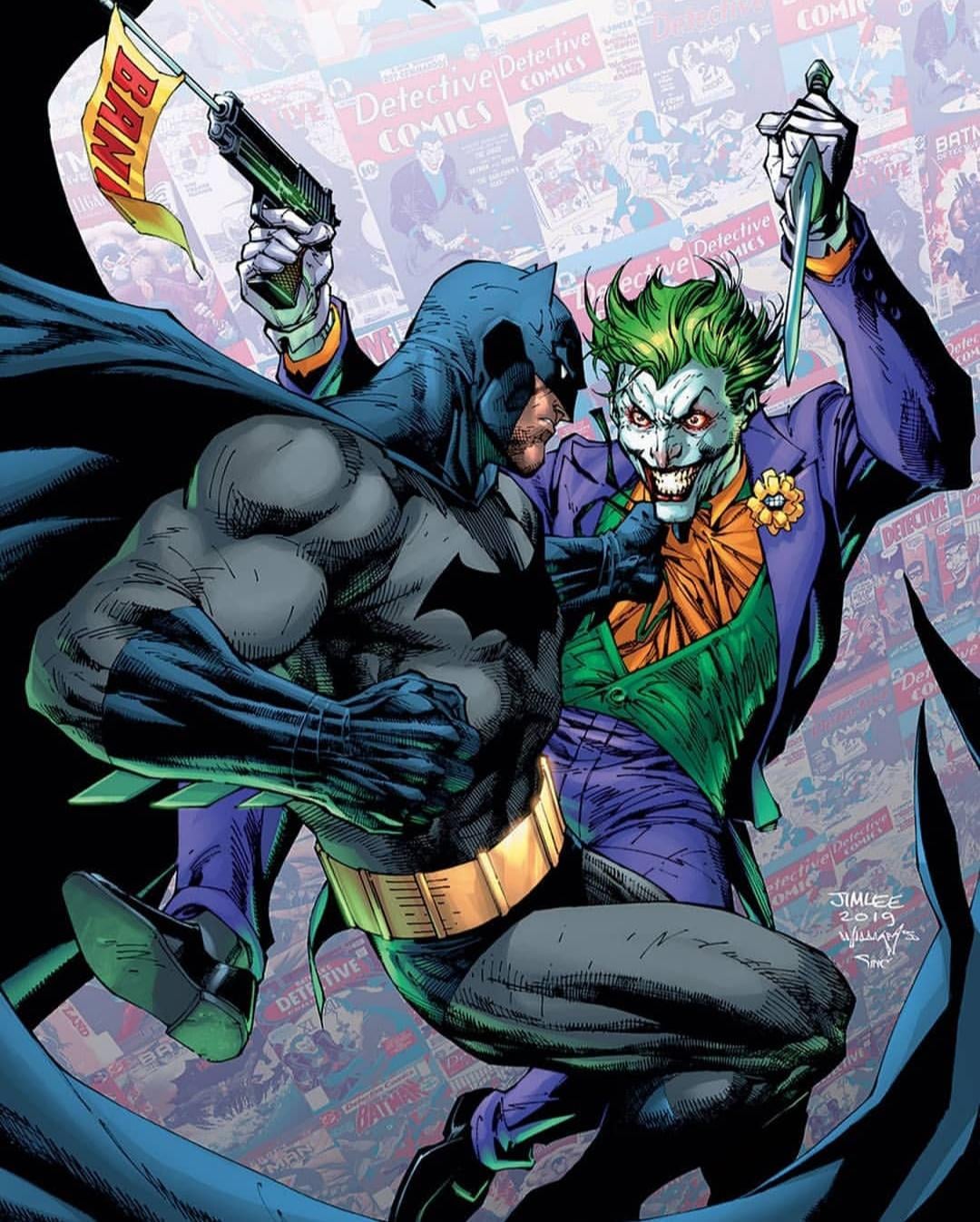 Caption: The eternal conflict between Batman and the Joker has defined both characters for decades. Credit: DC Comics / Jim Lee Source: https://www.reddit.com/r/batman/comments/17kza3j/batman_vs_joker_by_jim_lee/
Superman vs. Lex Luthor: Brains Against Brawn
If Batman and the Joker represent a philosophical war, the rivalry between Superman and Lex Luthor is a battle for the very soul of humanity. On the surface, it’s a simple case of brains versus brawn. Superman, the god-like alien with limitless power, is pitted against Lex Luthor, a mortal man whose only superpower is his own staggering intellect. But their conflict runs much deeper. Luthor sees Superman not as a savior, but as a threat—an alien interloper whose very existence makes humanity complacent and weak.
As detailed by CBR, Luthor believes he should be humanity’s savior [3]. He is one of the wealthiest and most brilliant men on the planet, a philanthropist who has done immense public good, yet he does it all for the adoration and power it brings him. When Superman arrived, people looked to the sky for a hero, and Luthor could never forgive him for it. He is consumed by a venomous envy, convinced that he is the rightful champion of Earth and that Superman is a foreign obstacle to mankind’s true potential.
What makes this one of the greatest comic book rivalries is that Luthor’s villainy is often cloaked in legitimacy. He can’t punch his way through a problem, so he outthinks it. He masterfully manipulates public opinion, exploits legal loopholes, and uses his vast resources to attack Superman in ways the Man of Steel can’t simply fight back against. He challenges Superman’s place in the world, forcing the hero to constantly justify his existence to the very people he has sworn to protect. Luthor’s greatest weapon isn’t Kryptonite; it’s his ability to turn humanity’s fear and suspicion against its greatest champion.
Professor X vs. Magneto: A War of Ideologies
Few rivalries are as tragic or as complex as the one between Charles Xavier and Erik “Magnus” Lehnsherr. Before they were Professor X and Magneto, they were friends who shared a common dream: a world where mutants could live without fear. However, their profoundly different life experiences drove them down two irreconcilable paths. Xavier, a privileged academic, believed in peaceful coexistence between humans and mutants. Magneto, a survivor of the Holocaust, was convinced that humanity would always seek to destroy what it feared and that mutants must claim their dominance to ensure their survival.
This ideological schism is the heart of the X-Men saga. As chronicled by Marvel Entertainment, their friendship fractured after they first revealed their powers to each other while fighting the Hydra agent Baron von Strucker [4]. The experience solidified Magneto’s belief that humanity was inherently violent, and he left his friend to begin his crusade for mutant supremacy. From that moment on, their lives became a chess match, with the fate of the world as their board.
Their rivalry is so compelling because neither man is entirely wrong. Xavier’s dream is noble, but at times it seems hopelessly naive in the face of humanity’s prejudice. Magneto’s methods are extreme, but they are born from a genuine desire to protect his people from repeating the horrors of his past. They have been bitter enemies, reluctant allies, and even, for a time, partners in building the mutant nation of Krakoa. Their story is a powerful exploration of how even the noblest of goals can lead to devastating conflict, a theme that touches on the very evolution of comic book villain archetypes.
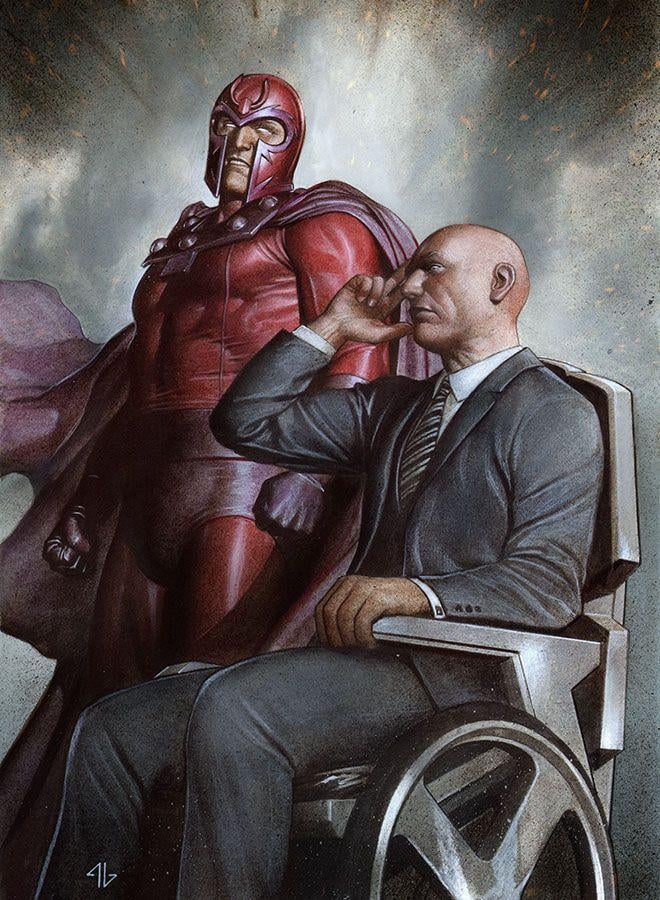 Caption: The philosophical divide between Professor X and Magneto has fueled the X-Men comics for decades. Credit: Marvel Comics Source: https://www.reddit.com/r/Marvel/comments/165rni8/best_superhero_friendships/
Other Legendary Rivalries That Shaped Comics
While the above rivalries are perhaps the most iconic, comic book history is filled with other legendary feuds that have left their mark on the medium:
Captain America vs. Red Skull: You don’t get much more basic, in terms of rivalry, than a superhero representing the United States during World War II versus a super villain representing Nazi Germany [1]. The Red Skull still represents the ideals of the Nazis, making him the perfect counterpoint to the symbol of all that is right with America. Their rivalry has endured for over seventy years, proving that some conflicts are truly timeless.
Daredevil vs. Kingpin: Wilson Fisk, the Kingpin of Crime, has systematically destroyed Matt Murdock’s life multiple times, most notably in the “Born Again” storyline where he discovered Daredevil’s secret identity and used it to tear apart everything Matt held dear [1]. This rivalry shows how a villain doesn’t need superpowers to be devastating; intelligence, resources, and ruthlessness can be just as dangerous.
Wolverine vs. Sabretooth: Their decades-spanning conflict has gone through numerous phases, including a disturbing tradition where Sabretooth would visit Logan on his birthday each year to prove he could kill him at any time [1]. This ritual of violence speaks to the deeply personal and sadistic nature of their rivalry.
Thor vs. Loki: The sibling rivalry between the God of Thunder and the God of Mischief goes back well before they appeared in Marvel Comics, rooted in Norse mythology itself [1]. Their relationship is complicated by the fact that despite all of Loki’s betrayals, Thor still sees him as his brother, creating a fascinating dynamic of love and conflict.
Why These Rivalries Endure
What makes these conflicts stand out among the countless hero-villain pairings in comic history? It’s the personal stakes and the reflection they offer of the hero’s own soul. The Joker is what Batman fears he could become. Lex Luthor represents the part of humanity that rejects Superman. And Magneto is the dark path Professor X could have easily walked.
These rivalries are not just about stopping the next doomsday device; they are about fundamental questions of morality, ideology, and human nature. They are the reason these characters have remained so compelling for so long, constantly evolving yet forever locked in their iconic struggles. It’s a perfect example of why superheroes never stay dead; their stories, and the rivalries that define them, are simply too powerful to ever truly end.
Resources
- Batman #1 (1940). DC Comics.
- What’s the Deal with Batman and the Joker Anyway? – dc.com
- Superman & Lex Luthor’s Rivalry, Explained – cbr.com
- Professor X & Magneto’s Relationship, Explained – marvel.com