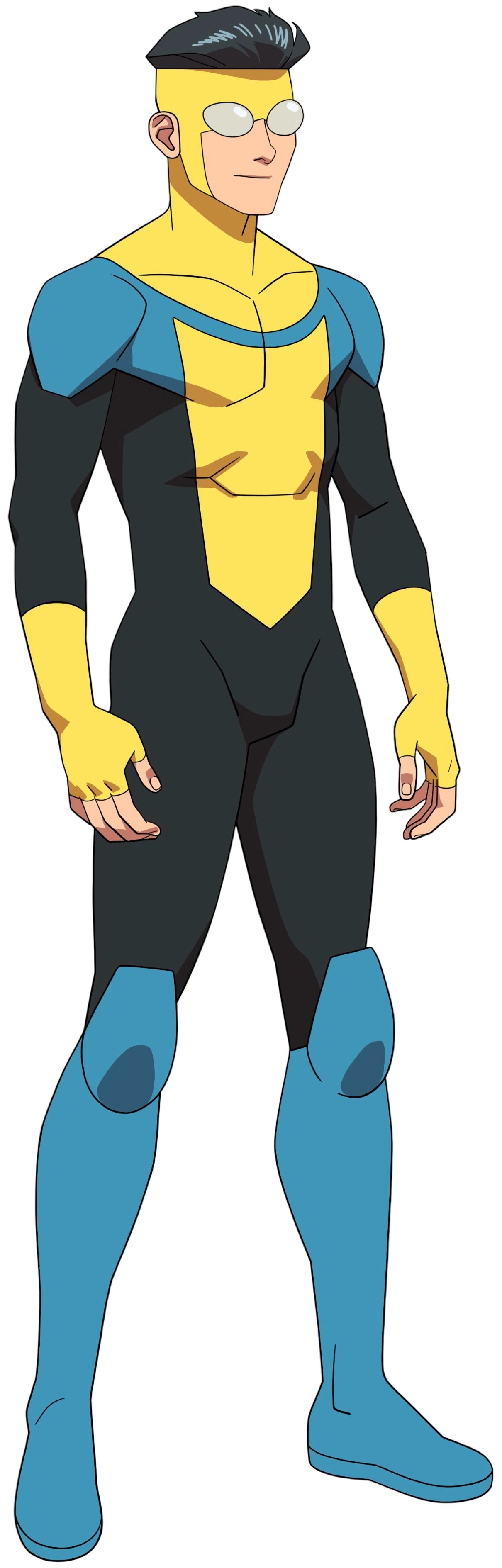
Invincible’s powers come from his father’s Viltrumite genetics: superhuman strength, speed, flight, and durability, plus rapid regeneration and slowed aging, all of which grew in gradually starting around age 17 because Mark is only half-Viltrumite, born to a human mother, Debbie Grayson.
Where Mark Grayson’s Powers Actually Come From
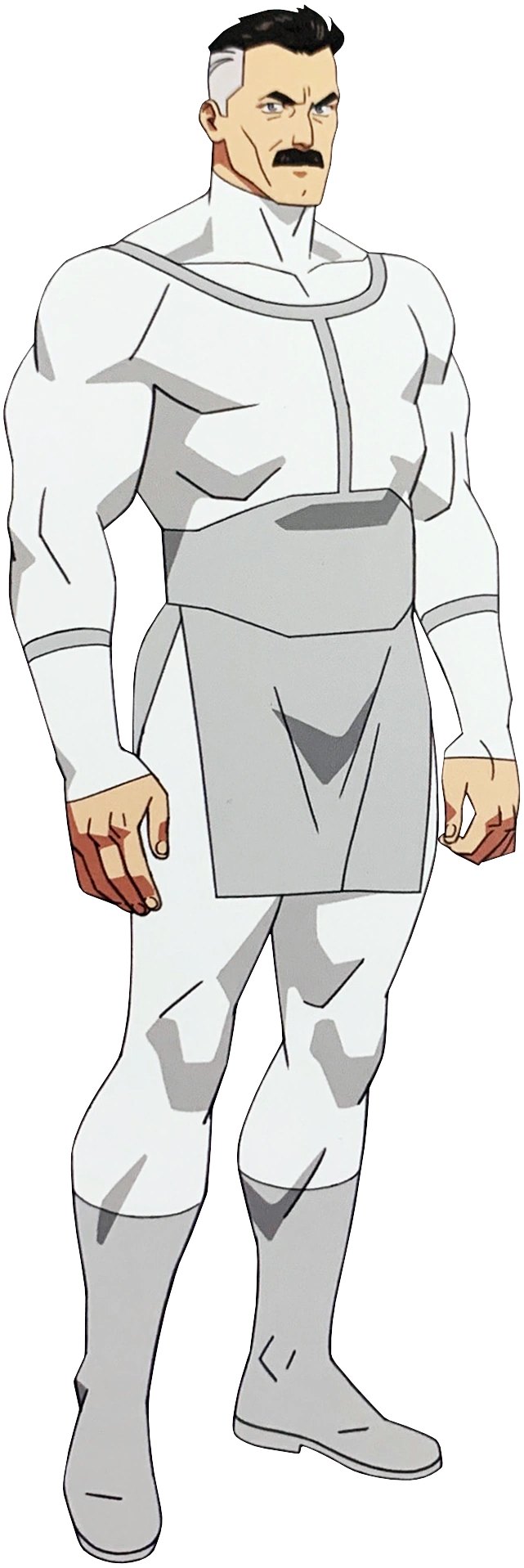
Mark Grayson is the son of Nolan Grayson, a full-blooded Viltrumite better known on Earth as Omni-Man, and Debbie Grayson, a human woman. Viltrumites are an alien species from the planet Viltrum whose biology grants them a suite of abilities once they reach maturity: superhuman strength that scales well beyond baseline human limits, flight, high-speed reflexes, near-total invulnerability to blunt trauma, rapid cellular regeneration, and a lifespan measured in centuries rather than decades. Because Viltrumite and human biology are compatible enough to produce a viable hybrid, Mark inherited the genetic potential for the full range of Viltrumite powers — but inherited potential and functioning powers are not the same thing, and that gap is the whole engine of his character arc in the early seasons and issues.
Why Mark’s Powers Took Until Age 17 to Show Up
For most of his childhood, Mark Grayson is, by his own description and the story’s, an ordinary kid with an extraordinary dad. He doesn’t fly, isn’t unusually strong, and isn’t hard to hurt. That changes suddenly during his senior year of high school, when his abilities activate almost all at once — the story’s first visible sign is Mark accidentally launching a bag of trash into orbit while working his after-school job. From there his strength, speed, durability, and flight come online over a matter of weeks, followed by continued growth as he trains and ages.
The in-story explanation is that half-Viltrumites mature on a delayed, human-influenced timeline: a pure-blooded Viltrumite child develops abilities much earlier and more completely, while a hybrid’s dormant Viltrumite genes need to reach a biological threshold — roughly aligned with human puberty and late adolescence — before they express themselves. Even after the initial activation, Mark’s power ceiling keeps climbing for years; he is explicitly written as weaker than his father through most of the early seasons, not because his genes cap out lower, but because Viltrumite strength compounds with age and use, and Nolan simply has centuries of a head start.
The Core Ability Set: Strength, Speed, Flight, Durability
Once active, Mark’s powers follow the same basic categories as any full Viltrumite, just at a lower ceiling for most of the story:
Superhuman strength
Mark can lift, throw, and punch through mass far beyond human capacity, and his output scales with training and age. It’s consistently the ability with the most visible growth curve across the comic’s run — fight scenes from early volumes look modest next to what Mark can casually do by the series’ back half.
Flight
Viltrumite flight isn’t wings or thrust-based; it functions as a form of directed self-propulsion that also lets Viltrumites survive and maneuver in the vacuum of space, which matters a lot once the story’s conflicts go off-world.
Durability and regeneration
Mark can absorb blunt-force damage that would kill a human many times over, and he heals from most injuries — including ones that would be fatal to a human — over hours to days rather than weeks. Regeneration has limits, though: it’s fast, not instantaneous or absolute, and the story repeatedly puts Mark through injuries brutal enough that recovery takes real time and leaves him vulnerable in the interim.
Enhanced senses and slowed aging
Mark’s senses — sight, hearing, reaction time — scale up alongside his physical abilities. Longevity is the other defining Viltrumite trait: once matured, Viltrumites age at a small fraction of the human rate, which is part of why the species can run a centuries-long imperial project and why Nolan, confirmed in the Official Handbook of the Invincible Universe to be over 2,000 years old, still looks like a fit middle-aged man.
Mark vs. a Full-Blooded Viltrumite
The clearest way to see what “half” costs Mark is to line his ability set up against his father’s.
| Ability | Mark Grayson (Half-Viltrumite) | Full-Blooded Viltrumite (e.g., Omni-Man) | First Appearance / Source |
|---|---|---|---|
| Onset age | Gradual, starting ~17 | Early, develops in childhood | Invincible #1 (2003) |
| Strength ceiling | Lower through early-mid series, grows with age/training | Higher baseline from maturity onward | Invincible #1–#7 |
| Flight | Yes, same mechanism | Yes, same mechanism | Invincible #1 |
| Durability/regeneration | Strong, but injuries can still sideline him for arcs | Extremely high, faster recovery | Invincible vol. 1–3 |
| Lifespan | Unconfirmed, likely extended but untested in-story | Over 2,000 years (Nolan, per the Official Handbook of the Invincible Universe) | Invincible #12–#13 |
| Cultural conditioning | Raised human, no Viltrumite indoctrination | Raised within Viltrumite military empire | Invincible #1–#7 |
The Viltrumite Empire: Power as Ideology, Not Just Ability
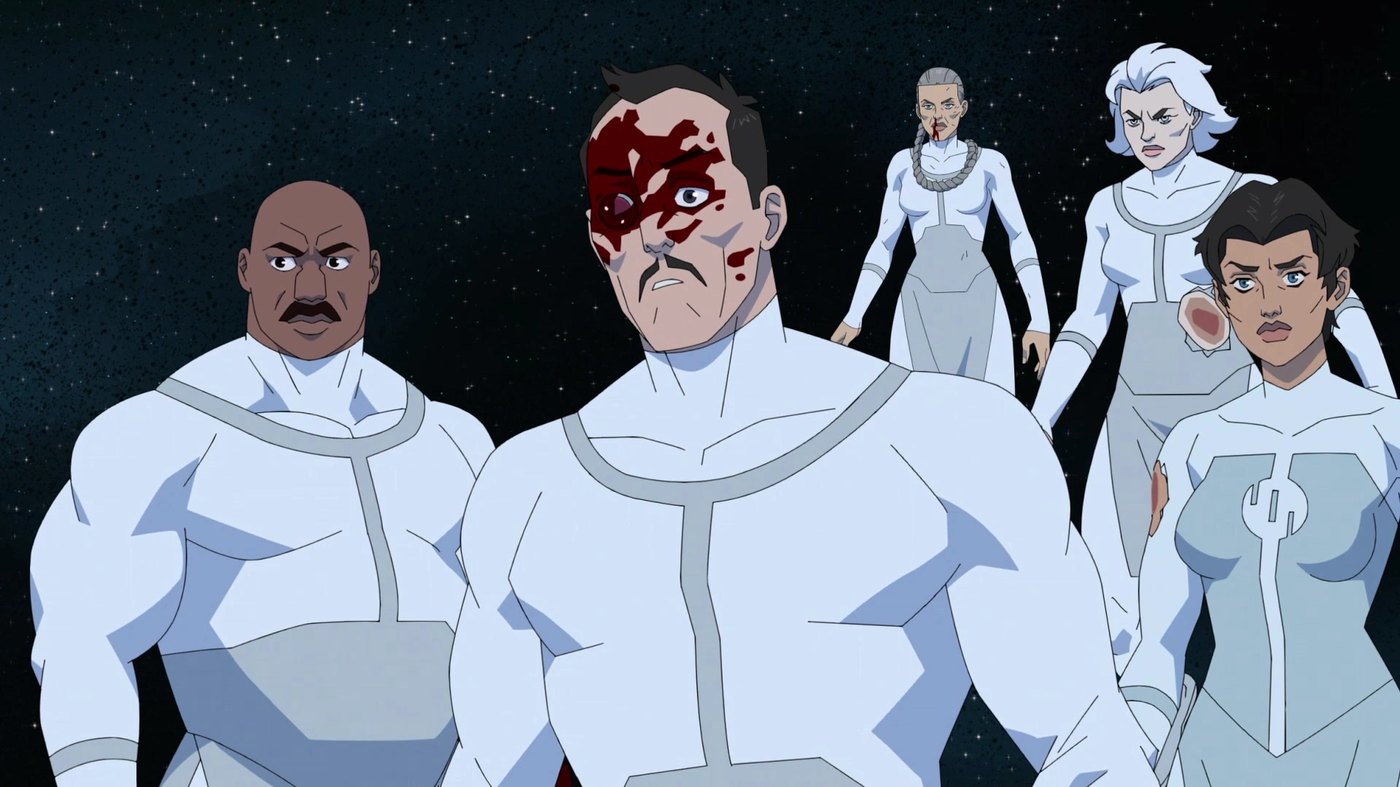
Viltrumite powers don’t exist in a vacuum — they’re the load-bearing justification for an entire imperial culture. The Viltrumite Empire is an explicitly conquest-driven, militaristic society built on the premise that physical strength confers the right to rule. Viltrumite doctrine, reinforced over generations under rulers like Emperor Argall and later Thragg, treats strength as a moral fact: the strong are entitled to control the future of the empire, and worlds are absorbed through a mix of forced “diplomacy” and outright conquest, with total obedience the price of survival. Being raised outside that culture — as a human kid in Illinois rather than inside Viltrum’s military hierarchy — is arguably as important to who Mark becomes as any biological difference. His power comes from Viltrum; his values come from Debbie.
The Real Insight: Kirkman Built Viltrumites as Superman’s Opposite — and He’s Not the Only One Who’s Noticed
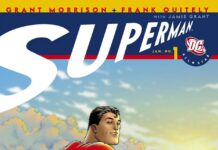
It’s easy to describe Invincible as “Superman, but the dad is evil” and stop there. The more specific, verifiable point is what the Viltrumite power structure was built to invert. Superman’s mythology runs on Krypton being gone: Kal-El is the last son of a destroyed world, powerful but isolated, and his strength is framed as a gift he chooses to use in service of a planet that isn’t his. Viltrum is the opposite premise on every axis — it isn’t destroyed, it’s expanding; Mark isn’t the last of his kind, he’s a low-ranking asset in a species that treats strength as a recruitment pipeline for conquest; and “great power, great responsibility” gets replaced with great power, entitled dominion. Omni-Man isn’t a rogue Superman analog; he’s a functioning Viltrumite doing exactly what his culture raised him to do.
That contrast has now been made explicit in public, on the record, by the two men most directly positioned to make it. On Rob Liefeld’s Robservations podcast, Liefeld put the comparison to Kirkman directly: “I believe Superman has an Invincible problem now. I believe the tables have 1000% turned, and I mean, I really do believe the space of this style of superhero is now being defined by what [Kirkman], and [Ryan Ottley], and Cory [Walker] did and what the show is doing, and it’s up to Superman to somehow adapt,” Liefeld said. Kirkman didn’t wave the framing off, and pointed to specifics of his own: “When I see Superman comics where they’re giving Superman a kid, and when I see Superman cartoons where they’re making the Kryptonians Viltrumites, sometimes I’m like, ‘Hm, that’s kind of weird.’” He was careful not to accuse anyone of copying — “Very creative people are doing this stuff, and I think it’s a zeitgeist thing. It’s not necessarily like anyone going, well, ‘You know, the Kryptonians would be cooler if they were more like Viltrumites.’” — but he didn’t fully back off the comparison either: “Although let’s be honest, that’s true. I don’t think it’s a deliberate thing,” he added, as CBR reported. Whatever you make of the rivalry framing, the exchange confirms something that matters more for understanding the powers themselves: Kirkman conceived Viltrumite biology and culture as a structural answer to Krypton, not a coat of paint on it. The empire’s conquest doctrine and the “might makes right” succession politics under Argall and Thragg aren’t background lore — they’re the mechanism that explains why the same powerset produces a mass-murdering invasion force on one side of Mark’s family and a mild-mannered comic-shop kid on the other.
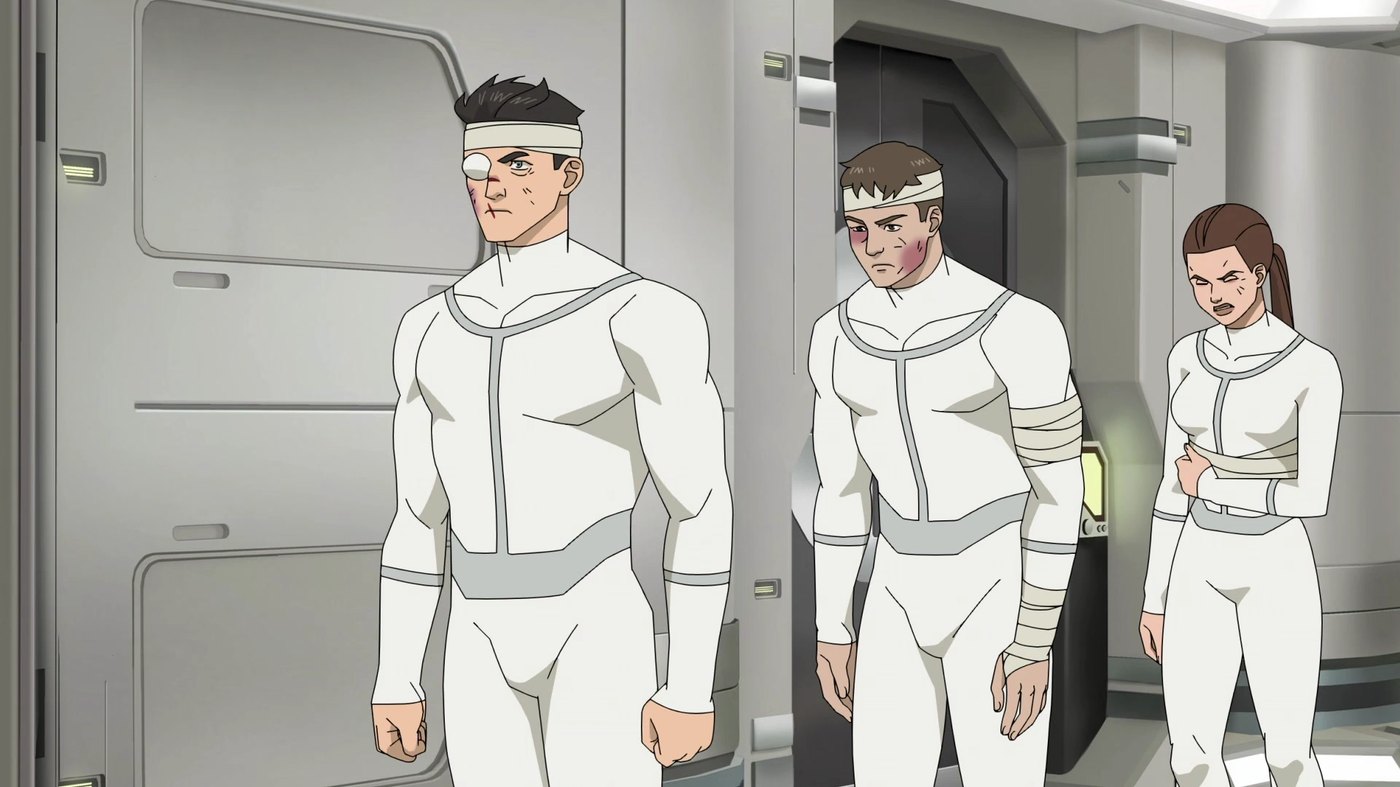
The half-Viltrumite mechanic also lines up with how ScreenRant’s breakdown of Mark’s power set and CBR’s history of Viltrumite culture both frame the species: strength, speed, flight, and durability that scale up over time, paired with a social structure where hybrids like Mark only earn standing in the empire by proving themselves in combat.
Powers vs. Character: Why the Distinction Matters
The half-Viltrumite framing does real narrative work beyond justifying a slower power curve. It gives Kirkman a mechanism to keep Mark physically overmatched by Viltrumite antagonists for years of story time, which forces him to win fights (when he wins them) through timing, terrain, and allies rather than pure output. It also keeps the door open, mechanically, for Mark’s ceiling to keep rising as the series goes on, since nothing in the biology caps a hybrid below a pureblood — it only delays and complicates the climb. That’s a meaningfully different promise to the reader than a fixed power level: the tension isn’t just “can Mark win this fight,” it’s “how much stronger does Mark get before the values his human upbringing gave him get tested by the kind of strength his Viltrumite half makes possible.”
How Invincible’s Powers Hold Up Next to Other Power Systems
If you’re comparing Invincible’s power framework against other franchises, the explainer on how comic book powers actually work is a useful baseline for how writers justify strength scaling in general. For a sense of where a Viltrumite-level combatant would rank against organized super-teams rather than solo antagonists, see our ranking of the most powerful superhero teams. And if you’re catching up on where the story and its power reveals stand on screen, our guide to Invincible Seasons 3 and 4 covers release dates, cast, and what’s confirmed so far.
Frequently Asked Questions
Why didn’t Mark Grayson have powers as a kid?
Because he’s only half-Viltrumite. Full-blooded Viltrumites develop their abilities early in childhood, but a human-Viltrumite hybrid’s genes stay dormant until a later biological threshold, which for Mark landed during his senior year of high school, around age 17.
Will Mark ever be as strong as Omni-Man?
The story treats Mark’s power ceiling as still rising rather than fixed, since nothing in the biology caps a hybrid below a pureblood Viltrumite — it only delays the climb. He closes the gap with training and age but starts years behind his father’s centuries of experience.
What is a Viltrumite, exactly?
Viltrumites are a militaristic alien species from the planet Viltrum with superhuman strength, speed, flight, durability, regeneration, and greatly extended lifespans — Omni-Man himself is confirmed to be over 2,000 years old. Their empire is built on the belief that physical strength grants the right to rule and conquer other worlds.
Is Invincible based on Superman?
Creator Robert Kirkman has described Invincible as starting from a Superman-style premise before subverting it — Viltrumite biology and imperial culture were built as a structural opposite to Krypton’s destruction and Superman’s isolation, not a simple reskin.