Black Widow has no superpowers in the MCU — no super-strength, no healing, no serum. Natasha Romanoff’s abilities are entirely earned: elite hand-to-hand combat, espionage, marksmanship, and tactical skill from a childhood spent training in the Red Room. The comics version has a small biological edge the films leave out entirely, which is worth knowing before you assume the movies told the whole story.
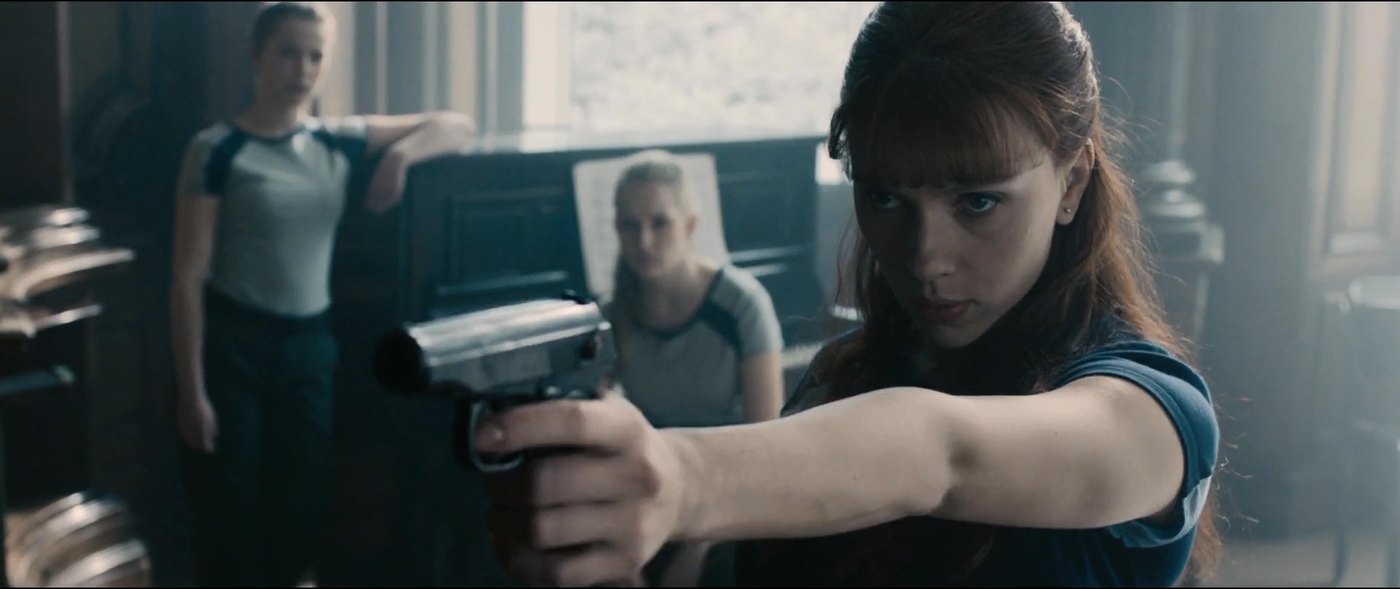
Black Widow’s Skills, Not Powers
| Skill | What It Means |
|---|---|
| Master martial artist | Trained in multiple combat disciplines from childhood; fights soldiers, aliens, and super-soldiers on even footing through technique alone |
| Expert espionage and infiltration | Trained as a spy first — covert operations, interrogation resistance, and disguise are core to her skill set, not an afterthought |
| Marksmanship | Proficient with firearms and thrown weapons at a level matching or exceeding S.H.I.E.L.D.’s best agents |
| Multilingual | Fluent in multiple languages, a direct product of Red Room training for global espionage work |
| Widow’s Bite gauntlets | Wrist-mounted stun weapons delivering an electric shock strong enough to down enhanced opponents — her one piece of tech that functions like a power |
The Red Room: Where Her Skills Come From
Natasha was trained from childhood at the Red Room, a Soviet black-ops program that produced a generation of elite assassins and spies — not superhumans. The training was brutal and deliberate: years of combat conditioning, psychological manipulation, and forced compliance designed to erase hesitation rather than grant biological enhancement. That distinction matters, because it’s also why Natasha’s arc across the MCU is framed around escaping and atoning for what the Red Room made her do, not around controlling a power she was born with.

What the Comics Give Her That the Movies Don’t
Here’s the detail most “no powers” explainers skip entirely: in the comics, Natasha did receive a variant of the Soviet Super-Soldier serum as part of her Red Room conditioning. It’s a minor enhancement compared to Captain America’s, but it’s real — comics geneticist Dr. Kurdin has stated she heals at roughly four to five times the human rate, ages significantly slower than a normal person (which is how a WWII-era operative still looks the same age decades later), and has a superhumanly efficient immune system that resists most toxins and disease.
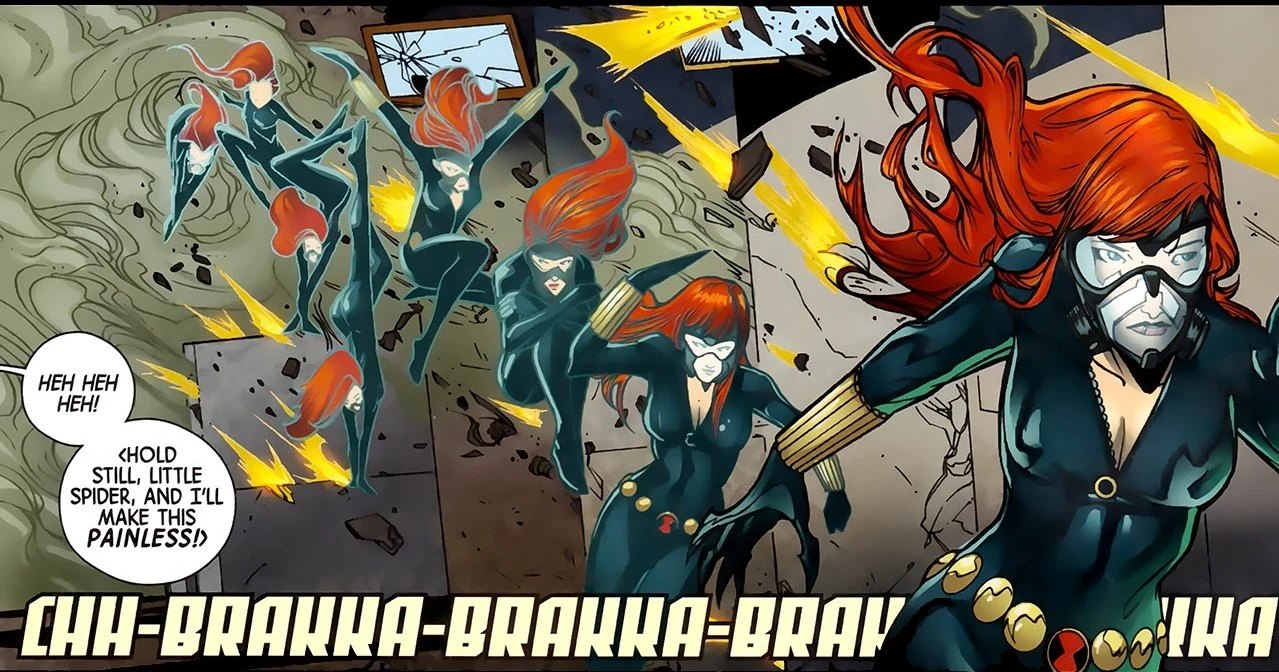
The MCU deliberately dropped all of it. There’s no scene where film-Natasha shrugs off a wound faster than a normal person would, and the franchise never explains why she doesn’t visibly age between 2010’s Iron Man 2 and 2019’s Endgame the way an ordinary person would over nine years of high-stress fieldwork. That’s not a plot hole so much as a choice: the films needed Black Widow to read as mortal and human-scale next to a god and a super-soldier, and even a small biological edge would have complicated that.
Compare that to a hero like Scarlet Witch, whose power level has grown to reality-warping extremes, and the contrast is the point: Black Widow was never designed to compete on raw power in the first place. Her value to the Avengers has always been that she’s the one member of the team whose survival depends entirely on never making a mistake — which is a much harder needle to thread across a decade of increasingly cosmic threats.
Why ‘No Powers’ Was the Point — Not a Limitation
Writers and directors across the MCU have consistently framed Natasha’s lack of powers as her defining strength, not a weakness to work around. Standing beside Thor and the Hulk, a character who competes purely on skill raises the stakes of everything she does — there’s no safety net, no healing factor to fall back on when a fight goes wrong. It’s also why her death in Avengers: Endgame landed as permanent in a way the film franchise rarely allows: unlike heroes erased by Thanos’s snap and restored five years later, Natasha’s sacrifice on Vormir happened outside that timeline entirely, and no amount of later time-travel plotting brought her back. A hero with a healing factor or a resurrection mechanic built into her comics history dying that permanently would have felt like a cheat; for a character defined by mortality, it was the only ending that fit.
That mortality is also exactly why the MCU has spent years transferring the Black Widow identity forward rather than recasting Natasha. Florence Pugh’s Yelena Belova was confirmed on-screen as the new Black Widow in Spider-Man: Brand New Day, continuing an arc that runs through 2021’s Black Widow, the Hawkeye series, and Thunderbolts*, ahead of a larger role for Yelena in Avengers: Doomsday. Yelena inherited the same Red Room training and the same lack of superpowers — the mantle passed on skill, not on any biological gift, which keeps the character’s entire premise intact.
Frequently Asked Questions
Does Black Widow have any powers at all?
In the MCU, no — she relies entirely on training, technology, and tactics. In the comics, she has a minor Super-Soldier-derived enhancement giving her accelerated healing, slowed aging, and disease resistance, though this has never been adapted on screen.
How is Black Widow able to fight super-soldiers and gods?
Through elite-level technique, tactical positioning, and equipment like her Widow’s Bite gauntlets rather than raw power. The films consistently frame her victories as outsmarting or out-maneuvering stronger opponents, not overpowering them.
Why doesn’t Black Widow age in the MCU?
The films never explain it on screen, unlike the comics, which attribute her youthful appearance to Red Room bio-enhancement that slows aging. It’s one of the details the movies quietly dropped along with her other minor comics enhancements.
Is Yelena Belova the new Black Widow?
Yes. Spider-Man: Brand New Day confirmed on-screen that Yelena has taken on the Black Widow identity, continuing her arc from 2021’s Black Widow film and Thunderbolts* ahead of Avengers: Doomsday.
Sources: Black Widow’s comics-only enhancements are documented by Writeups.org’s Red Room profile and ScreenRant, and Yelena’s on-screen confirmation as the new Black Widow was reported by CBR.