From a simple costume change for Spider-Man to a galaxy-spanning cosmic horror story, Marvel’s symbiotes have become one of the most enduring and terrifying corners of the comic book universe. While Venom and Carnage are household names, their family tree is a tangled, chaotic web of monstrous offspring, powerful hybrids, and forgotten experiments. This is the complete guide to Marvel’s symbiote family tree, from the primordial darkness to the latest generation of lethal protectors.
The Primordial Goo: Knull and the First Symbiotes
Before there was Venom, before there was Spider-Man, there was Knull, the primordial god of the abyss. As revealed in the groundbreaking Thor: God of Thunder series and expanded upon in the massive King in Black crossover event, Knull forged the first symbiote, All-Black the Necrosword, from his own shadow to wage war against the Celestials themselves. This ancient, powerful weapon set the stage for the entire Klyntar race, the proper name for the symbiote species that would eventually spread across the cosmos.
Knull’s early experiments produced other, lesser-known symbiotes like Mister E and the Void Knight, proto-symbiotes that lacked the refinement of later generations. These early attempts were crude, violent, and ultimately failures in Knull’s grand design. However, they established the fundamental characteristics that would define all future symbiotes: the ability to bond with a host, amplify their physical abilities, and feed off their emotions. The Exolon, another discarded species from Knull’s experiments, would later resurface in the Marvel Universe, proving that even the god of symbiotes couldn’t fully control his creations.
The symbiote dragons, massive creatures forged from living darkness, were among Knull’s most powerful weapons. Grendel, named after the monster from the Old English poem Beowulf, fought Thor during the Viking Age and was eventually frozen in ice. Centuries later, S.H.I.E.L.D. would discover Grendel and attempt to weaponize it through the Sym-Soldier Program during the Vietnam War. This led to the creation of the Tyrannosaurus symbiote, which bonded with soldier Rex Strickland. The fact that even a fragment of Knull’s power could create such a formidable weapon speaks to the terrifying potential of the symbiote species.
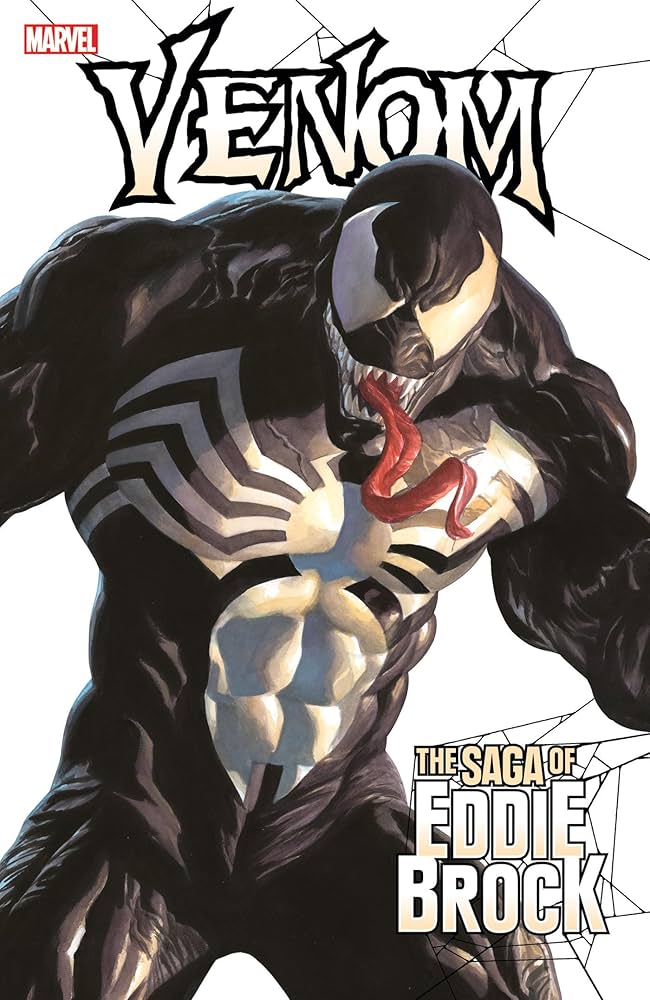 Caption: The original Lethal Protector, Venom, has spawned an entire lineage of symbiotes on Earth.
Credit: Marvel Comics
Source:Marvel.com
The Progenitor: How Venom Seeded a Planet of Monsters
The symbiote that would become Venom first appeared in Secret Wars #8 in 1984 as a new, sleek black costume for Spider-Man. Peter Parker, believing he’d found a machine that could create a new costume, unknowingly bonded with a sentient alien organism. The symbiote, a descendant of Knull’s creations, had a desire to permanently bond with a host, and when Peter forcefully rejected it after learning the truth, the symbiote found a new partner in disgraced journalist Eddie Brock.
Their shared hatred for Spider-Man created Venom, a terrifying and powerful anti-hero who has been both a lethal protector and a world-ending threat. Eddie Brock’s rage and the symbiote’s alien nature combined to create something entirely new, a being that possessed all of Spider-Man’s powers plus enhanced strength, the ability to shapeshift, and immunity to Spider-Sense. Venom quickly became one of Spider-Man’s most dangerous foes, but over time, Eddie Brock’s moral compass began to reassert itself. He left New York and established himself as a “Lethal Protector” on the West Coast, using his powers to defend the innocent while still maintaining his brutal methods.
Venom’s ability to spawn offspring is the primary reason for the explosion of symbiotes on Earth. Unlike traditional reproduction, symbiotes can create offshoots of themselves, essentially cloning their genetic material while allowing for variation and mutation. This process is often involuntary, triggered by extreme stress or trauma. The most infamous of these offspring is, of course, Carnage. When Eddie Brock was imprisoned at Ryker’s Island, the Venom symbiote came to break him out, but left a small part of itself behind in the chaos. That spawn bonded with Brock’s cellmate, the nihilistic serial killer Cletus Kasady, creating a monster of pure, unadulterated chaos.
Carnage is more powerful, more sadistic, and more dangerous than Venom, lacking any semblance of a moral compass. The bond between Kasady and the symbiote is so complete that they are essentially one being, with Kasady’s psychopathic personality amplified by the alien’s raw power. Carnage lacks Venom’s vulnerability to fire, making him even more difficult to defeat. He is, in many ways, the truest expression of the symbiote’s destructive potential, a being driven solely by the desire to cause pain and suffering. Carnage has been the central villain in numerous major storylines, including Maximum Carnage, Absolute Carnage, and King in Black, cementing his place as one of Marvel’s most terrifying villains.
The Grandchildren of Venom: Toxin and the Life Foundation Five
Carnage, like its “father” Venom, also spawned its own offspring. Toxin, the 1000th in their lineage, was feared by both Venom and Carnage for its potential power. In the symbiote hierarchy, each generation is theoretically more powerful than the last, and Toxin represented a quantum leap in raw strength and ability. Initially bonded with police officer Pat Mulligan, Toxin was a force for good, a hero who struggled to control its darker impulses. This made Toxin a unique figure in the symbiote family tree, a true hero born from a lineage of monsters.
Pat Mulligan’s strong moral character and sense of justice helped to temper Toxin’s violent nature, creating a symbiote that could actually work within the law. However, the bond was always tenuous, with Toxin constantly threatening to overwhelm Mulligan’s control. Later, Toxin would bond with teenager Bren Waters, continuing its complicated legacy. The fact that Toxin could stand toe-to-toe with both Venom and Carnage in combat speaks to its immense power, and its potential for either heroism or villainy remains one of the most compelling aspects of the character.
But Venom’s lineage doesn’t stop there. The shadowy Life Foundation, a survivalist organization preparing for nuclear apocalypse, captured Venom and forcibly extracted five more symbiotes: Scream, Phage, Riot, Lasher, and Agony. These five were bonded to the foundation’s security forces to create a new generation of super-soldiers. Each of the Life Foundation Five developed unique abilities beyond the standard symbiote powerset. Scream, bonded to Donna Diego, could manipulate her hair-like tendrils for both offense and defense. Phage, bonded to Carl Mach, favored transforming his arms into massive blades. Riot, bonded to Trevor Cole, was a hulking brute who preferred blunt weapons. Lasher, bonded to Ramon Hernandez, wielded whip-like tendrils similar to Doctor Octopus’s arms. Agony, bonded to Leslie Gesneria, could spit corrosive acid and ingest various chemicals.
While initially villains, the Life Foundation symbiotes have had a complicated history. They fought against Venom and Spider-Man, but also struggled with their own identities and the moral implications of their powers. Eventually, the five symbiotes merged to form the composite symbiote Hybrid, a being that combined the abilities of all five into one powerful entity. Hybrid has bonded with multiple hosts over the years, including Scott Washington, a security guard who used the symbiote’s power to fight crime. The Life Foundation Five represent the dangers of weaponizing symbiotes, but also the potential for redemption even among the most monstrous of creatures.
 Caption: Carnage’s power has evolved over the years, culminating in his terrifying Extrembiote form during the King in Black event.
Credit: Marvel Comics
Source:Marvel.com
The Modern Era: Hybrids, Clones, and a Whole New Generation
The symbiote family tree has only grown more complex in recent years. The introduction of Anti-Venom, a hybrid symbiote created when Martin Li (Mister Negative) used his powers on Eddie Brock to cure his cancer, added a new wrinkle to the family. Anti-Venom possesses powerful healing abilities and can cure those afflicted by symbiotes, essentially acting as an antibody to the Klyntar species. This made Anti-Venom a unique and valuable asset, capable of neutralizing other symbiotes and healing their victims. Eddie Brock eventually sacrificed the original Anti-Venom symbiote to cure the Spider-Virus during the Spider-Island event, but a new version was later created when Flash Thompson was exposed to the Anti-Venom Serum.
Other notable additions to the modern symbiote family include Sleeper, another of Venom’s spawn who was raised by Alchemax and developed a more childlike, innocent personality. Mania, a clone of the Venom symbiote created by the Ararat Corporation, bonded with Andi Benton and became a hero in her own right. Rascal, a young symbiote bonded to Normie Osborn, represents the latest generation of symbiotes, one that is disconnected from the Hive-Mind and has the potential to forge its own path. Misery, a hybrid of Carnage and Anti-Venom bonded to Liz Allan, represents the terrifying potential of combining two opposing symbiote types.
The recent King in Black and Extreme Carnage events have introduced even more symbiotes, expanding the family tree in new and terrifying directions. Extrembiote, a fusion of the Extremis virus and a symbiote dragon, gave Carnage reality-warping powers. Silence, created using the Anti-Venom Serum and Scream’s biological data, bonded with Andi Benton after she lost Mania. Serpent, born from the fallout of the Dark Web event, has bonded with multiple hosts including Donald Blake and Darkoth. These new symbiotes represent the ever-evolving nature of the Klyntar species, constantly adapting and mutating to survive.
Understanding Symbiote Powers and Weaknesses
All symbiotes share certain core abilities. They grant their hosts superhuman strength, speed, agility, and durability. They can shapeshift, creating weapons, armor, and even mimicking clothing. They possess a form of Spider-Sense, allowing them to detect danger. They can also heal their hosts from injuries and diseases. However, symbiotes also share common weaknesses. They are vulnerable to intense heat and sonic vibrations, which can disrupt their molecular structure and cause them immense pain. They also feed off their host’s emotions, particularly negative ones like rage and fear, which can lead to a loss of control.
The bond between a symbiote and its host is a complex, symbiotic relationship. The symbiote provides power and protection, while the host provides sustenance and direction. However, this bond can be corrupted if the host’s negative emotions overwhelm the symbiote, or if the symbiote’s alien nature dominates the host’s personality. The most successful symbiote bonds are those where both host and symbiote work together, respecting each other’s needs and limitations. This is why heroes like Toxin and Agent Venom have been able to use their symbiotes for good, while villains like Carnage have become monsters.
The Future of the Symbiote Family Tree
From the ancient darkness of Knull to the heroic struggles of Toxin, the symbiote family tree is a testament to the enduring appeal of these monstrous, complex, and utterly captivating characters. With each new generation, the legacy of Venom grows, and the Marvel Universe trembles in anticipation of what new horrors and heroes will emerge from the primordial goo. The Venom War storyline promises to shake up the symbiote hierarchy once again, as Eddie Brock’s son Dylan and other contenders vie for the title of King in Black. The symbiotes have evolved from simple villains to complex characters with their own motivations, desires, and moral codes. They represent the duality of power, the potential for both great good and terrible evil, and the eternal struggle between our darker impulses and our better angels.
Whether you’re a longtime fan of Venom or just discovering the symbiote family tree, one thing is clear: these alien creatures have left an indelible mark on the Marvel Universe, and their story is far from over.
Resources
- Marvel.com, “Every Marvel Symbiote, from Venom to Knull” – https://www.marvel.com/articles/comics/every-marvel-symbiote-list-venom-knull-carnage
- CBR.com, “Venom’s Complete Symbiote Family Tree From The Comics” – https://www.cbr.com/venom-complete-symbiote-family-tree/
- ScreenRant.com, “Every Named Symbiote in Marvel Comics History (Ranked Weakest to Strongest)” – https://screenrant.com/all-marvel-symbiotes-explained-ranked/
Related Articles:
For more on the history of Marvel’s cosmic entities, check out our article on Beyond Galactus and the cosmic hierarchy. The eternal debate of who would win in a fight is covered in our Batman vs. Superman power comparison.