The highly anticipated second season of HBO Max’s Peacemaker debuts with a bold new direction that could redefine the character forever
After a three-year wait that felt longer than Peacemaker’s list of regrets, HBO Max’s breakout superhero series returns today with a season that promises to be both bigger and more intimate than its predecessor. James Gunn’s Peacemaker Season 2 officially launches the next chapter of the DC Universe, but more importantly, it dives deeper into the fractured psyche of Christopher Smith than ever before.
The timing couldn’t be more perfect. With James Gunn’s Superman film having crossed nearly $600 million worldwide and officially launching the new DCU era, Peacemaker Season 2 serves as the crucial bridge between the old DCEU and Gunn’s ambitious new vision for DC’s cinematic future. But don’t expect this to be just another superhero spectacle filled with world-ending threats and CGI battles. According to early reviews and Gunn’s own statements, this season is fundamentally about one man’s struggle with identity, regret, and the tantalizing possibility of a better life.
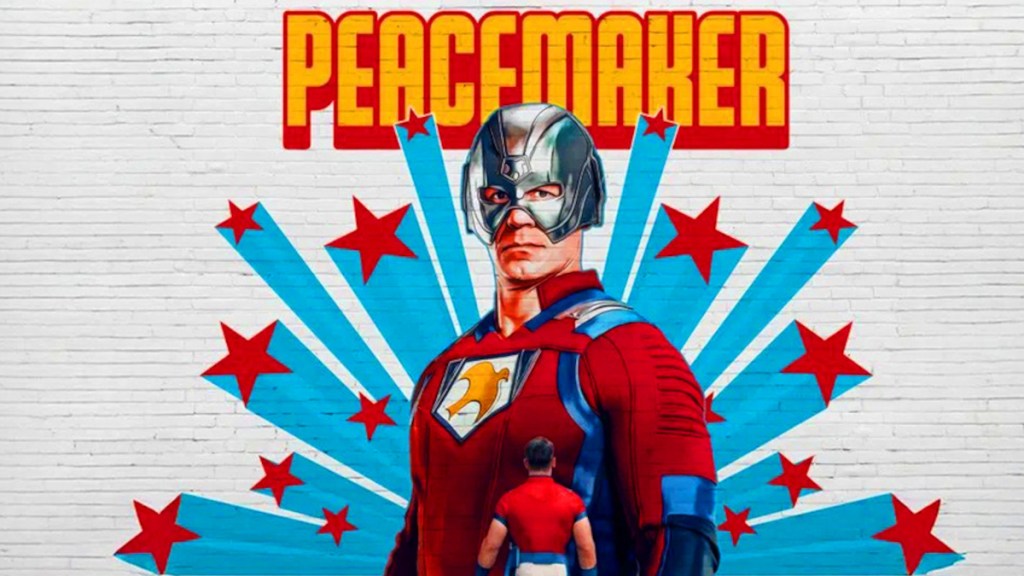
The official poster for Peacemaker Season 2, premiering August 21, 2025 on HBO Max Source: ComicBook.com
A Multiverse Story That’s Really About Self-Acceptance
The central premise of Peacemaker Season 2 revolves around Christopher Smith’s discovery of alternate dimensions through his late father’s “quantum unfolding storage area” – essentially a closet filled with interdimensional portals. But this isn’t your typical multiverse adventure. When Peacemaker peers through one of these doorways, he discovers a reality where everything he’s ever wanted has come true: his father Auggie Smith (Robert Patrick) is alive, kind, and fights crime alongside him as a beloved superhero duo.
“Peacemaker sees this reality that’s like his, but better in seemingly every way,” Gunn explained in a recent interview with Deadline. “So how does he deal with that from an emotional standpoint and face the ghosts from his past that he loved and killed? It seemed potent especially when mixed with the love story.”
This alternate reality serves as more than just a plot device – it’s a mirror reflecting everything Christopher Smith believes he’s failed at in his own life. In this better world, he’s not a government lackey with a reputation for excessive violence. Instead, he’s a celebrated hero, wealthy from his superhero career, and most importantly, he has the loving father he always craved. The temptation to abandon his own troubled reality for this idealized version becomes the season’s central conflict.
The concept draws inspiration from Philip Roth’s novel “The Counterlife,” according to Gunn, exploring themes of identity, regret, and the paths not taken. It’s a surprisingly literary foundation for a show that features a man in a chrome helmet dancing to power ballads, but that’s exactly what makes Peacemaker such a unique entry in the superhero genre.
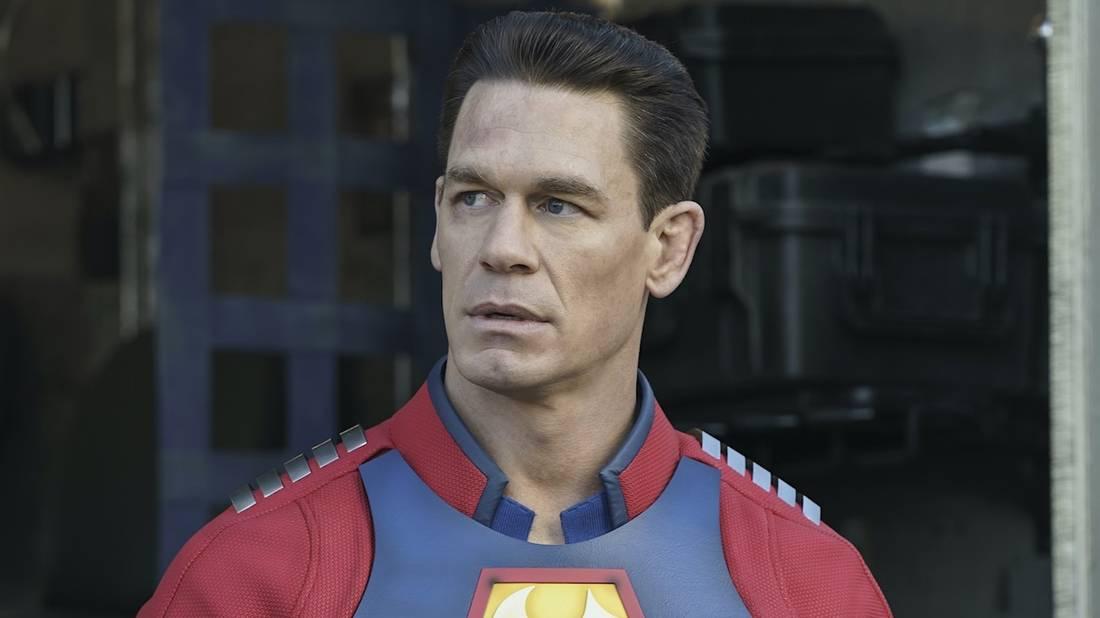
John Cena returns as Christopher Smith/Peacemaker in Season 2, facing his most personal challenge yet Source: CBR.com
James Gunn’s Creative Evolution: Why He Scrapped His Original Season 2 Plan
One of the most fascinating aspects of Peacemaker Season 2’s development is how dramatically James Gunn changed course from his original vision. The filmmaker initially planned a very different story that would have felt more like a direct continuation of Season 1’s themes and conflicts.
“The first time I wrote a rough outline of season 2, it had to do with other white supremacist superheroes who were after Peacemaker for killing his father because he was their comrade,” Gunn revealed to Deadline. “For me, it played a little bit too much like season one and I wanted to turn the story on its heels.”
This scrapped storyline would have leaned heavily into the white supremacist themes that dominated Season 1, particularly the toxic relationship between Christopher and his father, Auggie Smith, aka White Dragon. While that approach would have provided clear antagonists and familiar territory, Gunn recognized it would have been retreading old ground rather than pushing the character forward.
Instead, Gunn pivoted to something far more introspective and emotionally complex. “I wanted Peacemaker to be this character who had to really deal with the ramifications of his actions in season one, and deal with his emotional reality of the demons that he discovered in season one and how does he face that,” he explained.
This creative decision reflects Gunn’s growth as both a filmmaker and the new co-head of DC Studios. Rather than simply delivering more of what worked before, he’s using Season 2 to explore deeper psychological territory while simultaneously integrating the show into his broader DCU vision. The result is a season that serves multiple purposes: concluding Christopher Smith’s personal journey from Season 1, establishing new connections to the Superman film, and setting up future DCU storylines.
The timing of this creative shift is particularly significant. Originally, Gunn planned to write Peacemaker Season 2 before tackling Superman, but his appointment as DC Studios co-head changed everything. The multiverse elements that now play a crucial role in Peacemaker’s story were directly influenced by the dimensional concepts Gunn developed for Superman, creating a more cohesive universe than would have been possible with his original approach.
Frank Grillo’s Rick Flag Sr. Brings Personal Stakes to Season 2
While Peacemaker Season 2 focuses heavily on Christopher Smith’s internal journey, it doesn’t lack for external conflict. The season’s primary antagonist is Rick Flag Sr., played by Frank Grillo, who brings a very personal vendetta against our antihero. As the new director of A.R.G.U.S., Flag Sr. represents a different kind of threat than Amanda Waller ever did – this isn’t about government manipulation or bureaucratic control, but raw, personal hatred.
Flag Sr.’s motivation is devastatingly simple: Peacemaker killed his son, Joel Kinnaman’s Rick Flag Jr., during the events of The Suicide Squad. This creates a dynamic that’s both more intimate and more dangerous than the typical superhero-villain relationship. Flag Sr. isn’t trying to take over the world or gain power – he wants revenge, and he has the resources of A.R.G.U.S. at his disposal to get it.
This personal antagonism adds another layer to Christopher Smith’s guilt and self-reflection. He’s not just dealing with abstract regrets about his past actions; he’s facing the very real consequences of his choices in the form of a grieving father who has every reason to hate him. It’s the kind of grounded, character-driven conflict that sets Peacemaker apart from other superhero properties.
The returning cast brings their own emotional baggage to Season 2. Danielle Brooks returns as Leota Adebayo, who’s struggling with a recent breakup and trying to get her new business off the ground. Jennifer Holland’s Emilia Harcourt is dealing with her own trauma, having been blackballed from intelligence agencies by Amanda Waller before her departure from office. The character is described as having a “severe form of toxic masculinity,” spending her time drinking heavily and picking fights at bars rather than processing her emotions in healthy ways.
Steve Agee’s John Economos remains trapped at A.R.G.U.S., now with the paradoxical assignment of spying on Peacemaker for his new boss. Meanwhile, Freddie Stroma’s Adrian Chase/Vigilante has been reduced to working at a fast-casual restaurant called Fennel Farms, a far cry from his vigilante activities.
These character arcs create what Gunn describes as an “office comedy vibe” at times, with former coworkers who “had something good going before their higher-ups drove them apart.” Each character is struggling to balance personal ambitions with professional demands, creating a sense of shared displacement that mirrors Christopher Smith’s own feelings of not belonging anywhere.
Critical Acclaim and a Brand New Dance Sequence
Early critical reception for Peacemaker Season 2 has been overwhelmingly positive, with the season currently holding a perfect 100% Certified Fresh score on Rotten Tomatoes based on 30 reviews. Critics are praising the show’s ability to balance its signature irreverent humor with deeper emotional storytelling, suggesting that Gunn has successfully evolved the series beyond its origins as a Suicide Squad spinoff.
IndieWire’s Ben Travers noted that the season “tells a smaller, simpler story with bigger, knottier emotions,” highlighting how the show is “revamping its antihero into a more traditional hero” while maintaining its unique voice. The review particularly praised the season’s ambition in tackling complex themes of identity and belonging within the framework of a superhero comedy.
One of the most anticipated elements of Season 2 is the completely new opening dance sequence. The original opening credits, featuring the cast performing an elaborate choreographed routine to Wig Wam’s “Do Ya Wanna Taste It,” became a viral sensation and beloved part of the Season 1 experience. Rather than simply repeating the formula, choreographer Charissa Barton has created an entirely new routine set to a different power ballad, incorporating even more cast members than before.
“That’s right — new,” as one critic enthusiastically noted. “The cast’s quirky-jerky opening titles routine became a buzzy, then beloved part of the first season’s weekly release, and instead of simply repeating the sequence in Season 2, choreographer Charissa Barton returns with fresh steps, set to a different power ballad, incorporating even more cast members.”
James Gunn has been characteristically playful about the new sequence, calling out several actors for their lack of dance skills during filming. The new opening serves as a perfect metaphor for the season itself – familiar enough to feel like Peacemaker, but different enough to signal that this is a new chapter with its own identity and ambitions.
The decision to create a completely new opening sequence rather than recycling the beloved original demonstrates the same creative confidence that led Gunn to scrap his initial Season 2 storyline. It’s a risk that appears to be paying off, with early viewers praising the new routine as “fantastic” and noting that “the risk pays dividends within a few sittings.”
Bridging the DCU: From Superman to Justice Gang
One of the most significant aspects of Peacemaker Season 2 is its role as a bridge between James Gunn’s Superman film and the broader DCU. The season doesn’t just reference the events of Superman – it actively incorporates characters and concepts from the film, creating a more interconnected universe than DC has achieved in years.
The most notable connection comes through the Justice Gang, the superhero team introduced in Superman that Peacemaker desperately wants to join. The season opens with Christopher Smith attending a job interview with the Justice Gang, hoping to prove that he’s evolved beyond his reputation for reckless violence and homicidal tendencies. However, the hiring committee dismisses him before he can even make his case, their minds already made up about who they think Peacemaker is.
This rejection serves multiple narrative purposes. On a character level, it reinforces Christopher’s feelings of isolation and unworthiness, driving him toward the alternate reality where he’s celebrated rather than scorned. On a universe-building level, it establishes clear connections between the Superman film and the Peacemaker series while maintaining the distinct tone and perspective of each property.
The season also features the small-screen debuts of several characters from Superman, including Nathan Fillion as Guy Gardner/Green Lantern, Isabela Merced as Kendra Saunders/Hawkgirl, and Sean Gunn as Maxwell Lord, the Justice Gang’s billionaire benefactor. These appearances aren’t just cameos – they’re integral to the story and help establish the broader world that Gunn is building.
According to Gunn, Peacemaker Season 2 “really is the Christopher Smith season,” focusing on the character rather than the superhero persona. “It’s about the character of Christopher Smith. It is much more about him than it is about a superhero named Peacemaker. That’s just the costume he sometimes wears.”
This character-first approach allows the show to maintain its intimate focus while still serving the larger DCU narrative. Rather than being overwhelmed by universe-building obligations, Peacemaker Season 2 uses its DCU connections to enhance Christopher Smith’s personal journey, making both the character development and the world-building feel organic and earned.
Release Schedule and How to Watch
Peacemaker Season 2 follows a traditional weekly release schedule, with new episodes dropping every Thursday at 9 p.m. ET exclusively on HBO Max. Unlike some other HBO properties, Peacemaker will not air on the main HBO cable channel – it’s a streaming-exclusive series that requires an HBO Max subscription to watch.
The complete eight-episode season will unfold over the following schedule:
- Episode 1: “The Ties That Grind” – August 21, 2025 (Available Now)
- Episode 2 – August 28, 2025
- Episode 3 – September 4, 2025
- Episode 4 – September 11, 2025
- Episode 5 – September 18, 2025
- Episode 6 – September 25, 2025
- Episode 7 – October 2, 2025
- Episode 8 – October 9, 2025
James Gunn has been vocal about his preference for weekly releases over binge-dropping entire seasons, believing that the format allows for better audience engagement and discussion. “The wait has been worth it,” Gunn tweeted on the day of the premiere, expressing confidence in the final product.
What This Means for the Future of the DCU
Peacemaker Season 2 represents more than just the return of a popular character – it’s a crucial test case for how James Gunn’s DCU will handle the balance between individual character stories and universe-wide narratives. The success of this approach could influence how future DCU projects integrate with each other while maintaining their distinct identities.
Gunn has already teased what comes next for the DCU, mentioning plans for The Batman Part 2, a Superman sequel, and “another TV show, which nobody knows about, which is going next.” The filmmaker is also overseeing upcoming projects like Supergirl: Woman of Tomorrow starring Milly Alcock and the highly anticipated Clayface film from director James Watkins.
The emotional and thematic success of Peacemaker Season 2 could establish a template for how the DCU handles character development across multiple properties. Rather than treating each project as an isolated story with occasional crossover elements, Gunn appears to be building a universe where character growth and universe expansion happen simultaneously, each enhancing the other.
For Christopher Smith specifically, Season 2 appears to be setting up a definitive character arc that could either conclude his story or transform him into something entirely new. The question of whether he chooses his own flawed reality over the idealized alternate dimension isn’t just about plot resolution – it’s about whether the character can finally accept himself and find his place in a world that has repeatedly rejected him.
The Verdict: A Superhero Show That Dares to Be Different
Peacemaker Season 2 arrives at a time when superhero fatigue is a real concern for audiences and studios alike. By focusing on character psychology over spectacle, emotional growth over action sequences, and personal stakes over world-ending threats, the series offers a refreshing alternative to the typical superhero formula.
The show’s willingness to explore complex themes like identity, regret, and self-acceptance through the lens of a character who wears a chrome helmet and dances to power ballads is exactly the kind of creative risk-taking that the superhero genre needs. James Gunn has created something that feels both familiar and revolutionary – a superhero story that’s ultimately about becoming human.
Whether Peacemaker Season 2 will influence the broader direction of superhero entertainment remains to be seen, but it’s already succeeded in proving that there’s still room for innovation within the genre. For fans of the character, the DCU, or just well-crafted television, this season represents appointment viewing that rewards both casual viewers and dedicated fans.
As Christopher Smith faces his most personal challenge yet, audiences get to witness a master storyteller at the height of his powers, using the superhero framework to explore the very human question of whether we can ever truly escape our past – or if we even should.
Peacemaker Season 2 is now streaming exclusively on HBO Max, with new episodes releasing every Thursday at 9 p.m. ET.