From the melodramatic death of a hero to the last-minute arrival of a powerful ally, comic book tropes are the bedrock of sequential storytelling. While some readers might dismiss them as clichés, these recurring narrative devices are far more than just lazy writing. They are powerful psychological tools that tap into our deepest instincts for storytelling, making comics a uniquely engaging and emotionally resonant medium. But what is it about these familiar patterns that keeps us turning the page? The answer lies in the fascinating intersection of cognitive science, visual language, and the very nature of how we process stories.
For decades, comics were often dismissed as low-brow entertainment, but modern research reveals a far more complex picture. Cognitive scientists have discovered that our brains are wired to recognize patterns, and comic book tropes are a perfect example of this in action. These narrative shortcuts allow creators to convey complex ideas and emotions with remarkable efficiency, creating a shared language between the reader and the story. This article explores the psychology behind the most enduring comic book tropes, revealing why these familiar story elements are not just entertaining, but essential to the magic of comics.
The Visual Language of Comics: More Than Just Pictures
At its core, comic book storytelling is a visual language, and like any language, it has its own grammar and syntax. The way panels are arranged on a page, the use of speech bubbles, and the explosive energy of sound effects all contribute to a unique reading experience. In his groundbreaking work, Understanding Comics, Scott McCloud famously described the “gutter” – the space between panels – as the place where the reader’s imagination does its most important work. It is in these gaps that we connect the dots, infer action, and create a sense of motion and time. This active participation is a key reason why comics are so engaging.
Recent studies in cognitive science have further illuminated this process. Research by Neil Cohn, a leading expert in the visual language of comics, has shown that our brains process sequential images in a way that is remarkably similar to how we process written language. His Parallel Interfacing Narrative-Semantics (PINS) Model proposes that we understand comics through a dual process of semantic and narrative processing. We build a mental model of the story’s meaning while simultaneously organizing the information into a coherent sequence. This cognitive dance is what allows us to effortlessly follow the most complex action sequences and character interactions.
“The past decade has seen a rapid growth of cognitive and brain research focused on visual narratives like comics and picture stories. This paper will summarize and integrate this emerging literature into the Parallel Interfacing Narrative-Semantics Model (PINS Model)—a theory of sequential image processing characterized by an interaction between two representational levels: semantics and narrative structure.” – Neil Cohn, “Your Brain on Comics: A Cognitive Model of Visual Narrative Comprehension”
This research underscores the idea that reading comics is a learned skill. We become fluent in the visual language of comics over time, learning to interpret the subtle cues that creators use to guide our emotional and psychological responses. The use of a Dutch angle to create a sense of unease, or a close-up to heighten emotional intimacy, are all part of this sophisticated visual vocabulary.

Caption: Comic book panels demonstrate visual storytelling techniques through sequential art and dynamic layouts. Credit: Myth Works Source: https://www.myth.works
The Power of the Familiar: Why Tropes Work
While the visual language of comics provides the framework for storytelling, it is the tropes themselves that provide the emotional and psychological weight. These recurring narrative patterns tap into universal human experiences and archetypes, creating a sense of familiarity and resonance. From the hero’s journey to the villain’s tragic backstory, these tropes provide a narrative shorthand that allows creators to quickly establish character, plot, and theme.
One of the most enduring tropes in comics is the “death and return” of a major character. While this is often criticized as a gimmick, it speaks to our deep-seated desire for hope and resurrection. The temporary death of a hero creates a powerful emotional response in the reader, and their eventual return provides a sense of catharsis and relief. This cycle of loss and renewal is a powerful storytelling device that has been used in myths and legends for centuries. For a deeper dive into this trope, you can explore our article on why superheroes never stay dead.
Another powerful trope is the “secret identity.” The dual life of the hero, balancing their ordinary existence with their extraordinary powers, creates a sense of relatable conflict. This trope allows us to explore themes of identity, responsibility, and the nature of the self. The tension between the hero’s two lives is a constant source of drama and suspense, and it is a key reason why characters like Spider-Man and Superman have remained so popular for so long.
The Emotional Core: How Tropes Create Empathy
Beyond their narrative function, comic book tropes are also powerful tools for creating empathy. By tapping into universal human emotions, these tropes allow us to connect with characters on a deep and personal level. The villain with a tragic backstory, for example, is a classic trope that encourages us to see the humanity in even the most monstrous characters. This exploration of moral ambiguity is a hallmark of sophisticated storytelling, and it is a key reason why comics have become a respected art form. Our article on the psychology of supervillains delves further into this fascinating topic.
Will Simpson, in his article “Feelings in the Gutter: Opportunities for Emotional Engagement in Comics,” argues that the unique multimodality of comics creates “uniquely constituted opportunities for emotional engagement and responses.” The combination of text and images allows for a layered and nuanced emotional experience that is distinct from other media. The reader is not just a passive observer, but an active participant in the creation of meaning and emotion.
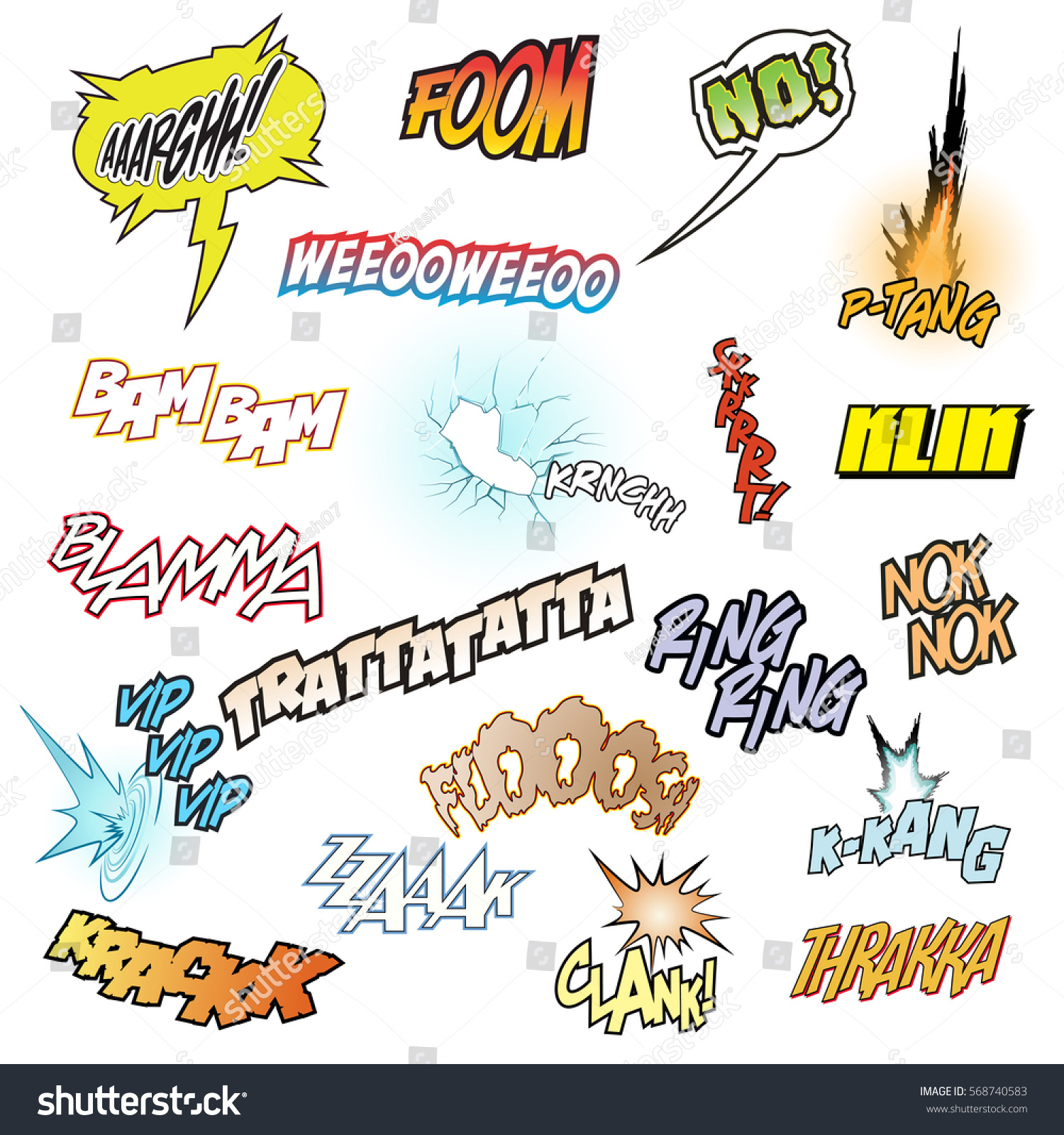
Caption: Onomatopoeia and sound effects are essential comic book tropes that create auditory experiences through visual text. Credit: Shutterstock Source: https://www.shutterstock.com
The Evolution of Tropes: A Living Language
While the core psychological principles behind comic book tropes remain constant, the tropes themselves are constantly evolving. The evolution of comic book art has seen a shift from the simple, iconic images of the Golden Age to the more complex and cinematic style of modern comics. This visual evolution has been accompanied by a similar evolution in storytelling, with creators finding new and innovative ways to use and subvert classic tropes.
The rise of independent and alternative comics has also played a significant role in the evolution of tropes. Creators are no longer bound by the constraints of the superhero genre, and they are free to explore a wider range of themes and styles. This has led to a renaissance in comic book storytelling, with creators pushing the boundaries of the medium and challenging our expectations of what a comic book can be.
Conclusion: The Enduring Power of Story
Comic book tropes are far more than just tired clichés. They are a sophisticated and powerful form of storytelling that taps into our deepest psychological and emotional needs. From the visual language of panels and speech bubbles to the narrative power of archetypes and archetypal stories, these recurring elements are the heart and soul of the comic book medium. As our understanding of the cognitive science behind comics continues to grow, so too will our appreciation for the artistry and complexity of this unique and enduring art form.
References
- Cohn, Neil. “Your Brain on Comics: A Cognitive Model of Visual Narrative Comprehension.” Topoi, vol. 38, no. 1, 2019, pp. 352-86, https://pmc.ncbi.nlm.nih.gov/articles/PMC9328425/.
- Simpson, Will. “Feelings in the Gutter: Opportunities for Emotional Engagement in Comics.” ImageTexT: Interdisciplinary Comics Studies, vol. 10, no. 1, 2021, https://imagetextjournal.com/feelings-in-the-gutter-opportunities-for-emotional-engagement-in-comics/.
- Franck, Stephan. “13 Visual Storytelling Tips For Comics.” 13th Dimension, 20 June 2018, https://13thdimension.com/13-visual-storytelling-tips-for-comics/. ”’