Stan Lee (born Stanley Martin Lieber, December 28, 1922 – November 12, 2018) was an American comic book writer, editor and publisher — not an artist. He joined Timely Comics as an office assistant in 1939 at the age of sixteen, became its editor before he turned nineteen, and between 1961 and 1966 co-created the Fantastic Four, Spider-Man, the Hulk, Thor, Iron Man, the X-Men, the Avengers, Daredevil, the Silver Surfer and Black Panther with a small group of artists. This is the story of how a teenage gofer who filled inkwells ended up rewriting what superhero comics could be.
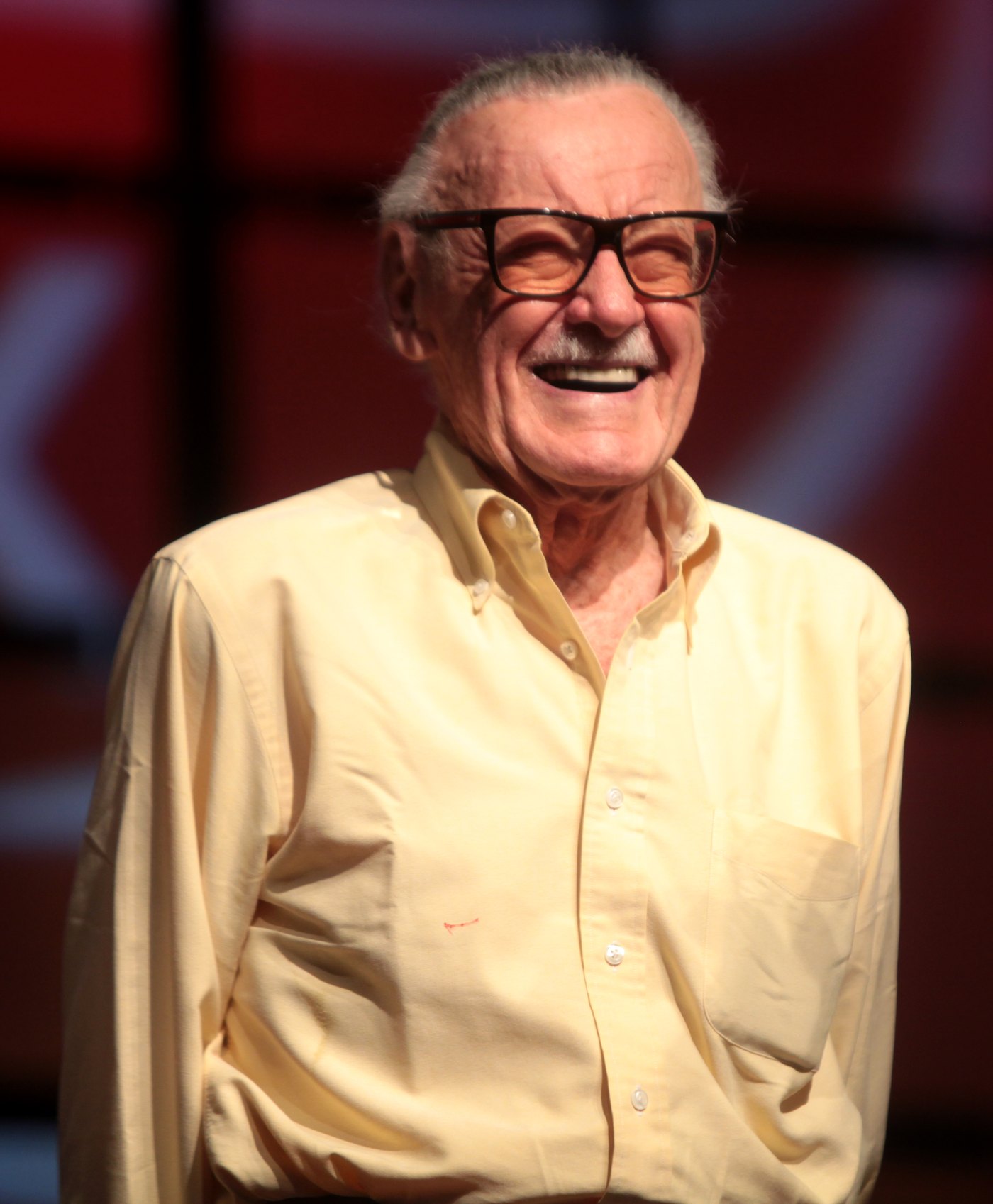
Stan Lee: Quick Facts
| Full name | Stanley Martin Lieber |
|---|---|
| Born | December 28, 1922, New York City, U.S. |
| Died | November 12, 2018, Los Angeles, California, U.S. |
| Known for | Co-creating Spider-Man, the Fantastic Four, the X-Men, the Hulk, Thor, Iron Man, the Avengers, Daredevil and Black Panther |
| Roles in comics | Comic book writer, Editor, Publisher, Producer |
| First job in comics | Assistant at Timely Comics, 1939 |
| First published work | “Captain America Foils the Traitor’s Revenge”, a text filler in Captain America Comics #3 (cover-dated May 1941) – the first time he used the pen name Stan Lee |
| Military service | United States Army, 1942-1945; Signal Corps, 1st Motion Picture Unit; rank of Sergeant |
| Key collaborators | Jack Kirby, Steve Ditko, John Romita Sr., Don Heck, Bill Everett, Joe Maneely, Dick Ayers, Joe Simon |
| Major honors | Will Eisner Award Hall of Fame, Jack Kirby Hall of Fame, National Medal of Arts (2008), Disney Legends |
| Catchphrase | Excelsior! |
The Stan Lee Questions People Actually Ask
Four of the five things readers most often want to know about Stan Lee are about what he actually did — and three of them are based on a rumor. Here are the straight answers before the full story.
Was Stan Lee primarily an illustrator at Marvel?
No – he was a writer and editor. No. Stan Lee was a writer and editor, never an illustrator. Across all sixteen of his major Marvel co-creations he is credited as writer, plotter, scripter or editor, and not once as artist. The drawing was done by collaborators including Jack Kirby, Steve Ditko and Bill Everett.
Did Stan Lee start as an accountant at Timely Comics?
No – he started as an assistant. No. Stan Lee never worked as an accountant. He joined Timely Comics in 1939 as an assistant, a junior office role that involved fetching lunches, refilling inkwells and proofreading. He was hired at sixteen by editor Joe Simon, and was promoted to interim editor in late 1941.
What was Stan Lee’s first job at Timely Comics?
An assistant, hired in 1939. Stan Lee began at Timely Comics in 1939 as an assistant. The job was errand-running and proofreading for editor Joe Simon and artist Jack Kirby. He was still a teenager, and had taken the job expecting to learn how a publishing company worked before moving on to serious writing.
Did Stan Lee start as a photographer at Timely Comics?
No – he started as an assistant. No. Stan Lee was never a photographer at Timely Comics. His first job there, from 1939, was as an assistant doing clerical and errand work. His only camera-adjacent work came later, in the US Army Signal Corps, where he wrote training films rather than shooting them.
Who helped create Spider-Man?
Stan Lee, with artist Steve Ditko. Stan Lee co-created Spider-Man with artist Steve Ditko. The character first appeared in Amazing Fantasy #15, cover-dated August 1962. Lee wrote and edited; Ditko designed the costume, the web-shooters and the visual storytelling, and drew the first thirty-eight issues of the series.
From Errand Boy to Editor at Eighteen
Stanley Lieber grew up in Depression-era New York in an apartment where, by his own account, the family’s finances were a constant background noise. He read everything he could get hold of and wanted to write novels. What he got instead, in 1939, was a job at a pulp publisher owned by Martin Goodman — a relative by marriage — in a small division called Timely Comics. The role was assistant: fetch the lunches, refill the inkwells, proofread the pages, stay out of the way of the two men actually making the comics, Joe Simon and Jack Kirby.
He got his own name into print in Captain America Comics #3, cover-dated May 1941, with a two-page prose filler called "Captain America Foils the Traitor’s Revenge." He signed it Stan Lee, splitting his first name in half, because he was saving Stanley Lieber for the literary career he still assumed was coming — Marvel’s own creator spotlight still lists that filler as his first writing. The pen name outlived the plan, and he eventually made it his legal name.
Later that year Simon and Kirby left after a dispute with Goodman, and the publisher handed the editor’s chair to the only person left who knew where anything was. Lee was not yet nineteen. He held that job — editor, and for much of the time art director too — for the next three decades.
1961: The Year He Nearly Quit
By 1961 Lee had been writing romance, western and monster comics for twenty years and was ready to leave the industry. When DC’s revived Justice League started selling, Goodman told him to produce a superhero team to match it. Lee’s wife Joan gave him the piece of advice that changed the direction of the medium: if he was quitting anyway, he should write the book the way he wanted to write it first, because he had nothing to lose.
What came out was the Fantastic Four — a team who argued with each other, worried about money, and in Ben Grimm’s case hated what had happened to him. Before that, superheroes were essentially flawless. Lee’s were vain, broke, ill, bad-tempered and frequently miserable, and readers had never seen anything like it. Everything Marvel became follows from that one decision.
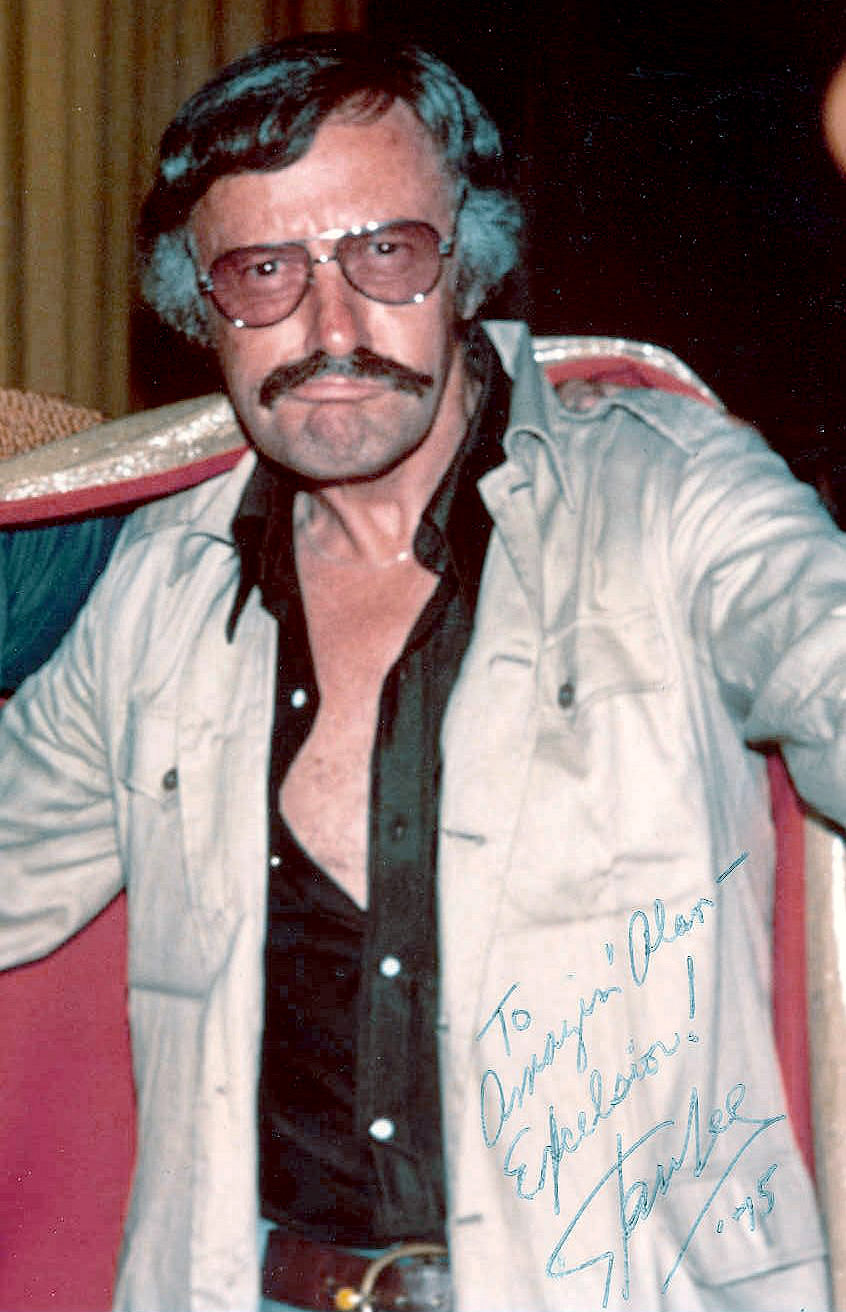
Every Major Character Stan Lee Co-Created
This is the table that answers the illustrator question on its own. The Lee’s credited role column is taken from each character’s own creator credit. Across 25 years and sixteen co-creations, it reads writer, plotter, scripter or editor every single time — and artist never once.
| Character or team | First appearance | Lee’s credited role | Created with |
|---|---|---|---|
| The Destroyer | Mystic Comics #6 (October 1941) | Writer | Jack Binder |
| Fantastic Four | Fantastic Four #1 (November 1961) | Writer / editor | Jack Kirby |
| The Hulk | The Incredible Hulk #1 (May 1962) | Writer | Jack Kirby |
| Spider-Man | Amazing Fantasy #15 (August 1962) | Writer | Steve Ditko |
| Thor | Journey into Mystery #83 (August 1962) | Writer / plotter | Larry Lieber, Jack Kirby |
| Iron Man | Tales of Suspense #39 (December 1962) | Editor / concept | Larry Lieber, Don Heck, Jack Kirby |
| Ant-Man (Hank Pym) | Tales to Astonish #27 (January 1962) | Co-writer / editor | Larry Lieber, Jack Kirby |
| The Wasp | Tales to Astonish #44 (June 1963) | Writer / plotter | Ernie Hart, Jack Kirby |
| Nick Fury | Sgt. Fury and his Howling Commandos #1 (May 1963) | Writer | Jack Kirby |
| Doctor Strange | Strange Tales #110 (July 1963) | Editor – creator credit disputed * | Steve Ditko |
| X-Men | The X-Men #1 (September 1963) | Writer | Jack Kirby |
| The Avengers | The Avengers #1 (September 1963) | Writer / editor | Jack Kirby |
| Black Widow | Tales of Suspense #52 (April 1964) | Editor / plotter | Don Rico, Don Heck |
| Daredevil | Daredevil #1 (April 1964) | Writer | Bill Everett |
| Silver Surfer | Fantastic Four #48 (March 1966) | Writer | Jack Kirby |
| Black Panther | Fantastic Four #52 (July 1966) | Writer | Jack Kirby |
* Wikipedia’s infobox credits Ditko as sole creator. Marvel and most obituaries credit Lee and Ditko jointly. Ditko conceived and drew the character; Lee edited and named him.
A few of these deserve a second look. On Iron Man Lee is credited with the concept and the editing, while his brother Larry Lieber wrote the script and Don Heck designed the character. On Black Widow he is credited as plotter and editor. On Black Panther — mainstream comics’ first Black superhero — he and Kirby share it outright. The pattern is a man running a room, not a man drawing in one.
The Marvel Method, and Why the Credit Argument Never Ends
Lee was editing, art-directing and scripting most of the line at once, and no one can write that many full scripts. So he used a shortcut that became known as the Marvel Method: he would talk a story through with the artist, hand over a short synopsis instead of a script, and let the artist decide the panel-by-panel storytelling and draw the whole issue. When the pencilled pages came back, Lee wrote the dialogue and captions onto them.
That workflow is the reason the credit question is genuinely hard rather than just contentious. Under the Marvel Method the artist is a co-plotter: Kirby and Ditko were not illustrating Lee’s stories, they were building half of them and often more. Kirby later contested who deserved credit for creating the Fantastic Four, and Ditko’s account of Spider-Man’s creation differs sharply from Lee’s. Both men have a real case. So does Lee, whose dialogue and editorial voice are what made the characters sound like people.
The honest summary is that the great Marvel characters were made by partnerships, and that Lee — as the public face, the credit-panel writer and the man with the column — was better positioned than his collaborators to be remembered as the sole author. Any account of his career that skips this is selling you a simpler story than the one that happened.
What Lee Invented That Had Nothing To Do With Drawing
Strip out the character credits and there is still a long list of things that are unambiguously his. He put a credit panel on the splash page of every story, naming not just the writer and penciller but the inker and the letterer — at a time when most publishers printed no creator names at all. He wrote the Bullpen Bulletins and the monthly "Stan’s Soapbox" column in a chatty first-person voice that treated readers as insiders.
The measure of how well it worked is in the mail. Letters to other publishers began "Dear Editor." Letters to Marvel began "Dear Stan and Jack." He had turned an anonymous production line into a set of people the audience felt they knew, and modern comics fandom — and arguably the whole idea of a creator-led shared universe — starts there. He also used deliberately difficult vocabulary, on the theory that a kid reaching for a dictionary was a good outcome, not a failure.
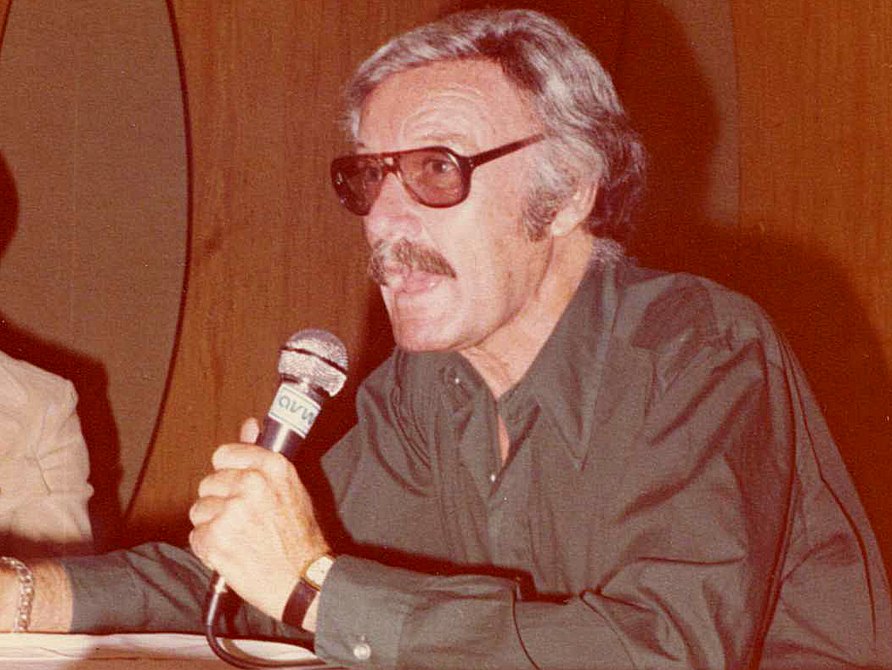
Stan Lee Timeline: The Career at a Glance
| Year | What happened |
|---|---|
| 1922 | Born Stanley Martin Lieber in New York City on December 28. |
| 1939 | Hired as an assistant at Timely Comics, the Martin Goodman company that became Marvel. |
| 1941 | Publishes his first comics work, a two-page text filler in Captain America Comics #3, under the new pen name Stan Lee. |
| 1941 | Co-creates his first superhero, the Destroyer, in Mystic Comics #6. After Joe Simon and Jack Kirby leave, Goodman installs Lee – not yet 19 – as interim editor. |
| 1942 | Enlists in the United States Army; serves until 1945 in the Signal Corps, writing training films and manuals. |
| 1961 | Co-creates the Fantastic Four with Jack Kirby, on his wife Joan’s advice to write the kind of story he actually wanted to write. |
| 1962 | Co-creates the Hulk, Spider-Man, Thor and Iron Man inside a single twelve-month stretch. |
| 1963 | Co-creates the X-Men and the Avengers, and formalises the Marvel Method of plotting. |
| 1966 | The Galactus Trilogy runs in Fantastic Four #48-50, widely cited as the high point of his work with Kirby. Black Panther debuts in Fantastic Four #52. |
| 1972 | Stops writing monthly comics and succeeds Martin Goodman as publisher of Marvel. His last Amazing Spider-Man is #110 and his last Fantastic Four is #125. |
| 1981 | Moves to California to develop Marvel’s television and film properties. |
| 2008 | Awarded the National Medal of Arts. |
| 2018 | Dies in Los Angeles on November 12, aged 95. |
Publisher, California, and the Cameos
In 1972 Lee stopped writing monthly comics and succeeded Martin Goodman as publisher of Marvel. His last issue of The Amazing Spider-Man was #110 and his last Fantastic Four was #125, both that year. In 1981 he moved to California to push Marvel’s characters into television and film, which at the time looked like a semi-retirement posting and turned out to be the beginning of the most commercially significant part of his life.
Then came the cameos. He appeared in dozens of Marvel films, shows and games, and Guardians of the Galaxy Vol. 2 eventually made it canon that he was playing the same person every time: a chronicler, reporting the events of the Marvel Universe back to the Watchers. He was awarded the National Medal of Arts in 2008, an award whose National Endowment for the Arts citation recognizes him for "innovations that revolutionized American comic books" and lists his trade, for the record, as writer, editor and comic book creator. He died in Los Angeles on November 12, 2018, aged 95.
If you want to see the work rather than the biography, the Lee–Kirby Fantastic Four and the Lee–Ditko Amazing Spider-Man both sit near the top of our list of the best comic book runs of all time, and the issues in the table above are the ones collectors chase — our guide to what makes a key issue explains why Amazing Fantasy #15 costs what it does.
Frequently Asked Questions
Did Stan Lee draw any comics himself?
No. Stan Lee did not draw comics professionally. He wrote, edited and plotted them, and served as art director in the sense of assigning and approving work rather than producing it. Every character he co-created was drawn by an artist collaborator such as Jack Kirby, Steve Ditko, Don Heck or Bill Everett.
What was the Marvel Method?
The Marvel Method was Stan Lee’s plotting shortcut. Rather than writing a full script, he gave the artist a short synopsis, the artist drew the complete issue and decided the panel-by-panel storytelling, and Lee then added dialogue and captions to the finished pencils. It made the artists co-plotters rather than illustrators.
Did Stan Lee create Marvel by himself?
No. Lee co-created Marvel’s characters in partnerships, principally with Jack Kirby and Steve Ditko, both of whom later disputed how credit was shared. Under the Marvel Method the artists plotted as well as drew, so the honest answer is that the Marvel Universe had several authors and Lee was its most visible one.
When did Stan Lee become publisher of Marvel?
Stan Lee became publisher of Marvel Comics in 1972, succeeding Martin Goodman. He had been the company’s editor since 1941 and gave up writing monthly comics to take the role. His final regular issues were The Amazing Spider-Man #110 and Fantastic Four #125, both published in 1972.