The strongest Chainsaw Man villains are Devils and Devil hybrids whose power scales with how deeply humanity fears the concept they represent, from Makima’s absolute Control Devil dominance to the primal terror of the Darkness and Falling Devils. This ranks the 11 who hit hardest, by canon feats.
Last updated: September 12, 2026.
Why Chainsaw Man’s Villains Don’t Follow Normal Shonen Rules
Tatsuki Fujimoto built Chainsaw Man’s power system on a single rule that makes this ranking harder than it looks: a Devil’s strength is tied directly to how widely and how deeply humans fear the concept it embodies. That’s confirmed in-story by Yoru, who explains that most of her power as the War Devil comes from global fear of guns, tanks, and nuclear weapons — fears that overlap with and feed into the broader concept of war itself. It’s also why the Darkness Devil and Falling Devil, both “Primal Fears” that predate human civilization, are treated as functionally unkillable, while a Devil built on a narrower or more culturally specific fear tops out lower no matter how skilled its host is.
That mechanic is the backbone of this list. It also inverts the genre’s usual logic: a flashy, high-body-count villain doesn’t automatically outrank a quieter one, because raw kill counts don’t measure how ancient or universal the underlying fear is. We leaned on the Chainsaw Man Wiki’s Devil hierarchy and the Chainsaw Man Wikipedia entry to cross-check every claim below. For the wider cast, including non-villains, see our ranking of the strongest Chainsaw Man characters; if you need the story order these fights happen in, our Chainsaw Man reading order guide covers Part 1 through the current Part 2 chapters.
The Strongest Chainsaw Man Villains, Ranked
1. Makima, the Control Devil
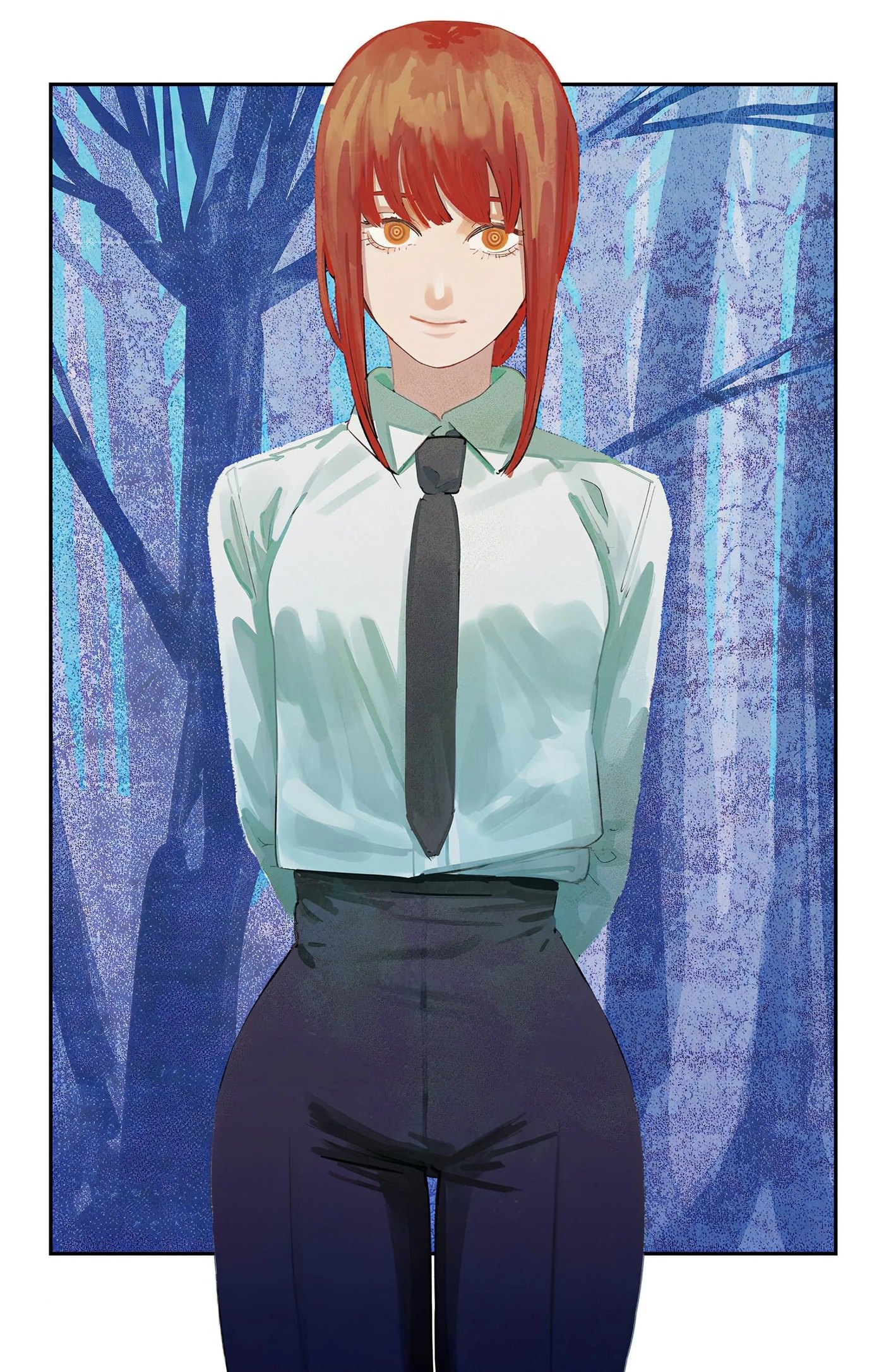
Makima spends most of Part 1 posing as Denji’s handler before Chainsaw Man reveals her as the Control Devil, one of the Four Horsemen alongside War, Famine, and Death. Her ability triggers whenever she “subjectively” decides someone is inferior to her — at that point she can seize their body, borrow their powers, or use them as a weapon, and almost no one in the cast escapes that classification. She eavesdrops through animals across the city, and her signature ranged attack, an invisible concussive blast fired from a pointed finger, is strong enough to wound the Darkness Devil in Hell and launch a devil-empowered Denji into orbit. Her stated goal — using Chainsaw Man’s power to erase war, hunger, and fear as concepts — makes her the only villain on this list operating on a civilization-ending scale on purpose.
2. Yoru, the War Devil
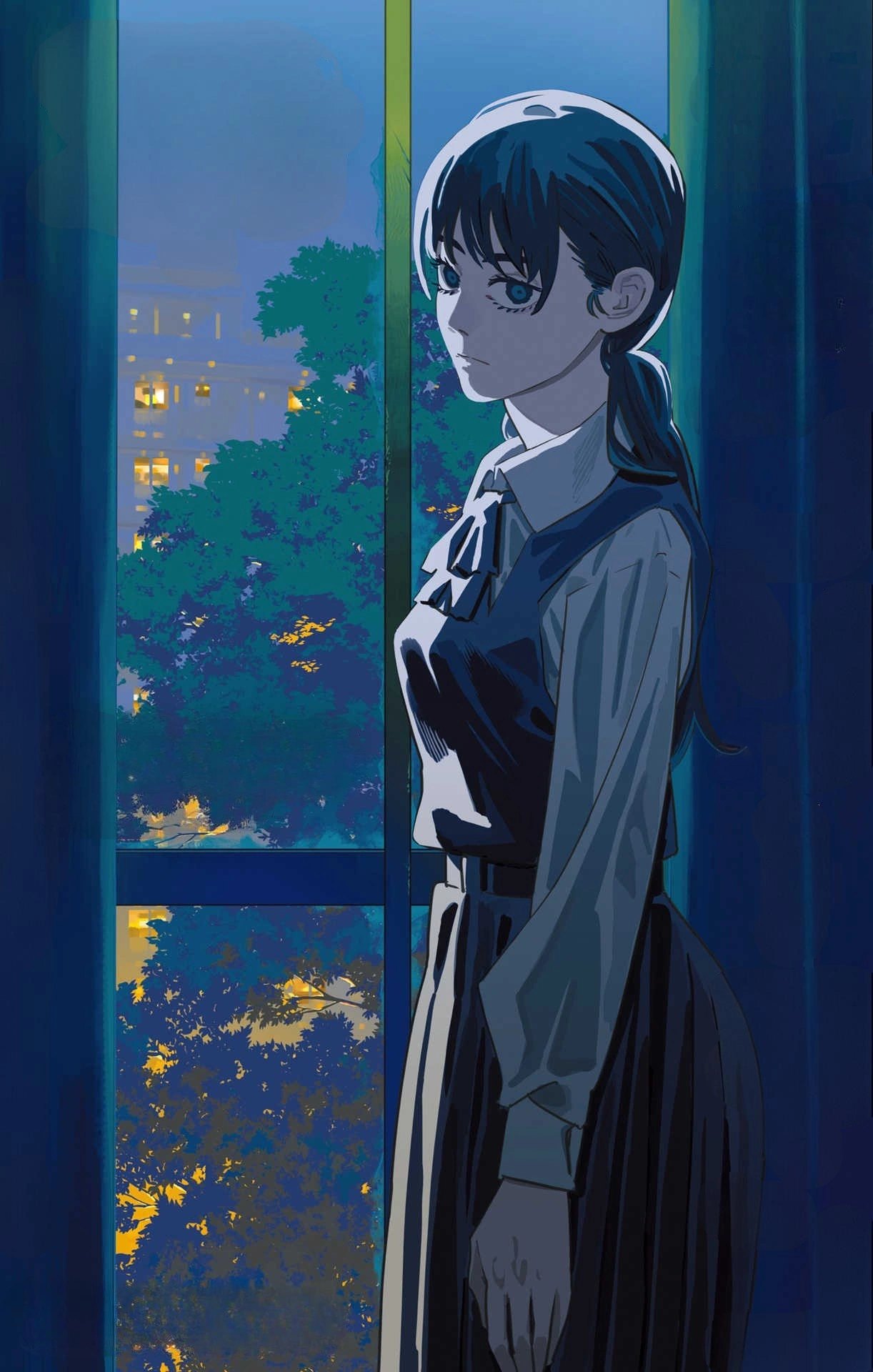
Introduced simply as the War Devil, she takes the name Yoru in Chapter 101 after Asa Mitaka asks for it directly. After the Justice Devil kills Asa, Yoru offers her a contract that revives her by fusing their bodies — a merger closer to a hostile roommate situation than Denji and Pochita’s partnership, since Yoru kept half of Asa’s brain intact and the two argue over control constantly. As a Horseman, her power draws from the world’s fear of guns, tanks, and nuclear weapons, concepts broad enough to fold into “war” itself, which is what makes her one of the two or three Devils in the series capable of standing with Makima.
3. The Darkness Devil
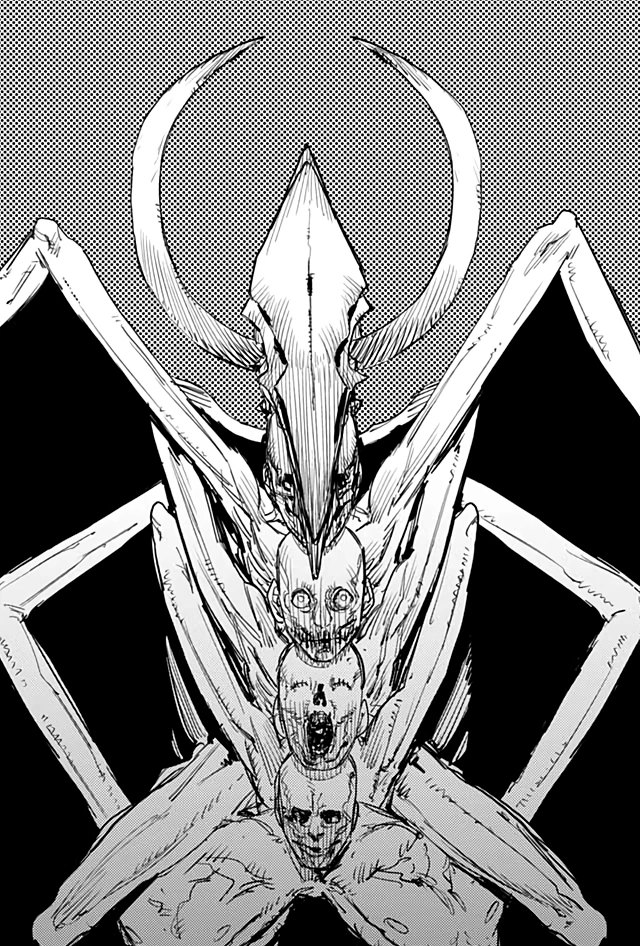
First appearing in Chapter 64 when the Hell Devil drags Denji’s group into Hell, the Darkness Devil is named alongside the Gun Devil and Chainsaw Devil as one of the three most powerful Devils in existence. It’s a “Primal Fear” that has reportedly never died. Its kit is built to end fights instantly: a stare that causes uncontrollable bleeding, invisible crushing force, and a remotely controlled blade that kills through brain hemorrhage on contact. It later turns up as one of the Devils Santa Claus contracts in her bid to take down Makima — and the fact that Makima’s attack could actually damage it in Hell is treated in-story as a genuinely rare feat.
4. Fami, the Famine Devil
Fami spends Part 2 disguised as a schoolgirl companion to Asa, first appearing under that identity around Chapter 113. Chapter 198 delivers the twist: the character everyone assumed was the Death Devil is actually Famine, restoring her damaged body by draining the lifespans of nearby ants before formally introducing herself. As a Horseman, she plays a longer, more patient game than any other villain here, and her power to siphon life directly gives her a kind of attrition-based strength that doesn’t show up in a single flashy attack.
5. The Gun Devil
The Gun Devil is Chainsaw Man’s clearest illustration of scale. Its full canon reveal comes in Chapter 75, but Fujimoto had already seeded its body count for chapters: 1,199,997 unnamed civilians killed off-screen in a single string of attacks across multiple countries, rendered on the page as scrolling lists of victims’ names rather than a stated number. Japan alone lost 57,000 people to one half-minute appearance. Its fragments get carved up and distributed as hybrid and fiend powers across the cast — including Kishibe’s arm — which is part of why it ranks below Devils with more concentrated, singular threats despite the staggering death toll.
6. Santa Claus
The main antagonist of the International Assassins arc, Santa Claus poses as a frail old mentor to the Russian Devil Hunter Tolka while secretly running a body-horror network through a contract with the Doll Devil — dolls planted worldwide that can turn anyone into an assassin with a single touch. She also strikes a pact with the Darkness Devil to move against Makima directly, and grooms Tolka into a disposable weapon in the process. Her actual body is a decoy; the persona is a construct built entirely to hide how many devils she’s already bargained with.
7. The Falling Devil
Part of Part 2’s Academy Saga, the Falling Devil embodies a fear so basic it predates language — the instinctive terror of falling that even infants display. It’s secretly controlled by the Death Devil as a tool to weaken and bring War under her influence. Its regeneration doesn’t depend on human blood like most Devils’, and when Public Safety Devil Hunters hit it with heavy artillery, it simply reassembles and kills them. Its most dangerous trait, though, is psychic: it can implant thoughts and suggestions directly into a person’s mind, which makes it a threat even when it isn’t in the room.
8. Quanxi
Hired by the Chinese government to capture Denji during the International Assassins arc, Quanxi is a Bow Devil hybrid who triggers her transformation by pulling a specialized arrow from her own eye socket. Her hardened arrowhead teeth and bow-shaped horns come with the kind of speed that lets her decapitate several opponents before they can react — she carves through a horde of Santa Claus’s dolls in one sustained rush. The hybrid merger has also made her functionally ageless; she’s over fifty but still has the body of a woman in her mid-twenties.
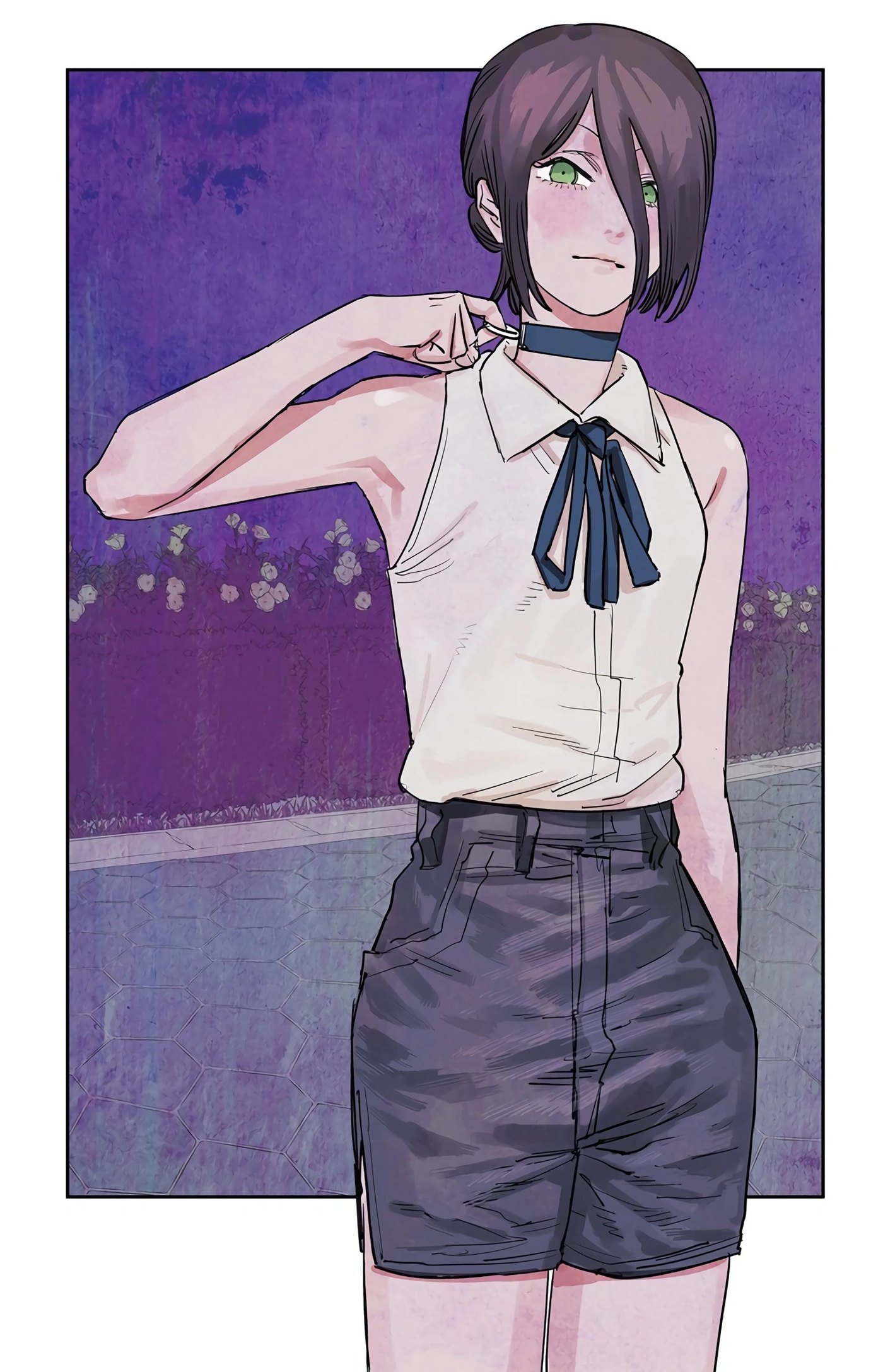
9. Reze, the Bomb Devil
Reze is the antagonist of the Bomb Girl arc (Chapters 40–52), later adapted into Chainsaw Man – The Movie: Reze Arc. Sent to extract Denji’s heart, she poses as a romantic interest before revealing her Bomb Devil hybrid form, triggered by pulling a grenade pin from her neck. She can fire explosive projectiles, turn sections of her own body into remote bombs, and convert her limbs into torpedo-force strikes, on top of trained assassin hand-to-hand combat. Bombs are a globally, immediately recognized threat — tied to war and terrorism rather than a single culture’s history — which is part of why her ceiling sits above hybrids built around narrower weapons.
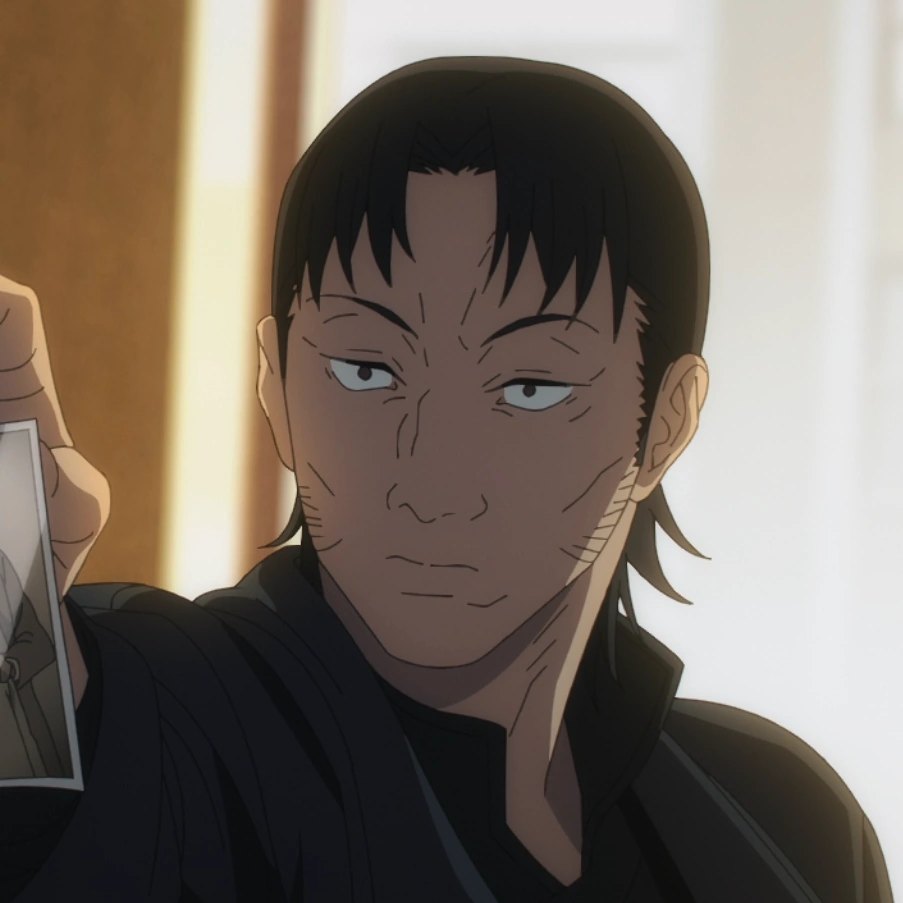
10. Katana Man (Samurai Sword)
A Devil-human hybrid fused with the Katana Devil, Katana Man headlines his own arc early in Part 1. His transformed state, Samurai Sword, grows blades from both arms and a sword where his eyes should be, cutting through walls and floors as easily as flesh. He regenerates from death unless his left hand is specifically removed, though he can’t re-enter his hybrid form for a cooldown period afterward. Compared to Reze, his ceiling is lower for the same fear-based reason: swords are a narrower, more culturally specific fear than bombs, guns, or darkness, so the Katana Devil’s available power pool is smaller no matter how good a fighter its host is.
11. Akane Sawatari
The secondary antagonist of the Katana Man arc, Akane Sawatari is a former civilian Devil Hunter who allies with the Gun Devil and fights alongside Katana Man. Her contract with the Snake Devil gives her a support role rather than a frontline one — she revives Katana Man mid-fight after the Curse Devil beats him down — and she commands a Zombie Devil army the mafia left behind to overwhelm Public Safety’s fourth division. She’s the least individually powerful name on this list, but her ability to keep other villains in the fight is exactly why she made the cut over one-note threats.
Villain Comparison Table
| Villain | Devil Type | Signature Power | First Appearance (Part/Chapter) |
|---|---|---|---|
| Makima | Control Devil | Absolute control over anyone she deems inferior | Part 1, Chapter 1 |
| Yoru | War Devil (fused with Asa Mitaka) | Power scales with global fear of guns, tanks, nukes | Part 2, named in Chapter 101 |
| Darkness Devil | Primal Fear Devil | Bleeding-inducing stare, remote hemorrhage blade | Part 1, Chapter 64 |
| Fami | Famine Devil | Drains life force to restore and empower herself | Part 2, Chapter 113 (identity confirmed Ch. 198) |
| Gun Devil | Primal/Weapon Devil | Mass-casualty gunfire attacks | Part 1, Chapter 75 |
| Santa Claus | Doll Devil contractor + Darkness Devil pact | Body-horror doll possession network | Part 1, International Assassins arc |
| Falling Devil | Primal Fear Devil | Gravity manipulation and psychic suggestion | Part 2, Academy Saga |
| Quanxi | Bow Devil Hybrid | Superhuman speed, multi-target decapitation | Part 1, International Assassins arc |
| Reze | Bomb Devil Hybrid | Explosive projectiles and bomb-flesh transmutation | Part 1, Chapters 40-52 |
| Katana Man | Katana Devil Hybrid | Blade-arm regenerating swordsman | Part 1, Katana Man arc |
| Akane Sawatari | Snake Devil contractor | Zombie Devil army control, ally revival | Part 1, Katana Man arc |
What the Fear Mechanic Explains About This Ranking
The gap between Reze at No. 9 and Katana Man at No. 10 is the clearest example of the fear-scaling rule doing real work. Both are Devil-human hybrids, both are trained fighters, and both function as arc-ending threats for the cast at the time they show up. But a bomb is a fear shared globally and reinforced constantly by war and terrorism coverage, while a katana is a comparatively narrow fear tied to specific cultures and eras. Fujimoto’s system means the Bomb Devil simply has a bigger reservoir of collective dread to draw from, so Reze’s ceiling sits higher even though Katana Man arguably gets more panel time as a physical combatant. It’s the same logic that keeps the Darkness and Falling Devils near the top of every serious tier list despite comparatively few “big” moments on the page — fear of the dark and fear of falling are two of the first things humans are ever afraid of, and that primal universality outweighs a flashier kill count almost every time. It’s also why the Gun Devil, despite the largest confirmed body count in the story, sits behind Devils built on older, more universal fears rather than a specific modern weapon.
That mechanic also explains why Makima and Yoru dominate the top two spots without needing the biggest single hit of destruction in the series. Control and war are concepts every human society has feared since before recorded history, which puts a hard ceiling above almost everything else on this list. If you want to see how this same math plays out against the franchise’s heroes and neutral parties, our best anime villains list has more series where the power scaling works the same way.
Frequently Asked Questions
Who is the strongest villain in Chainsaw Man overall?
Makima, the Control Devil, ranks first. She’s a Four Horseman who can seize control of nearly anyone she considers inferior and hits hard enough at range to wound the Darkness Devil in Hell, making her the only villain operating on a world-altering scale by choice.
Is Yoru the War Devil actually a villain or a hero in Part 2?
She starts as an antagonist who takes over Asa Mitaka’s body after a fatal encounter with the Justice Devil, but the two develop a genuinely contentious, shared-body relationship as Part 2 goes on, which is why some readers now treat her as more of an anti-hero than a straightforward villain.
Why does the Gun Devil rank below Devils with a smaller body count?
Chainsaw Man’s power system ties strength to how deeply and universally a concept is feared, not just to a kill count. Guns are a comparatively recent invention, so the Gun Devil’s 1.2-million-death rampage still ranks behind Primal Fears like Darkness and Falling, which draw on terror that predates human civilization.
Did the Chainsaw Man manga finish releasing chapters as of 2026?
Yes. The series concluded with Chapter 232 on March 25, 2026, spanning 24 total volumes in Japan, with the final volume released June 4, 2026. VIZ’s English print editions are still catching up several volumes behind.