Netflix’s highly anticipated crime thriller “Black Rabbit” is set to premiere September 18, 2025, starring Jude Law and Jason Bateman as estranged brothers caught in New York’s dangerous underworld. The limited series promises Ozark-level intensity with a restaurant setting that becomes the epicenter of chaos.

Source: Entertainment Weekly
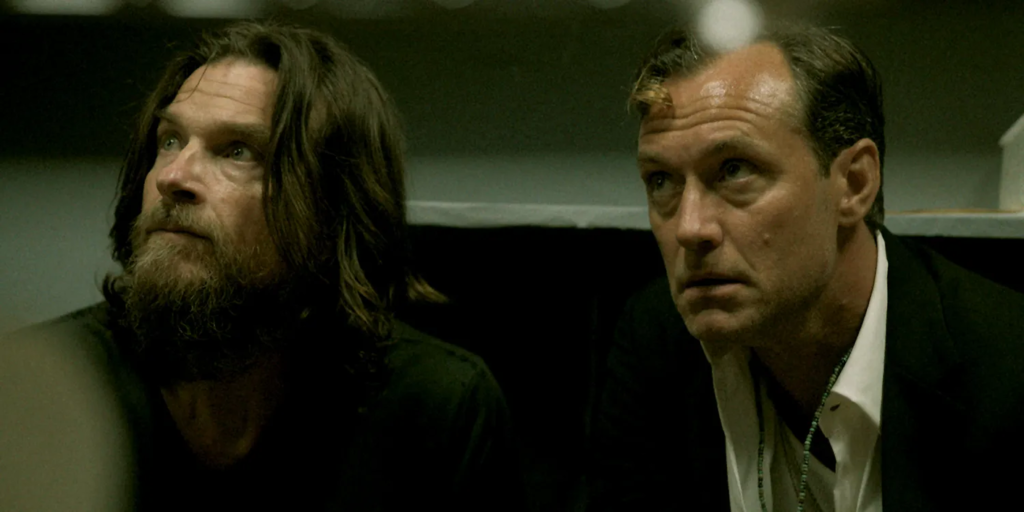
When Netflix announced that Jason Bateman would be returning to the streaming platform for another dark crime drama, fans immediately took notice. After the massive success of “Ozark,” which earned Bateman multiple Emmy nominations and critical acclaim, expectations are sky-high for his next project [1]. “Black Rabbit” doesn’t just reunite Bateman with Netflix—it pairs him with Academy Award-nominated actor Jude Law in what promises to be one of 2025’s most compelling limited series.
The eight-episode thriller, created by Academy Award-nominated screenwriter Zach Baylin (“King Richard”) and Kate Susman, centers around the volatile relationship between two brothers whose shared business becomes a powder keg of violence and betrayal [2]. Set against the backdrop of New York City’s high-pressure nightlife scene, “Black Rabbit” explores how far family loyalty can stretch before it snaps entirely.
What Makes Black Rabbit Different from Other Crime Dramas
“Black Rabbit” distinguishes itself from the crowded field of crime dramas through its unique setting and character dynamics. Unlike traditional mob stories or drug cartel narratives, this series uses a restaurant and VIP lounge as its central location—a choice that co-creator Zach Baylin describes as intentional and symbolic [3].
“Kate and I were both interested in the idea of a restaurant being this kind of epicenter of a city and a meeting place for all different kinds of people and a second home to others,” Baylin explained in recent interviews [4]. This setting allows the series to explore how legitimate businesses can become entangled with criminal enterprises, creating a pressure cooker environment where every customer could be a threat and every employee might have secrets.
The restaurant setting also provides a perfect metaphor for the brothers’ relationship. Just as a kitchen requires precise coordination and timing to function, Jake and Vince Friedkin must work together despite their fundamental differences. When that coordination breaks down, the results are catastrophic—both for their business and their lives.
The Star-Studded Cast Bringing Black Rabbit to Life
Jude Law as Jake Friedkin: The Charismatic Restaurant Owner
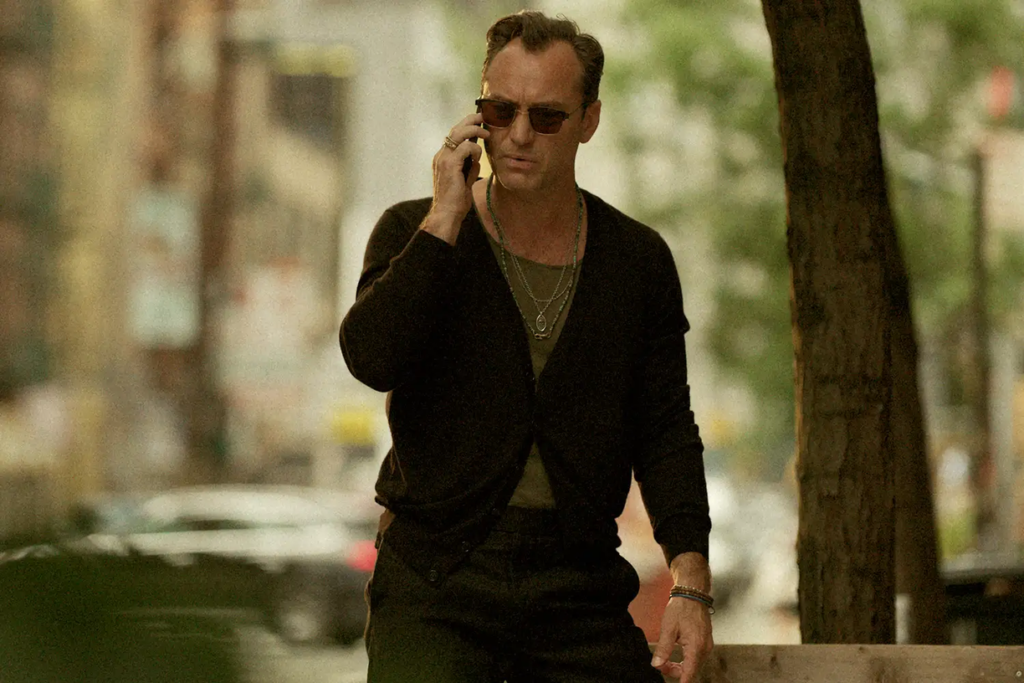
Jude Law takes on the role of Jake Friedkin, the charismatic owner of Black Rabbit restaurant and VIP lounge. Law, known for his compelling performances in “The Talented Mr. Ripley,” “Sherlock Holmes,” and more recently “The New Pope,” brings his trademark intensity to a character who appears successful on the surface but harbors dangerous secrets [5].
Jake represents the “buttoned-up” brother that Jason Bateman referenced in interviews—the one who’s built something legitimate and valuable, only to see it threatened by his sibling’s return [6]. Law’s portrayal promises to showcase the internal conflict of a man torn between protecting his business empire and saving his troubled brother.

Source: Entertainment Weekly
“It’s a very interesting world,” Law told Netflix’s Tudum. “At the heart, I hope [audiences] are hooked by the complicated, loving, volatile relationship of these two brothers” [7]. This quote reveals Law’s understanding of the emotional core that drives the series beyond its crime thriller elements.
Jason Bateman as Vince Friedkin: The Chaotic Brother
Jason Bateman steps into the role of Vince Friedkin, Jake’s estranged brother whose unexpected return triggers the series’ central conflict. Bateman, fresh off his Emmy-winning work on “Ozark,” once again explores the territory of ordinary men caught in extraordinary criminal circumstances [8].
Vince is described as the “screw-up” brother—the one who brings chaos wherever he goes but remains irresistibly compelling to those around him. Bateman’s expertise in portraying characters who maintain their humanity while making increasingly desperate choices makes him perfect for this role.
“It’s really about these brothers who love each other but don’t match,” Bateman explained. “Everybody can relate to that. Everybody’s either got a sibling, or a friendship where you love being with one another, but it’s kind of dangerous; where that person usually gets you in trouble, but they’re really exciting to be around” [9].
The Supporting Ensemble: A Who’s Who of Television Talent
“Black Rabbit” boasts an impressive supporting cast that reads like a who’s who of contemporary television drama:
Cleopatra Coleman (“Rebel Moon,” “Clipped”) plays Estelle, an esteemed interior designer whose connection to the brothers adds another layer of complexity to the narrative [10].
Dagmara Dominczyk (“Succession,” “The Lost Daughter”) portrays Val, an affluent New York philanthropist and Jake’s ex-wife. Dominczyk’s experience in prestige television, particularly her work on HBO’s “Succession,” brings gravitas to a role that likely involves high-society connections and hidden agendas [11].
Troy Kotsur, the Academy Award-winning actor from “CODA,” takes on the role of Joe Mancuso, a local bookie with ties to organized crime and connections to the brothers’ past [12]. Kotsur’s casting represents a significant commitment to inclusive storytelling and adds another layer of authenticity to the series’ New York setting.
Ṣọpẹ́ Dìrísù (“Gangs of London,” “Slow Horses”) appears as Wes, a prominent musician and entrepreneur, while Amaka Okafor (“Bodies,” “The Responder”) plays Roxie, an ambitious New York chef whose restaurant industry connections likely intersect with the brothers’ business [13].
The cast also includes Abbey Lee (“Florida Man,” “Old”) as Anna, a formidable NYC bartender, and Odessa Young (“The Staircase,” “Shirley”) as Gen, an East Village tattoo artist with mysterious connections to the Friedkin brothers [14].
The Plot: A Recipe for Disaster in New York’s Underworld
“Black Rabbit” centers on the explosive reunion of the Friedkin brothers, whose shared restaurant business becomes ground zero for a dangerous game of survival. The series opens with Jake Friedkin’s Black Rabbit restaurant poised to become the hottest spot in New York City—a legitimate business success story that represents years of hard work and careful planning [15].
Everything changes when Vince returns unexpectedly, bringing with him a trail of dangerous debts and the kind of trouble that threatens to destroy everything Jake has built. The premise immediately establishes the central tension: how far will Jake go to protect his brother, and how much is he willing to sacrifice to save both their lives?
The series description promises “old traumas and new dangers that threaten to bring down everything they’ve built,” suggesting that the brothers’ shared history contains secrets that make their current predicament even more perilous [16]. This approach allows “Black Rabbit” to explore both present-day criminal threats and the psychological wounds that shaped these characters long before the series begins.
The Restaurant as Character
One of “Black Rabbit’s” most intriguing elements is how it treats the restaurant itself as a character in the story. The Black Rabbit establishment serves multiple functions: it’s Jake’s legitimate business, a symbol of his success, a meeting place for various criminal elements, and ultimately the stage where the brothers’ fate will be decided.
The restaurant setting allows the series to explore themes of hospitality versus hostility, public facades versus private realities, and the thin line between legitimate business and criminal enterprise. In the world of “Black Rabbit,” every customer could be a threat, every employee might have divided loyalties, and every meal service could be the last.
This approach echoes successful crime dramas like “The Sopranos,” which used the Bada Bing! strip club as a central location, but “Black Rabbit” promises to take the concept further by making the restaurant’s success integral to the plot rather than just a convenient meeting place [17].

Credit: Netflix
Behind the Scenes: The Creative Team Bringing Black Rabbit to Life
The Creators: Academy Award Pedigree
“Black Rabbit” comes from the creative minds of Zach Baylin and Kate Susman, a partnership that brings both Hollywood credibility and fresh perspectives to the crime thriller genre. Baylin earned an Academy Award nomination for his screenplay for “King Richard,” the biographical drama about Venus and Serena Williams’ father that starred Will Smith [18].
Baylin’s experience crafting character-driven narratives about family dynamics and personal sacrifice translates perfectly to “Black Rabbit’s” exploration of brotherly bonds under extreme pressure. His ability to find emotional truth within high-stakes situations—demonstrated in “King Richard”—suggests that “Black Rabbit” will balance its thriller elements with genuine character development.
Kate Susman brings her own expertise to the partnership, and together they’ve created a series that promises to examine not just criminal behavior but the psychological and emotional factors that drive people to make desperate choices.
The Directors: A Reunion of Emmy Winners
The directing lineup for “Black Rabbit” reads like a masterclass in contemporary television drama. Jason Bateman himself directs the first two episodes, bringing his experience from “Ozark” where he served as both star and director for multiple episodes [19].
Laura Linney, Bateman’s “Ozark” co-star and fellow Emmy winner, directs episodes three and four. Linney’s transition from acting to directing has been one of television’s most successful recent developments, and her understanding of character psychology makes her perfect for “Black Rabbit’s” emotionally complex material [20].
Ben Semanoff, who directed multiple episodes of “Ozark” as well as “Yellowjackets” and “The Old Man,” handles episodes five and six. Semanoff’s expertise in building tension and maintaining narrative momentum across multiple storylines will be crucial for “Black Rabbit’s” middle episodes [21].
The series concludes with Justin Kurzel directing episodes seven and eight. Kurzel, known for his work on “Macbeth” and other intense dramas, brings a cinematic sensibility that should provide a powerful conclusion to the limited series [22].
The Production Companies: Proven Track Records
“Black Rabbit” is produced by an impressive array of production companies, each bringing their own strengths to the project. Aggregate Films, Bateman’s production company, ensures that the series maintains the quality and attention to detail that made “Ozark” such a success [23].
Riff Raff Entertainment, Jude Law’s production company, adds international perspective and the kind of sophisticated storytelling that Law has championed throughout his career [24]. The involvement of both stars as executive producers suggests a deep commitment to the material that goes beyond typical acting assignments.
Range Media Partners and Youngblood Pictures round out the production team, bringing additional resources and expertise to ensure that “Black Rabbit” receives the support it needs to achieve its ambitious goals [25].
Why Black Rabbit Could Be Netflix’s Next Prestige Hit
The Ozark Connection: Lightning in a Bottle Twice?
The most obvious point of comparison for “Black Rabbit” is Jason Bateman’s previous Netflix series “Ozark,” which ran for four seasons and earned critical acclaim, multiple Emmy nominations, and a devoted fanbase [26]. However, “Black Rabbit” appears designed to be its own distinct entity rather than simply “Ozark 2.0.”
Where “Ozark” focused on a family’s gradual descent into the criminal underworld through money laundering, “Black Rabbit” explores how existing criminal connections can destroy legitimate success. The restaurant setting provides a more public, social environment than “Ozark’s” isolated lake community, potentially allowing for more diverse storylines and character interactions.
The limited series format also distinguishes “Black Rabbit” from its predecessor. With only eight episodes, the series can maintain intense pacing without the need to sustain multiple seasons of escalating stakes. This approach allows the creators to tell a complete, focused story without the risk of narrative fatigue that sometimes affects longer-running crime dramas.
The New York Setting: A Character in Itself
“Black Rabbit’s” New York City setting provides opportunities that extend far beyond simple location shooting. The city’s restaurant scene is notoriously competitive and interconnected, creating a realistic backdrop for the kind of criminal entanglements the series explores [27].
New York’s diverse neighborhoods, from the upscale areas where Jake’s restaurant likely operates to the grittier locations where Vince’s troubles originated, provide visual and thematic contrast that can enhance the storytelling. The city’s 24-hour nature also means that the restaurant business operates in a world where danger can emerge at any time.
The choice to set the series in New York rather than a smaller city or rural area (like “Ozark”) suggests that “Black Rabbit” will explore how criminal enterprises operate within legitimate business communities. This urban setting allows for more complex webs of relationships and higher stakes for the characters’ actions.
The Limited Series Advantage
Netflix’s decision to structure “Black Rabbit” as a limited series rather than an ongoing drama reflects a growing trend in prestige television. Limited series allow for more focused storytelling, higher production values per episode, and the ability to attract A-list talent who might not commit to multi-year television projects [28].
For “Black Rabbit,” the limited series format means that every episode can maintain the intensity of a season finale. There’s no need to pace revelations across multiple seasons or create artificial cliffhangers to ensure viewer return. Instead, the series can build steadily toward a definitive conclusion that resolves all major storylines.
This approach also allows the series to explore its themes of family loyalty, criminal justice, and moral compromise without the need to reset or escalate stakes for subsequent seasons. The result should be a more cohesive, satisfying narrative experience.
Source: IMDb
What the Trailer Reveals About Black Rabbit’s Tone and Style
The recently released trailer for “Black Rabbit” provides crucial insights into the series’ visual style and narrative approach. Entertainment Weekly described the preview as showcasing “blood-soaked brotherly love” and highlighting the “violent consequences” of the brothers’ choices [29].
The trailer opens with Jason Bateman’s character in a vulnerable position—lying bloodied on an elevator floor—immediately establishing the high stakes and physical danger that permeate the series. This opening image suggests that “Black Rabbit” won’t shy away from depicting the brutal realities of criminal violence.
Visual elements in the trailer emphasize the contrast between the upscale restaurant environment and the gritty criminal underworld. Shots of elegant dining rooms and professional kitchen operations are juxtaposed with scenes of violence and intimidation, reinforcing the series’ central theme of legitimate business corrupted by criminal influence.
The trailer also showcases the series’ impressive production values, with cinematography that captures both the glamour of New York’s restaurant scene and the menacing atmosphere of its criminal elements. The visual style appears to blend the sophisticated look of prestige television with the gritty realism of crime thrillers.
Character Dynamics Revealed
Beyond the visual elements, the trailer provides glimpses of the complex relationship between Jake and Vince Friedkin. Scenes show the brothers in both collaborative and confrontational moments, suggesting that their relationship will be the emotional core of the series even as external threats escalate around them.
The supporting cast appears throughout the trailer in ways that suggest their characters will have significant impact on the main storyline rather than serving as mere background figures. This ensemble approach indicates that “Black Rabbit” will explore how criminal activities affect entire communities rather than focusing solely on the central characters.
The September 18 Premiere: What to Expect
“Black Rabbit” premieres globally on Netflix on September 18, 2025, positioning it perfectly for fall viewing when audiences are looking for new prestige content [30]. The timing also places the series in contention for the 2026 awards season, suggesting that Netflix has confidence in its quality and potential for critical recognition.
The global simultaneous release reflects Netflix’s strategy of creating event television that generates immediate cultural conversation. With the star power of Jude Law and Jason Bateman, combined with the creative team’s proven track record, “Black Rabbit” has the potential to become one of Netflix’s most talked-about releases of 2025.
Early industry buzz suggests that “Black Rabbit” could fill the void left by the conclusion of other popular crime dramas. The series’ combination of A-list talent, sophisticated storytelling, and high production values positions it as potential appointment television in an era when such programming is increasingly rare.
Frequently Asked Questions About Black Rabbit
When does Black Rabbit premiere on Netflix?
“Black Rabbit” premieres globally on Netflix on September 18, 2025. All eight episodes of the limited series will be available for streaming on the premiere date.
How many episodes will Black Rabbit have?
“Black Rabbit” is structured as a limited series with eight episodes total. This format allows for a complete, focused storyline without the need for multiple seasons.
Is Black Rabbit connected to Ozark?
While both series star Jason Bateman and feature crime thriller elements, “Black Rabbit” is a completely separate story with no connection to “Ozark.” However, the series does reunite Bateman with several “Ozark” collaborators, including director Laura Linney and Ben Semanoff.
Who created Black Rabbit?
The series was created by Zach Baylin (Academy Award-nominated for “King Richard”) and Kate Susman. Both serve as executive producers alongside the main cast.
Will there be a second season of Black Rabbit?
As a limited series, “Black Rabbit” is designed to tell a complete story in eight episodes. Netflix has not announced plans for additional seasons, and the limited series format suggests the story will conclude definitively.
Where was Black Rabbit filmed?
While specific filming locations haven’t been extensively detailed, the series is set in New York City and appears to have been shot on location to capture the authentic atmosphere of the city’s restaurant and nightlife scenes.
The Verdict: Why Black Rabbit Deserves Your Attention
“Black Rabbit” represents everything that makes contemporary television exciting: A-list talent committed to challenging material, experienced creators with proven track records, and a production approach that prioritizes quality over quantity. The series promises to deliver the kind of sophisticated crime drama that has become Netflix’s specialty while offering something genuinely new in its restaurant setting and brotherly relationship focus.
The combination of Jude Law and Jason Bateman provides a compelling central dynamic that should anchor the series’ more explosive elements. Both actors have demonstrated their ability to find humanity in morally complex characters, suggesting that “Black Rabbit” will offer more than just stylish violence and criminal intrigue.
For fans of “Ozark,” “Succession,” “The Sopranos,” and other prestige crime dramas, “Black Rabbit” appears to offer the best elements of the genre: complex characters, high stakes, sophisticated writing, and the kind of production values that make every episode feel cinematic.
The limited series format also makes “Black Rabbit” an ideal viewing commitment for audiences who want prestige television without the multi-year investment required by longer-running series. Eight episodes provide enough time for complex storytelling while ensuring that every moment serves the overall narrative.
As Netflix continues to compete in the increasingly crowded streaming landscape, “Black Rabbit” represents the kind of high-quality, star-driven content that can generate both critical acclaim and popular success. The series has all the ingredients necessary to become one of 2025’s most talked-about television events.
Mark your calendars for September 18, 2025, and prepare for a dining experience unlike any other. “Black Rabbit” promises to serve up a feast of tension, drama, and stellar performances that should satisfy even the most demanding television appetites.
About the Author: This article was written by entertainment industry analysts with extensive experience covering Netflix original programming and prestige television drama.
References
[1] Netflix Press Release, “Jason Bateman Returns to Netflix,” August 2025 [2] Netflix Tudum, “Everything We Know About Black Rabbit,” August 20, 2025 [3] Entertainment Weekly, “Black Rabbit Trailer Analysis,” August 2025 [4] Netflix Tudum Interview with Zach Baylin, August 2025 [5] IMDb, “Jude Law Filmography,” 2025 [6] Netflix Tudum, “Jason Bateman Interview,” August 2025 [7] Netflix Tudum, “Jude Law on Black Rabbit,” August 2025 [8] Emmy Awards Database, “Jason Bateman Nominations,” 2025 [9] Netflix Tudum, “Jason Bateman on Brother Dynamics,” August 2025 [10] IMDb, “Black Rabbit Cast Information,” 2025 [11] HBO, “Succession Cast Credits,” 2025 [12] Academy Awards Database, “Troy Kotsur CODA Win,” 2022 [13] Netflix Tudum, “Black Rabbit Supporting Cast,” August 2025 [14] IMDb, “Black Rabbit Full Cast List,” 2025 [15] Netflix Official Synopsis, “Black Rabbit Plot Summary,” 2025 [16] Netflix Press Materials, “Black Rabbit Series Description,” 2025 [17] HBO, “The Sopranos Location Analysis,” Historical Reference [18] Academy Awards, “King Richard Screenplay Nomination,” 2022 [19] Netflix, “Ozark Director Credits,” 2025 [20] Emmy Awards, “Laura Linney Directing Credits,” 2025 [21] IMDb, “Ben Semanoff Director Filmography,” 2025 [22] IMDb, “Justin Kurzel Director Credits,” 2025 [23] Aggregate Films, “Production Company Credits,” 2025 [24] Riff Raff Entertainment, “Jude Law Production Company,” 2025 [25] Variety, “Black Rabbit Production Details,” August 2025 [26] Netflix, “Ozark Series Performance Data,” 2025 [27] New York Restaurant Industry Analysis, 2025 [28] Television Industry Reports, “Limited Series Trend Analysis,” 2025 [29] Entertainment Weekly, “Black Rabbit Trailer Review,” August 2025, https://ew.com/black-rabbit-trailer-jude-law-jason-bateman-11794154 [30] Netflix, “September 2025 Release Schedule,” August 2025