The best anime villains are the ones who reframe the entire story around themselves — and no antagonist has done that more completely than Sosuke Aizen of Bleach, whose decades-long deception rewrote everything fans thought they understood about the Soul Society. A truly great anime villain is not just powerful; they are a philosophy with a face, a mirror the hero is forced to look into. This ranking weighs writing craft, thematic weight, cultural staying power, and how thoroughly each antagonist warps the narrative around their will — not raw power levels. From soft-spoken manipulators like Aizen and Light Yagami to genocidal emperors like Frieza and tragic monsters like Griffith, these are the fifteen anime villains who define the medium. Below you will find an at-a-glance ranking table, a full countdown with expert notes, an original breakdown of what separates a great villain from a merely strong one, and an FAQ.
| Rank | Villain | Anime | Villain Type | Defining Trait |
|---|---|---|---|---|
| 1 | Sosuke Aizen | Bleach | Mastermind | The perfect long con |
| 2 | Light Yagami | Death Note | Fallen idealist | Godhood via notebook |
| 3 | Griffith | Berserk | Tragic betrayer | Ambition over love |
| 4 | Johan Liebert | Monster | Pure nihilist | Evil without motive |
| 5 | Frieza | Dragon Ball Z | Galactic tyrant | Casual planetary genocide |
| 6 | Meruem | Hunter x Hunter | Evolving monarch | A monster who learns to feel |
| 7 | DIO Brando | JoJo’s Bizarre Adventure | Immortal aristocrat | Pure charismatic menace |
| 8 | Makima | Chainsaw Man | Manipulator | Control disguised as love |
| 9 | Madara Uchiha | Naruto Shippuden | Ideological titan | A dream of ending war |
| 10 | Muzan Kibutsuji | Demon Slayer | Progenitor | Immortality at any cost |
| 11 | Eren Yeager | Attack on Titan | Fallen hero | Freedom through genocide |
| 12 | Askeladd | Vinland Saga | Grey pragmatist | Cynic with a hidden creed |
| 13 | Sukuna | Jujutsu Kaisen | Ancient curse | Total self-interest |
| 14 | Char Aznable | Mobile Suit Gundam | Rival ideologue | The eternal mirror |
| 15 | Shogo Makishima | Psycho-Pass | Philosopher | Free will as weapon |
15. Shogo Makishima (Psycho-Pass)
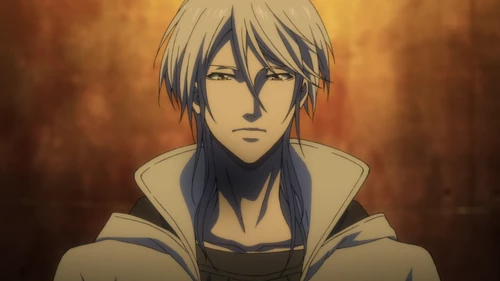
Makishima is the rare villain whose crimes are almost secondary to his argument. In a society where the Sibyl System pre-judges every citizen’s capacity for violence, Makishima’s mind is a blank the system cannot read — and he uses that immunity to expose the moral cowardice of a world that outsourced its conscience to a machine. He does not kill for pleasure so much as to prove a point about the value of self-determination.
What lands him on this list is how genuinely difficult he is to refute. Protagonist Akane Tsunemori spends the series unable to fully condemn his logic even as she resists his methods, and that ambivalence is the point. Makishima is the villain as thought experiment, a reader-stand-in who asks whether a safe, unfree society is worth defending at all.
14. Char Aznable (Mobile Suit Gundam)
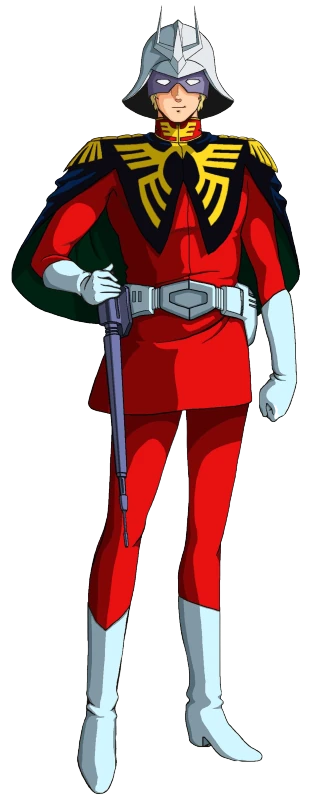
The original "Red Comet" is the template countless later rivals copied without ever matching. Across the original Mobile Suit Gundam and Char’s Counterattack, Char shifts from masked antagonist to reluctant ally to full-blown apocalyptic revolutionary, and the tragedy is that his grievances are legitimate. He watches humanity refuse to change and concludes, catastrophically, that it must be forced to.
Char matters because he made the "rival who is also a mirror" a foundational anime archetype. Every brooding, ideologically driven antagonist who believes he is the story’s true protagonist owes a debt to him. He is not the flashiest name here, but he is one of the most influential.
13. Sukuna (Jujutsu Kaisen)
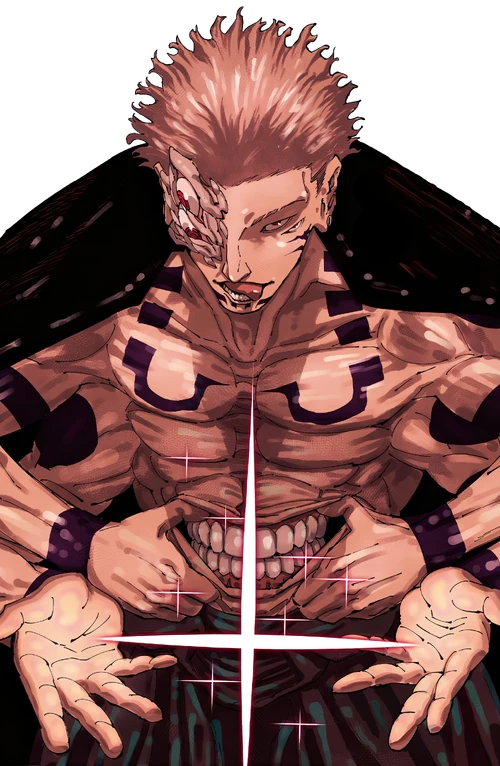
The King of Curses is a study in what makes menace feel real. Sukuna is not driven by trauma, ideology, or wounded love — he is driven by boredom and appetite. Sealed for a thousand years and reborn inside Yuji Itadori, he treats every human bond as a lever to pull and every fight as entertainment. His cruelty toward Itadori’s friends is calculated to hurt, not merely to win.
What keeps Sukuna compelling rather than flat is his absolute internal consistency. He never pretends to a higher purpose, never bargains, never softens. In an era of sympathetic antagonists, Sukuna is a deliberate throwback to the villain as pure, elegant self-interest, and the fandom’s fascination with him proves that archetype still works when executed with confidence.
12. Askeladd (Vinland Saga)
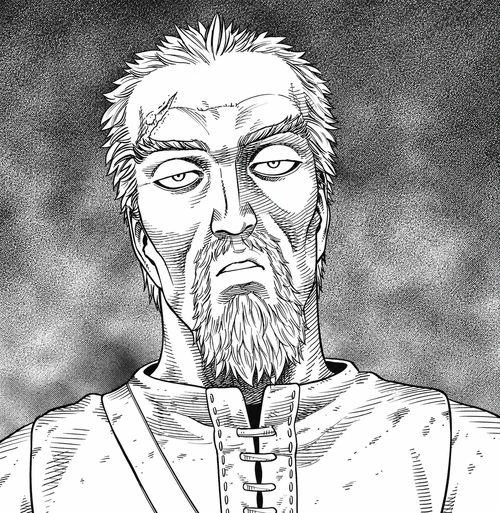
Askeladd is the mercenary captain who spends most of Vinland Saga‘s first season looking like a straightforward antagonist — the man who murdered Thorfinn’s father and dangles vengeance in front of the boy for years. Then the writing quietly rotates him ninety degrees, revealing a fiercely intelligent survivor carrying a secret Welsh heritage and a code he refuses to name aloud.
His final act, sacrificing himself in a berserk gambit to protect Wales from a mad king, recontextualizes everything. Askeladd earns his place because he embodies the grey morality that defines prestige anime: a killer, a liar, and, in the end, one of the most principled characters in the series. Few antagonists complete an arc this satisfying.
11. Eren Yeager (Attack on Titan)
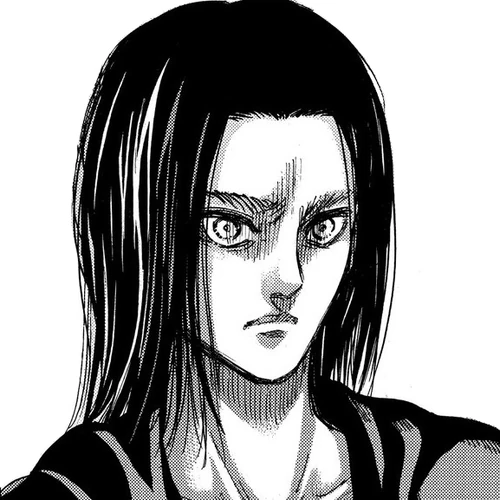
No modern anime villain divides fans like Eren. He begins Attack on Titan as its screaming, wall-punching hero and ends it as the architect of the Rumbling, a genocide that wipes out roughly eighty percent of humanity beyond his home island. The horror is that his logic is traceable step by step, born from a lifetime of persecution and a glimpse of a future he believes he cannot escape.
Eren is ranked here because his fall is not a twist so much as a slow suffocation of hope. The series forces viewers to sit with the possibility that the boy they cheered for was always capable of this. Whether you read the ending as tragedy or failure, Eren remains one of anime’s boldest experiments in turning the protagonist into the final boss.
10. Muzan Kibutsuji (Demon Slayer)
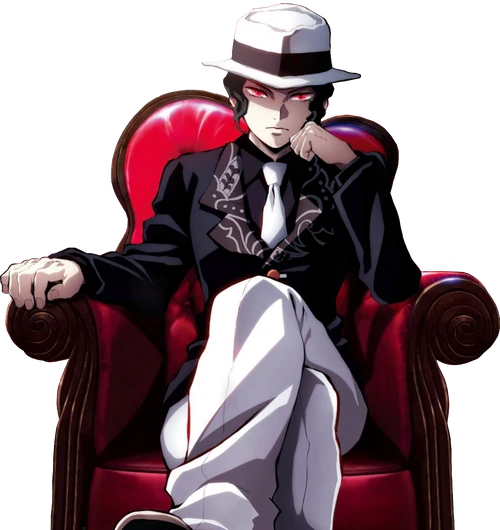
Muzan is the fountainhead of every horror in Demon Slayer — the first demon, the one who slaughtered Tanjiro’s family and cursed Nezuko. What makes him memorable is not complexity but the specific texture of his evil: a paranoid, image-obsessed narcissist who murders his own subordinates over the faintest hint of disrespect, then walks the streets disguised as a doting family man.
His singular obsession — conquering the sun to become truly immortal — gives the entire series its engine. Muzan is not a philosopher or a tragic figure; he is fear itself, dressed in Taisho-era finery. The anime’s staggering visual budget turns his final confrontation into a spectacle, but it is his petty, all-too-human cruelty that makes him linger.
9. Madara Uchiha (Naruto Shippuden)
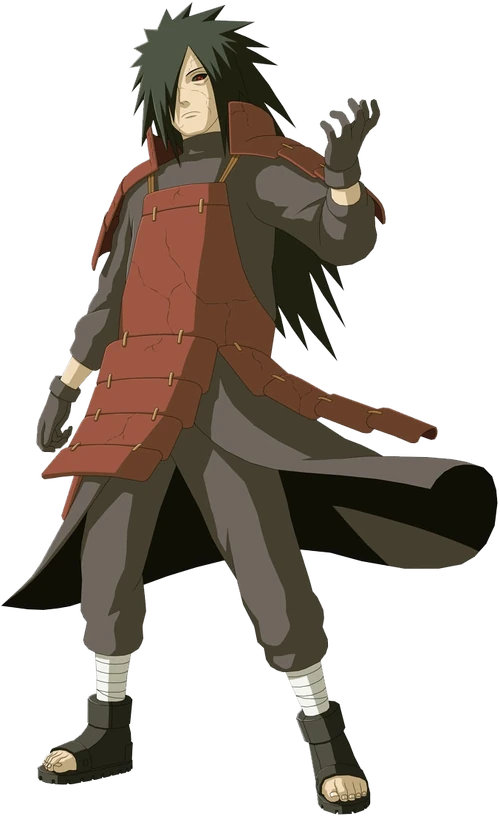
When Madara is finally resurrected in full, Naruto Shippuden visibly changes gears — an entire allied army stands helpless before one man having the time of his life. But Madara is more than a power fantasy. His Eye of the Moon Plan, a genjutsu that would trap all of humanity in a shared dream of peace, is the tragic endpoint of a life spent watching war devour everyone he loved.
Madara’s ideology — that reality is too painful to be worth defending — gives Naruto‘s sprawling war arc its emotional core. He is the ultimate expression of the series’ central question about whether the cycle of hatred can ever truly be broken. Even his eventual sidelining by a greater threat cannot erase how thoroughly he dominated the story he entered.
8. Makima (Chainsaw Man)
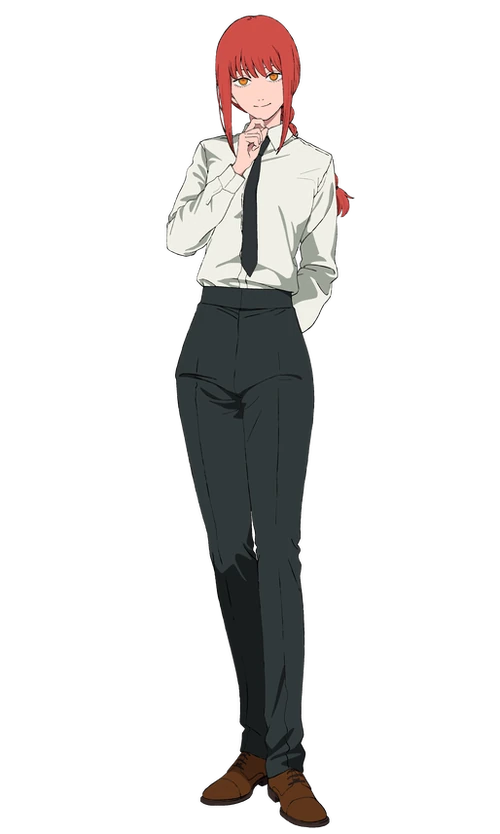
Makima, the Control Devil, is the defining villain of anime’s new generation. She presents herself as protagonist Denji’s kind, alluring superior while methodically weaponizing his desperate need to be loved. Her power is control through hierarchy and fear, and the genius of her writing is that Denji — and the audience — want to trust her even as the evidence piles up.
Makima weaponizes affection itself, treating devotion as a resource to be farmed. Her defeat is not a fistfight but an act of grotesque intimacy that inverts everything she represents. She earns her top-eight placement because she updated the manipulator archetype for a generation raised online, embodying the horror of a love that is really just ownership.
7. DIO Brando (JoJo’s Bizarre Adventure)
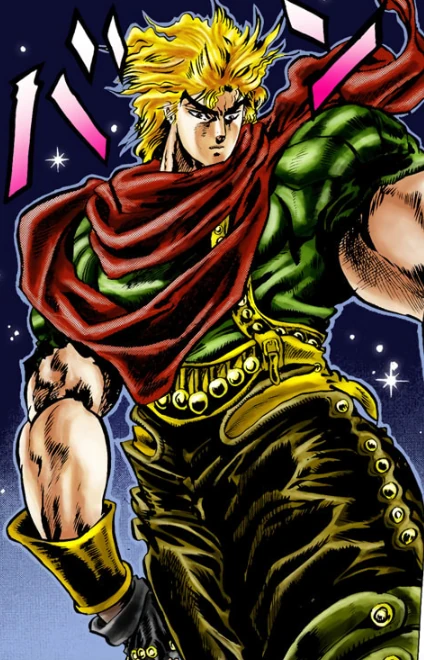
DIO is charisma weaponized. From the moment he arrives in the Joestar household as a scheming adopted son, he radiates a theatrical, gleeful cruelty that never lets up across generations of the JoJo saga. Turning himself into a vampire and later wielding the reality-bending Stand The World, he treats domination as an art form and menace as performance.
Few villains have entered the cultural bloodstream like DIO. His catchphrases, his poses, and the sheer force of his personality have made him a meme-tier icon far beyond anime circles. But underneath the flamboyance is a genuinely frightening conviction: DIO believes himself entitled to godhood, and he has the will to bend the world toward that belief.
6. Meruem (Hunter x Hunter)
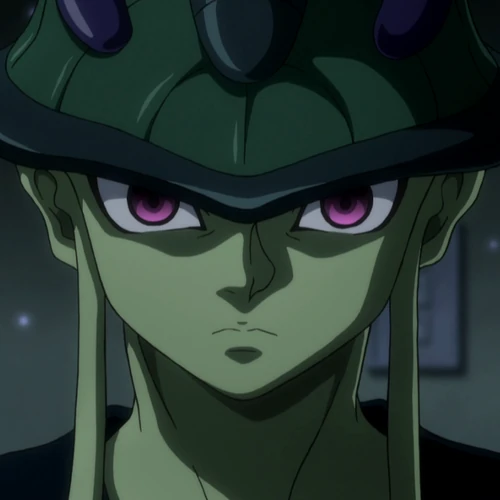
Meruem, the Chimera Ant King, begins as arguably the purest monster on this list — a being born to consume, who kills without a flicker of conscience. What elevates him above nearly every other villain is that Hunter x Hunter then does the unthinkable: it makes him grow a soul in real time, through a game of Gungi against a blind human girl named Komugi.
The Chimera Ant arc uses Meruem to ask what actually separates a person from a beast, and his answer — discovered too late — is devastating. His final scene, choosing to spend his last moments in quiet companionship rather than conquest, is among the most emotionally complete endings in the medium. Meruem is proof that a villain’s arc can rival any hero’s.
5. Frieza (Dragon Ball Z)
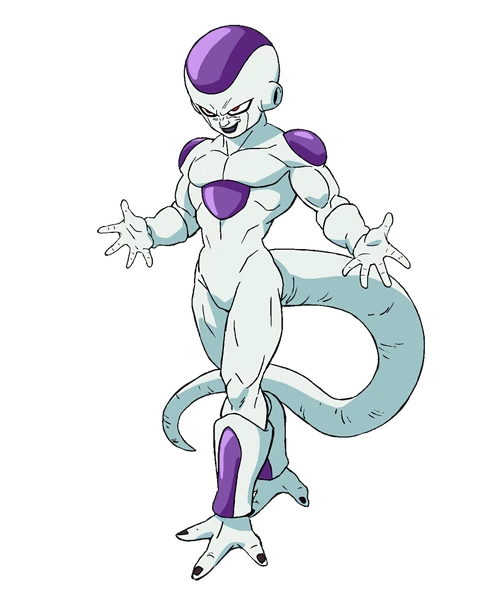
Frieza is the definitive personification of galactic tyranny: a soft-spoken emperor who treats the annihilation of entire species as routine paperwork. He commits genocide against the Saiyans not out of hatred but out of mild, preemptive convenience, and that casualness is precisely what makes him terrifying. His polite, purring menace set the standard for every anime overlord that followed.
Decades on, Frieza remains one of anime’s most enduring antagonists, repeatedly clawing his way back from death in Dragon Ball Super because he is simply too iconic to retire. His multi-stage transformations and the legendary Namek confrontation are foundational anime memories for an entire generation. Frieza is not the deepest villain here, but he may be the most influential blueprint.
4. Johan Liebert (Monster)
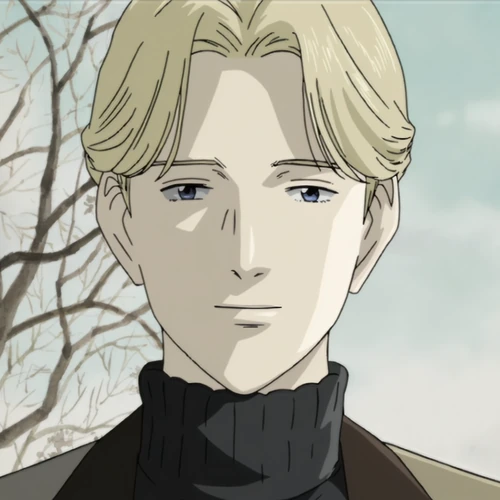
Johan Liebert is the void at the center of Naoki Urasawa’s Monster, and the most quietly disturbing antagonist anime has produced. Beautiful, gentle-mannered, and impossibly persuasive, he orchestrates suicides and murders across Europe not for power or revenge but to enact a philosophy of absolute nothingness — the belief that all lives are equally meaningless.
Where most villains want something, Johan wants the erasure of wanting itself. He talks people into destroying themselves with a few soft sentences, and the series never fully explains him, which is exactly why he works. Johan is the anti-thesis of the shonen villain: no transformations, no final battle, just a smiling man proving how thin the membrane of civilization really is.
3. Griffith (Berserk)
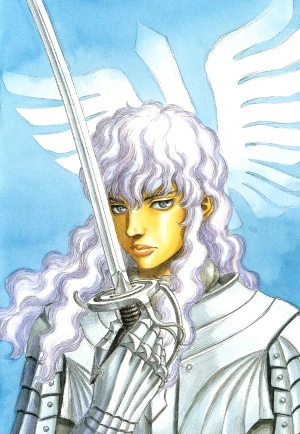
Griffith’s betrayal is the gold standard of anime tragedy. As the charismatic leader of the Band of the Hawk, he inspires genuine love from every reader before the Eclipse — which is what makes his choice to sacrifice his loyal comrades for personal ascension so unbearable. He trades the people who worshipped him for godhood, reborn as the demon-angel Femto.
What makes Griffith the third-greatest anime villain is that his evil is inseparable from a very human ambition we half-understand. He is not a monster who was always a monster; he is a dreamer who could not bear to be ordinary, and paid any price to avoid it. Kentaro Miura built Berserk‘s entire mythology around the wound Griffith inflicts, and it still aches.
2. Light Yagami (Death Note)
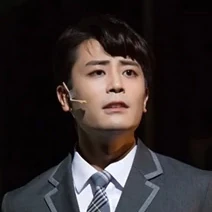
Light Yagami is what happens when a bored genius is handed the power of a god. Finding the Death Note dropped by the shinigami Ryuk, this straight-A honor student begins killing criminals to build a utopia with himself installed as its silent deity, "Kira." The brilliance of Death Note is that Light is the protagonist, and we watch his soul curdle in real time.
His chess match against the detective L is one of the greatest battles of wits ever animated — two prodigies circling each other with nothing but deduction and nerve. Light ranks this high because he weaponizes an ordinary object into absolute power and lets his own arrogance become his undoing. He is the definitive study of corruption, a hero’s face over a tyrant’s heart.
1. Sosuke Aizen (Bleach)
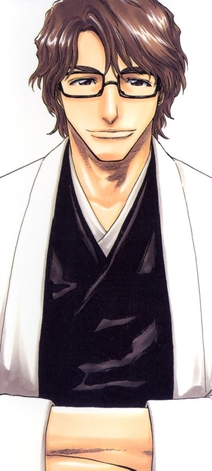
Sosuke Aizen is the greatest anime villain of all time because he does not just fight the heroes — he reveals that the story they were living was his all along. For over a century, this soft-spoken, bespectacled captain cultivated a flawless facade of gentleness while secretly conducting forbidden experiments and engineering nearly every crisis in Bleach from the shadows. His betrayal, descending from the sky as his glasses shatter, is one of anime’s most iconic turns.
Aizen’s signature line — that no one has ever stood at the top of the world, and he intends to change that — captures a megalomania so complete it loops back around to serene calm. His Kyoka Suigetsu, a sword that controls all five senses, makes his very presence a puzzle: you can never be sure what you are actually seeing. He tops this list because he embodies the ultimate villain fantasy: the man who was always three steps ahead, who turned the entire narrative into his personal stage. No one has done it better.
What Actually Separates a Great Villain From a Strong One
The most common mistake in ranking anime villains is confusing power with greatness. Power-scaling debates are endless fun, but they measure the wrong thing. A being who can delete a galaxy is not automatically interesting; plenty of world-ending threats in shonen are forgotten the moment their arc ends. What separates the villains on this list from the hundreds who don’t make it is a single quality: narrative gravity — the degree to which a villain bends the entire story around their will.
Look at the pattern. Aizen, Light, Griffith, and Johan are not the strongest characters in their respective series by raw combat metrics — and it doesn’t matter at all. Their strength is that the story cannot exist without them. Remove Aizen and Bleach has no spine; remove Griffith and Berserk has no wound to circle. The best villains are load-bearing. They articulate the theme the hero is too close to see, and they force a choice that defines the protagonist forever.
The second marker is internal coherence. Sukuna’s pure appetite, Frieza’s casual convenience, Meruem’s evolving conscience — each is ruthlessly consistent within their own logic, which is why they feel like people rather than plot devices. A great villain never acts "because the script needs a fight." They act because, given who they are, they could do nothing else. When power-scaling fans argue about who would win, they are answering a trivia question. When we ask who bent their story hardest, we are actually ranking villains — and that is the lens this list was built through.
Frequently Asked Questions
Who is considered the best anime villain of all time?
There is no universal answer, but Sosuke Aizen from Bleach is one of the most frequently cited, thanks to his century-long deception and the way he retroactively reframes the entire series as his master plan. In fan-voted rankings, Madara Uchiha, Light Yagami, and Aizen consistently place near the top. Our ranking leads with Aizen for how completely he controls his narrative.
What makes an anime villain "great" rather than just powerful?
Greatness comes from narrative gravity and internal coherence, not raw power. The best villains bend their entire story around themselves, articulate the theme the hero cannot, and act with ruthless consistency. Characters like Griffith and Light Yagami are not the strongest in their series, yet they are unforgettable because the story could not exist without them.
Is Light Yagami a villain or an anti-hero?
Light is the protagonist of Death Note, but he is unambiguously the villain of his own story. He begins with an arguably idealistic goal — a world without crime — and rapidly descends into mass murder and god complex. His arc is one of corruption, which is precisely why he ranks so high as a villain despite being the lead character.
Which recent anime has the best new villain?
Makima from Chainsaw Man and Sukuna from Jujutsu Kaisen are the standout new-generation antagonists. Makima updated the manipulator archetype for a modern audience with her control-disguised-as-love, while Sukuna revived the pure, self-interested villain with total confidence. Both prove the medium is still producing all-time-great antagonists.
Why isn’t the strongest anime character the best villain?
Power and quality are different axes. Many of the strongest characters in anime are heroes or forgettable one-arc threats. The best villains are defined by how thoroughly they shape their story and how coherent their motives are — qualities that have nothing to do with who would win a fight.
If you enjoyed this ranking, dive deeper into our related lists: the strongest anime characters of all time, the most powerful comic book characters ranked, the strongest Marvel villains, and our roundup of the top anime waifus.