The Star Wars: Visions watch order is simpler than most Star Wars viewing guides: the three volumes are anthologies of standalone shorts, so you can watch them in any order. The one exception is the Ninth Jedi storyline, which runs across Volume 1, Volume 3 and the 2026 series Visions Presents — The Ninth Jedi, and must be watched in that sequence.
The Short Answer
If you only want the connected storyline, watch these three in order:
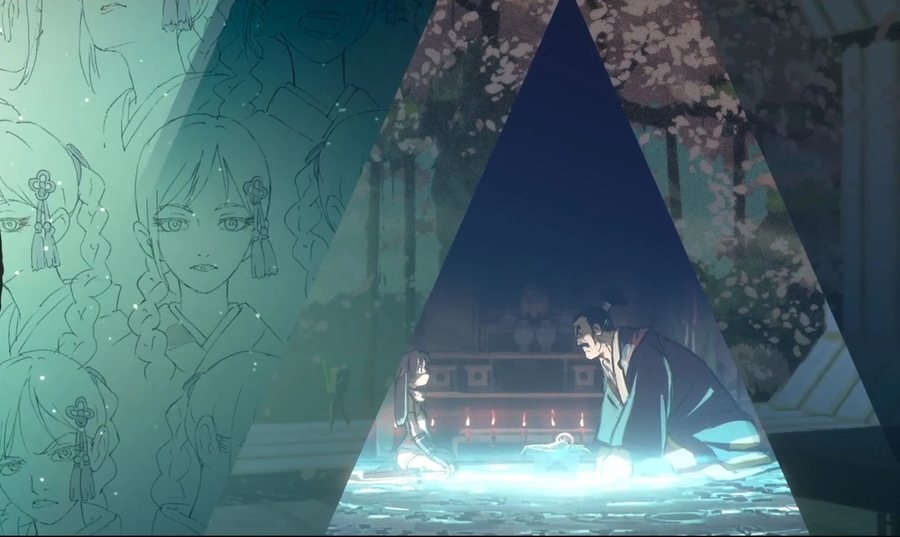
- “The Ninth Jedi” — Star Wars: Visions Volume 1 (2021)
- “The Ninth Jedi: Child of Hope” — Star Wars: Visions Volume 3 (2025)
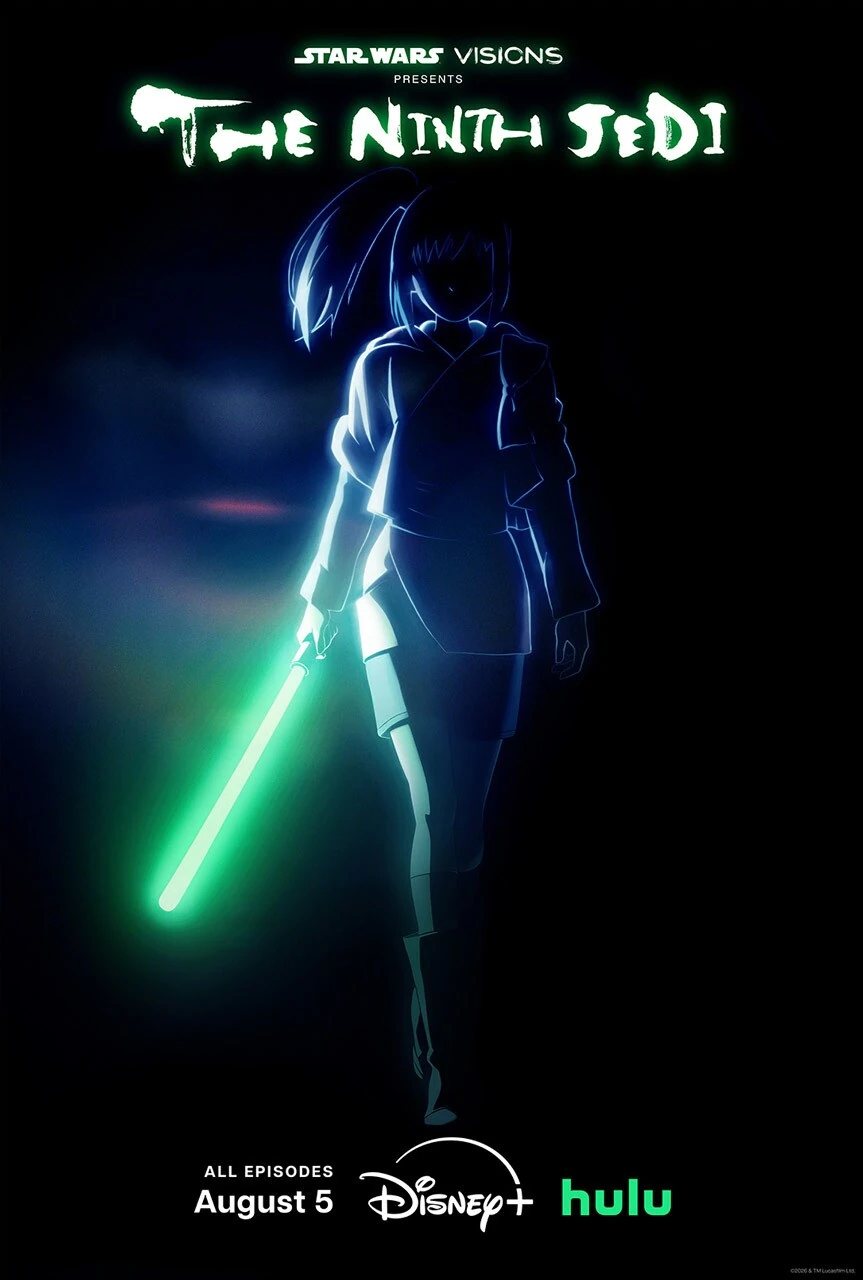
- Star Wars: Visions Presents — The Ninth Jedi — the 8-episode series (2026)
Everything else in Visions is standalone. There is no wrong order for the rest.
Star Wars: Visions Volumes at a Glance
| Volume | Year | Shorts | Who Made It |
|---|---|---|---|
| Volume 1 | 2021 | 9 | Seven Japanese anime studios |
| Volume 2 | 2023 | 9 | Studios from nine countries worldwide |
| Volume 3 | 2025 | 9 | Return to Japanese anime studios |
| Visions Presents — The Ninth Jedi | 2026 | 8 episodes | Production I.G |
Volume 1 assembled seven Japanese studios including Studio Trigger, Production I.G, Kinema Citrus, Science Saru, Kamikaze Douga, Studio Colorido and Geno Studio.
Volume 2 changed the premise entirely, going international: El Guiri in Spain, Cartoon Saloon in Ireland, Punkrobot in Chile, Aardman in the UK, Studio Mir in South Korea, Studio La Cachette in France, 88 Pictures in India, D’Art Shtajio in Japan and Triggerfish in South Africa and Ireland.
Volume 3 returned to Japanese anime studios, including David Production, Studio Trigger, Kinema Citrus, Polygon Pictures, Project Studio Q, Production I.G and Wit Studio.
What Each Volume Is Known For
Volume 1 (2021) — the anime statement
The volume that established the concept, and still the most stylistically confident. Studio Trigger contributed two shorts, and Production I.G’s “The Ninth Jedi” became the breakout that eventually earned its own series. If you want the version of Visions that everyone talks about, this is it.
Volume 2 (2023) — the global experiment
The most creatively ambitious and the most divisive. By handing the premise to studios in Spain, Ireland, Chile, the UK, South Korea, France, India, Japan and South Africa, Lucasfilm turned an anime showcase into a survey of world animation. Aardman’s stop-motion entry alone makes it worth watching.
Viewers who came specifically for anime were frequently disappointed, which is a marketing failure rather than a quality one — the volume is excellent at what it actually set out to do.
Volume 3 (2025) — the return
A deliberate course-correction back to Japanese studios, including David Production, Wit Studio, Studio Trigger, Polygon Pictures and Production I.G. It also delivered “The Ninth Jedi: Child of Hope,” the direct sequel that set up the 2026 series.
Is Star Wars: Visions Canon?
Generally, no. Visions was created explicitly as a series of non-canon reinterpretations — each studio was given freedom to reimagine Star Wars without continuity obligations. That freedom is the entire creative point, and it is why the shorts vary so wildly in tone, art style and even the rules of the Force.
The Ninth Jedi thread is the interesting edge case. It is set in an unspecified era far after the Skywalker Saga, and Lucasfilm has never pinned it to a precise point on the official timeline. Whether that counts as canon is a question Lucasfilm has pointedly declined to answer.
Why Volume Order Barely Matters — and What Actually Does
Here is the practical advice that most watch-order guides miss.
Because these are anthologies, the real risk is not watching them out of order — it is quality whiplash. Anthology formats produce uneven results by design, and a viewer who starts with a short that does not land often abandons the whole project.
So the useful framing is not chronological but tonal. Volumes 1 and 3 are both Japanese-studio productions and share a broadly consistent anime sensibility. Volume 2 is a deliberate stylistic scattering — stop-motion from Aardman sits next to Cartoon Saloon’s hand-drawn Irish style next to Studio Mir’s Korean action animation.
If you came for anime, watch Volume 1, then Volume 3, then Volume 2. Volumes 1 and 3 give you a coherent run of the style you are expecting, and by the time you reach Volume 2 you are watching it for the variety rather than being blindsided by it.
If you came for animation as a medium, Volume 2 first is genuinely the stronger opener — it is the most artistically ambitious of the three.
Where to Watch Star Wars: Visions
All three volumes and the 2026 Ninth Jedi series stream on Disney+. Visions Presents — The Ninth Jedi is also available on Hulu, where all eight episodes released simultaneously on August 5, 2026 rather than weekly.
Frequently Asked Questions
Do I need to watch Star Wars: Visions in order?
No. All three volumes are anthologies of standalone shorts. Only the Ninth Jedi storyline requires a specific order.
How many Star Wars: Visions volumes are there?
Three volumes of nine shorts each, released in 2021, 2023 and 2025, plus the 2026 series Visions Presents — The Ninth Jedi.
Do I need to know Star Wars to watch Visions?
Barely. The shorts assume you know what a lightsaber and the Force are. Beyond that, they are self-contained.
Which Visions short should I watch first?
“The Ninth Jedi” from Volume 1 is the most widely praised and now leads directly into a full series, which makes it the strongest entry point.
The Bottom Line
There is no required Star Wars: Visions watch order except for the three-part Ninth Jedi thread. Watch that in sequence, and treat everything else as a buffet rather than a menu.
For more on the anime and Western animation crossover, see our piece on live-action anime challenging superheroes, or browse the strongest anime characters, ranked.
For the newest entry, see our guide to The Ninth Jedi’s eight-episode premiere.