The correct Evangelion watch order is release order: the 26-episode 1995 series, then The End of Evangelion (1997), then the four Rebuild films in order — 1.0, 2.0, 3.0 and 3.0+1.0. Skip Death & Rebirth. Rebuild is a separate continuity, not a remake, and it only makes sense after the original.
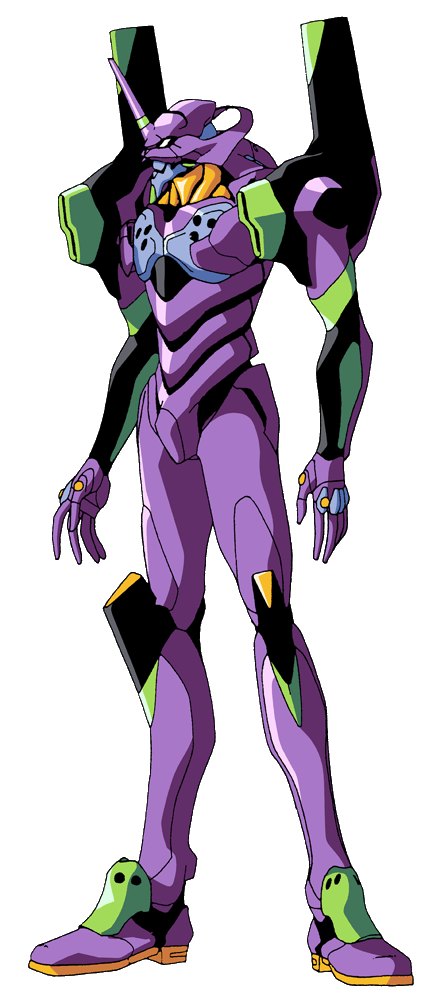
The Evangelion watch order at a glance
| # | Title | Year | Runtime | Watch it? |
|---|---|---|---|---|
| 1 | Neon Genesis Evangelion (TV series) | 1995–96 | 26 episodes | Essential |
| 2 | The End of Evangelion | 1997 | 87 min | Essential |
| — | Evangelion: Death & Rebirth / Death (True)² | 1997–98 | ~70 min | Skip on a first watch |
| 3 | Evangelion: 1.0 You Are (Not) Alone | 2007 | 98 min | Optional, start here for Rebuild |
| 4 | Evangelion: 2.0 You Can (Not) Advance | 2009 | 108 min | Optional |
| 5 | Evangelion: 3.0 You Can (Not) Redo | 2012 | 96 min | Optional |
| 6 | Evangelion: 3.0+1.0 Thrice Upon a Time | 2021 | 155 min | Optional |
Why this question confuses everyone
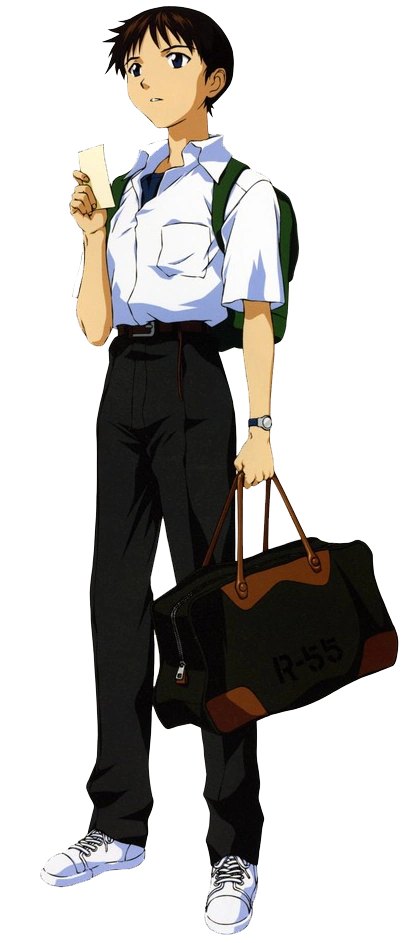
“Evangelion watch order” is one of the most-searched anime questions on the internet for a franchise of only seven items. That is not because the order is complicated. It is because three genuinely different questions are hiding inside one phrase, and most guides only answer the first:
- What order do I watch them in? Easy. Release order.
- Which of these replace each other? This is the real confusion, and it has a specific answer most guides skip.
- Is Rebuild a remake or a sequel? Neither, exactly — and the honest answer changes partway through.
Answer all three and the franchise stops looking like a maze.
Step 1: the 26-episode TV series
Neon Genesis Evangelion aired on TV Tokyo from October 1995 to March 1996, 26 episodes, directed by Hideaki Anno. Watch all of them, including episodes 25 and 26.
That last instruction is where a lot of guides quietly go wrong. Episodes 25 and 26 are the notorious ones — largely still frames, internal monologue and abstract text cards, produced under a collapsing budget and schedule. A common piece of advice online is to stop at episode 24 and substitute The End of Evangelion.
Do not do that. You lose the entire point of what follows, for reasons we will get to.
Step 2: The End of Evangelion — and what it actually is

Released July 19, 1997, The End of Evangelion is not a sequel. It is not an epilogue. It is a theatrical retelling of episodes 25 and 26 — the same events, at the same point in the story, shown from outside Shinji’s head instead of inside it.
This is the single most useful fact in any Evangelion guide, and it is the one most of them omit. The TV finale shows you what the Human Instrumentality Project feels like to the person experiencing it. The film shows you what it looks like happening to the world. Neither is the “real” ending and neither is a fix for the other. They are two halves of a deliberate pair, and the film’s meaning depends on you having seen the version it is answering.
Watch them in that order — episodes 25 and 26, then the film — and the film lands as intended. Skip the episodes and you are watching one half of a conversation.
Step 3: skip Death & Rebirth (and here is why)

Evangelion: Death & Rebirth arrived in March 1997, four months before The End of Evangelion, and it is the reason so many watch orders look cluttered.
It has two halves. Death is a roughly 60-minute recap of the first 24 episodes, re-cut with some new footage. Rebirth is an incomplete first chunk of the new ending — which was then finished and expanded, and became the first act of The End of Evangelion.
So on a first watch you would be seeing a summary of a show you just finished, followed by twenty-odd minutes you are about to see again in better form. Skip it. A revised version, Evangelion: Death (True)², is what streams today and is worth a look afterwards if you enjoy the re-edit as an artefact — but it belongs after the story, not inside it.
Step 4: Rebuild is a separate continuity, and it changes what it is

The four Rebuild films — produced by Anno’s own Studio Khara rather than Gainax — are usually described as “the remake movies.” That description is accurate for about one film and then stops being true, which is exactly why people get lost.
| Film | Japanese release | How much is new |
|---|---|---|
| 1.0 You Are (Not) Alone | September 1, 2007 | Close to a straight retelling of episodes 1–6, remastered and re-storyboarded |
| 2.0 You Can (Not) Advance | June 27, 2009 | Recognisable events, new characters, and an ending that breaks decisively from the series |
| 3.0 You Can (Not) Redo | November 17, 2012 | Almost entirely new; a fourteen-year time skip and no TV-series equivalent |
| 3.0+1.0 Thrice Upon a Time | March 8, 2021 | Wholly new, and an explicit answer to the 1997 ending |
Here is the part that matters for your watch order. Because Rebuild opens as a faithful retelling, a lot of newcomers are told they can start there and skip the series. You can, technically. But the tetralogy’s entire final act is constructed as a reply to The End of Evangelion — a response by the same director, twenty-four years later, to the ending he made in his thirties. Watching the reply without the original is like reading a rebuttal with no idea what is being rebutted. It works as spectacle. It does not work as the thing it is.
Where to watch Evangelion in 2026 — this changed this month
Streaming availability for this franchise has been unusually unstable, and it moved days before this guide was written. As of mid-August 2026:
| What | Where | Note |
|---|---|---|
| TV series, Death (True)², The End of Evangelion | Netflix | Carried since the 2019 global licensing deal |
| TV series, Death (True)², The End of Evangelion | The Criterion Channel | Arriving September 1, 2026 |
| The four Rebuild films | — | Left Prime Video on August 13, 2026; no replacement streaming home announced |
That Prime Video departure is worth spelling out, because most watch-order guides currently online still tell you to find the Rebuild films there. They had been on the service since August 2021, almost exactly five years, and they were removed on August 13, 2026. At the time of writing no distributor has announced where they go next, which leaves digital purchase or physical media as the reliable options. If a guide you are reading does not mention this, it was written before this month.
Two “orders” you will see recommended that you should ignore
Chronological order. Some lists try to interleave the Rebuild films with the TV series by in-story events. This produces nonsense, because they are not the same story — Rebuild’s third and fourth films have no TV equivalent at all, and its second diverges permanently. There is no shared chronology to sort.
“Watch 1–24, then End of Evangelion.” Covered above. It is the most popular shortcut and it removes the half of the ending the film is in dialogue with.
If you want more anime explainers
Evangelion is the show that broke the mecha genre open and then refused to put it back. For the franchise it was reacting against, see our Gundam watch order guide. We also have explainers on how Stands work in JoJo’s Bizarre Adventure and every Demon Slayer breathing style, plus our ranking of the best anime fights of all time.
Frequently Asked Questions
What is the correct order to watch Evangelion?
Release order. Watch the 26-episode Neon Genesis Evangelion TV series (1995-96) in full, then The End of Evangelion (1997). Then, optionally, the four Rebuild films in order: 1.0 (2007), 2.0 (2009), 3.0 (2012) and 3.0+1.0 Thrice Upon a Time (2021). Skip Death & Rebirth on a first watch.
Should I skip episodes 25 and 26 and watch End of Evangelion instead?
No. The End of Evangelion is a theatrical retelling of episodes 25 and 26, not a replacement for them. The episodes show Human Instrumentality from inside Shinji’s head; the film shows the same events from outside. The film is built as a companion to the episodes, so watching only one half loses the point.
Do I need to watch the original series before the Rebuild movies?
You can start with Rebuild, but you will get much less out of it. The first film is close to a straight retelling, but by the second the continuity diverges permanently, and Thrice Upon a Time is explicitly constructed as Hideaki Anno’s answer to the 1997 ending. Without the original, that answer has nothing to answer.
Is Death & Rebirth worth watching?
Not on a first watch. Death is a recap of episodes 1-24 and Rebirth is an unfinished version of material that was completed and expanded into the first act of The End of Evangelion. The revised Death (True)-squared cut is interesting as an artefact once you have finished the story.
Where can I stream Evangelion right now?
As of mid-August 2026, Netflix carries the TV series, Death (True)-squared and The End of Evangelion, and The Criterion Channel adds the same three on September 1, 2026. The four Rebuild films left Prime Video on August 13, 2026 and have no announced streaming home, so digital purchase or Blu-ray is currently the reliable route. Availability varies by region.
Sources: release dates and production details per Wikipedia’s Evangelion franchise entry; Criterion Channel addition per Anime News Network; Prime Video removal per CBR.