The best X-Men reading order for a new reader is not chronological. Start with Giant-Size X-Men #1 (1975) and Chris Claremont’s Uncanny X-Men run, or jump straight into the current era with X-Men: Shadows of Tomorrow (2026). Reading 1963 forward is the single most common way people give up on X-Men comics.
Pick your entry point first
Most X-Men reading order guides hand you a list of several hundred issues in publication sequence. That answers the question “what came out when,” which is not the question you actually have. Your real question is “where do I start, given who I am.”
There are five honest answers, and they are all correct for different readers.
| Start here | If you are… | Era | Commitment |
|---|---|---|---|
| X-Men: Shadows of Tomorrow | Coming from the movies or the cartoon and want what is on shelves now | 2026–present | Low — you are current immediately |
| Giant-Size X-Men #1 + Claremont | Willing to read older comics for the definitive run | 1975–1991 | High — roughly 190 issues |
| House of X / Powers of X | After the most talked-about modern reinvention | 2019–2024 | Medium — then a large era follows |
| X-Men: From the Ashes | Wanting a clean modern relaunch with a defined endpoint | 2024–2025 | Medium — a completed era |
| Uncanny X-Men #1 (1963) | A completionist or a historian | 1963–1970 | High — and least like the X-Men you know |
If you want one recommendation and no further reading: start at Giant-Size X-Men #1 if you care about the story, and at Shadows of Tomorrow if you care about keeping up. Everything below explains why.
Why you should not start at the beginning
The X-Men debuted in 1963 under Stan Lee and Jack Kirby. That series ran to issue #66 and then stopped producing new stories, drifting into reprints for five years. It was, commercially, a failure.
Nearly everything people associate with the X-Men — Wolverine, Storm, Nightcrawler, Colossus, the international roster, the persecution allegory in its familiar form — arrived in 1975 or later. Starting in 1963 means reading five years of material that the franchise itself effectively abandoned before you reach the part that made X-Men famous.
This is the structural fact most reading orders bury in a footnote, and it changes the whole approach. The X-Men have a soft reboot built into their history at exactly the point a new reader should begin.
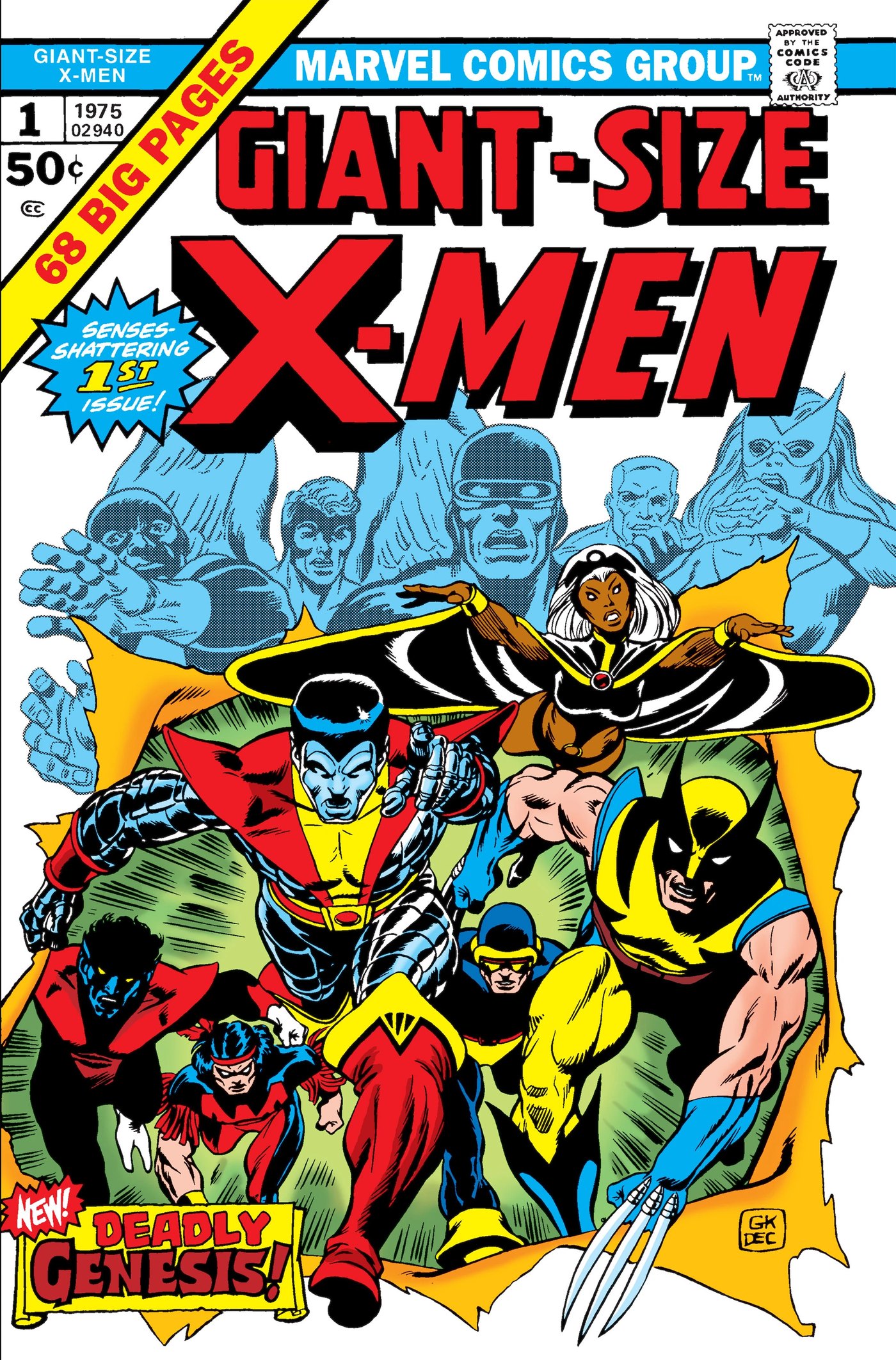
Giant-Size X-Men #1 (1975)
Written by Len Wein and drawn by Dave Cockrum, this 68-page special carried a May 1975 cover date and reached newsstands that February. It was the first new X-Men story in five years, titled “Second Genesis.”
It introduced Storm, Colossus and Nightcrawler, and brought back Wolverine after a single prior appearance in Incredible Hulk. Chris Claremont contributed to the plot uncredited. Chronologically it sits after X-Men #66 and before X-Men #94 — it is the hinge between the original team and the one you recognise.
It also deliberately expanded the roster beyond a white American cast to broaden the book’s international appeal, which is part of why it is cited as a landmark of the Bronze Age.
Then: Uncanny X-Men #94–280
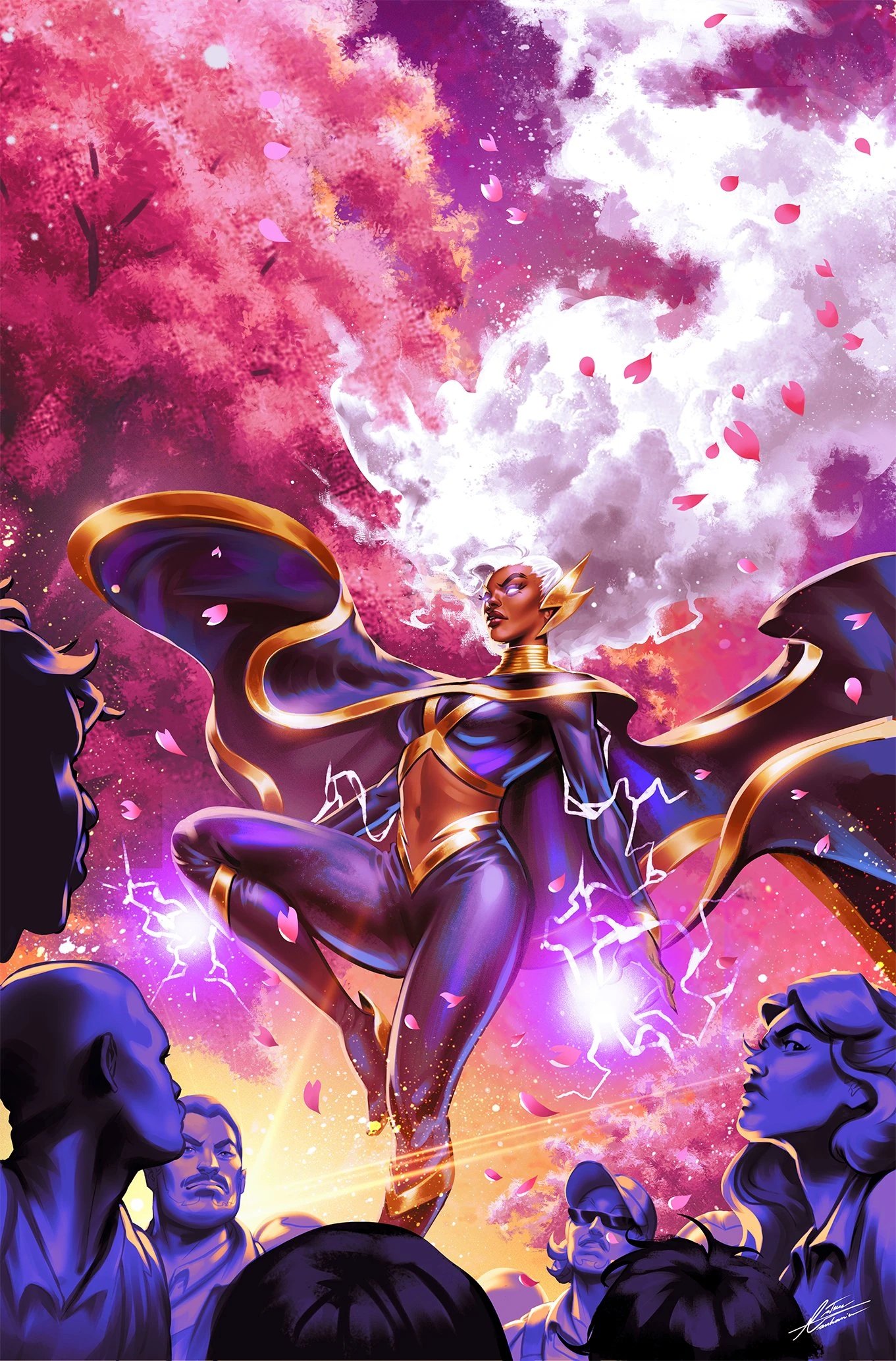
Claremont took over with issue #94 and wrote the book for sixteen years. That run is the source of the Dark Phoenix Saga, Days of Future Past, God Loves Man Kills and most of what later adaptations draw on.
It is long. You do not have to finish it. Read to the end of the Dark Phoenix Saga and you will already understand more X-Men than most viewers of the films.
The storylines worth reading first
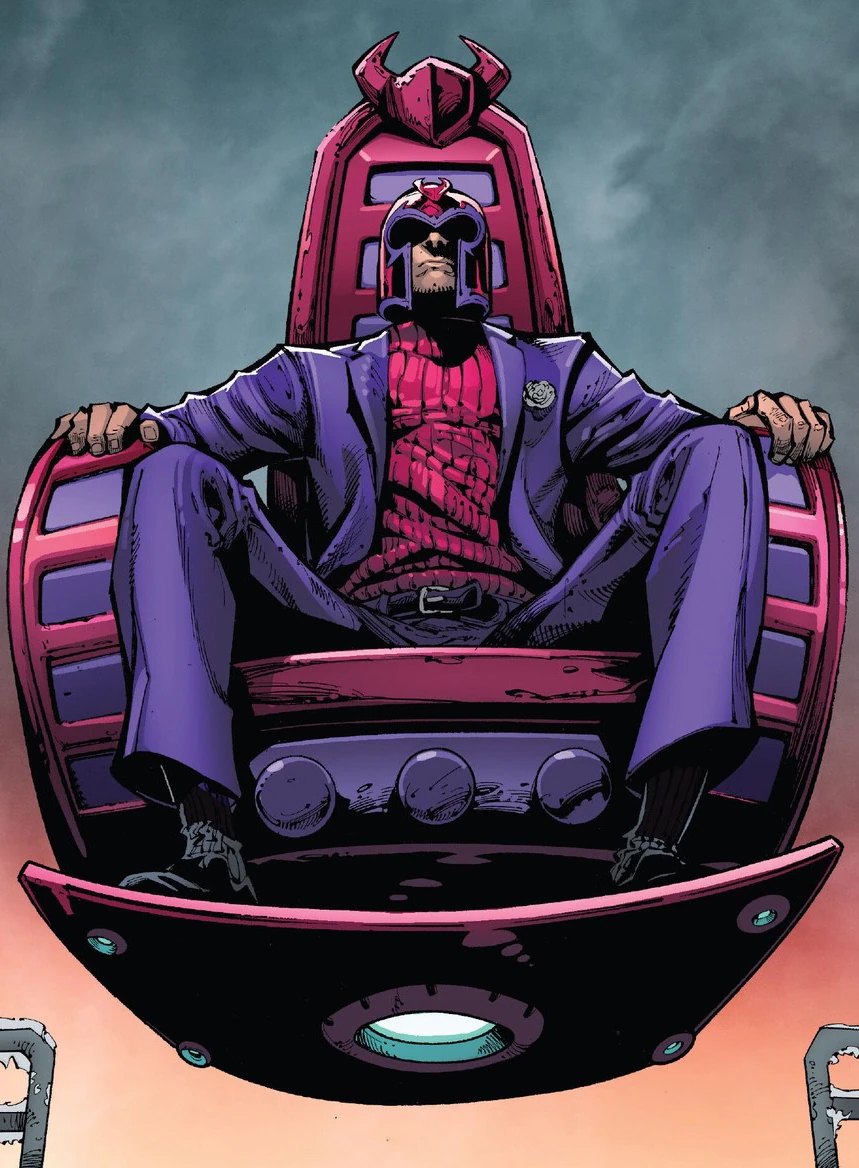
If a full run still sounds like too much, X-Men has an unusual advantage: several of its best-known stories work as self-contained reading. These are the ones that repay a single volume of effort.
- The Dark Phoenix Saga — Claremont and John Byrne’s Jean Grey story, and the one adaptation after adaptation keeps returning to. The single most-recommended X-Men story for a reason.
- Days of Future Past — short, bleak, and the origin of the dystopian-future template the whole superhero genre borrowed.
- God Loves, Man Kills — the clearest statement of the persecution themes the X-Men are built on, and readable with no prior context at all.
- House of X / Powers of X — the modern reinvention. Read as one interleaved story, not two separate series.
Read those four and you will have a working knowledge of the X-Men spanning five decades, without committing to a single long run.
The modern eras, in order
If you would rather skip forward, here is how the last few years actually connect — and this is where most published reading orders are now out of date.
- The Krakoan Age (2019–2024). Jonathan Hickman’s House of X and Powers of X relaunched the line around Krakoa, a mutant nation-state. Read those two series first; they are designed as a paired entry point.
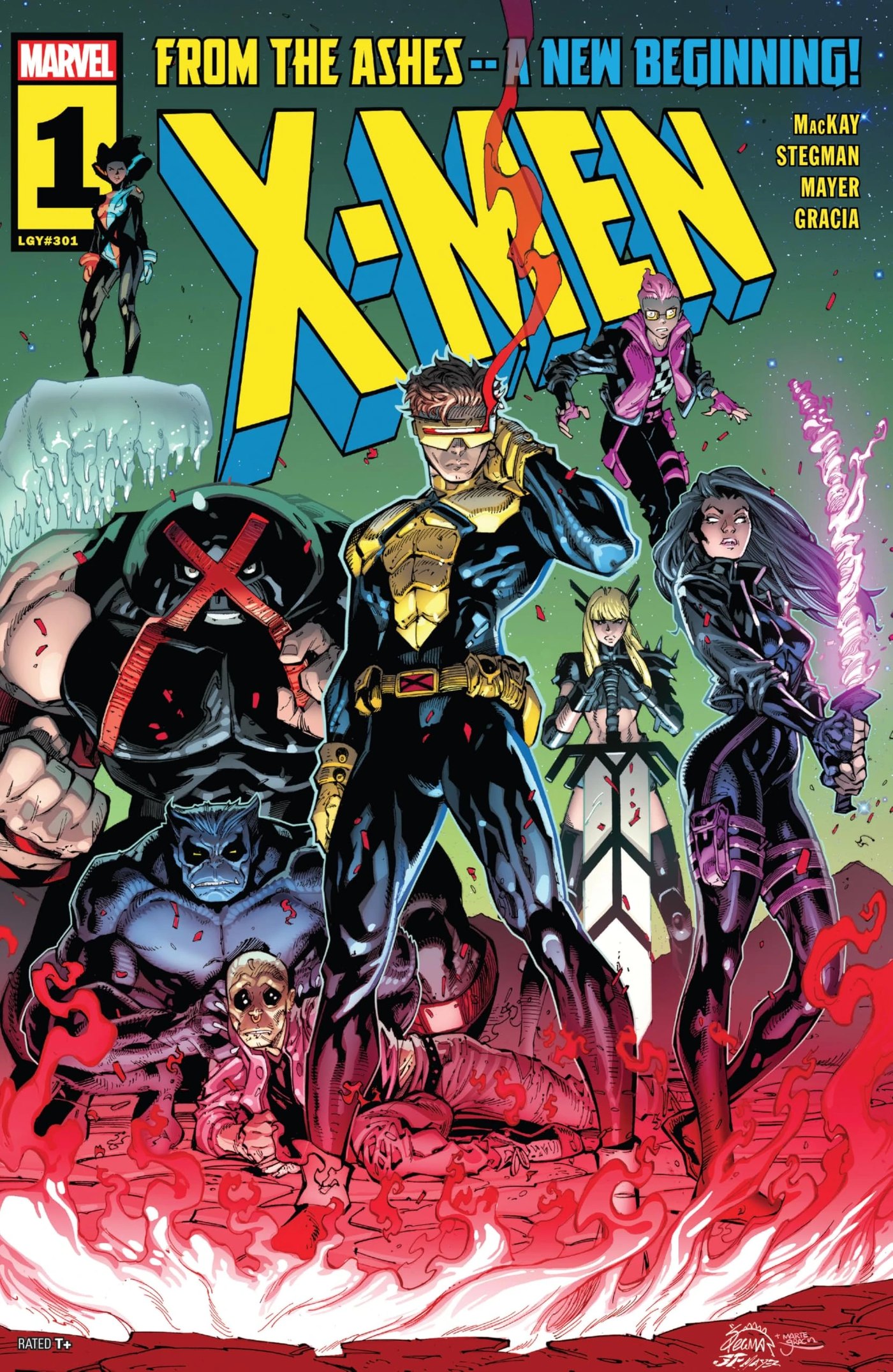
- X-Men: From the Ashes (2024–2025). A relaunch after Krakoa dissolved, scattering the X-Men back into ordinary society. It launched in July 2024 with separate teams — an Alaska-based team under Cyclops in X-Men, a Louisiana-based team under Rogue in Uncanny X-Men, and a Chicago-based team under Kitty Pryde in Exceptional X-Men.
- Age of Revelation (October–December 2025). A line-wide crossover set in a dark future ruled by Apocalypse’s heir Revelation — Doug Ramsey. It opened with the one-shot X-Men: Age of Revelation Overture and ran through X-Men: Book of Revelation, Amazing X-Men and Unbreakable X-Men. During the event the ongoing titles were replaced by limited series.
- X-Men: Shadows of Tomorrow (2026–present). The current relaunch, following directly from Age of Revelation.
The mistake nearly every X-Men reading order makes right now
Search for an X-Men reading order today and a large share of the results will tell you that X-Men: From the Ashes is the current jumping-on point for new readers.
It is not, and has not been since 2025.
From the Ashes ended in December 2025, closed out by the Age of Revelation finale. The line then relaunched as X-Men: Shadows of Tomorrow. A guide that sends a new reader to From the Ashes in 2026 is pointing them at a completed era two relaunches behind the shelf — which is a fine place to read, but a bad place to start if the goal was to catch up.
This is worth naming because it is a recurring failure mode rather than a one-off error. X-Men reading orders are enormously expensive to maintain and cheap to publish, so they get written once and left. Marvel has relaunched the X-Men line three times in roughly six years. Any guide without a visible recent update date should be treated as historical.
Our practical rule: check what a guide says is “current,” then check whether that era has already ended. If it has, the rest of the guide is probably stale too.
How to actually read them
Single issues are the worst format for catching up. Collected editions are cheaper per page and solve the ordering problem for you, because the collection itself decides what goes where.
- Marvel Unlimited is the cheapest route to the back catalogue if you are reading digitally and want the Claremont run without hunting for volumes.
- Epic Collections reprint long stretches of the classic material in reading order at a reasonable price per volume.
- Omnibus editions are the premium option and the most expensive way in — worth it only once you know you like the era.
If you are buying physical copies and thinking about condition or long-term value, our comic collecting guide for beginners covers grading and storage before you spend real money.
Where to go next
Once you have a foothold, the character histories fill in fast. We have full breakdowns of Professor X and Emma Frost, a ranking of the strongest X-Men characters, and coverage of the Shadows of Tomorrow lineup and creative teams if you are starting with the current era.
Frequently asked questions
Do I need to read the 1963 X-Men comics first?
No. The original Lee and Kirby run ended new stories at issue #66 and the series lapsed into reprints for five years. Storm, Nightcrawler, Colossus and Wolverine all arrive in 1975 with Giant-Size X-Men #1, which is the natural starting point for most readers.
What is the current X-Men era in 2026?
X-Men: Shadows of Tomorrow, which relaunched the line in 2026 following the Age of Revelation crossover. It succeeded X-Men: From the Ashes, which ran from July 2024 and ended in December 2025.
How long is the Claremont X-Men run?
Chris Claremont wrote Uncanny X-Men from issue #94 through #280 — about sixteen years and roughly 190 issues. You do not need to read all of it; stopping after the Dark Phoenix Saga is a common and sensible break point.
Where should I start if I only watched the movies or X-Men ’97?
Start with Giant-Size X-Men #1 and early Claremont. Both the films and the animated series draw heavily on that era, so you will recognise the characters and the storylines immediately.
The bottom line
There is no single X-Men reading order, and any guide that gives you one without asking what you want is guessing. Start at Giant-Size X-Men #1 for the story, or X-Men: Shadows of Tomorrow to be current. Skip 1963 unless you are reading as a historian.
Sources: Wikipedia’s Giant-Size X-Men entry for the 1975 publication details and creative credits, Wikipedia’s X-Men: From the Ashes entry for the modern relaunch timeline, and Marvel’s own comics listings for what is currently shipping.