Ultra Instinct is a rare mental state in Dragon Ball that lets every part of the body react independently, without waiting for the brain to issue a command. It is not a strength multiplier. It removes the delay between perceiving a threat and answering it, which is why even the gods find it exceptionally difficult to master.
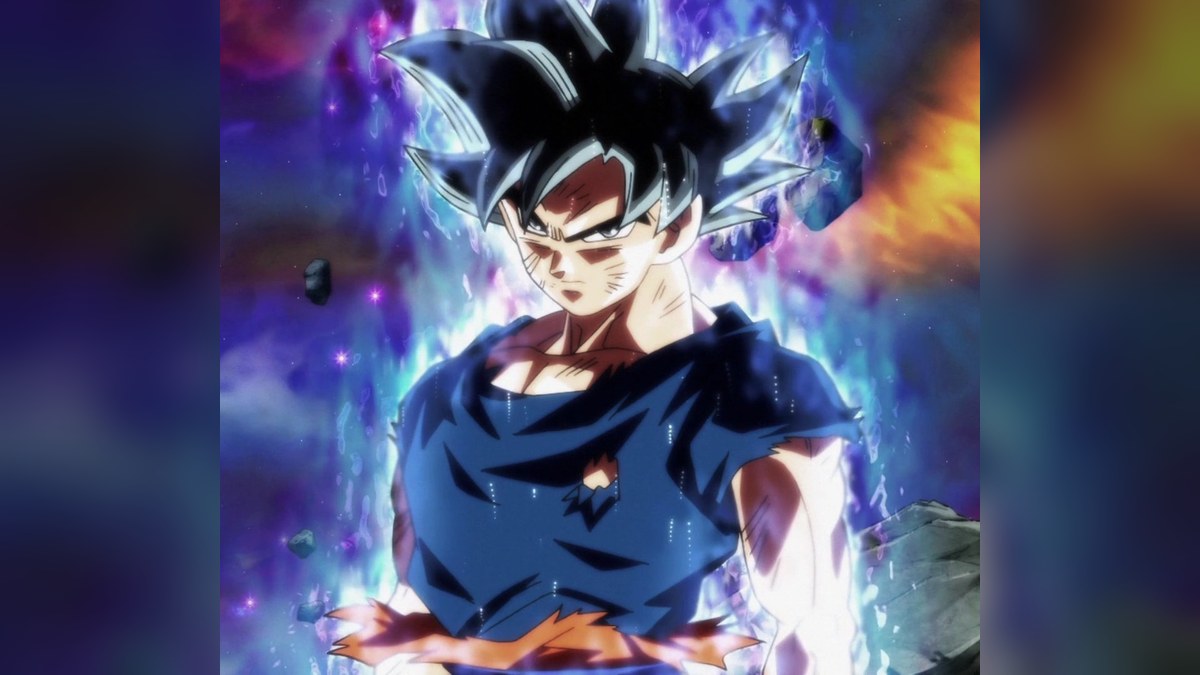
That distinction — reaction rather than raw power — is the thing most explanations skip, and it is the reason Ultra Instinct behaves so strangely compared with every Saiyan transformation before it. Here is how it actually works, what its two forms are, where its limits sit, and why it broke the series’ own escalation formula.
What Ultra Instinct actually does
The Japanese name is Migatte no Goku’i, usually glossed as “the secret of the self-centred.” Mechanically, it addresses a bottleneck the series had never previously acknowledged: nerve latency.
Normally a fighter perceives an attack, the brain decides on a response, and the command travels down the nervous system to the limbs. That sequence takes time — a small amount, but in a fight between opponents moving at Dragon Ball speeds, a decisive amount. Ultra Instinct cuts the brain out of the loop entirely. Each part of the body thinks and moves on its own, producing the correct movement at the correct moment without the user consciously deciding anything.
The practical consequence is that a user can fight effectively while their attention is elsewhere, because the response never required their attention in the first place. This is why the series animates it as serene rather than explosive: the character is genuinely not concentrating.
The two forms: Sign and Perfected
| Ultra Instinct Sign | Perfected Ultra Instinct | |
|---|---|---|
| Status | Incomplete | Complete |
| Hair | Unchanged colour, silver-blue aura | Silver / grey |
| Balance | Defence far ahead of offence | Defence and offence both operating |
| Debut | Dragon Ball Super episodes 109–110 | Dragon Ball Super episode 129 |
| Drawback | Dodges near-automatically but strikes poorly | Severe physical toll; short duration for mortals |
Ultra Instinct Sign arrives first, in episodes 109–110, when Goku absorbs the Spirit Bomb he had intended to use on Jiren. In this incomplete state the defensive half of the ability is running and the offensive half is not — Goku evades almost everything and lands almost nothing.
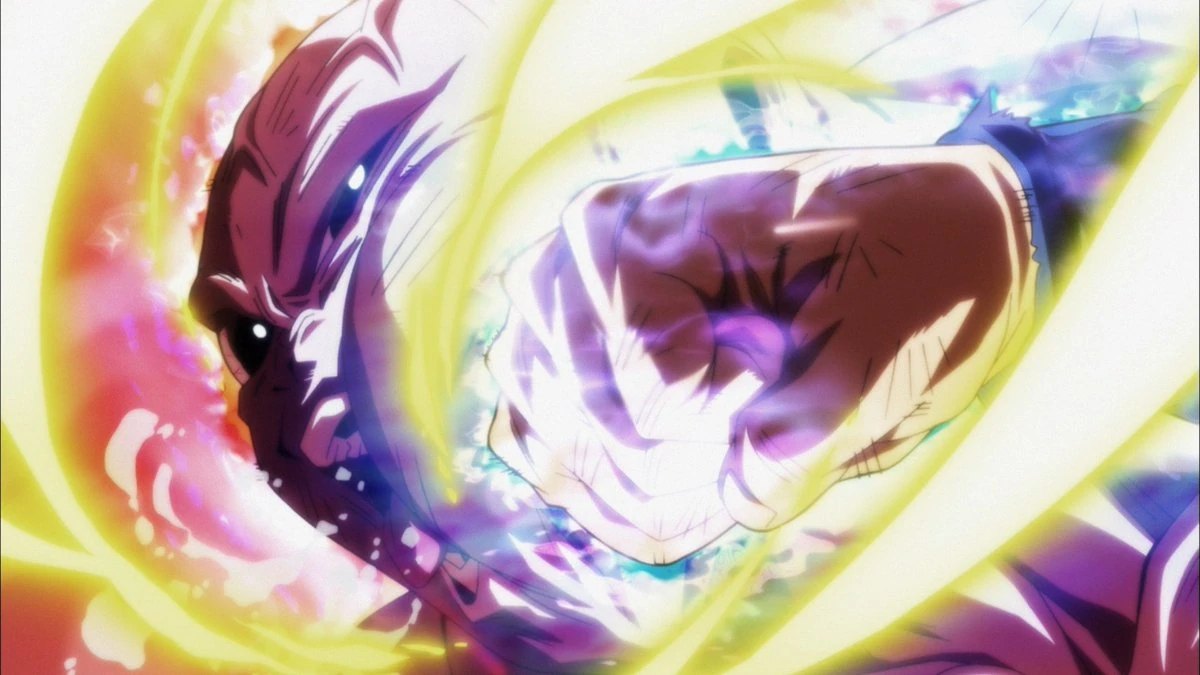
Perfected Ultra Instinct arrives in episode 129, and completes the circuit so that attacks flow with the same automaticity as dodges. The Dragon Ball Super manga later introduces a further refinement unique to Goku, sometimes called True Ultra Instinct, which reframes the state around his own fighting temperament rather than around detached calm. That version is a manga development and has not been adapted into the anime.
Why it is so hard to learn
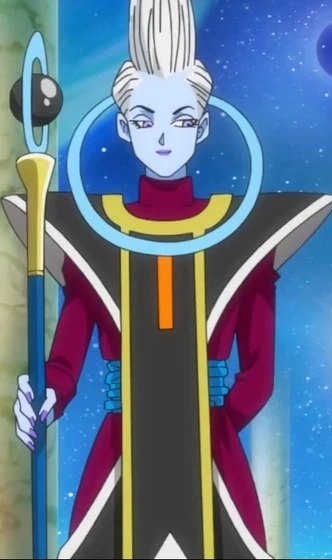
Ultra Instinct is described as the absolute peak for a martial artist, and it is notoriously difficult even among gods. Beerus, a God of Destruction, has not mastered it; Whis, his attendant, has. That gap between two beings of enormous power tells you the requirement is not a power threshold.
The obstacle is psychological. Because the state depends on the body acting without conscious direction, any conscious direction interferes with it. A fighter’s instinct to think their way through a fight — the very habit that makes them skilled — is precisely what blocks the technique. It is possible to apply the ability’s principles to a limited degree without the transformation, but the full state resists exactly the kind of person who would want it.
The limits nobody mentions

Ultra Instinct looks like invincibility and is not. Four documented limits are worth knowing:
- Trivial threats do not register. The state answers genuine danger. Whis, its most accomplished user, has been caught out by things too minor to trip the response.
- Overwhelming force can punch through. A sufficiently colossal attack can bypass the automatic defensive impulse outright.
- Focus can beat it. An immensely concentrated strike can find a vital point regardless — Granolah’s Evolved Right Eye does exactly this.
- Refinement beats refinement. When two Ultra Instinct users meet, the one with the more refined command simply bypasses the other’s defence.
There is also a hard cost. In the anime, Ultra Instinct is a technique of the gods, and a mortal without sufficient divine training can sustain it for roughly a minute before their body begins to fail — comparable to reckless overuse of Kaio-ken. Past that point the user suffers ruptures and dark ki discharges, and is eventually forced into unconsciousness. Goku’s position on our strongest Dragon Ball characters list reflects a form he cannot hold.
The original angle: the first Dragon Ball power-up that is not a power-up
Every Saiyan transformation before this one did the same thing in a different costume. Super Saiyan, Super Saiyan God, Super Saiyan Blue — each multiplied output. The story escalated by making the number bigger, and the numbers eventually became meaningless, which is the standard failure mode of the genre.
Ultra Instinct multiplies nothing. It changes latency. That is a category shift, and the series’ own rules confirm it: if Ultra Instinct raised power, overwhelming force could not bypass it and a focused attack could not pierce it. Those limits only make sense for an ability that improves how fast you answer, not how hard you hit.
The structural evidence is Vegeta. He has never taken this road, and the obstacle reads as temperament rather than power — the state demands the surrender of ego and conscious will, and Vegeta’s entire characterisation is ego and conscious will. So the story sends him down a deliberately inverted path instead: Ultra Ego, which draws power from embracing battle-lust rather than emptying the mind. The two forms are a matched antithesis pair, and that pairing only works because Ultra Instinct is defined by a mental posture rather than a multiplier. Two rivals could not meaningfully split over who has the bigger number.
There is a nice contradiction buried in the name, too. Migatte no Goku’i reads as the secret of the selfish — yet the state is reached by removing the self from the equation entirely. Read charitably, the “selfishness” is the body’s: each limb acting for itself, refusing to wait for orders from above. The technique is not egoless so much as anarchically distributed, and that is a far more interesting idea than another colour of hair.
For how Ultra Instinct compares with the systems built by other franchises, see our anime power systems explainer, and our list of the strongest Dragon Ball villains for the opponents that forced it into existence.
Frequently Asked Questions
What episode does Goku first use Ultra Instinct?
Ultra Instinct Sign, the incomplete form, first appears in Dragon Ball Super episodes 109 and 110, triggered when Goku absorbs the Spirit Bomb intended for Jiren. The complete version, Perfected Ultra Instinct, arrives in episode 129.
Is Ultra Instinct a transformation or a technique?
Strictly it is a mental state rather than a transformation, though it is accessed through transformations. The ability itself is the autonomous reaction; the silver hair and aura are the visible signature of the body entering that state. Its principles can be applied to a limited degree without transforming at all.
Can Vegeta use Ultra Instinct?
He has not achieved it, and the story treats the reason as characterological rather than a matter of insufficient power. Ultra Instinct requires surrendering conscious control and ego, which runs against everything Vegeta is built around. He pursues Ultra Ego instead, which draws power from embracing battle-lust rather than emptying the mind.
Why can’t Goku stay in Ultra Instinct?
Because it is a technique of the gods and Goku is a mortal without sufficient divine training. In the anime he can sustain it for around a minute before his body starts to break down from operating beyond its natural limits, suffering ruptures and dark ki discharges before being forced into unconsciousness.
Does Ultra Instinct make you invincible?
No. Overwhelming raw power can bypass the automatic defensive impulse, an immensely focused attack can still find a vital point, trivial threats may not trigger a response at all, and a user with more refined Ultra Instinct can simply bypass a less refined one’s defence.