Street Fighter has a new trailer. Paramount Pictures posted the 2-minute-49-second promo to its own YouTube channel on September 1, 2026, and it is the second full trailer for Kitao Sakurai’s live-action Capcom adaptation. The film, set in 1993, reaches cinemas on October 16, 2026.
Trailer via Paramount Pictures on YouTube.
Everything described below was read off the video itself. We downloaded the trailer, cut it into frames at half-second intervals, and went through all 169 seconds in order. Timestamps are ours and refer to this trailer. Where a claim comes from a press release or another outlet rather than from the frames, we say so.
Street Fighter (2026): the facts
| Detail | What we know |
|---|---|
| Release date | October 16, 2026 (theatrical) |
| Director | Kitao Sakurai |
| Screenplay | T.J. Fixman and Kitao Sakurai; story by Dalan Musson and Gary Dauberman |
| Studios | Legendary Pictures (production), Paramount Pictures (distribution) |
| Setting | 1993 |
| Runtime | 119 minutes |
| Rating | PG-13 — read directly off the trailer’s end card |
| Format | “Filmed for IMAX,” per the same end card |
| Principal cast | Andrew Koji (Ryu), Noah Centineo (Ken Masters), Callina Liang (Chun-Li), David Dastmalchian (M. Bison), Jason Momoa (Blanka), Cody Rhodes (Guile), Roman Reigns (Akuma), 50 Cent (Balrog), Olivier Richters (Zangief), Mel Jarnson (Cammy), Hirooki Goto (E. Honda), Vidyut Jammwal (Dhalsim), Orville Peck (Vega), Andrew Schulz (Dan Hibiki), Eric André (Don Sauvage) |
| This trailer | 2:49, posted to Paramount Pictures’ YouTube channel on September 1, 2026 |
The banner says “II” — and that is not decoration
At 0:36.0 the trailer cranes past a tower block carrying an enormous cloth banner. It is legible. It reads 1993 · WORLD WARRIOR TOURNAMENT · II, with a Roman numeral II set in a medallion at the bottom, a Greek-key border running the full edge, and a painted portrait of a caped officer in military dress with a skull on his belt buckle.
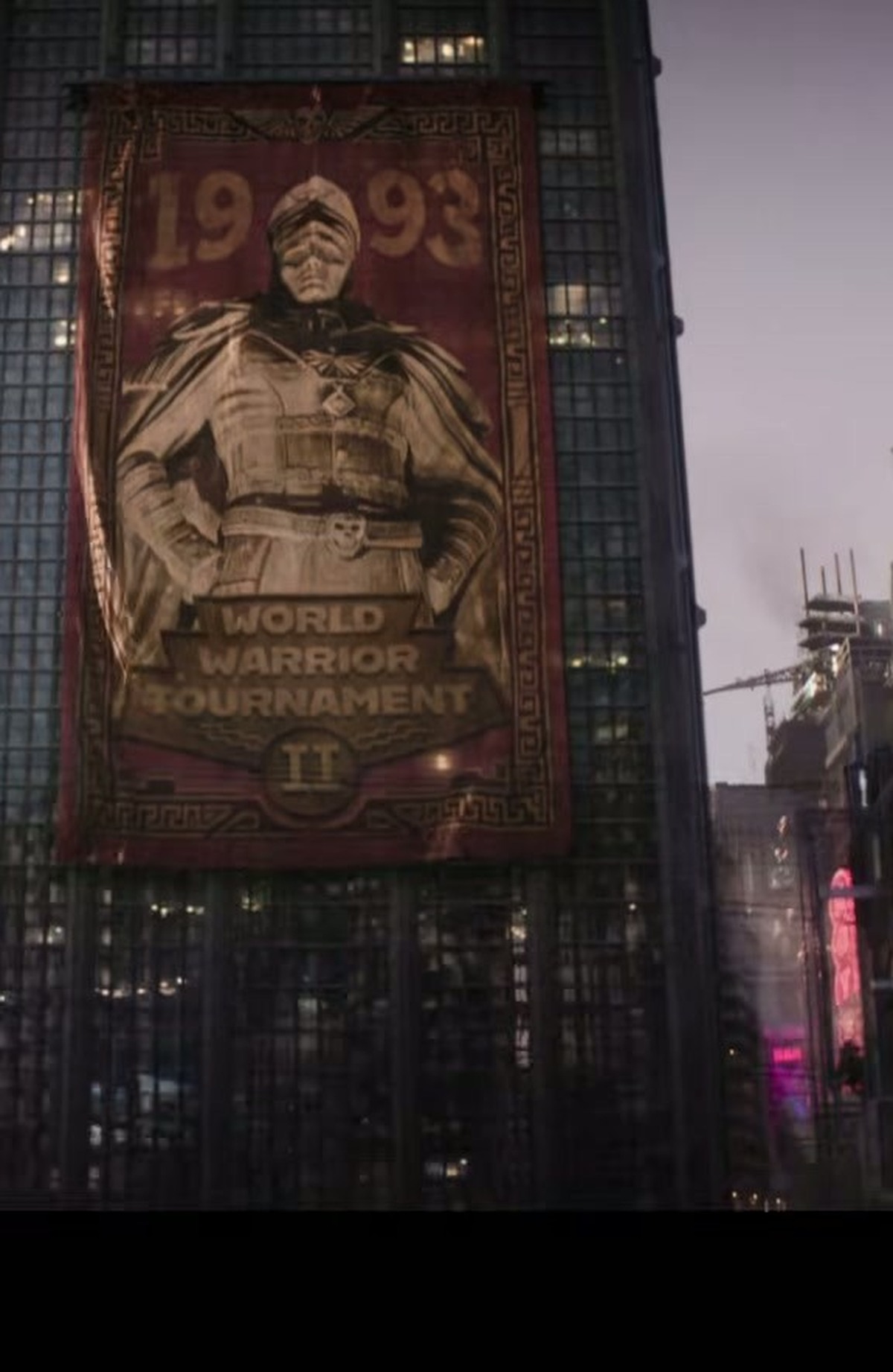
Two things follow from that. The first is a plot fact the trailer never says out loud: this is the second World Warrior Tournament, which matches Paramount’s own synopsis describing Chun-Li recruiting Ryu and Ken for “the next World Warrior Tournament.” The second is a joke aimed squarely at the audience. The game this film is adapting is Street Fighter II; the in-world tournament is numbered II. The film gets to be a faithful adaptation of the second game and an in-fiction sequel at the same time, and it tells you so on a banner rather than in dialogue.
The portrait matters too. Long before any character names the villain, the tournament’s own publicity is a picture of a man in a peaked cap and cape. The film is telling you who owns the event.
The trailer withholds its studio logos for 21 seconds
The Paramount, Legendary and Capcom logos do not appear until roughly 0:21 to 0:23. Everything before that is a cold open: a rain-slicked alley in blue, a body on wet ground, a fight lit in hard red, and at 0:12.8 a face in magenta light with the eyes glowing.
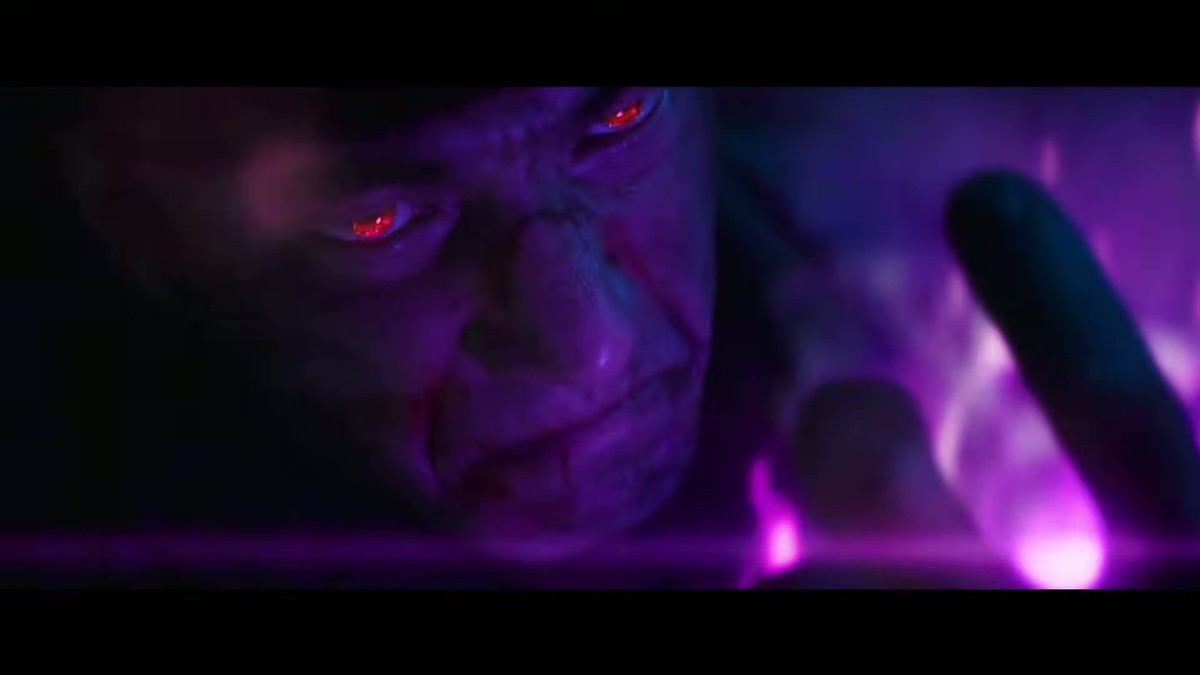
Worth noting against the obvious reading: this is not Paramount doing something unusual. The first Street Fighter trailer held its logos back even longer, until roughly 0:58. If anything, trailer two gets to the branding faster.
The car bonus stage has a working clock
The Street Fighter II bonus round where you demolish a car is in the film, and it was in the first trailer too, so it is not a new reveal. What we can add is the detail. Between 0:46.0 and 0:46.8 a countdown display behind the car ticks from 36 to 35 in a chunky arcade-style pixel font — a real timer, running, exactly as the bonus stage has one.
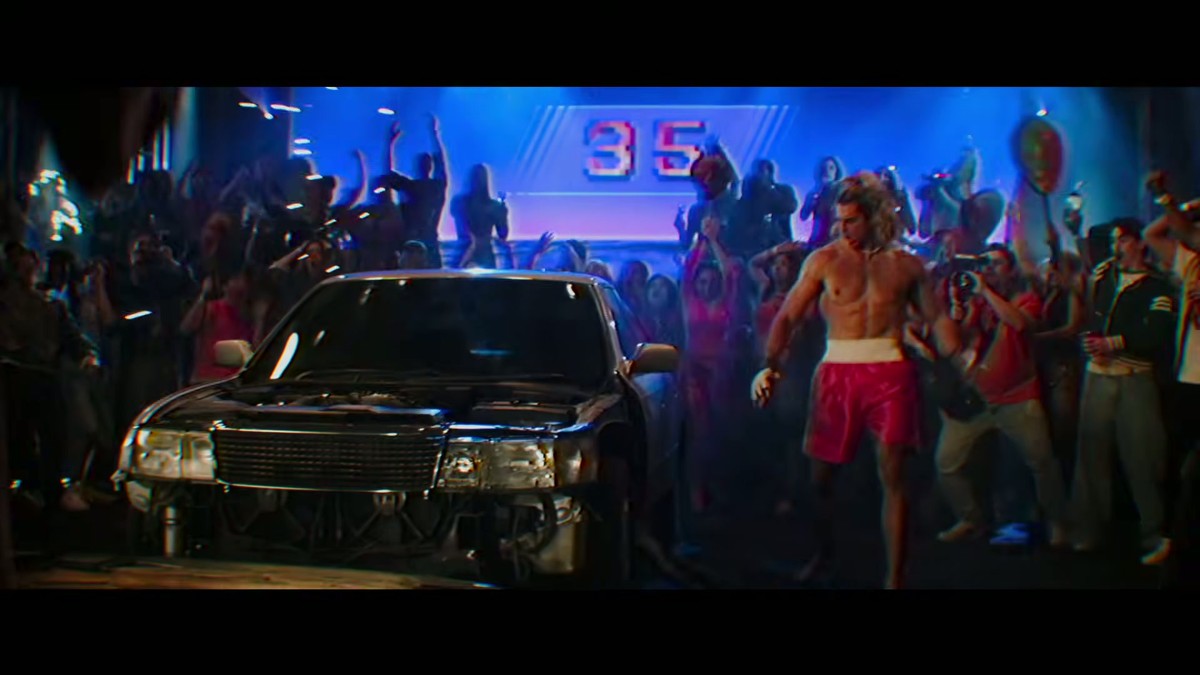
The sequence is also graded and processed to look like camcorder video: heavy colour fringing on the highlights, smeared verticals, and at least one bystander in shot holding a video camera. The film is not just restaging the bonus round, it is presenting it as home-video footage of a 1993 party.
The bathhouse is the biggest genuinely new thing here
From roughly 1:00 to 1:26 the trailer parks in a steam-filled Japanese bathhouse. That is about 25 seconds, or close to 15% of the whole trailer, on a single location — by some distance the longest the trailer stays anywhere. At 1:02.2 a heavyset man with a chonmage topknot turns into frame.
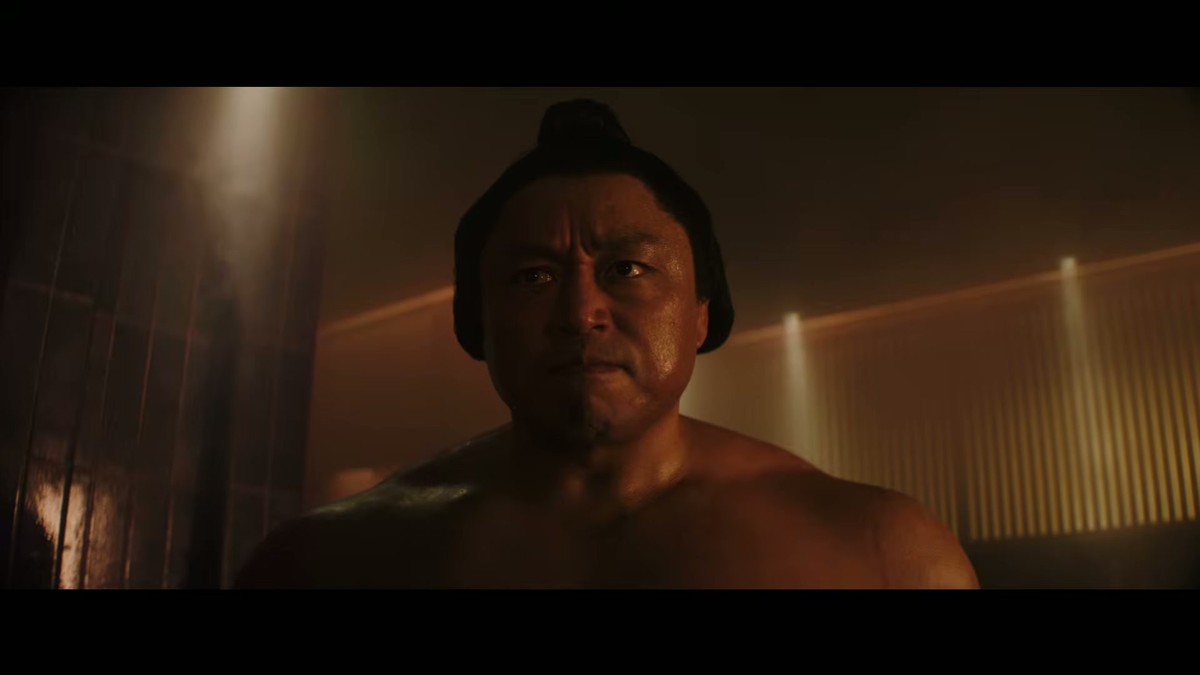
A sumo wrestler in a public bath is not a neutral choice. E. Honda’s stage in Street Fighter II is a bathhouse, and the cast list has former sumo wrestler Hirooki Goto playing him. We are confident about the setting and the build; we are reasoning from the cast list, not from the frame, when we attach the name.
The reason this section matters: we watched the first trailer frame by frame as well, and there is no bathhouse in it anywhere. This is the single largest block of footage the second trailer adds.
Who is actually legible in the new Street Fighter trailer
The back third of the trailer is a rapid character parade. Some of these are unmistakable from a single frame. Some are not, and we have separated them.
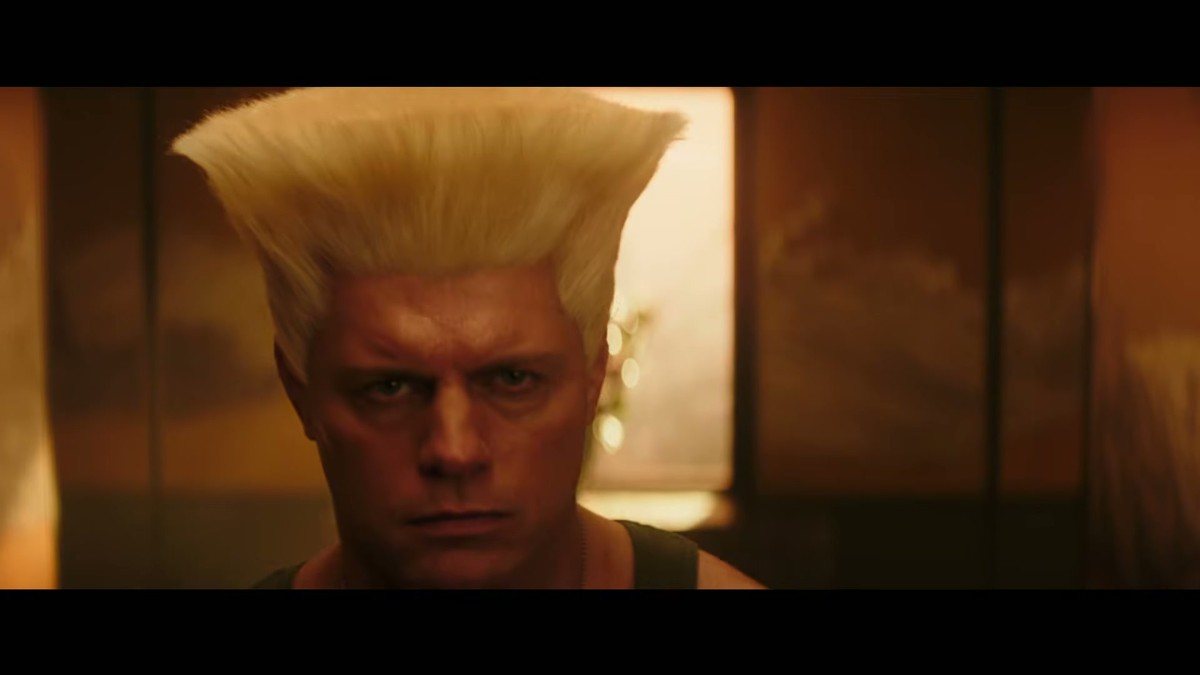
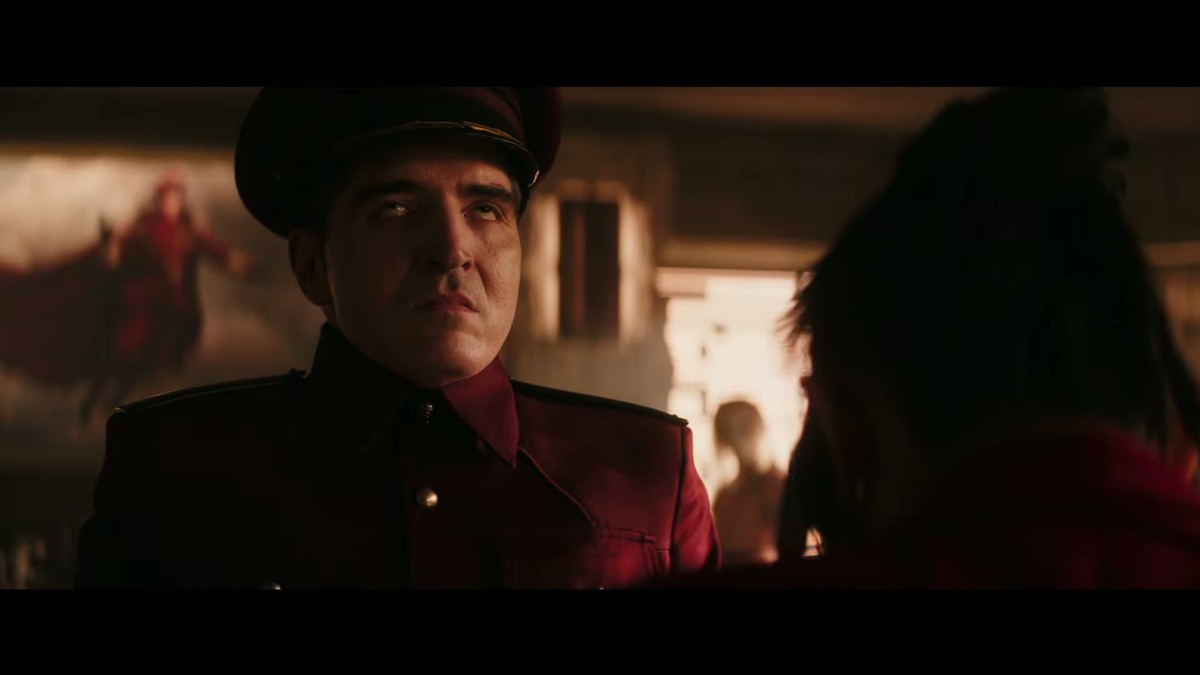
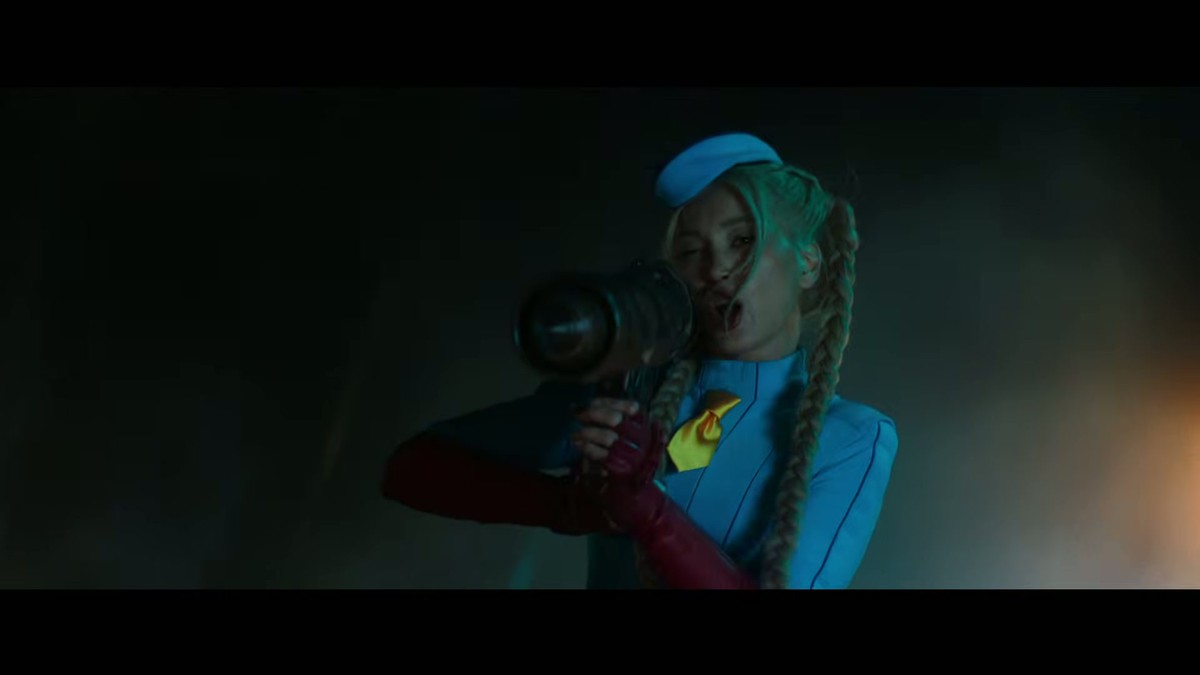
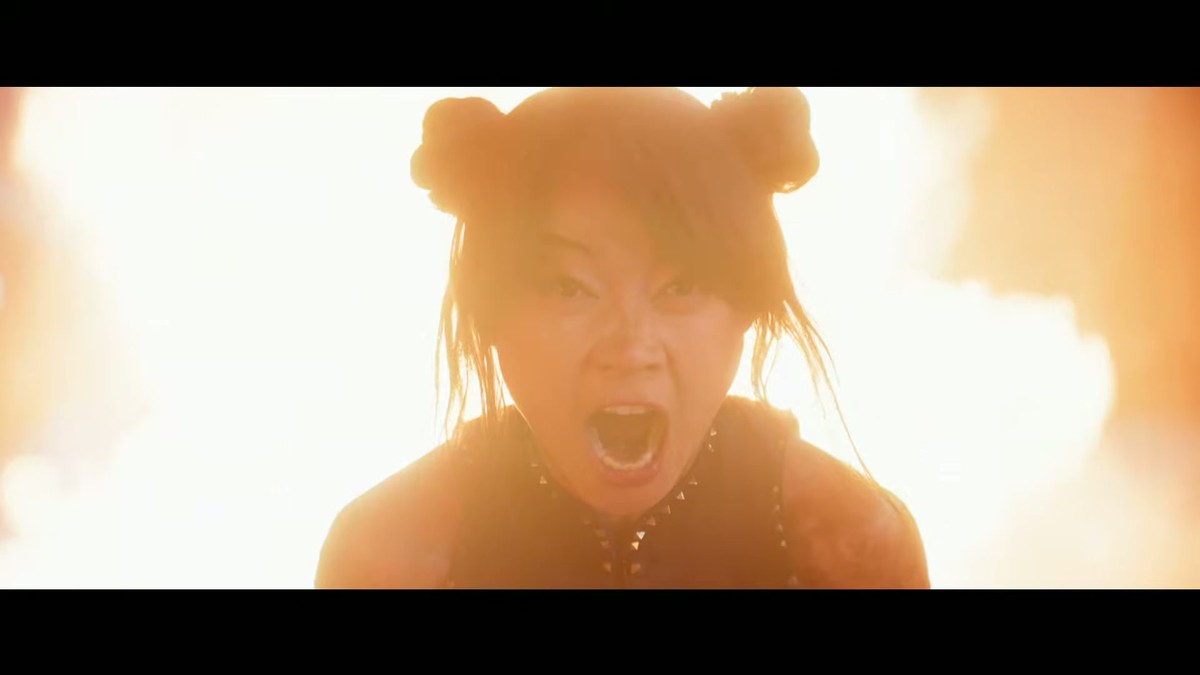
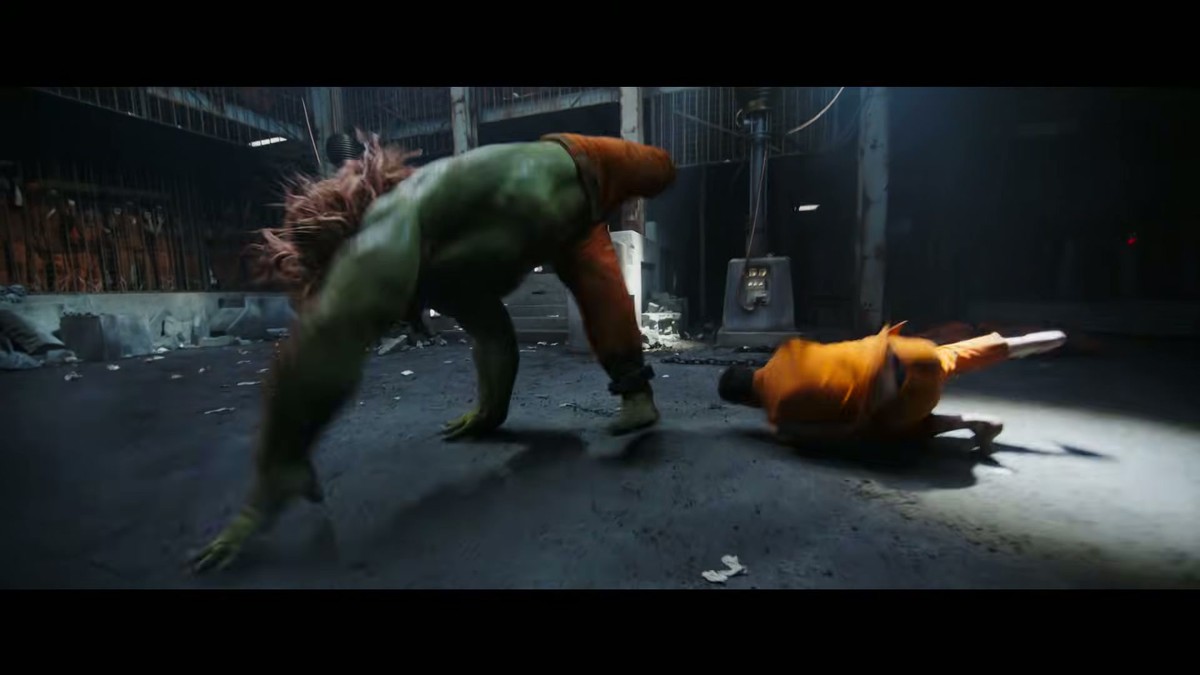
Blanka turns up twice in the back third, and in two different places rather than one continuous fight: a rolling attack trailing yellow electricity through a concrete stairwell at 2:20.0–2:20.8, and the alley brawl above at 2:24.6–2:25.2, where the men he is throwing around are dressed in orange rather than the dark uniforms and red berets seen elsewhere. The trailer cuts the two together; that does not make them one scene, and we are not going to assemble a sequence out of editing.
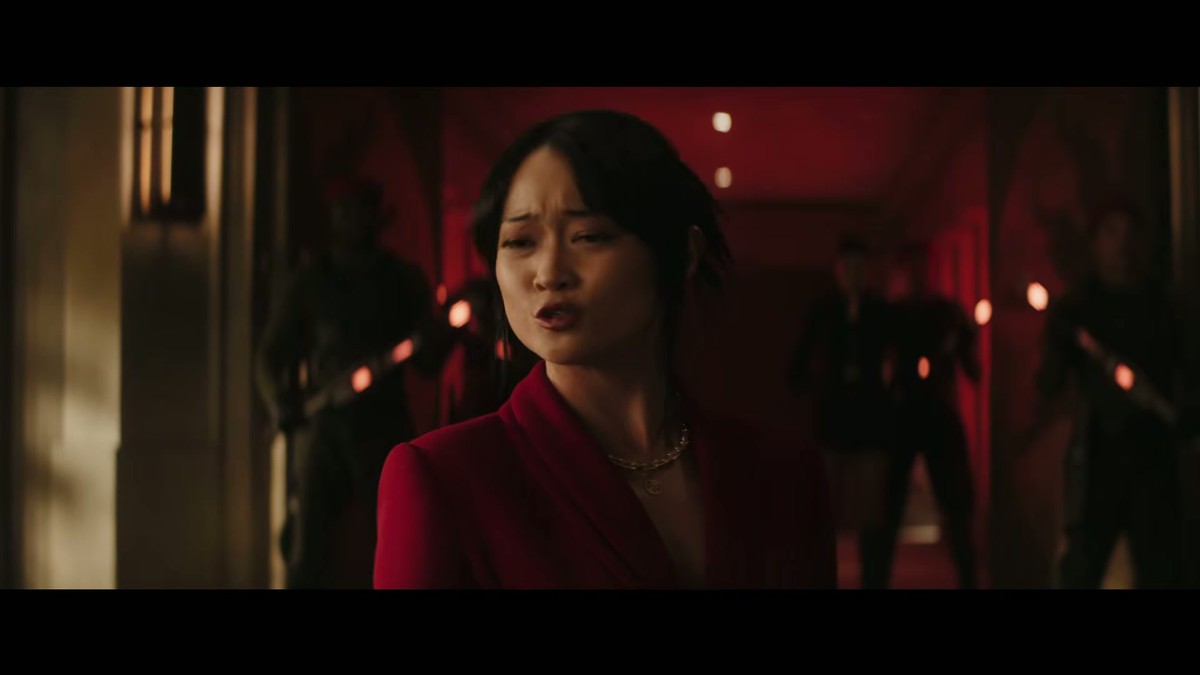
Chun-Li gets two distinct looks: the ox-horn buns above, and a red dress in a corridor lined with armed men at 1:51.2 and again on a hillside at 2:06.0, where she fights a man with a long staff beside a helicopter.
Identifications we are not making
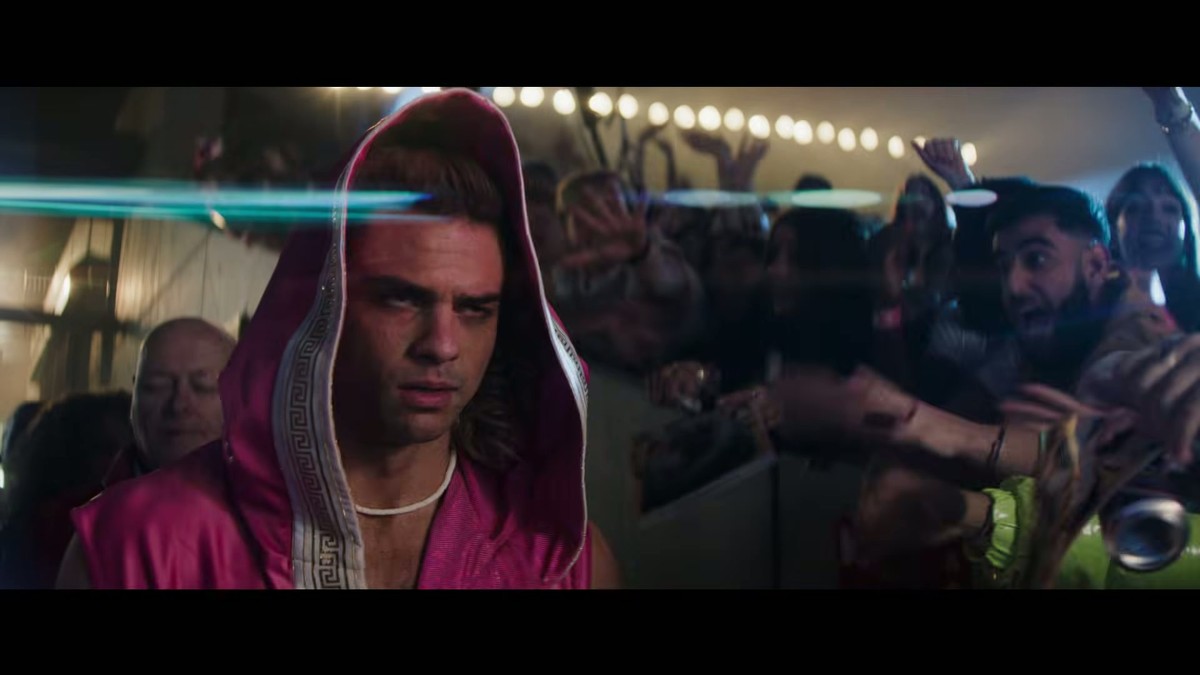
At 0:44.8 a fighter walks a crowd in a pink hooded entrance robe with a Greek-key trim. Pink is Dan Hibiki’s colour in the games and Andrew Schulz is cast as Dan, so that is the obvious read — but it is an inference from a costume colour, not a face we can identify, and the same pink robe turns up again in the closing gag at 2:38.6.
We are also declining to name: the boxer in red gloves who trades with Ken at 0:51.2 (a boxer, in a boxing ring, in a Street Fighter film, is a strong hint and nothing more); the bald tattooed fighter Ken faces in the arena at 2:13.0; the blond performer in a white tracksuit on a neon stage at 1:27.6; the enormous bearded man posing for a camera crew beside a horse at 1:36.4; and the lean figure crouching in blue mist at 2:31.0. We initially misread that last one as Blanka off a thumbnail. At full resolution he is plainly a human being under blue light, which is a good argument for opening the frames properly before writing about them.
A 1993 film with flying cars in it
At 2:08.4 the trailer cuts to a skyline of neon towers with aircraft banking between them over a bay. It does not read as 1993, or as any real city in 1993.
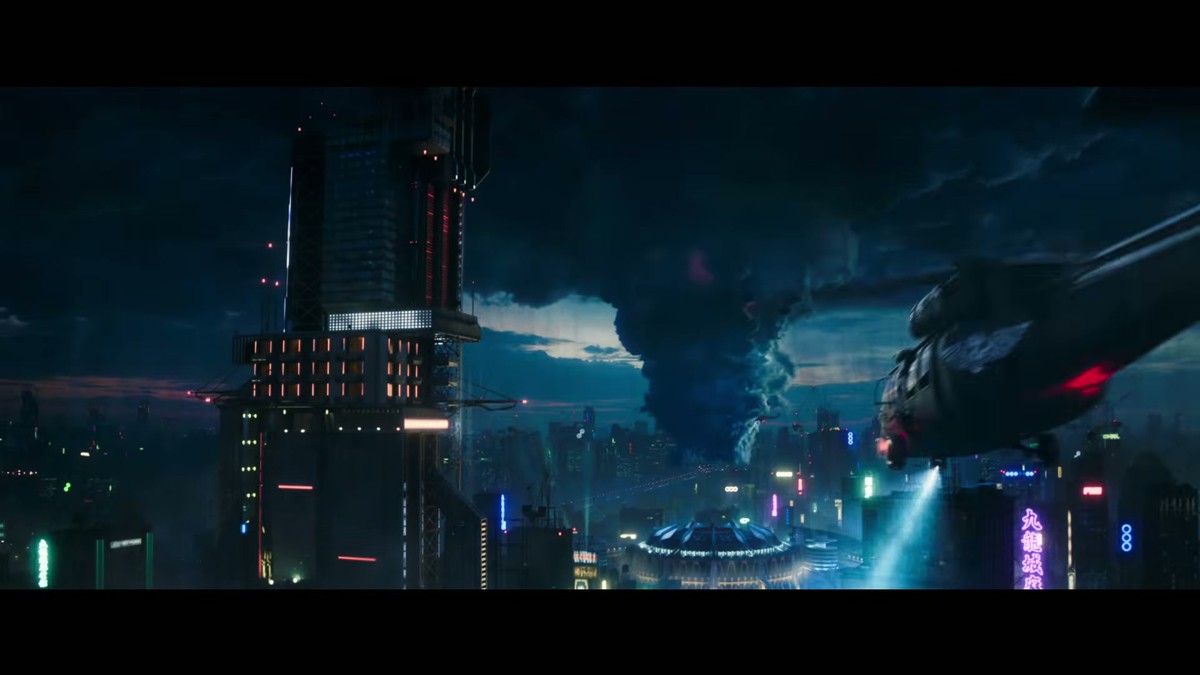
This shot was in the first trailer too, so it is not a reveal, and we are not going to pretend to know what it is. It is consistent with Shadaloo’s territory being its own place rather than a real one, which is roughly how the games have always treated it. But the trailer offers no caption, and neither will we.
What is actually new, measured against the first trailer
We downloaded Paramount’s first full Street Fighter trailer and stepped through it the same way, so this comparison is against the video rather than against other people’s coverage. A large amount of trailer two is reused footage.
| First trailer | This trailer (September 1) | |
|---|---|---|
| Length | 2:53 | 2:49 |
| Studio logos land at | about 0:58 | about 0:21 |
| Mid-trailer date card | “THIS OCTOBER” | “ON OCTOBER 16” |
| Bathhouse sequence | Absent | About 25 seconds, 1:00–1:26 |
| MPA rating on the end card | None shown | PG-13, with the full content descriptor |
| “Filmed for IMAX” | Not shown | On the end card |
| Closing credit block | Full cast billing plus story, screenplay and director credits | Dropped — ends on the date card |
| Car bonus stage | Present | Present (same sequence) |
| Banner, Blanka, Cammy, Guile, the neon skyline | All present | All present again |
So the honest summary is: the bathhouse, the rating and the IMAX line are the news. The rating in particular is a concrete production milestone — a film only carries an MPA rating on its marketing once it has been rated, and the first trailer carried none.
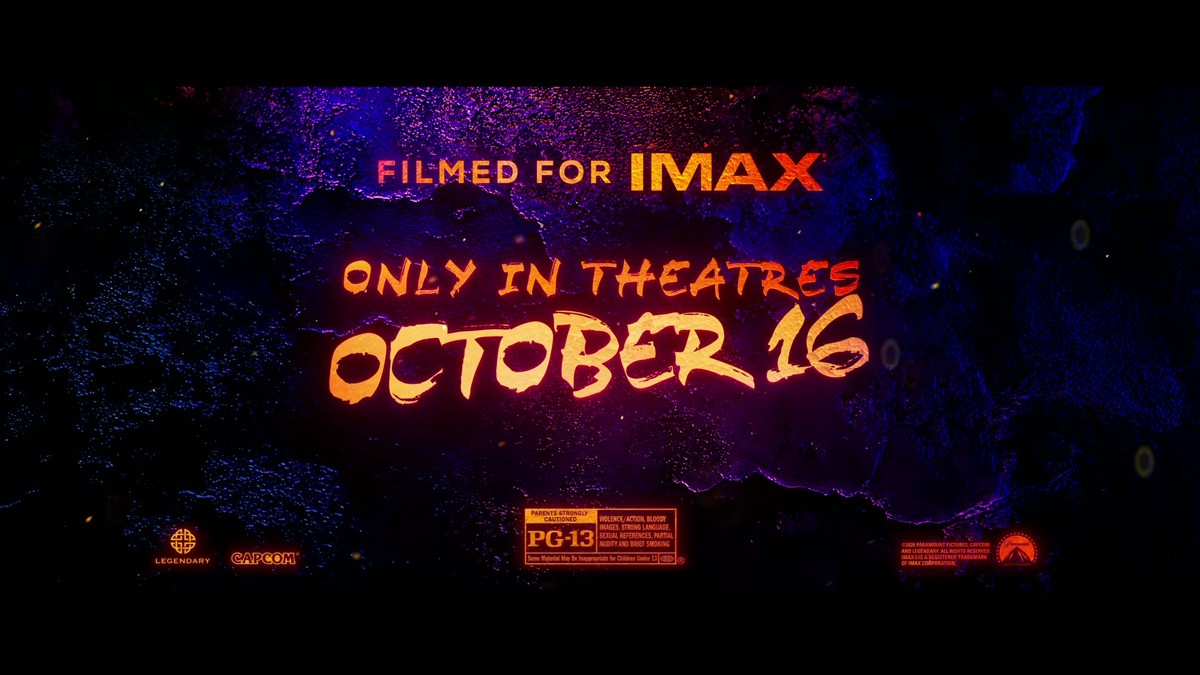
That descriptor is worth reading twice. “Bloody images” and “partial nudity” on a PG-13 video game adaptation suggests a film pushing at the top of its rating rather than sitting comfortably in the middle of it — and the bathhouse sequence probably accounts for at least one of those descriptors.
What the trailer does not show
Observation, not reporting. A trailer omitting something is not evidence the film omits it.
There is no legible mask in this trailer. The first trailer had a clear shot of a pale mask in a doorway at about 2:26; nothing equivalent appears here. There is no clearly framed Dhalsim — no bald head, no skull necklace, no elongated limbs — despite Vidyut Jammwal being cast. Akuma, Roman Reigns’ character, is not identifiable in any frame we can point at, and neither is Zangief with any certainty.
There is also no hadouken clearly resolved on screen in this cut. There is purple energy in a pair of hands at 1:47.2 and a purple flash in a cage at 2:11.0, both of which read as the villain’s power rather than Ryu’s.
And for a trailer built on two estranged friends, Ryu and Ken share exactly one clean sequence together, running 2:17.6 to 2:19.4. It is worth describing properly, because it is the only place the trailer shows you their relationship rather than telling you about it: the two of them stand shoulder to shoulder at the end of a corridor, fists up, facing a squad of men in dark uniforms and red berets. Whatever the film does with the estrangement, this shot is the reconciliation — they are fighting the same people, not each other. The trailer gives it under two seconds.
Lastly, the trailer never states the tournament’s stakes, never names the conspiracy Paramount’s synopsis refers to, and never gives a single character a line long enough to establish who they are. It is a texture reel, not a story reel.
Why Capcom is being this careful
Street Fighter is not a small licence being cashed in. Capcom’s own Platinum Titles ledger, as of June 30, 2026, puts Street Fighter 6 at 7.20 million units and Street Fighter V at 8.00 million (Capcom Platinum Titles).
The same ledger contains a detail that reframes the film’s choice of year. Street Fighter II sits at 6.30 million units on its June 1992 release — and Capcom then shipped Street Fighter II Turbo in July 1993 (4.10 million) and Street Fighter II’ Special Champion Edition in September 1993 (1.65 million). Setting the film in 1993 is not a generic nostalgia grab for “the nineties.” It is the specific twelve months in which Capcom put out two more Street Fighter II releases and the game was at its absolute cultural peak. The banner reading “1993” and “II” in the same frame is doing more work than it looks like.
There is also a specific bad memory to work against. The 1994 live-action film took $99.4 million worldwide against a $35 million budget and sits at 11% on Rotten Tomatoes.
| Street Fighter (1994) | Street Fighter (2026) | |
|---|---|---|
| Director | Steven E. de Souza | Kitao Sakurai |
| Top billing | Jean-Claude Van Damme as Guile | Andrew Koji as Ryu, Noah Centineo as Ken |
| Setting | Contemporary Shadaloo | 1993 |
| Runtime | 102 minutes | 119 minutes |
| Rating | PG-13 (cut from R to G, then raised to PG-13 by adding one expletive in post) | PG-13 (violence/action, bloody images, strong language, sexual references, partial nudity, brief smoking) |
| Distributor | Universal | Paramount |
| Budget | $35 million | Not disclosed |
| Worldwide gross | $99.4 million | Unreleased |
| Rotten Tomatoes | 11% | Unreleased |
That rating row is the sharpest line between the two films. The 1994 version was trimmed all the way down to a G and had to have a swear word put back in to reach PG-13. The 2026 version arrives at the same certificate carrying “bloody images” and “partial nudity” in its content descriptor. Same rating, opposite direction of travel.
Capcom has been publicly closer to this one. Takayuki Nakayama, game director on Street Fighter at Capcom, visited the set and said of the production: “I think they’ve managed to accomplish something very difficult in a really smart way. This is the Street Fighter I know.” He also noted that “the director and everyone else involved in the production all love Street Fighter, and are fans, just like us” (via JoBlo).
That is a promotional quote and should be read as one. But the banner detail at 0:36 is the kind of thing that supports it: numbering the in-world tournament II is a joke that only lands if you have played the game, and nobody makes that joke by accident.
Read next
We broke down Capcom’s other live-action adaptation the same way in our Mega Man: Dual Override trailer breakdown, and did the same for another arcade cabinet heading to screen in our Golden Axe trailer breakdown. For the wider context on how these adaptations tend to go, see the best and worst comic book video games of all time.
Frequently Asked Questions
When does the Street Fighter movie come out?
October 16, 2026, in cinemas. The trailer’s own end card reads “only in theatres October 16” and adds “filmed for IMAX.”
Is this the first Street Fighter trailer?
No. It is the second full trailer. Paramount’s YouTube channel also holds a 46-second Game Awards sneak peek, a 2-minute-53-second first official trailer, and a 59-second Blanka vs. Ryu special look.
What is the Street Fighter movie rated?
PG-13. The rating block on the trailer’s end card cites violence/action, bloody images, strong language, sexual references, partial nudity and brief smoking.
Which characters appear in the new trailer?
Ryu, Ken Masters, Chun-Li, Guile, Cammy, Blanka and a commander in the red uniform that matches the tournament banner are all clearly identifiable from the frames. Several other fighters appear but are not identifiable from a single shot, and we have not guessed at them.
Is the car bonus stage from Street Fighter II in the movie?
Yes. It appears in both trailers. In this one, a countdown display behind the car visibly ticks from 36 to 35 between 0:46.0 and 0:46.8, and the whole sequence is processed to look like camcorder footage.
Who is directing the Street Fighter movie?
Kitao Sakurai, best known for The Eric Andre Show and Bad Trip. The screenplay is by T.J. Fixman and Sakurai, from a story by Dalan Musson and Gary Dauberman — credits that appear in the closing credit block of the first trailer.
Last updated: September 1, 2026.