The JoJo’s Bizarre Adventure watch order almost everyone recommends is simple: watch the eight parts in release order, Phantom Blood through JoJolion, because Hirohiko Araki wrote them as one continuous family saga. The hard part isn’t the order — it’s that the anime is split across five David Production seasons, two Netflix exclusives, and a platform-dependent episode count that trips up even longtime fans.
Quick-Reference JoJo Watch Order
This is the order to watch the anime in, matching both release order and the story’s internal chronology (with one asterisked exception noted below):
- Part 1 — Phantom Blood
- Part 2 — Battle Tendency
- Part 3 — Stardust Crusaders
- Part 4 — Diamond is Unbreakable
- Part 5 — Golden Wind
- Part 6 — Stone Ocean
- Part 7 — Steel Ball Run*
- Part 8 — JoJolion (manga only — no anime yet)
*Steel Ball Run is not a direct sequel to Stone Ocean. Araki set it in a parallel timeline with new incarnations of the Joestar and Zeppeli families, so it plays as a soft reset you can watch straight after Part 6 without missing a continuity thread — JoJolion later continues from where Steel Ball Run leaves off, in that same alternate timeline.
Part-by-Part Breakdown: What to Expect (and What You Can Skip)
Part 1: Phantom Blood (2012) — 9 episodes
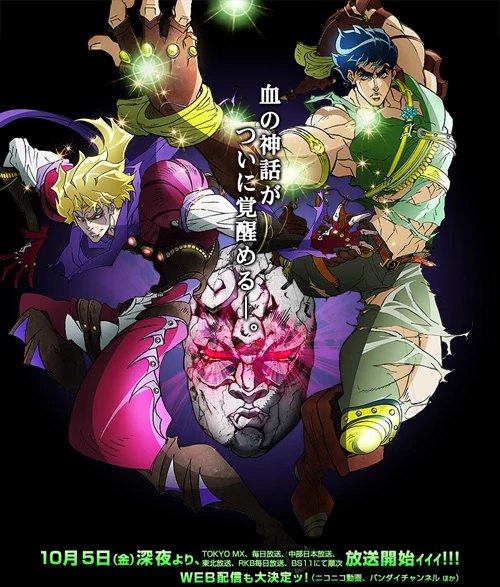
David Production’s gothic-horror origin story: Jonathan Joestar vs. his adopted brother Dio Brando, ending in vampires and the Hamon breathing technique. It’s the shortest part by a wide margin and the least visually polished of the David Production run, but skipping it means meeting Dio, Jotaro’s great-great-grandfather Jonathan, and the entire premise of the Joestar bloodline’s rivalry secondhand. Not skippable.
Part 2: Battle Tendency (2012–2013) — 17 episodes
A tonal jump into pulpy 1930s adventure serial territory, with Joseph Joestar fighting the ancient Pillar Men across Italy and Mexico. This is where Hamon combat actually gets interesting and where the series’ sense of humor shows up for the first time. Essential for understanding Joseph’s character in every part he appears in afterward, including cameos in Stardust Crusaders and Diamond is Unbreakable.
Part 3: Stardust Crusaders (2014–2015) — 48 episodes
The part most casual fans picture when they hear “JoJo”: Jotaro Kujo, Star Platinum, and a road trip from Japan to Egypt to save his mother from Dio, now fully introduced to the Stand power system. It aired as two 24-episode cours a year apart (2014 and 2015), which is why some guides list it as two separate seasons. This is also the part where the battle-of-the-week shonen structure that defines the rest of the franchise locks in. Jotaro and Star Platinum also show up on our strongest anime characters list.
Part 4: Diamond is Unbreakable (2016) — 39 episodes
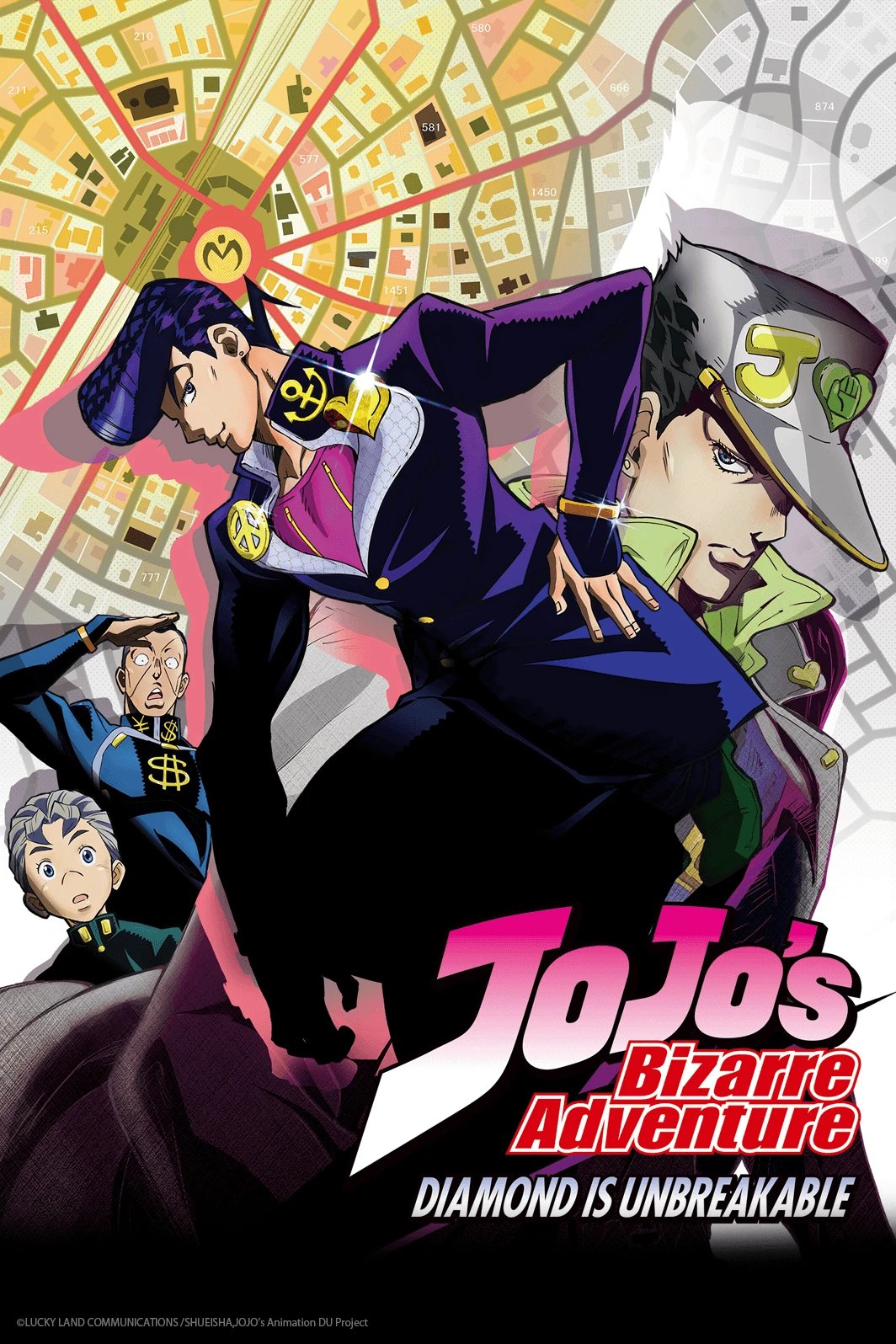
A hard genre swerve: instead of a road trip, Part 4 confines itself to the fictional town of Morioh for a slice-of-life mystery-horror story built around serial killer Yoshikage Kira. Josuke Higashikata headlines, and the ensemble cast (Rohan Kishibe, Koichi Hirose, Okuyasu Nijimura) is generally considered the strongest in the franchise. Skippable content: the four-episode Thus Spoke Kishibe Rohan OVA anthology is a side story set in this part’s world and isn’t required, though it’s a fun watch once you’re attached to Rohan.
Part 5: Golden Wind (2018–2019) — 39 episodes
Giorno Giovanna, Dio’s biological son, works his way up through Italy’s mafia underworld with Team Bucciarati in what plays closer to a crime thriller than a horror story. It has some of the franchise’s best-choreographed fights, including the King Crimson and Gold Experience Requiem confrontations. See the streaming section below for why this part’s episode count is the one place watch-order guides consistently get sloppy.
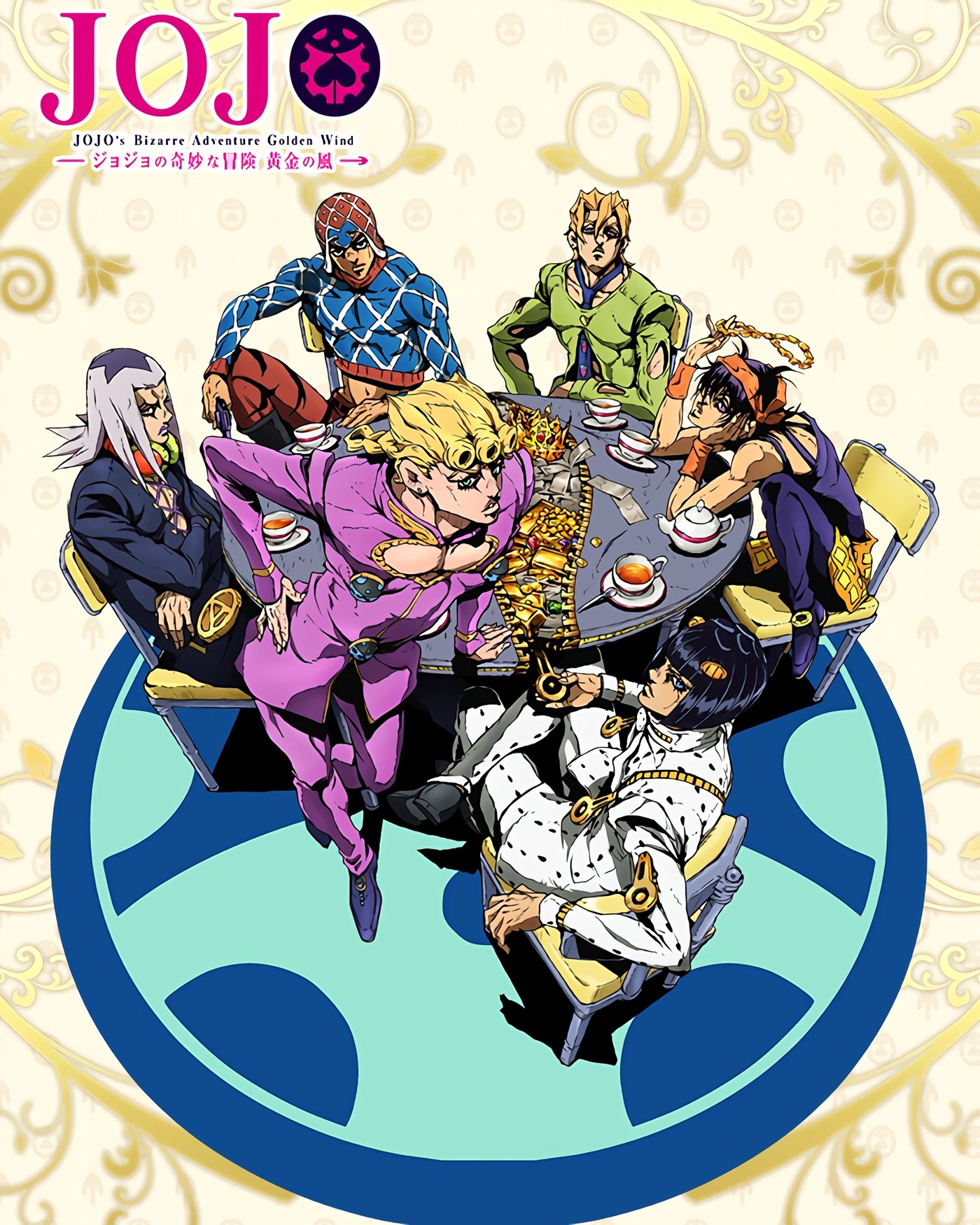
Part 6: Stone Ocean (2021–2022) — 38 episodes
Jotaro’s daughter Jolyne Cujoh is framed for murder and sent to a Florida women’s prison that turns out to be run by a Stand user with plans involving Dio’s severed remains. It’s the franchise’s first Netflix-exclusive part and its first with a female lead. Netflix released it in three batches over exactly a year (December 2021, September 2022, December 2022) rather than weekly, which is part of why this part gets singled out as the hardest to binge in one sitting.
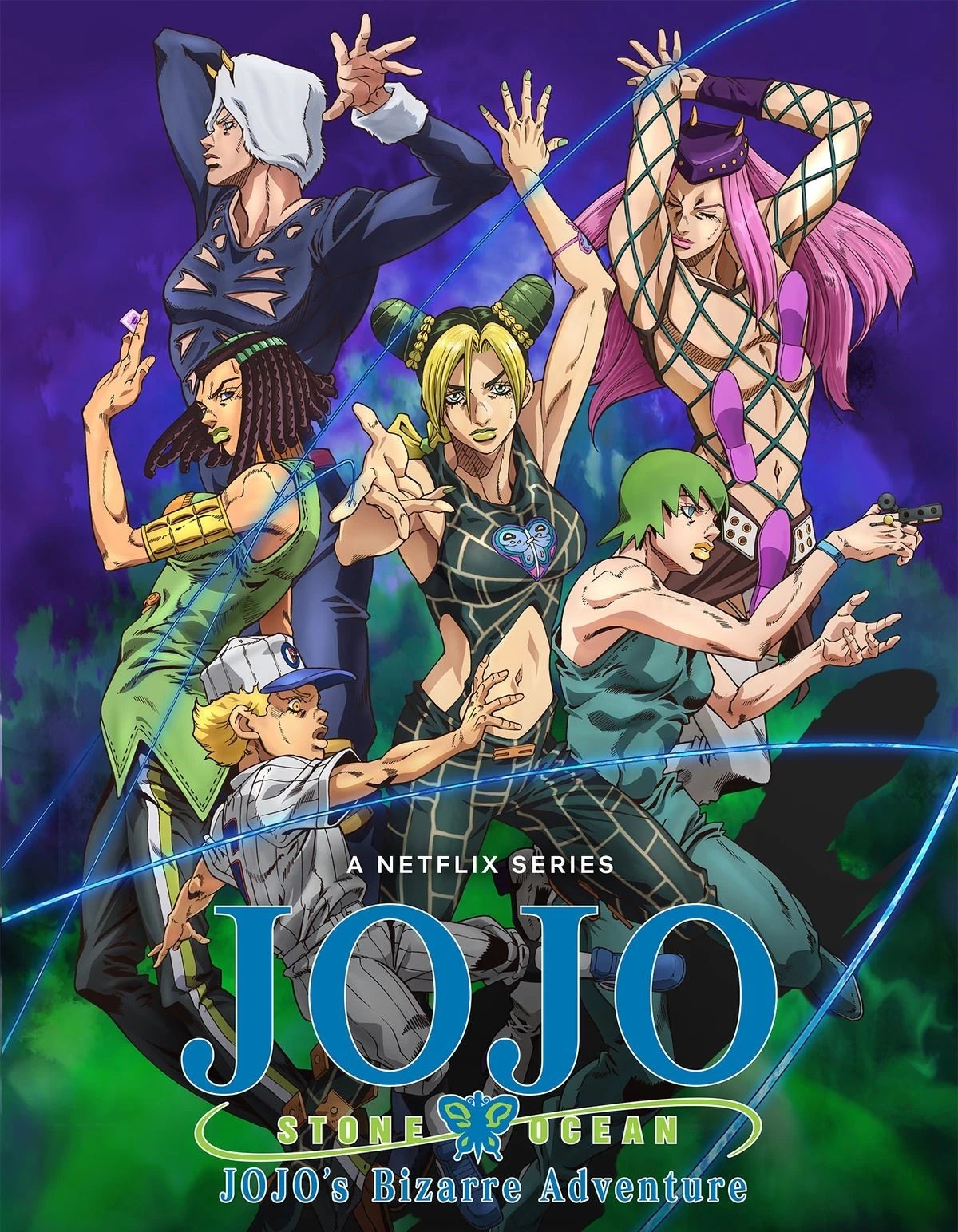
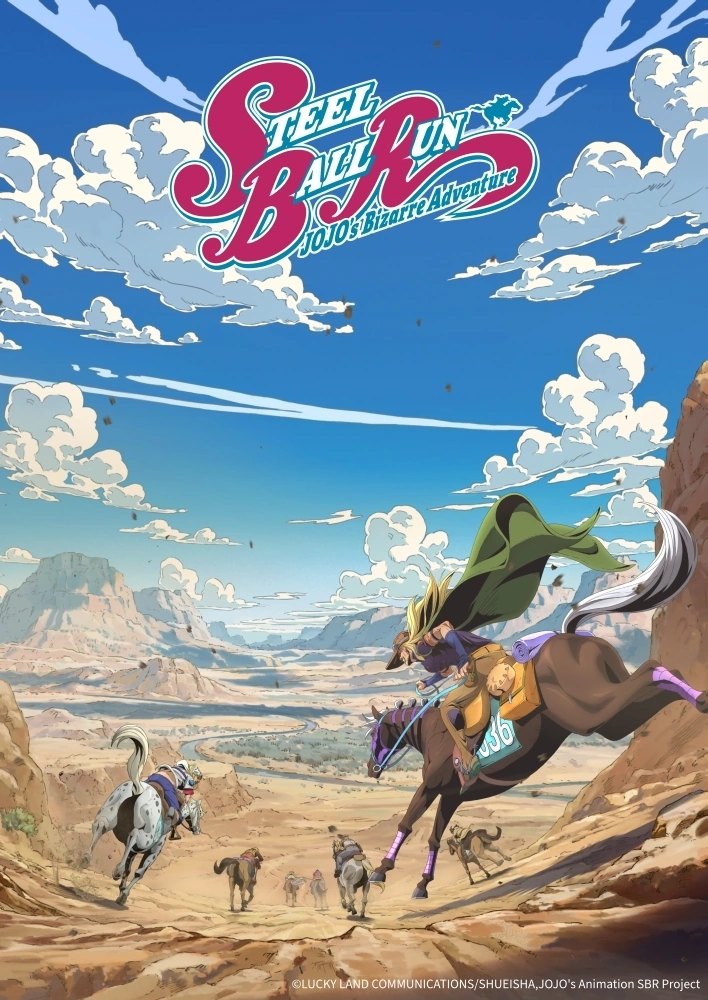
Part 7: Steel Ball Run (2026–present) — in progress
An alternate-timeline western: Johnny Joestar and Gyro Zeppeli race across 1890s America on horseback, with Stand powers reframed as “Spin” techniques. David Production announced the adaptation in April 2025, and Netflix released the 1st Stage as a single 47-minute special on March 19, 2026. After a gap that frustrated fans enough to become its own minor controversy, Netflix confirmed the 2nd and 3rd Stage — 11 more episodes — begin streaming weekly starting September 25, 2026. See Crunchyroll’s coverage of the schedule for the full breakdown. It’s Netflix-exclusive, like Stone Ocean before it.
Part 8: JoJolion — no anime yet
As of this writing there is no confirmed, official anime adaptation of JoJolion. It continues the story after Steel Ball Run’s alternate timeline and is currently manga-only. Watch-order guides that list a JoJolion season are getting ahead of the actual announcement calendar — treat any release date you see for it as a rumor until Netflix or David Production confirms it directly.
Optional side content
The 1993–2002 OVA (13 episodes, animated by A.P.P.P.) adapts roughly the first half of Stardust Crusaders in an earlier, rougher art style and predates David Production’s continuity entirely. It’s a curiosity for completionists, not a prerequisite — fully skippable. The four-episode Thus Spoke Kishibe Rohan OVA anthology (2016–2019, David Production, on Netflix since February 2021) is a lighter, standalone bonus best watched after Diamond is Unbreakable.
JoJo’s Bizarre Adventure Anime at a Glance
| Part | Year(s) | Episodes | Studio | Skippable content |
|---|---|---|---|---|
| 1. Phantom Blood | 2012 | 9 | David Production | None |
| 2. Battle Tendency | 2012–2013 | 17 | David Production | None |
| 3. Stardust Crusaders | 2014–2015 | 48 (two cours) | David Production | 1993–2002 OVA (optional, different studio) |
| 4. Diamond is Unbreakable | 2016 | 39 | David Production | Thus Spoke Kishibe Rohan OVA (side story) |
| 5. Golden Wind | 2018–2019 | 39 (listed as 42 on some platforms) | David Production | 3 clip-show recap episodes |
| 6. Stone Ocean | 2021–2022 | 38 (3 Netflix batches) | David Production | None |
| 7. Steel Ball Run | 2026–present | 1 special + 11 more from Sept. 2026 | David Production | None so far |
| 8. JoJolion | TBA | No anime yet | N/A | Manga only |
Where to Stream JoJo’s Bizarre Adventure in 2026
No single service carries the whole franchise. Crunchyroll streams Parts 1 through 5 (Phantom Blood through Golden Wind) but does not carry Stone Ocean or Steel Ball Run. Netflix carries the entire series, including both of the Netflix-exclusive parts, plus the Thus Spoke Kishibe Rohan OVAs. If you want to watch everything without switching services, Netflix is the only option; if you only care about Parts 1–5, Crunchyroll works fine. See Wikipedia’s series overview for the full broadcast history.
The Episode-Count Trap: Why Two Services Can’t Agree on How Long Golden Wind Is
Here’s a detail almost no watch-order guide mentions: Golden Wind’s episode count depends on which platform you’re watching it on. The story itself runs 39 episodes, ending with “Sleeping Slaves.” But Golden Wind also has three clip-show recap episodes covering earlier arcs (roughly episodes 1–13, 14–21 and 22–28), and Crunchyroll lists those recaps as their own numbered entries in the season, pushing its listing to 42 items. Netflix’s listing folds them out and shows 39. Anime News Network’s own episode reviews confirm the 39-episode main count, which is the number to use if someone asks how long Golden Wind is — but if you’re checking off episodes on Crunchyroll and land on “episode 40,” you haven’t missed content, you’ve hit a recap.
It’s a small thing, but it matters for a franchise already flagged as confusing to watch: Stone Ocean’s own 38 episodes were withheld and released in three separate Netflix drops over a full calendar year rather than weekly, which is a different kind of pacing anomaly with the same root cause — the platform, not the story, is dictating how the content is chunked and numbered. If a watch-order list you’re reading treats every part’s episode count as a fixed, platform-independent fact, it hasn’t actually checked both services.
Frequently Asked Questions
Do I need to watch Phantom Blood, or can I start with Stardust Crusaders?
You can technically start with Stardust Crusaders and follow the plot, since Jotaro’s story is largely self-contained. But you’ll meet Dio, Jonathan Joestar, and the entire Joestar-family setup as flashback exposition rather than as the story built to land, and you’ll miss Joseph Joestar’s full arc from Battle Tendency. The standard recommendation is to start at Part 1.
Are the JoJo OVAs canon to the main story?
No. The 1993–2002 OVA is an older, separate adaptation of part of Stardust Crusaders made before David Production’s continuity existed, and it’s optional. The Thus Spoke Kishibe Rohan OVAs are David Production productions but are self-contained side stories about Rohan Kishibe from Diamond is Unbreakable — fun, but not required to follow the main eight-part story.
Is Steel Ball Run connected to Stone Ocean and the first six parts?
Not directly. Steel Ball Run takes place in an alternate timeline with new versions of the Joestar and Zeppeli families rather than being a direct sequel to Stone Ocean. You can watch it right after Part 6 without missing a continuity thread; JoJolion later continues the story from where Steel Ball Run leaves off in that same alternate timeline.
Where can I watch every part of JoJo’s Bizarre Adventure in 2026?
Netflix is the only service carrying the complete series, including the Netflix-exclusive Stone Ocean and Steel Ball Run. Crunchyroll carries Parts 1 through 5 (Phantom Blood through Golden Wind) but not Parts 6 or 7.