Ever wondered how Daredevil and Superman can exist in the same universe? One protects a single neighborhood, while the other can move planets. This vast difference in scale is managed through a concept fans and writers have developed over decades: comic book power levels. This unofficial system helps categorize characters, making sense of a world where a back-alley brawl and a galaxy-ending war can happen in the same month.
Understanding these power tiers is key to appreciating the rich tapestry of comic book storytelling. It’s not just about who would win in a fight; it’s about the stakes, the scope of conflict, and the roles different heroes and villains play in their respective universes. From the gritty streets of Hell’s Kitchen to the farthest reaches of the cosmos, let’s break down the hierarchy of power that defines our favorite comic book characters.
What Are Street-Level Heroes?
At the foundation of the comic book world are the street-level heroes. These are the characters who, as the name suggests, operate on the ground, dealing with crime that the police might handle, if they weren’t overwhelmed or outgunned. As ScreenRant explains, street-level heroes are defined less by their power level and more by their modus operandi [3]. They protect their local communities, fighting against mob bosses, serial killers, and corrupt officials. While some, like Batman, are technically non-powered humans who have honed their bodies and minds to peak condition, others, like Daredevil, possess low-level superhuman abilities. The common thread is their focus on tangible, immediate threats.
Street level characters can be defined as heroes who pursue largely the same type of crime that the police would go after, leaving the more esoteric, world-ending threats of the MCU to higher-budget teams like the Avengers while protecting their own local communities.
— ScreenRant [3]
This tier is where you’ll find some of the most compelling and character-driven stories in comics. The stakes are personal, the action is grounded, and the victories feel hard-won. These heroes don’t have the luxury of invulnerability; they bleed, they bruise, and they often struggle to balance their vigilante activities with their personal lives.
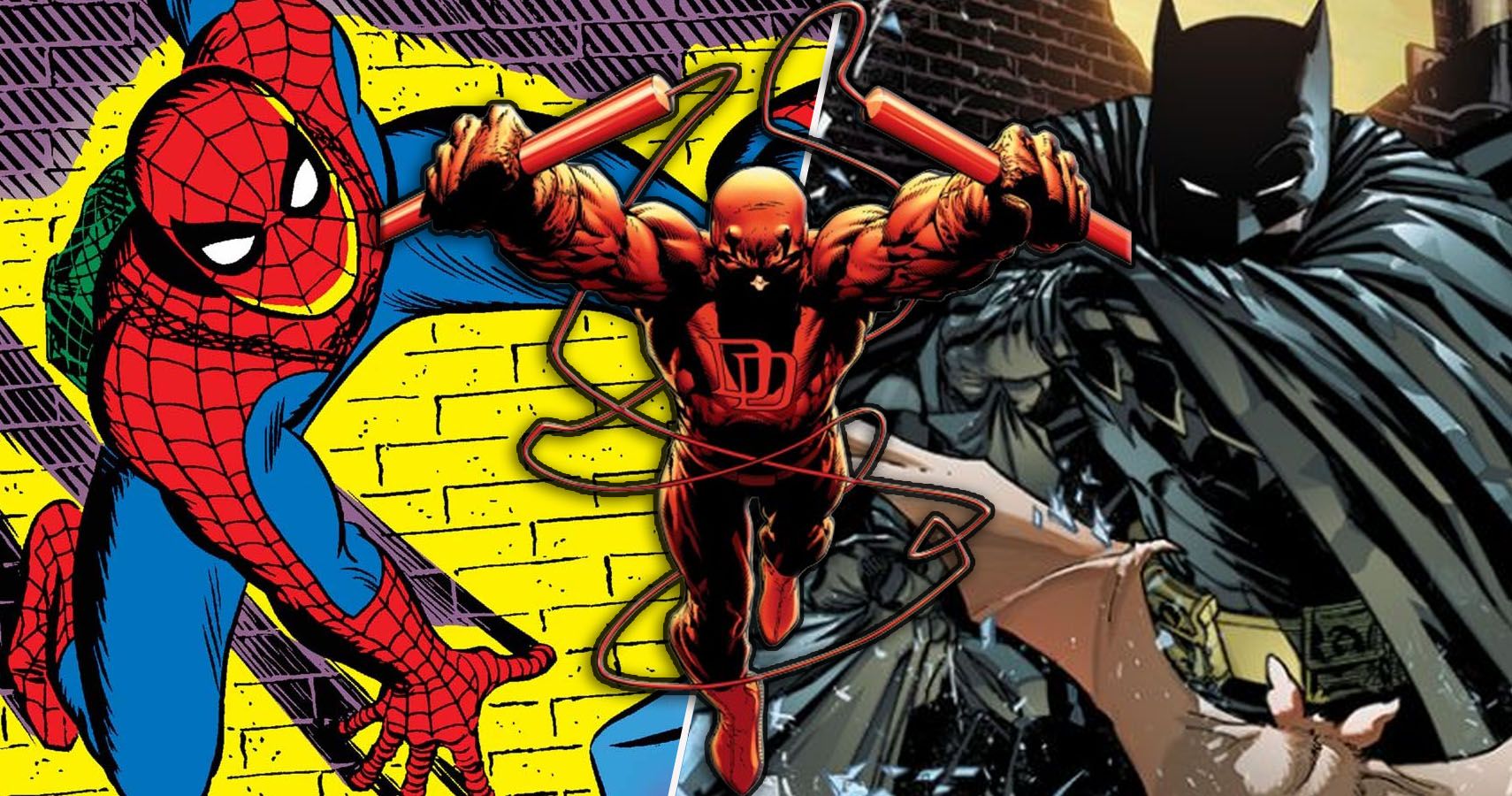 Caption: Street-level heroes like Spider-Man, Daredevil, and Batman operate at the ground level, fighting crime in their local communities.
Credit: CBR
Source: https://www.cbr.com/best-street-level-superheroes/
Caption: Street-level heroes like Spider-Man, Daredevil, and Batman operate at the ground level, fighting crime in their local communities.
Credit: CBR
Source: https://www.cbr.com/best-street-level-superheroes/
Key Street-Level Characters:
- Batman: The quintessential street-level hero. With no inherent superpowers, Bruce Wayne relies on his genius-level intellect, peak human physical conditioning, and vast arsenal of gadgets to wage his war on crime in Gotham City.
- Daredevil: Matt Murdock is a defense attorney by day and the Devil of Hell’s Kitchen by night. While blinded as a child, his remaining senses were enhanced to superhuman levels, giving him a radar-like awareness of his surroundings.
- The Punisher: Frank Castle is a brutal vigilante who uses lethal force to wage a one-man war on crime. He is a master of martial arts, stealth tactics, and a wide variety of weaponry.
- Green Arrow: Oliver Queen is a master archer who uses his skills and wealth to fight crime and corruption in Star City. Like Batman, he is a non-powered hero who relies on his skills and specialized arrows.
The Mid-Tier: Powerhouses on the Rise
Climbing the power ladder, we find the mid-tier characters. These individuals are a significant step up from street-level heroes and often possess incredible powers that make them formidable opponents. A ComicVine forum user, ChaosBlazer, describes this tier as including characters like Iron Man, Namor, and Ms. Marvel, who display strength nearly on the next level but aren’t quite planetary threats [1]. This tier is also home to characters with specific, powerful abilities that make them difficult for street-level heroes to handle, such as Luke Cage’s unbreakable skin or Iron Fist’s chi-powered punches.
Mid-tier heroes often find themselves dealing with threats that are too much for local law enforcement but don’t yet require the intervention of cosmic-level heroes. They might take on super-powered villains, rogue government agencies, or even small-scale alien invasions. These characters often serve as the backbone of teams like the Avengers or the X-Men, providing the necessary muscle to handle a wide range of threats.
Planetary Threats: The World-Enders
Now we enter the realm of the truly powerful: the planetary threats. These are the characters who can, as the name implies, threaten the entire planet. This tier includes most Omega-level mutants, high-end energy manipulators, and some of the strongest bricks in comics. Characters like the Hulk, Magneto, and Jean Grey fall into this category. Their powers are so immense that a single battle can cause widespread destruction, and their conflicts often have global ramifications.
These guys are generally a step up from the last level. This level includes most Omega-level mutants, most high end energy warpers, a few bricks, and high end telepaths.
— ChaosBlazer [1]
Planetary-level threats are often the central figures in major comic book events. Their stories are epic in scale, with the fate of the world hanging in the balance. They are the heroes who stand against alien armadas, reality-warping villains, and other existential threats. While they may not be able to destroy a universe, they are more than capable of ending all life on Earth if their powers are left unchecked.
Cosmic-Level Beings: Guardians of the Galaxy (and Beyond)
At the highest echelons of power are the cosmic-level beings. These are the characters who operate on a galactic or even universal scale. Their powers are so vast that they can manipulate the fundamental forces of the universe, travel across galaxies in an instant, and destroy entire solar systems. This tier includes the heralds of Galactus, Superman-level beings, and abstract entities that embody concepts like Death or Eternity. As CBR notes, characters like Superman and the Hulk are considered among the most powerful due to their incredible strength and overwhelming abilities, placing them squarely in this cosmic tier [2].
Cosmic-level characters are not just powerful; they are often ancient, immortal beings who have witnessed the birth and death of stars. Their concerns are far removed from the petty squabbles of Earth, as they deal with threats that could unravel the very fabric of reality. When these characters clash, the consequences are felt across the cosmos.
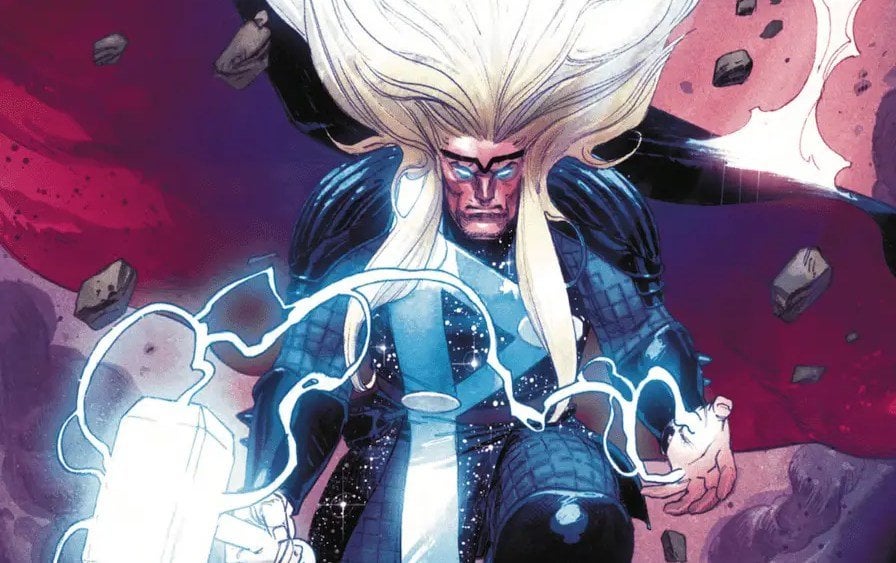 Caption: Cosmic-level heroes like Thor wield the Power Cosmic and face universe-threatening challenges far beyond street-level concerns.
Credit: Marvel Comics
Source: https://www.reddit.com/r/Marvel/comments/xy9ja4/how_did_the_streetlevel_vs_cosmiclevel/
Caption: Cosmic-level heroes like Thor wield the Power Cosmic and face universe-threatening challenges far beyond street-level concerns.
Credit: Marvel Comics
Source: https://www.reddit.com/r/Marvel/comments/xy9ja4/how_did_the_streetlevel_vs_cosmiclevel/
Key Cosmic-Level Characters:
- Superman: The quintessential cosmic hero. With his vast array of powers, including super strength, speed, flight, and heat vision, he is a force to be reckoned with on a galactic scale.
- Thor: The God of Thunder, Thor is an Asgardian prince who wields the enchanted hammer Mjolnir. He is one of the most powerful beings in the Marvel Universe, capable of battling cosmic entities and surviving in the vacuum of space.
- Silver Surfer: Once a herald of Galactus, Norrin Radd was imbued with the Power Cosmic, granting him incredible powers of energy manipulation, faster-than-light travel, and near-invulnerability.
- Thanos: The Mad Titan is a powerful cosmic warlord obsessed with death. With or without the Infinity Gauntlet, he is one of the most dangerous beings in the Marvel Universe, capable of going toe-to-toe with the most powerful cosmic entities.
Beyond Cosmic: The Abstract and the Almighty
Beyond even the cosmic tier are the abstract and omnipotent beings. These are the characters who are not just powerful but are the very embodiment of fundamental concepts. They are the ultimate powers in their respective multiverses, and their actions can create or destroy entire realities. This tier includes characters like The Living Tribunal, The Presence, and The One Above All.
These beings are rarely seen and even more rarely involved in the affairs of mortals. They are the ultimate arbiters of reality, the final say in all matters of cosmic significance. When they do appear, it is a sign that the stakes have been raised to their absolute limit. Their power is so immense that it is often beyond human comprehension.
Why Power Levels Matter
Understanding comic book power levels is more than just a fun exercise in hypotheticals. It’s about appreciating the vast and varied landscape of comic book storytelling. The different tiers allow for a wide range of stories, from the intimate, character-driven narratives of street-level heroes to the epic, universe-spanning sagas of cosmic gods. Each tier has its own unique appeal, and the interplay between them is what makes the comic book multiverse so endlessly fascinating. So, the next time you see Batman and Superman team up, you’ll have a better understanding of the incredible difference in their power levels and why their partnership is so compelling.
References
- ChaosBlazer. (2012, August 22). ChaosBlazer’s Guide to Power Levels- DC and Marvel. ComicVine. https://comicvine.gamespot.com/forums/battles-7/chaosblazers-guide-to-power-levels-dc-and-marvel-689145/
- Allan, S., et al. (2024, January 1). The Strongest Comic Book Characters Ever. CBR. https://www.cbr.com/most-powerful-comic-book-characters-ranked/
- Valentino, A. (2024, July 6). Every Street Level Hero In The MCU. ScreenRant. https://screenrant.com/mcu-marvel-street-level-heroes/