Before there was Superman, there was Heracles. Before the Avengers assembled, the gods of Olympus reigned. The stories of superheroes that dominate our screens and comic book pages are not a modern invention. They are the latest chapter in a story as old as civilization itself—the story of mythology. From the thunderous rage of Thor to the divine justice of Wonder Woman, the DNA of ancient myths is deeply embedded in the heart of our most beloved comic book characters. But how did these ancient tales of gods and monsters become the superhero blockbusters of today? Let’s delve into the mythological origins of our modern-day legends.
The Enduring Power of Myth: Why Ancient Stories Still Resonate
Myths are more than just old stories. They are the cultural software of a civilization, explaining the unexplainable, taming the chaotic, and providing a moral compass. As scholar Dawid Przywalny notes in his work on comics as modern mythology, myth serves as a “statement of primeval reality which still lives in present-day life” and provides a “retrospective pattern of moral values, sociological order, and magical belief” [2]. Superheroes, in this sense, are our modern myths. They reflect our deepest fears, our greatest aspirations, and the ever-evolving values of our society. Whether it’s the righteous fury of a god or the unwavering resolve of a caped crusader, these stories tap into a fundamental human need for heroes who can guide us, protect us, and inspire us to be better.

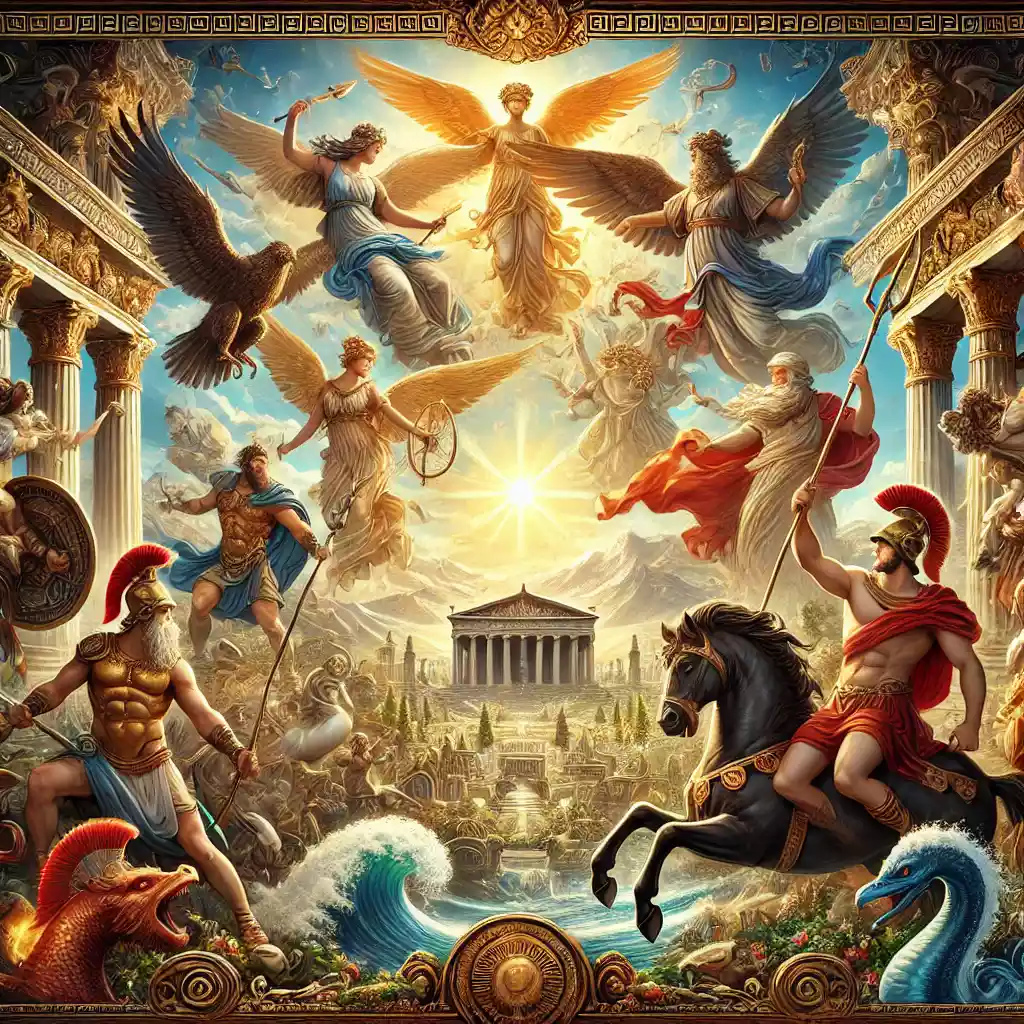
Caption: The gods and heroes of ancient mythology, as depicted in classical art, laid the groundwork for the superhero archetypes we know today. Credit: ClassicWorldCoins Source: https://classicworldcoins.ch/products/classical-mythology-greco-roman-gods-heroes-and-legends
The Pantheon of Power: How Greek and Roman Mythology Forged DC’s Mightiest Heroes
DC Comics, in particular, has a long and storied history of drawing from the rich well of Greco-Roman mythology. The gods of Olympus are not just ancient figures in the DC Universe; they are active players, their influence shaping the destinies of heroes and villains alike.
Wonder Woman: Daughter of Zeus, Champion of Truth
Perhaps the most prominent example of mythology in comics is Wonder Woman. Her origin story is a direct lift from Greek mythology. Over the years, her backstory has evolved, but the core elements remain the same. In some versions, she was sculpted from clay by her mother, Queen Hippolyta, and brought to life by the Greek gods, who blessed her with their powers: the beauty of Aphrodite, the strength of Hercules, and the wisdom of Athena. In the current continuity, she is the demigod daughter of Zeus himself, making her a literal goddess among mortals. Her rogues’ gallery is a who’s who of mythological figures, from the war god Ares to the sorceress Circe. Wonder Woman is not just a superhero; she is a living, breathing embodiment of Greek mythology, a champion of truth and justice in a world that desperately needs both.
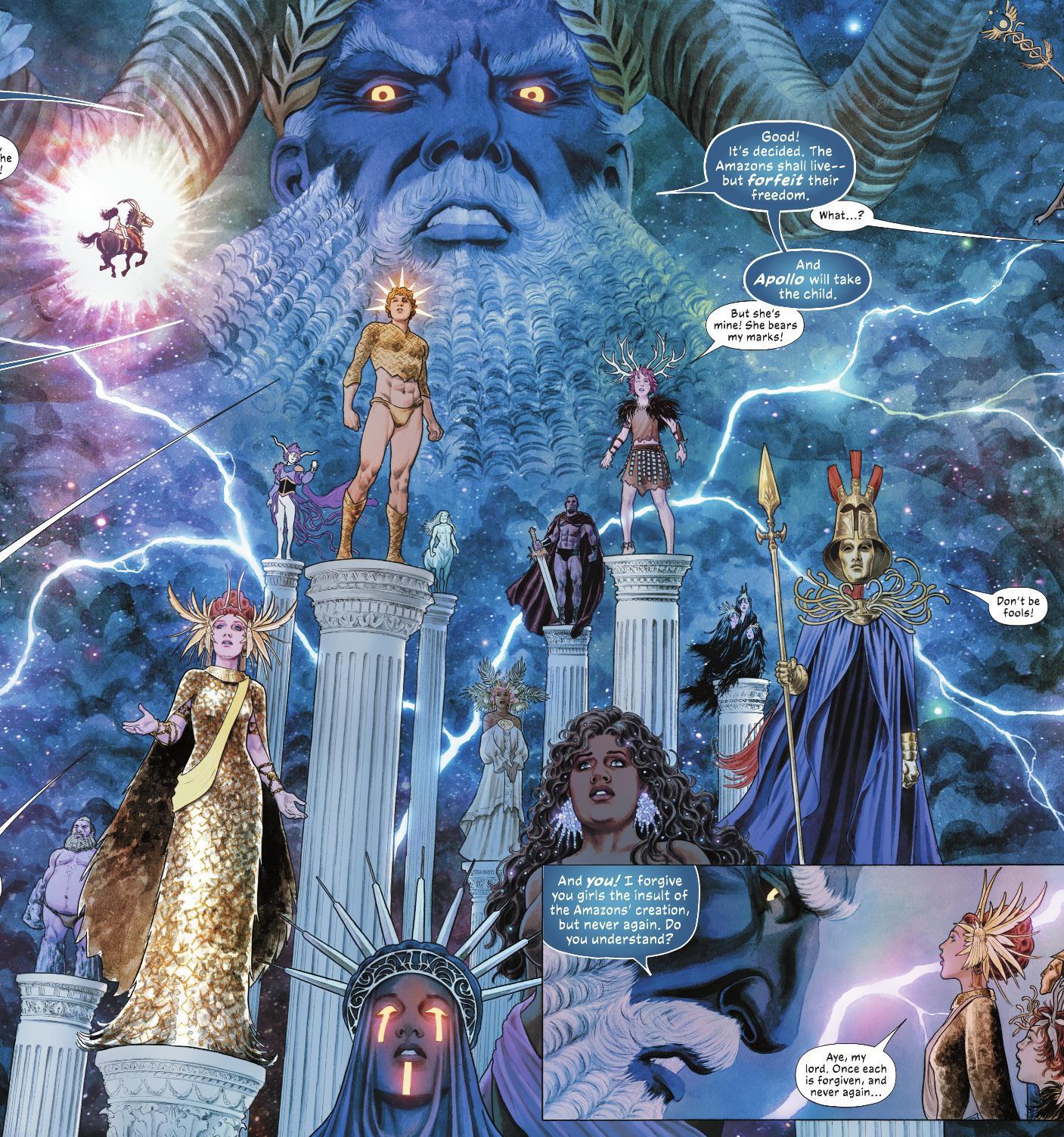
Caption: Wonder Woman, a character deeply rooted in Greek mythology, as seen in a stunning comic book panel. Credit: Reddit (r/comicbooks) Source: https://www.reddit.com/r/comicbooks/comments/125ympt/can_anyone_name_some_comics_that_involve_greek/
Shazam!: The Power of Six Immortal Elders
While Wonder Woman’s connection to mythology is overt, Shazam’s is more of a mythological cocktail. When young Billy Batson utters the magic word “Shazam!” he is transformed into a hero with the powers of six immortal elders: the wisdom of Solomon, the strength of Hercules, the stamina of Atlas, the power of Zeus, the courage of Achilles, and the speed of Mercury. This unique blend of Judeo-Christian and Greek mythological figures creates a hero who is both divinely powerful and deeply human. As one of the oldest and most powerful heroes in the DC Universe, Shazam is a testament to the enduring appeal of mythological archetypes.
The Asgardian Age: Marvel’s Epic Embrace of Norse Mythology
While DC looked to the sunny shores of Greece, Marvel turned to the frozen landscapes of Norse mythology to find its thunderous god. The tales of Asgard, with their epic battles, larger-than-life characters, and tragic destinies, provided the perfect source material for a new kind of superhero.
Thor: The God of Thunder Reimagined
When Stan Lee and Jack Kirby were looking to create a hero who could challenge the Hulk, they knew they needed someone more powerful than a mere mortal. As Lee himself explained, he chose the Norse gods because he felt people were less familiar with them than with the Greek and Roman pantheon. And so, the mighty Thor was born. The comic book version of Thor is a faithful, if somewhat embellished, adaptation of the Norse god of thunder. He wields the magical hammer Mjolnir, battles frost giants and fire demons, and defends the realms of gods and men from all manner of threats. The comics have explored the rich tapestry of Norse mythology, from the halls of Asgard to the fiery depths of Muspelheim, bringing these ancient tales to a whole new generation of readers.
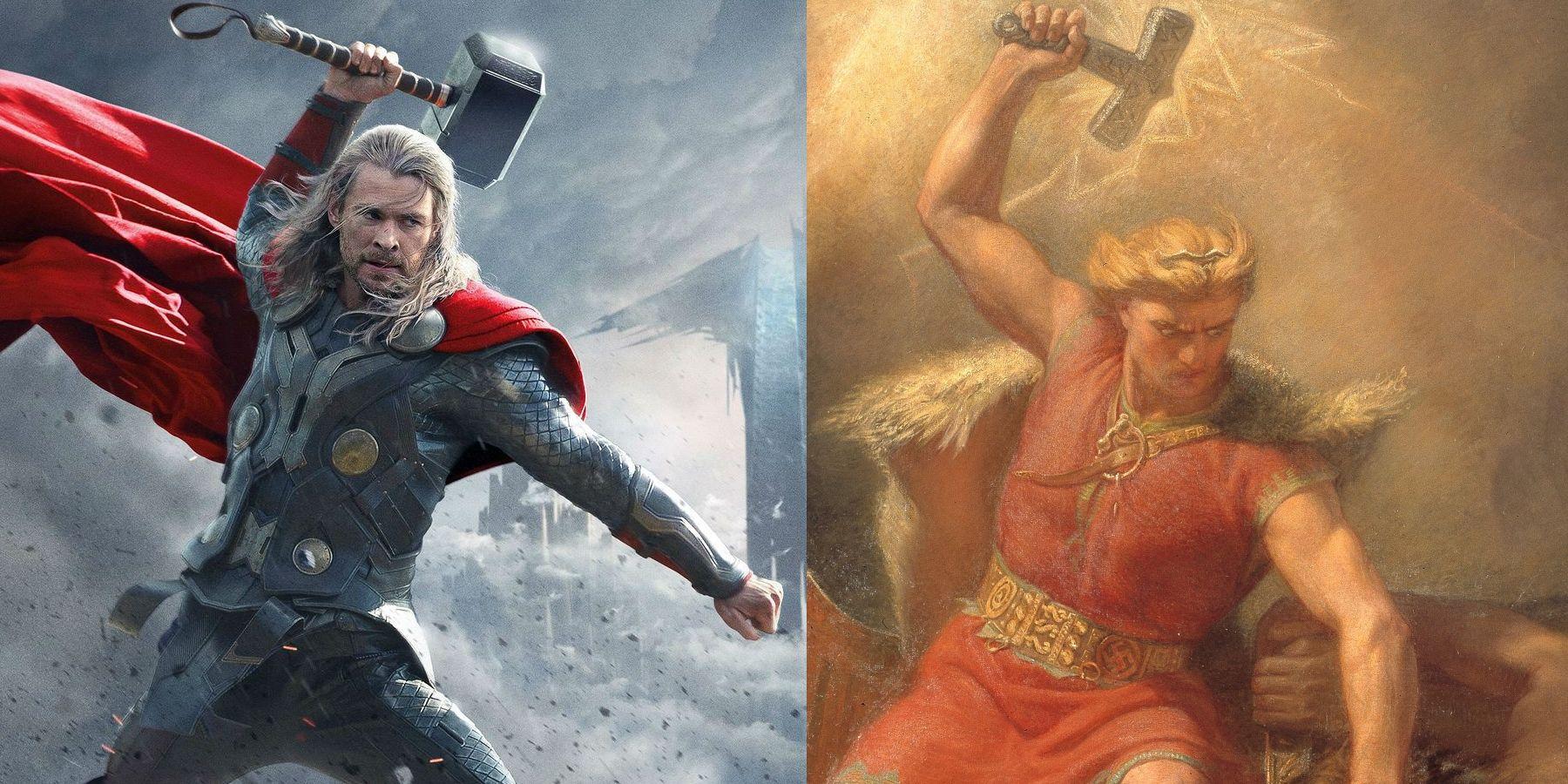
Caption: A comparison of Marvel’s Thor and the Thor of Norse mythology, highlighting the similarities and differences between the two. Credit: CBR Source: https://www.cbr.com/thor-norse-mythology-vs-marvel-comics/
Beyond Thor: The Rich Tapestry of Asgardian Lore
The world of Thor is not just about the God of Thunder. It is a world populated by a vast and colorful cast of characters drawn directly from Norse mythology. From the mischievous Loki, the god of mischief, to the all-seeing Odin, the All-Father of Asgard, to the fierce and noble Valkyries, the comics have brought the entire Norse pantheon to life in stunning detail. These characters, with their complex relationships, epic rivalries, and tragic flaws, have become as beloved as Thor himself, adding a depth and richness to the Marvel Universe that would not be possible without their mythological roots.
Beyond the West: Global Mythologies in Comics
The influence of mythology in comics is not limited to the Western world. All around the globe, comic creators have drawn from their own rich cultural heritage to create unique and compelling stories. In Japan, manga like Yu-Gi-Oh! and Demon Slayer are steeped in Egyptian and Japanese folklore, respectively. In India, comics like 18 Days and Ravanayan retell the epic tales of the Mahabharata and the Ramayana for a modern audience. These comics, and many others like them, are a testament to the universal appeal of mythology and its power to inspire and entertain.
The Monomyth in Modern Form: Superheroes as the New American Mythology
From an academic perspective, superheroes can be seen as the modern American mythology. They are the stories we tell ourselves about who we are, what we value, and what we aspire to be. As Norbert Demeter writes, “Humanity has always needed superheroes, though they have taken different forms throughout history” [3]. In ancient times, it was figures like Heracles and Gilgamesh. In the Middle Ages, it was knights and saints. And in the modern era, it is superheroes. These characters reflect the anxieties and aspirations of their time. Superman, the immigrant from a dying world who embodies the American Dream, was born during the Great Depression. Captain America, the super-soldier who fought for freedom and democracy, was created during the height of World War II. The X-Men, a team of outcasts who fight for a world that fears and hates them, are a powerful metaphor for the Civil Rights Movement. These characters are more than just entertainment; they are a reflection of our collective consciousness, a modern mythology for a modern world.
The Future of Myth-Making: Where Do Superheroes Go From Here?
As our society continues to evolve, so too will our myths. The superhero genre is constantly reinventing itself, exploring new themes, and pushing the boundaries of storytelling. But one thing is certain: the influence of mythology in comics will continue to be a powerful and enduring force. The ancient tales of gods and monsters, heroes and villains, are as relevant today as they were thousands of years ago. They are a part of our shared cultural heritage, a source of endless inspiration, and a reminder that the power of myth is timeless.
References
- ScreenRant – “10 Comics That Were Influenced By Ancient Mythology” – https://screenrant.com/comics-ancient-mythology-influences/
- Ad Americam Journal of American Studies – “Comic Books as the Modern American Mythology” – https://journals.akademicka.pl/adamericam/article/view/3196/2871
- Medium – “The Rise of Superheroes: From Ancient Myths to Hollywood Icons” – https://medium.com/@norbertdemeterwrites/the-rise-of-superheroes-from-ancient-myths-to-hollywood-icons-9c6cd50bfc9c