From the Sunday funnies to the silver screen, the comics industry has been shaped by countless creative minds. But for every Stan Lee or Jack Kirby whose name became legend, there are dozens of hidden pioneers whose contributions have been overlooked. Today, we’re pulling back the curtain on the women in comics history who defied the odds, shattered expectations, and built the foundations of the industry we love—often from the shadows.
While the comic book world has a reputation for being a boys’ club, the truth is that women have been there from the very beginning. They were artists, writers, editors, and innovators who created some of the most iconic characters and stories in the medium’s history. Yet, their names were often buried, their work uncredited, or their careers cut short by a system that wasn’t built for them. This is the story of those forgotten trailblazers.
The First Wave: The Flapper Queens and Commercial Titans (1890s-1920s)
Long before the first superhero took flight, women were already making their mark on the comic strip world. In an era when women were still fighting for the right to vote, these early female comic creators were building careers and captivating audiences with their art.
One of the earliest and most successful was Rose O’Neill, a self-taught artist who became one of the highest-paid illustrators of her time. In 1896, she published what many consider the first-known comic strip by a woman. But it was her creation of the Kewpies in 1909 that made her a global phenomenon. These cherubic, rosy-cheeked characters became a marketing empire, appearing on everything from dolls to postcards and even advocating for women’s suffrage.
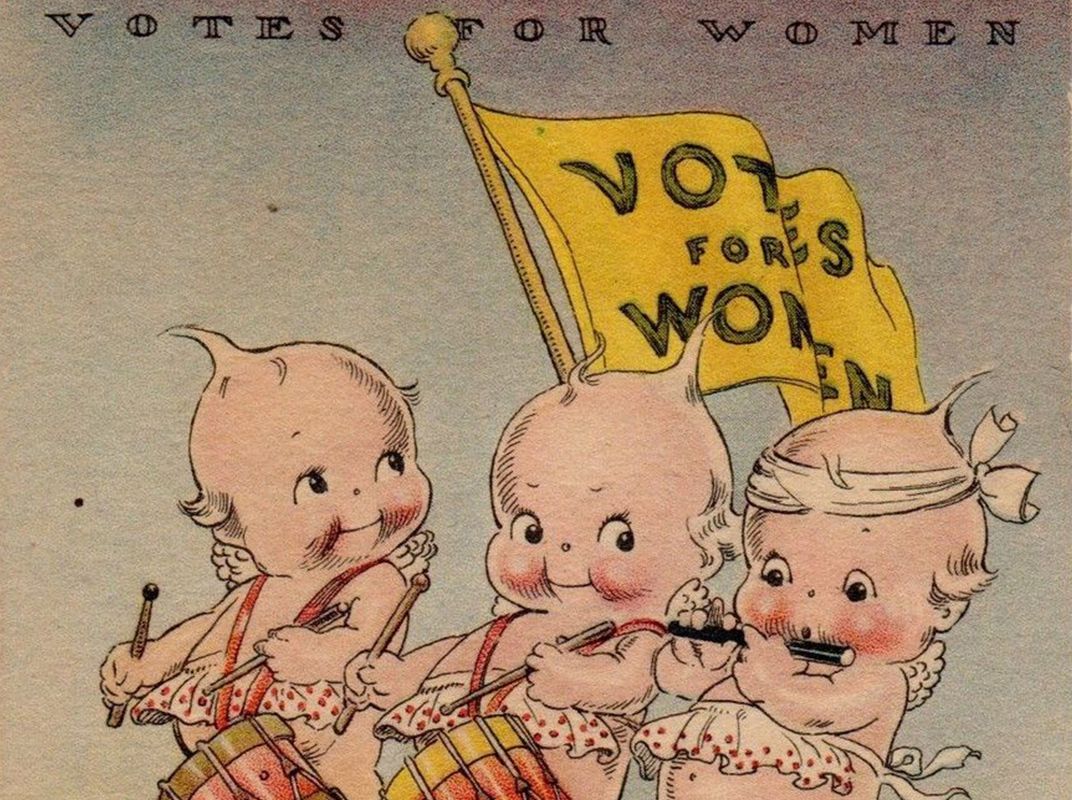
Caption: Rose O’Neill’s suffrage cartoon featuring her iconic Kewpie characters advocating for women’s voting rights.
Credit: Historical illustration by Rose O’Neill
Source: Women’s suffrage historical collection
Another commercial titan of the era was Grace Drayton, the artist behind the equally famous Campbell’s Soup Kids. First appearing in 1904, Drayton’s adorable, round-faced children became the face of the brand for decades. Drayton was a prolific artist, creating numerous comic strips and becoming the first woman to be syndicated by the powerful Hearst newspaper chain. Her success, like O’Neill’s, proved that women could not only create popular art but also build lucrative careers in the burgeoning world of commercial illustration.
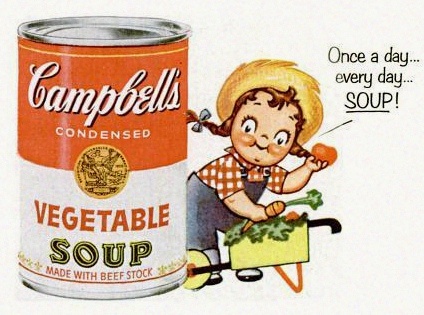
Caption: Grace Drayton’s Campbell Kids advertisement showcasing her iconic character design that became a cultural phenomenon.
Credit: Vintage advertisement featuring Grace Drayton’s Campbell Kids
Source: Campbell Soup Company historical archives
These early pioneers, along with others like Nell Brinkley, the “Queen of Comics” known for her glamorous “Brinkley Girls,” laid the groundwork for generations of women to come. They proved that there was a massive audience for stories and art created by women, even in a world that was often hostile to their ambitions.
The Golden Age and the Great Erasure (1930s-1950s)
The Golden Age of comics brought us Superman, Batman, and a legion of other superheroes. But while men in capes dominated the page, women were working tirelessly behind the scenes, often in uncredited roles. The industry was booming, and there was a high demand for artists and writers, which created opportunities for women to break in.
One of the most significant figures of this era was Dale Messick, the creator of the iconic comic strip Brenda Starr, Reporter. Launched in 1940, Brenda Starr was a glamorous, globe-trotting journalist who was as comfortable chasing down a story in a war zone as she was attending a high-society ball. The strip was a massive success, appearing in over 250 newspapers at its peak. But to get her foot in the door, Dalia Messick had to change her name to the more masculine-sounding “Dale.” It was a stark reminder of the sexism that was rampant in the industry.
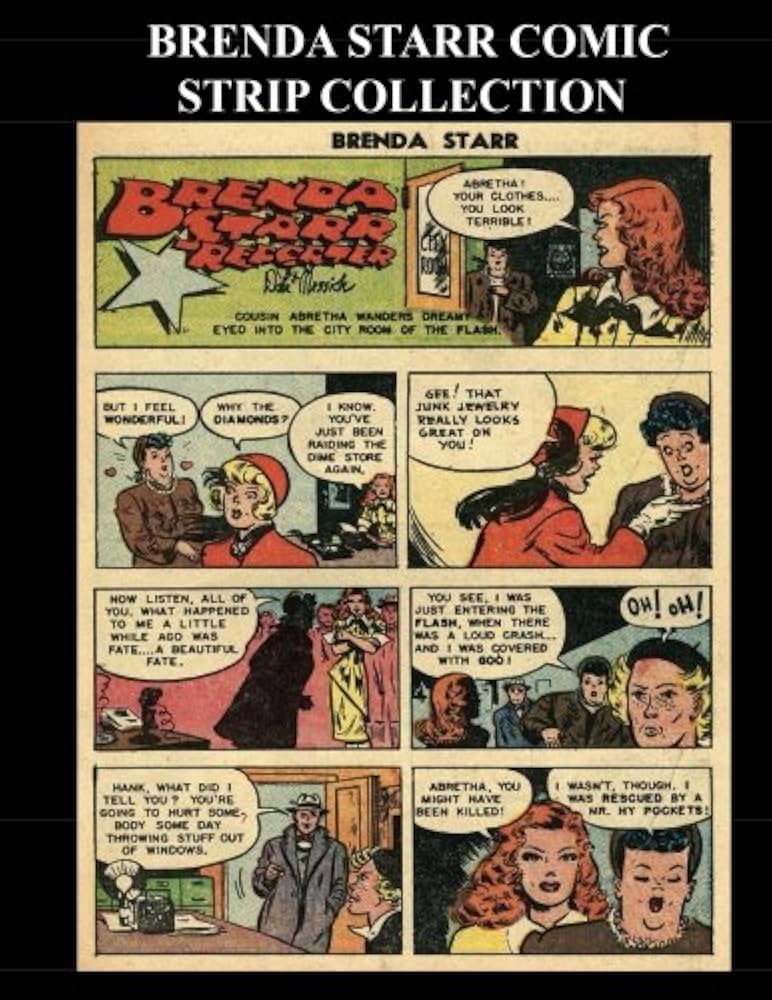
Caption: A collection of Brenda Starr comic strips by Dale Messick, featuring the glamorous reporter who broke barriers in comics.
Credit: Comic strips by Dale Messick
Source: Brenda Starr Comic Strip Collection
Other women also made crucial contributions during this time. Dorothy Woolfolk, an editor at DC Comics, is credited with coming up with the idea for Superman’s one weakness: kryptonite. She also became the first woman to write Wonder Woman, though she was never credited for it. Jackie Ormes became the first nationally syndicated African American woman cartoonist, creating the strip Torchy Brown in Dixie to Harlem, which tackled social and political issues with humor and style.
But as quickly as these doors had opened, they began to close. When men returned from World War II, women were pushed out of their jobs in the comics industry, just as they were in many other fields. As comics historian Trina Robbins notes, “They were forgotten. My big epiphany when writing these books, is that if you’re not written about, you’re forgotten.” This great erasure buried the contributions of countless women, leaving a huge gap in the history of comics.
The Underground Comix Revolution and the Rise of the Woman-Led Book (1960s-1980s)
By the 1960s, the mainstream comics industry had become even more of a boys’ club. But a new movement was brewing that would once again create a space for women’s voices: the underground comix scene. These independently published comics were raw, personal, and often politically charged, and they provided a platform for creators who didn’t fit the superhero mold.
Trina Robbins, who had been a fan of comics since childhood, became a key figure in this movement. Frustrated by the sexism she encountered in the underground scene, she co-founded the first all-woman comic book, It Ain’t Me, Babe Comix, in 1970. This was followed by the long-running anthology Wimmen’s Comix, which provided a platform for dozens of female creators.
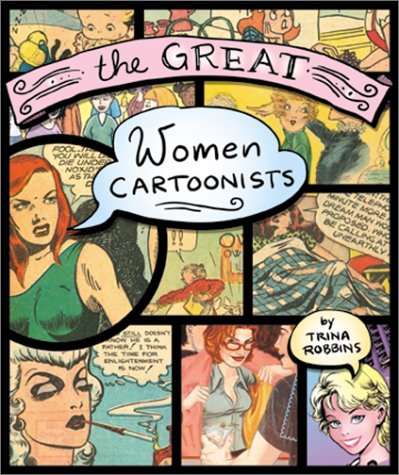
Caption: Trina Robbins’ book “The Great Women Cartoonists” helped preserve and celebrate the history of female comic creators.
Credit: Book cover by Trina Robbins
Source: Publisher’s promotional materials
This era also saw women making inroads at the major publishers. Marie Severin, a talented artist and colorist, became a key figure at Marvel Comics, co-creating Spider-Woman and working on a wide range of titles. Ramona Fradon, another veteran artist, had a long and distinguished career at DC, where she co-created Aqualad and the quirky hero Metamorpho.
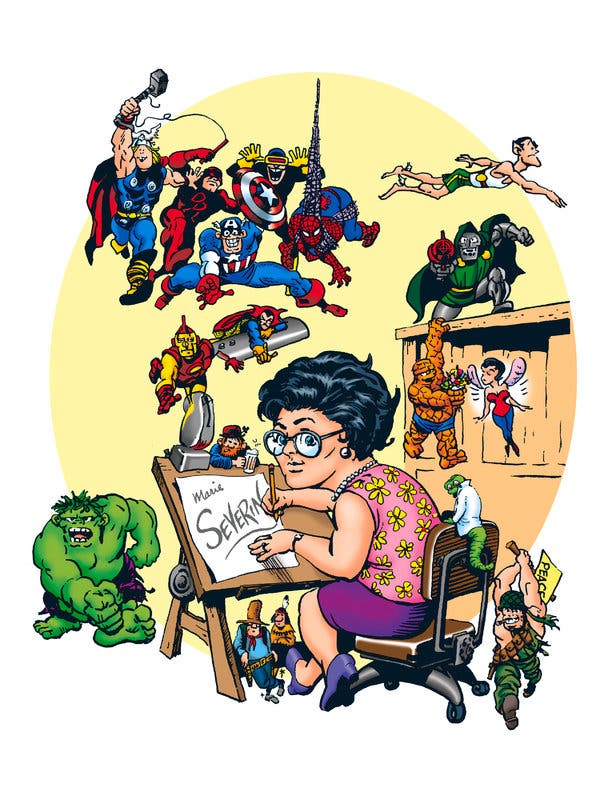
Caption: Marie Severin, the pioneering Marvel Comics artist who co-created Spider-Woman and broke barriers in the industry.
Credit: Portrait of Marie Severin
Source: Marvel Comics historical archives
But perhaps the most significant development of this period was the rise of the woman-led book. As women gained more creative control, they began to tell stories that reflected their own experiences and perspectives. This led to a new wave of comics that were more diverse, more personal, and more groundbreaking than ever before.
The Modern Era: From Vertigo to the Carol Corps (1980s-Present)
The 1980s and 90s saw a new generation of women rise to prominence, not just as creators, but as editors and publishers who would fundamentally reshape the industry. Jenette Kahn, who became the publisher of DC Comics in 1976, is widely credited with saving the company from financial ruin. She championed creator rights and oversaw the launch of the groundbreaking Vertigo imprint, which gave us classics like The Sandman and Y: The Last Man.
At Marvel, Louise Simonson became one of the most influential writers of the era, co-creating characters like Cable and Apocalypse and shaping the world of the X-Men. And in the world of independent comics, creators like Lynda Barry and Alison Bechdel were pushing the boundaries of the medium with their deeply personal and innovative work.
The 21st century has seen an explosion of female talent in the comics industry. Gail Simone became a fan-favorite writer with her runs on Birds of Prey and Wonder Woman, while Kelly Sue DeConnick’s revamp of Captain Marvel inspired a passionate fan movement known as the “Carol Corps.” And Sana Amanat, an editor at Marvel, co-created Kamala Khan, the first Muslim superhero to headline her own comic book.
Why Their Stories Matter
The history of women in comics is a story of resilience, innovation, and a relentless passion for the medium. These hidden pioneers didn’t just create memorable characters and stories; they fought for their right to be heard in an industry that was often determined to silence them. They built their own networks, founded their own publications, and mentored the next generation of female creators.
Their stories are a reminder that the history of comics is far richer and more diverse than we’ve been led to believe. And as the industry continues to evolve, it’s more important than ever to celebrate the contributions of these trailblazing women. They didn’t just change comics; they changed the world.
References
- The Guardian. (2020, April 29). ‘They were forgotten’: the great female cartoonists who have been overlooked. https://www.theguardian.com/books/2020/apr/29/women-in-comics-online-exhibition-cartoonists-society-of-illustrators
- GlobalComix. (2024, March 5). History of Women in Comics: Early Notable Figures. https://globalcomix.com/news/details/682/history-of-women-in-comics-early-notable-figures
- Book Riot. (2024, March 29). 24 Trailblazing Women in Comics for Women’s History Month 2024. https://bookriot.com/trailblazing-women-in-comics/
- The New York Times. (2005, April 8). Dale Messick, 98, Creator of ‘Brenda Starr’ Strip, Dies. https://www.nytimes.com/2005/04/08/arts/design/dale-messick-98-creator-of-brenda-starr-strip-dies.html
- America Comes Alive. (n.d.). Campbell Kids Creator Grace Drayton. https://americacomesalive.com/campbell-kids-creator-grace-drayton/
Internal Links
- The Importance of Representation in Comics: A Look at Diverse Characters in the Industry
- The Portrayal of Strong Female Characters in Comics
- Why Superheroes Never Stay Dead