Last updated: September 13, 2026
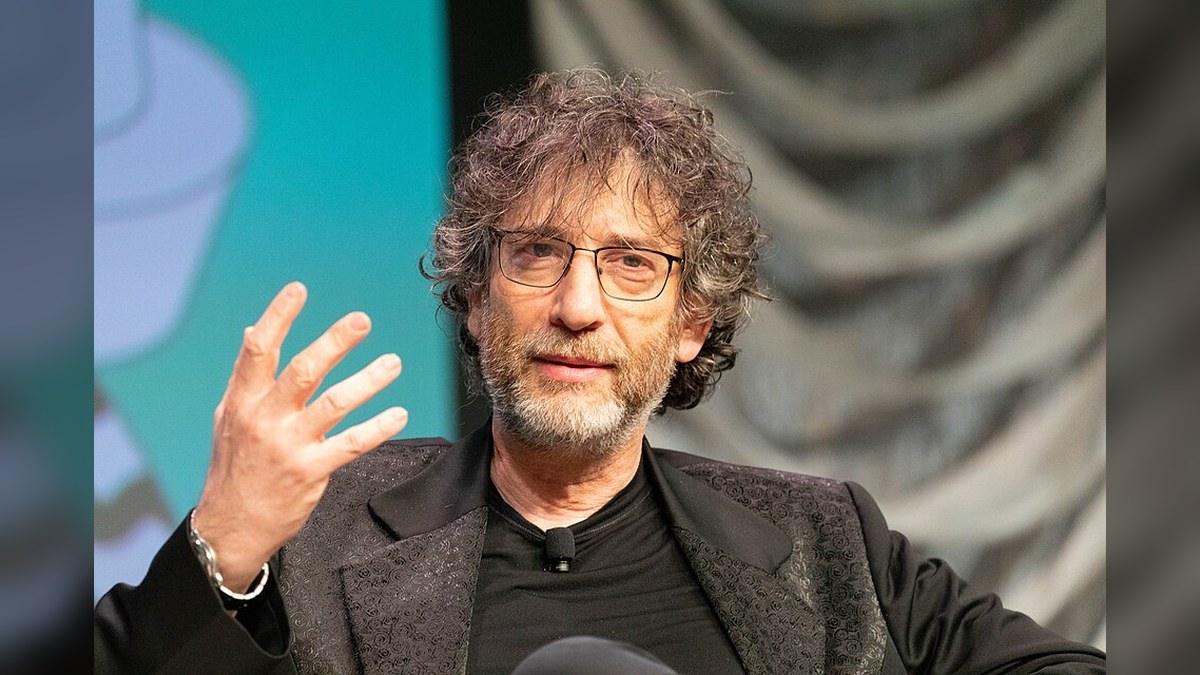
The best Vertigo comics of all time were published under DC’s mature-readers imprint between 1993 and 2020, and the strongest lineup — Sandman, Preacher, Fables, Y: The Last Man, and 100 Bullets — still defines what “literary” mainstream comics can look like. With Vertigo officially revived in 2026 under a new slate of creator-owned titles, this ranking covers the twelve series worth reading first.
Why Vertigo Still Matters in 2026
Karen Berger founded Vertigo in 1993 to give DC a home for horror, fantasy, and crime titles too mature or too creator-specific for the mainstream superhero line, starting with early books like Alan Moore’s Swamp Thing and Jamie Delano’s Hellblazer.
DC dissolved the imprint in January 2020, folding surviving titles into DC Black Label, but the Vertigo name returned for real: DC announced the revival at New York Comic Con in 2024 and unveiled a ten-title slate at NYCC 2025, with the new line beginning its rollout on February 4, 2026, and two new creator-owned titles launching per quarter through the rest of the year.
The 12 Best Vertigo Comics, Ranked
1. The Sandman (1989-1996, Neil Gaiman)
Neil Gaiman’s 75-issue run follows Dream of the Endless, one of seven anthropomorphic personifications of universal concepts, across myth, history, and the DC universe’s margins. It is Vertigo’s best-known and best-selling title by a wide margin — Netflix’s 2022 adaptation crossed 300 million hours watched within a month of its August 2022 premiere, per Netflix’s own weekly rankings — and remains the imprint’s clearest argument that superhero-adjacent comics could sustain genuinely literary ambition. See our Sandman reading order for how to tackle all 75 issues.
2. Preacher (1995-2000, Garth Ennis & Steve Dillon)
A Texas preacher possessed by a rogue angel-demon hybrid sets out to find God and hold Him accountable for abandoning creation. Its dark humor and religious satire won the 1999 Eisner Award for Best Continuing Series, and its blend of ultraviolence and genuine theological argument became a template Ennis has returned to across his career, including The Boys, his later Dynamite series.
3. Y: The Last Man (2002-2008, Brian K. Vaughan & Pia Guerra)
A mysterious plague kills every mammal with a Y chromosome except one man and his pet monkey. The 60-issue series won three Eisner Awards, including Best Continuing Series in 2008, before ending on schedule at issue 60 — a rarity for a Vertigo book of its length, and a large part of why it still reads as tightly plotted today.
4. Fables (2002-2015, Bill Willingham)
Fairy-tale characters exiled from their homelands by a mysterious Adversary now live hidden in modern New York City. Running 150 issues, it is one of Vertigo’s longest-running original series and one of the few to reach a planned ending rather than cancellation.
5. 100 Bullets (1999-2009, Brian Azzarello & Eduardo Risso)
A mysterious agent offers wronged people a gun, 100 untraceable bullets, and total legal immunity for revenge — a premise Azzarello and Risso use to build a sprawling noir conspiracy across 100 issues. Its clipped, hardboiled dialogue remains one of the most imitated voices in crime comics.
6. Hellblazer (1988-2013, various creators)
John Constantine’s solo series predates Vertigo’s 1993 launch but became one of its flagship titles, running continuously for 300 issues under writers including Jamie Delano, Garth Ennis, and Mike Carey. It is the longest-running Vertigo/Vertigo-adjacent series by a wide margin.
7. Transmetropolitan (1997-2002, Warren Ellis & Darick Robertson)
A gonzo journalist covers a decaying, hyper-technological future city and its corrupt presidential election. Its politics-as-spectacle satire has aged into something closer to prediction than fiction for many readers revisiting it after the 2010s.
8. Lucifer (2000-2006, Mike Carey)
A Sandman spinoff following the fallen angel after he abandons Hell, Carey’s 75-issue run expands Gaiman’s cosmology into its own mythological epic and is frequently cited as the best of Vertigo’s many Sandman-universe spinoffs.
9. Scalped (2007-2012, Jason Aaron & R.M. Guera)
A crime drama set on a fictional Lakota reservation, following an undercover FBI agent investigating his own community. It won wide critical praise for treating Indigenous American life with a specificity mainstream comics rarely attempted.
10. American Vampire (2010-2017, Scott Snyder & Rafael Albuquerque)
A vampire epic tracing a new, distinctly American strain of vampire across a century of U.S. history, co-plotted in its first arc with horror novelist Stephen King. It is Vertigo’s most successful attempt to revive the vampire genre after it had been thoroughly exhausted elsewhere in pop culture.
11. DMZ (2005-2012, Brian Wood & Riccardo Burchielli)
A photojournalist becomes stranded in a demilitarized Manhattan during a second American civil war. Its 72-issue run is one of Vertigo’s most direct political allegories, filtered through embedded-war-reporting tropes rather than superhero metaphor.
12. The Nice House by the Sea / The Nice House on the Lake (2021-2022, James Tynion IV & Álvaro Martínez Bueno)
One of the last original series published before the 2020 shutdown, this apocalyptic horror miniseries has become the flagship of the 2026 relaunch — its sequel, The Nice House by the Sea, is the first new issue of the revived imprint, arriving February 4, 2026.
How the Top Five Stack Up
| Title | Years | Issues | Signature Award |
|---|---|---|---|
| The Sandman | 1989-1996 | 75 | 1991 World Fantasy Award |
| Preacher | 1995-2000 | 66 | 1999 Eisner, Best Continuing Series |
| Y: The Last Man | 2002-2008 | 60 | 2008 Eisner, Best Continuing Series |
| Fables | 2002-2015 | 150 | Multiple Eisner nominations |
| 100 Bullets | 1999-2009 | 100 | 2001 Eisner, Best Serialized Story |
What the 2026 Revival Is Actually Bringing Back
DC’s new Vertigo is explicitly positioned as “the home for original, creator-owned work,” the same pitch Berger made in 1993, but it is not reviving any of the classic titles above.
The ten announced 2026 series are entirely new, creator-owned stories, meaning the imprint’s history is being used as a quality signal and a talent magnet rather than as a source of reboots or continuations — a meaningfully different bet than most “revived imprint” launches, which usually lean on nostalgia titles first.
Frequently Asked Questions
What was Vertigo Comics?
Vertigo was a mature-readers imprint of DC Comics, founded in 1993 by editor Karen Berger to house darker, creator-driven titles like The Sandman, Preacher, and Fables that did not fit DC’s mainstream superhero line. DC dissolved Vertigo in January 2020, folding its remaining titles into DC Black Label, before announcing the Vertigo revival at New York Comic Con in 2024 and detailing the full new title slate at NYCC 2025.
Is Vertigo Comics coming back in 2026?
Yes. DC announced the Vertigo revival at New York Comic Con in 2024 and unveiled a full slate of ten new titles at NYCC 2025, with the new line rolling out starting February 2026 — The Nice House by the Sea #7 on February 4, followed by Bleeding Hearts, End of Life, and The Peril of the Brutal Dark through the rest of the month, then two new titles launching per quarter through the year.
Do I need to read Vertigo comics in order?
No. Vertigo was never a shared-continuity universe like the mainstream DC line; nearly every series is self-contained, so you can start with whichever title’s premise interests you most rather than following a reading order.
What is the best starting point for someone new to Vertigo?
The Sandman is the most commonly recommended entry point because of its name recognition from the Netflix adaptation, but Preacher and Y: The Last Man are shorter, more tightly plotted series that some readers find easier to finish.
Sources: Vertigo Comics, Wikipedia; The Beat, “NYCC ’25: DC Comics Announces 10 New Titles for Vertigo Revival”; The Beat, “ComicsPRO ’26: DC Announces Rollout Schedule for Six New Vertigo Series”.