Last updated: September 13, 2026
The Boys comic vs show comparison comes down to one core fact: Amazon’s Prime Video adaptation is a loose reimagining, not a page-to-screen translation. Garth Ennis and Darick Robertson’s 2006-2012 comic and Eric Kripke’s series share a premise, a cast of names, and a contempt for corporate superheroes, but they diverge on nearly every major plot mechanic, several character arcs, and the ending itself.
Two Very Different Productions, One Shared Premise
The Boys began as a 2006 Wildstorm (DC Comics) series before Wildstorm canceled it over its content after six issues; Ennis and Robertson kept the rights and relaunched at Dynamite Entertainment, running from issue seven through issue 72 in 2012. The Amazon Prime Video series premiered July 26, 2019 under showrunner Eric Kripke and has since run five seasons plus the spinoff Gen V.
That gap — a finished 72-issue comic versus an open-ended, still-running streaming franchise that drew more than 55 million global viewers for Season 4 alone in 2024 (Amazon’s own reported figures) — is the root of almost every difference below. Gen V‘s own season 2 finale is covered in Gen V Season 2 Finale, Explained.
The Comparison Table: Comic vs. Show
| Element | Comic (2006-2012) | Amazon Series (2019-present) |
|---|---|---|
| Compound V and the Boys | Butcher’s team already takes Compound V from the start | Butcher and Hughie don’t get it until Season 3, framed as an addictive drug |
| Starlight’s assault by The Seven | Homelander, A-Train, and Black Noir demand sex as an explicit initiation “toll” | The Deep manipulates and assaults her alone, exploiting her naivety |
| Story ending | Fully resolved in issue #72 (2012) | Ongoing; no finale yet as of Season 5 |
| Tone | Blacker, more nihilistic satire with almost no redemption arcs | Satire mixed with more conventional serialized drama and sympathetic arcs (Hughie, A-Train, Kimiko) |
| Homelander’s arc | Revealed as a Nazi-cloning-program product with a comparatively narrow arc | Expanded across five seasons into the show’s central, slow-building threat |
For how the show’s version of Homelander stacks up against other TV supermen, see our breakdown of Homelander vs. Omni-Man.

Why Kripke Deliberately Avoided a Faithful Adaptation
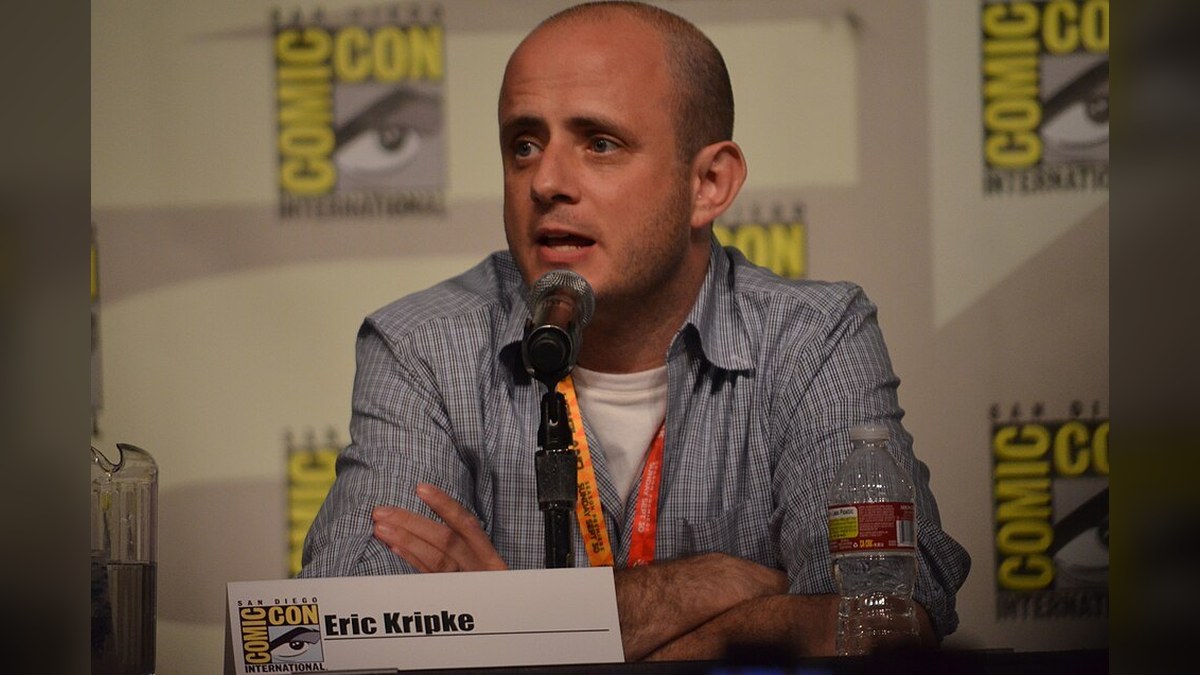
Showrunner Eric Kripke has said publicly that a page-for-page version would have failed. In interviews around the show’s 2019 premiere, Kripke pointed to Zack Snyder’s 2009 Watchmen film as the cautionary example of “slavish” comic adaptation, calling that approach too claustrophobic for television.
Instead, Kripke said the goal was to “capture that subversive spirit, that kind of anarchy, but in the same respect, we didn’t want to be shocking for shocking sake or exploitive.” That distinction — keeping the satire’s target (corporate-owned superheroes as a stand-in for real celebrity and corporate power) while rebuilding the plot mechanics around it — is the clearest throughline connecting five seasons of a show that otherwise resembles its source material less with each passing year.
The Starlight Difference Is the Clearest Example
Both versions introduce Annie January (Starlight) as a new Seven recruit who is sexually victimized almost immediately, but the mechanics diverge sharply. In Ennis and Robertson’s comic, Homelander, A-Train, and Black Noir treat sexual coercion as an explicit, near-ritualized entry toll for new members — a blunt, satirical indictment of institutional abuse.
The show isolates the abuse to The Deep manipulating Starlight’s inexperience in the Season 1 premiere, a choice that reads as more grounded but removes the comic’s implication that the abuse is systemic to the whole team. It’s the scene most frequently cited by critics comparing the two versions, because it shows the adaptation’s general method in miniature: keep the theme, change the delivery mechanism, and make the show’s version legible to an audience that hasn’t read the comic.
The Ending Nobody Can Compare Yet
Ennis and Robertson’s comic wraps every major thread — Butcher’s fate, Hughie’s arc, the fallout for the surviving members of the Seven — inside its 72nd and final issue. The show has no equivalent endpoint to measure against; Amazon has confirmed Season 5 as the series’ final season, meaning the two versions’ endings can only be properly compared once that season airs. Anyone claiming right now that the show “improves on” or “ruins” the comic’s ending is comparing a finished 14-year-old text to a story still being told — a distinction worth keeping in mind against outlets that made that claim before Season 5 existed.
What This Means If You’re Deciding Which to Read or Watch First
Neither version spoils the other in the way a straight adaptation would, because so little of the plot carries over beat-for-beat. Comic-first readers will recognize the premise, Butcher’s voice, and Homelander’s basic threat, but almost nothing about how the story gets there. Show-first viewers picking up the comic afterward should expect a darker, more compressed, and considerably more explicit version of the same idea with a genuinely different plot — closer to reading an alternate-universe take than a “book the show was based on” in the way most adaptations use that phrase. See how the Seven stack up against other fictional super-teams in our ranking of the most powerful superhero teams.
Frequently Asked Questions
Is The Boys TV show a faithful adaptation of the comic?
No. Showrunner Eric Kripke has said the writers avoided a “slavish” adaptation on purpose, keeping the comic’s subversive tone toward corporate superheroes while changing nearly every plot mechanic, several major character arcs, and the entire ending. The show and comic share a premise and a cast of names, not a shared plot.
How many issues does The Boys comic run?
The Boys ran 72 issues plus specials from 2006 to 2012. Wildstorm, a DC Comics imprint, published the first six issues before canceling the series over its content; creators Garth Ennis and Darick Robertson retained the rights and continued it at Dynamite Entertainment from issue seven through the finale.
Does the comic version of The Boys have an ending?
Yes. Ennis and Robertson concluded the story with issue #72 in 2012, resolving Butcher, Hughie, and the Seven’s arcs completely. The Amazon Prime Video series is not bound by that ending and has continued past it across five seasons plus the spinoff Gen V.
When did Butcher and Hughie get Compound V in the show versus the comic?
In Garth Ennis and Darick Robertson’s comic, the Boys already have Compound V running through their systems from the start of the series. In the Amazon series, Butcher and Hughie did not receive Compound V until three seasons in, and the show frames it as a dangerous addiction rather than a straightforward power boost.
Sources: The Boys (franchise), Wikipedia; The Hollywood Reporter, Eric Kripke interview; CBR, “10 Ways The Boys TV Series Is Different From the Comics”.