Clayface isn’t one villain — he’s at least five people who’ve worn the name since 1940, and DC’s new movie only tells one of their stories. These are the best Clayface comic storylines ranked, picked for how much they add to a character who’s really a whole twisted family tree built out of mud.
Last updated: October 24, 2026
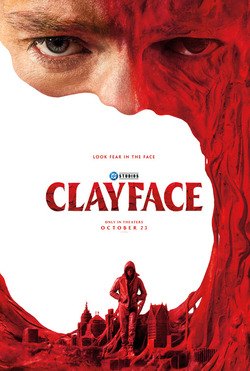
DC Studios’ “Clayface” opened October 23, 2026, and it did something nobody expected from a villain-only horror movie: it won the weekend. The film pulled in roughly $23 million domestically to finish No. 1, ahead of “You Can See Everything” at $19 million, and it’s sitting on a 93% audience score on Rotten Tomatoes against a 76% critics score (Deadline). Critics keep comparing it to Cronenberg and Raimi for a reason — it’s gross, sad, and surprisingly tender underneath the melting skin.
Here’s the thing the movie trailers don’t really explain: the guy on screen, played by Tom Rhys Harries, is Matt Hagen, a washed-up actor turned gangster target whose body gets wrecked and then “fixed” by a shady experiment. That’s one specific Clayface — you can catch up on his full movie details and where to watch it separately. The comics have given the name to at least five different people over 85 years, and some of their stories are a lot weirder — and better — than a single movie could ever cover. Ranked from solid-but-skippable up to essential, here’s where to start.
6. Clayface Joins a Pirate Crew in Flashpoint (2011)
In Geoff Johns’ “Flashpoint,” the alternate timeline where Barry Allen’s mother never died, Clayface shows up as one of Deathstroke’s pirate crew sailing the flooded ruins of Paris, alongside Electric Eel, Icicle and Sonar, caught in the crossfire of the war between Aquaman’s Atlantis and Wonder Woman’s Amazons. It’s not deep, but it’s a fun reminder that even in a universe rewritten from scratch, somebody’s wearing the clay suit.
It’s a minor appearance in a massive event, and Clayface gets attacked by Emperor Aquaman alongside the rest of Deathstroke’s crew partway through. Still, “Flashpoint” reshaped the entire DC line for years afterward, and it’s a good example of how writers reach for Clayface as a reliable, expendable heavy whenever a story needs a shapeshifting brute. (Wikipedia)
5. Gotham Gives Basil Karlo a TV Makeover (2016)
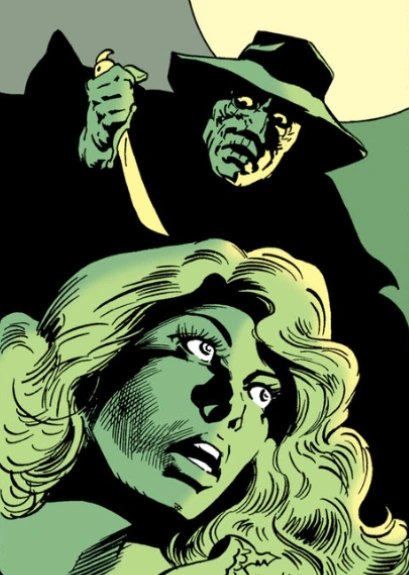
Fox’s “Gotham” cast actor Brian McManamon as Basil Karlo, reviving him as one of Hugo Strange’s experiments at Indian Hill in the episode “A Legion of Horribles.” Strange tests Karlo’s new stretching, shapeshifting body and weaponizes it, dangling his old dream of fame in front of him as leverage. It’s live-action proof that Karlo’s “actor who loses himself” origin still works decades later.
What makes this version worth watching is how it plays Karlo’s vanity as the real tragedy — he’s thrilled to finally be noticed again, even as a monster. That’s the same emotional hook “Clayface” the movie leans on with Hagen, just filtered through a different character first.
4. No Man’s Land Turns Clayface Into Gotham’s Food Problem (1999)
During “No Man’s Land,” with Gotham cut off from the rest of the country after an earthquake, Basil Karlo breaks into Robinson Park and tries to strong-arm Poison Ivy into growing fruit for him to control the city’s food supply. Ivy turns the tables, and when the deal collapses, she finishes him off with her toxic plants — only for Batman to free her afterward and let her keep the park on the condition she feeds Gotham instead of extorting it.
It’s a brutal, scrappy survival-era story that strips Clayface down to his most primal use: a villain who tries to weaponize the only things a starving city still needs. Watching two of Batman’s rogues fight over groceries says more about No Man’s Land’s stakes than almost anything else in the event.
3. Absolute Batman #23 Just Killed a Robin With Him (2026)
In Scott Snyder and Nick Dragotta’s “Absolute Batman,” the shapeshifter grows into a towering, Batman-shaped nightmare and impales Tim Drake with one of his own elongated spikes during a remixed take on “A Death in the Family.” Jason Todd, who had seemingly captured the real Batman moments earlier, wakes up assuming his own partner killed Tim — and Clayface escapes clean through a sewer drain before anyone learns the truth (CBR).
This is the clearest sign yet that Clayface’s comic-book stock is rising right alongside his movie. DC clearly knows the character has more left to give than “guy who looks like other people” — in the Absolute line, he’s being written as something genuinely frightening again.
2. Batman: Hush Makes Clayface Gotham’s Ultimate Trust Issue (2002-03)
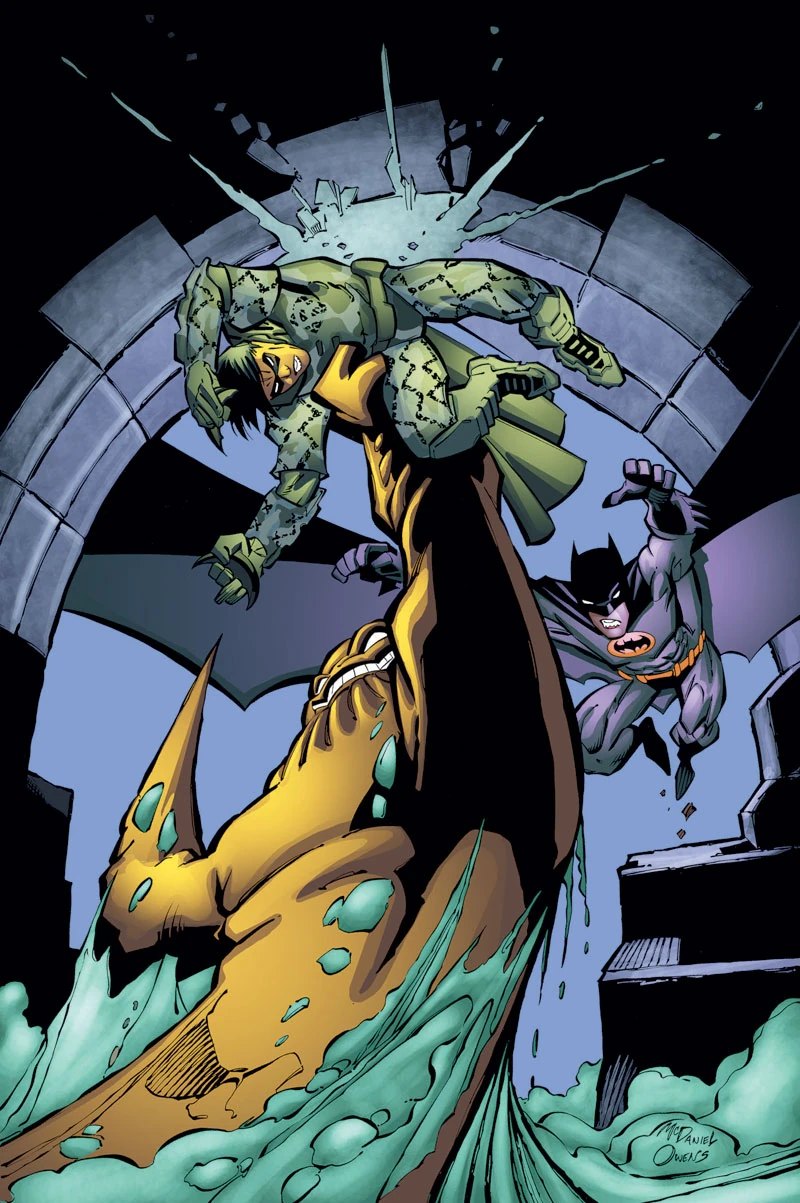
Jeph Loeb and Jim Lee’s “Hush” is one of the best-selling Batman arcs ever printed, and Clayface is the engine behind its best trick: Tommy Elliot uses Clayface’s shapeshifting to impersonate other characters and throw suspicion onto people close to Bruce Wayne, including framing Alfred for murder. The story works because Clayface isn’t even the mastermind — he’s a tool, and that’s scarier.
“Hush” is the story that convinced a generation of readers Clayface could be more than a punchline villain. Every modern writer who treats him as a legitimate threat, including whoever wrote the new movie’s pitch, owes something to this arc.
1. The Shadow of the Bat Saga Builds Clayface a Whole Family (1994-1998)
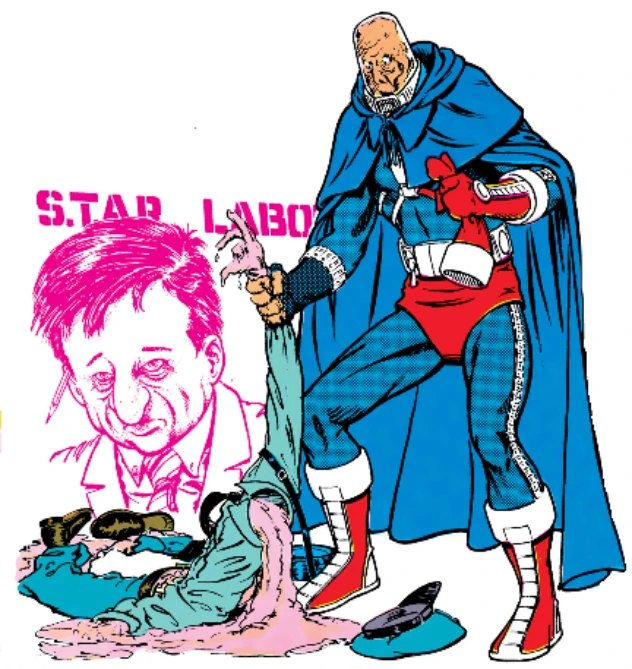
Doug Moench and Kelley Jones’ run on “Batman: Shadow of the Bat” is where Clayface stopped being one guy and became a bloodline. Preston Payne (Clayface III) and Sondra Fuller (“Lady Clay”) were paired off, and in 1994’s Shadow of the Bat #27 they had a son, Cassius Payne, named as a pun on Cassius Clay. He inherited both parents’ shapeshifting and grew up to become Clayface V in his own right (Wikipedia).
This is the single best argument for why “Clayface” deserves more than one movie. Moench and Jones didn’t just reuse the name, they built an actual mythology — a tragic clay family stuck loving and tormenting each other in equal measure. It’s the most ambitious thing anyone’s ever done with the character, and it’s the storyline every future adaptation should be stealing from.
How Do the Different Clayfaces Compare?
| Character | First Appearance | Signature Power | Vibe |
|---|---|---|---|
| Basil Karlo | Detective Comics #40 (1940) | Disguise, later true living clay | Vain, washed-up actor turned killer |
| Matt Hagen | Detective Comics #298 (1961) | Fully malleable body from mutagenic cave water | Smooth con man — the one the new movie is based on |
| Preston Payne | Detective Comics #478 (1978) | Clay body with a lethal “death touch” | Isolated, tragic, monstrous |
| Cassius Payne | Batman: Shadow of the Bat #27 (1994) | Inherited shapeshifting from both parents | The family legacy, Clayface V |
Here’s the detail that’s easy to miss: the new movie’s Matt Hagen is a Silver Age character from 1961, but the film’s “medical experiment gone wrong” framing actually borrows some of the tragic, disfigured-scientist energy that originally belonged to Preston Payne, a character who didn’t show up for another 17 years. Director James Watkins has said he deliberately avoided a Batman cameo because it “felt inappropriate” to crowbar the Dark Knight into a story that’s really about Clayface’s own tragedy (TechRadar) — which tracks with how the best comic Clayface stories treat him, as someone else’s tragedy first and a monster second.
So Why Is Clayface Suddenly Everywhere?
Because the movie’s $23 million No. 1 opening in 2026 proved a villain-only DC horror film can actually win a weekend, and that kind of box office result is exactly what gets an 86-year-old character’s deeper comic history dusted off and adapted again.
If you came to the movie fresh, it’s worth going back and reading how Clayface fits next to Gotham’s other classic rogues before diving into the deeper cuts above, or catching up on the full opening-weekend box office breakdown.
FAQ: Clayface Comics and the New Movie
Is the new Clayface movie based on Basil Karlo or Matt Hagen?
It’s Matt Hagen, the Silver Age version introduced in 1961. Tom Rhys Harries plays a washed-up actor-turned-gangster target whose body is mutated by a botched medical fix — though the film’s disfigurement angle borrows some tragic DNA from a later Clayface, Preston Payne.
How many different Clayfaces are there in DC Comics?
DC has given the name to at least five major characters — Basil Karlo, Matt Hagen, Preston Payne, Sondra Fuller (“Lady Clay”), and Cassius Payne — plus several minor one-off versions over the decades.
Does Batman appear in the Clayface movie?
No. Director James Watkins has said shoehorning Batman into a story that’s really about Clayface’s own tragedy “felt inappropriate,” so the Dark Knight sits this one out entirely.
How much did Clayface make at the box office opening weekend?
Clayface opened at roughly $23 million domestically on October 23-25, 2026, enough to finish No. 1 for the weekend ahead of “You Can See Everything.” (Deadline)