Every Legend of Zelda game, ranked from Metacritic’s best-reviewed entry down to the 1986 original, using each title’s official critic score as of September 2026. Nintendo’s 40th Anniversary Direct lands September 8, and with 12 mainline games spanning five decades, this is where the whole series stacks up on pure critical reception.
| Game | Platform | Year | Metacritic Score |
|---|---|---|---|
| The Legend of Zelda: Ocarina of Time | Nintendo 64 | 1998 | 99 |
| The Legend of Zelda: Breath of the Wild | Wii U / Switch | 2017 | 97 |
| The Legend of Zelda: Tears of the Kingdom | Switch | 2023 | 96 |
| The Legend of Zelda: The Wind Waker | GameCube | 2002 | 96 |
| The Legend of Zelda: Twilight Princess | GameCube / Wii | 2006 | 96 |
| The Legend of Zelda: A Link to the Past | SNES | 1992 | 95 |
| The Legend of Zelda: Skyward Sword | Wii | 2011 | 93 |
| The Legend of Zelda: A Link Between Worlds | 3DS | 2013 | 91 |
| The Legend of Zelda: Majora’s Mask 3D | 3DS (remaster) | 2015 | 89 |
| The Legend of Zelda: Link’s Awakening | Switch (remake) | 2019 | 88 |
| The Legend of Zelda: Echoes of Wisdom | Switch | 2024 | 86 |
| The Legend of Zelda (original) | NES | 1986 | 84 |
The S-Tier: Ocarina of Time, Breath of the Wild, and Tears of the Kingdom
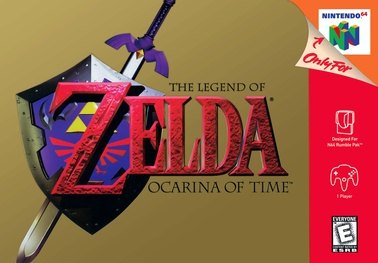
Ocarina of Time (1998) isn’t just the highest-scored Zelda game at 99 — it’s one of the highest-scored games Metacritic has ever tracked, period. The reason it still gets cited by designers three decades later isn’t nostalgia: Z-targeting solved the core problem of 3D combat (aiming in a space with no fixed camera) with a single lock-on button, and every dungeon tied its new item directly into that dungeon’s puzzle logic rather than treating items as generic inventory. That item-unlocks-puzzle-solves-dungeon loop is the actual template later 3D action-adventure games, Zelda or not, keep borrowing.
Breath of the Wild (2017, 97) is the one entry here that broke the formula instead of perfecting it. Instead of item-gated puzzle rooms, it built a physics and chemistry engine — things burn, freeze, conduct electricity, and roll downhill consistently — and let players climb or glide to almost anything they could see. Critics rewarded the structural risk, not just the scale: it’s a smaller conceptual jump from Ocarina’s dungeon logic to Wind Waker’s than it is from any prior Zelda to Breath of the Wild.
Tears of the Kingdom (2023, 96) took a slightly lower score not because it regressed but because Ultrahand, Fuse, and the sky islands/Depths verticality extend a formula reviewers had already graded a 97 two years earlier — genuinely inventive, but less of a first-time shock to the system.
The Golden-Age Classics: The Wind Waker, Twilight Princess, and A Link to the Past
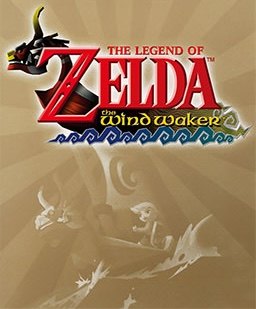
These three sit in a genuine three-way tie at 96. The Wind Waker (2002) was famously booed at its cel-shaded reveal in 2001, then scored just as well as photorealistic contemporaries once it shipped — the sailing-heavy back half of the Great Sea is the one recurring critique that’s kept it from separating from the pack. Twilight Princess (2006) leaned the opposite direction, chasing Ocarina’s tone with a darker Hyrule and a wolf-transformation mechanic, and launched simultaneously on GameCube and Wii. A Link to the Past (1992, 95) is the oldest game on this list to score above 90, and its light-world/dark-world duality is the direct ancestor of both A Link Between Worlds’ wall-merging and, more distantly, Breath of the Wild’s Depths/surface split.
Where Format and Controls Cost Points: Skyward Sword, A Link Between Worlds, and Majora’s Mask 3D
Skyward Sword (2011, 93) is the clearest case on this list of a game being marked down for one specific design choice rather than overall quality: reviewers consistently praised its dungeon design as some of the series’ tightest, then docked it for motion-control swordplay that didn’t track reliably and for Fi’s constant tutorial interruptions. It’s a reminder that Metacritic scores real friction, not just ambition. A Link Between Worlds (2013, 91) is arguably more influential than its score suggests — its wall-merge item and non-linear dungeon-order structure (rent any item, tackle dungeons in almost any sequence) is a direct precursor to Breath of the Wild’s go-anywhere design, just in 2D. Majora’s Mask 3D (2015, 89) inherited the N64 original’s three-day time loop and its much darker tone; the remaster’s quality-of-life fixes to the save system addressed the original’s biggest complaint, but the loop’s built-in time pressure still reads as more stressful than inviting to some critics.
The Modern Handheld Era and the Original: Link’s Awakening, Echoes of Wisdom, and 1986
Link’s Awakening (2019 remake, 88) turned an odd, moody Game Boy detour into a toy-diorama art piece; it scores just behind the SNES original whose engine it still runs on under the hood. Echoes of Wisdom (2024, 86) is the first mainline game where players control Zelda herself rather than Link, using an Echo-copy mechanic that let critics draw an easy, mostly favorable comparison to Tears of the Kingdom’s Ultrahand — just rebuilt for a 2D top-down grid.
The original 1986 Legend of Zelda (84) is the lowest score on this list, and it’s worth sitting with why: 1980s critics graded it against Famicom-era competition that mostly didn’t gate the player into vague, un-signposted exploration with almost no in-game instruction. That total lack of hand-holding is precisely what Breath of the Wild’s design team pointed to as inspiration in 2017 — Aonuma’s team has said openly they wanted to recapture the feeling of being dropped into Hyrule with no map and no tutorial. The series’ highest-scoring modern entry and its lowest-scoring original entry are, structurally, chasing the same idea forty years apart.
The scores above track critical reception, not commercial performance, and the two don’t always move together: per Nintendo’s investor relations data reported by Zelda Universe, Breath of the Wild had sold over 35 million units and Tears of the Kingdom over 22.4 million units worldwide as of December 31, 2025 — meaning the two most recent mainline entries are also comfortably the two best-selling games in series history.
For more on the score sourcing and methodology, see Metacritic’s Ocarina of Time score page. The sales figures cited above come from Zelda Universe’s reporting on Nintendo’s investor relations data, and the Echoes of Wisdom score was confirmed via NintendoSoup’s review roundup.
Zelda’s critical consistency is also why Nintendo is treating the franchise as a growing multimedia brand: the first look at the live-action Legend of Zelda movie dropped earlier this year, and our coverage of Nintendo’s recent Direct rumors has more on what else Nintendo has planned for 2026. If ranked lists like this one are your thing, we also broke down the best Spider-Man video games, ranked.
Frequently Asked Questions
What is the highest-rated Legend of Zelda game on Metacritic?
The Legend of Zelda: Ocarina of Time (N64, 1998) holds the highest Metacritic score in the series at 99, one of the highest scores any game has received on the platform.
Is Breath of the Wild or Tears of the Kingdom rated higher?
Breath of the Wild scores 97 on Metacritic versus Tears of the Kingdom’s 96, though both are widely considered part of the same top tier of the series.
What is the lowest-scoring mainline Legend of Zelda game?
The original 1986 NES Legend of Zelda has the lowest Metacritic score of any entry in this ranking, at 84, reflecting how review standards and expectations have shifted since the 1980s rather than a drop in the game’s historical significance.
How many Legend of Zelda games are ranked here?
This ranking covers 12 mainline Legend of Zelda releases, from the original 1986 NES game through 2024’s Echoes of Wisdom, using each game’s official Metacritic score.
Is Skyward Sword worth playing despite its lower score?
Yes — reviewers consistently praised Skyward Sword’s dungeon design even while marking it down for its motion-control swordplay, so its 93 reflects one specific control complaint more than an overall quality problem.
For more on what Nintendo has planned around this anniversary, see our coverage of the Zelda 40th Anniversary Direct, announced for September 8.