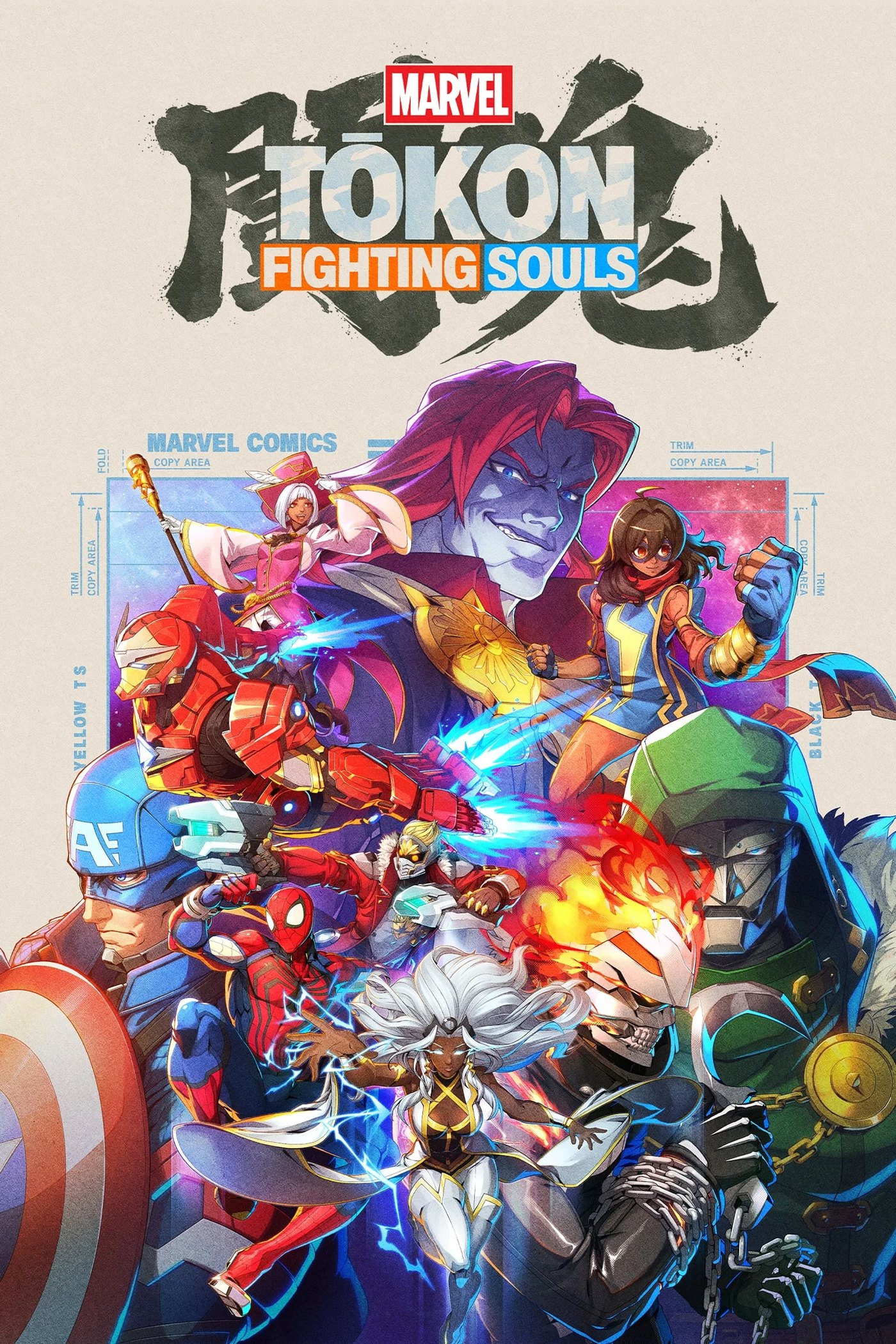
Marvel Tōkon‘s story mode is called Episode Mode, and it is far more of a comic than a campaign. Comics writer Kieron Gillen scripted five separate stories, one per team, and each was illustrated by a different artist — including Fairy Tail creator Hiro Mashima.
What Episode Mode actually is
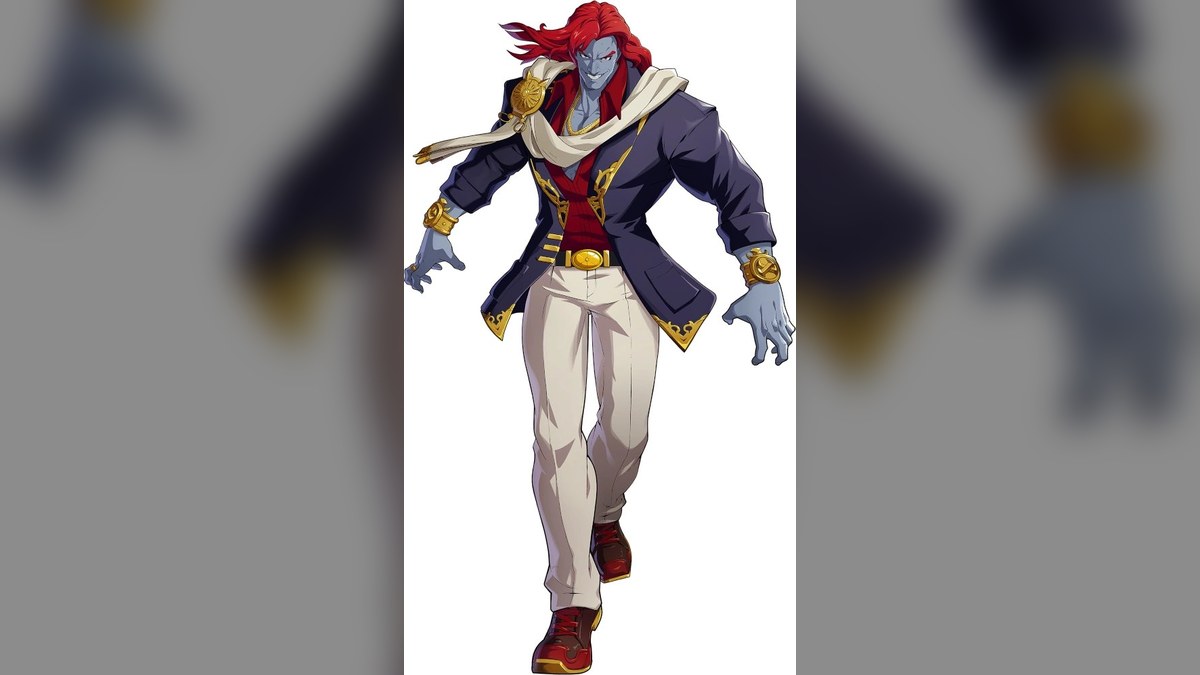
Episode Mode is the single-player story content in MARVEL Tōkon: Fighting Souls. It is built as five self-contained chapters, one for each of the game’s five teams, presented in a motion-comic style — illustrated panels with movement applied, advancing like an animated comic book between fights rather than a fully animated cutscene campaign.
Reviewers put the full run at roughly six to eight hours across the five episodes. The antagonists throughout are The Champion (Tryco Slatterus, one of Marvel’s Elders of the Universe) and an original character called The Promoter, Xirena Awhina, who frames the whole thing as a tournament.
Kieron Gillen is an unusually good fit for this job
Gillen wrote the scripts for all five episodes. Marvel readers know him from Uncanny X-Men, Immortal X-Men and Young Avengers, and comics readers more broadly from The Wicked + The Divine.
But here is the connection almost nobody draws: before he wrote comics, Gillen was a games journalist, and he co-founded Rock Paper Shotgun in 2007. Hiring a writer who spent years inside both industries for a project that is literally a comic embedded in a fighting game is not a coincidence. It is close to the only job description he is uniquely qualified for.
Five artists, five visual identities
The structural decision that defines Episode Mode is that each chapter has its own illustrator. Per ComicBook.com’s review (13 August 2026), the artists are:
| Artist | Known for |
|---|---|
| Emanuela Lupacchino (colours by David Curiel) | X-Men and Wonder Woman; a clean, classical superhero style |
| Mike Deodato (colours by Jao Canola) | Thunderbolts, Original Sin, Amazing Spider-Man |
| Betten Court | My Hero Academia: Vigilantes |
| Hiro Mashima | Fairy Tail, Edens Zero, Rave Master |
| Yusuke Osawa | Manga and illustration work |
Pause on that third and fourth row. Hiro Mashima drawing a Marvel story is a genuine event. Fairy Tail ran in Weekly Shōnen Magazine for eleven years and spawned a long-running anime; Mashima is one of the most widely-read shōnen creators working. Betten Court draws My Hero Academia: Vigilantes.
If this crossover had been solicited as a print one-shot, it would have been a headline across every comics and anime site. Instead it is bundled inside a $60 fighting game’s single-player mode, which is why so few people have registered it. That is the single most under-covered thing about this release.
Why this particular five is such an unusual line-up
Marvel commissions manga artists occasionally, and Japanese publishers license Marvel characters occasionally. What is rare is putting Western superhero artists and shonen manga creators inside the same project, page for page.
Emanuela Lupacchino and Mike Deodato are the Marvel house contingent — Lupacchino a clean, classical superhero draughtsman, Deodato known for heavy shadow and cinematic panel staging on books like Thunderbolts and Original Sin. Between them they cover the register American readers expect from a Marvel comic.
Hiro Mashima and Betten Court pull hard in the other direction. Mashima’s Fairy Tail style is built on exaggerated motion and expression; Betten Court draws My Hero Academia: Vigilantes, a spin-off of a series that is itself openly indebted to American superhero comics. Putting a Vigilantes artist on a Marvel book closes a loop that has been open for a decade.
Yusuke Osawa rounds out the set. The result is that Episode Mode does not have a house style at all, and readers coming from Marvel’s current X-Men books and readers coming from weekly shonen will each find one chapter that looks like home and four that do not.
Is the story canon?
Not to the main Marvel Universe. The game is assigned its own reality designation in Marvel’s multiverse bookkeeping, which is the standard mechanism for licensed games and adaptations — it makes the story officially catalogued without binding the monthly comics to it.
In practice that means Gillen had unusual freedom. Nothing that happens in Episode Mode has to be reconciled with what is happening in the comics this month, which is why the game can put a villain team together and hand Black Panther to Shuri without triggering any continuity conflict.
The honest problem with Episode Mode
It would be easy to sell this as a triumph and stop. It is not, and the criticism is worth stating plainly.
ComicBook.com’s Michael Leri, scoring the game 4 out of 5, found that the five threads “don’t tell unique parts of the same story and, instead, retell similar stories five times,” and described the accompanying fights as far too easy.
Our read is that this is a structural consequence rather than lazy writing. If you give five separate teams five self-contained chapters that all build toward the same antagonist, the five stories are going to rhyme — each one has to introduce its cast, establish the tournament conceit and arrive at The Champion. The anthology format that makes five distinct art styles possible is the same format that makes five distinct plots very difficult. You are trading narrative momentum for visual variety.
The other single-player modes
Episode Mode is not the only offline content, which matters if you are buying a fighting game without intending to play ranked.
| Mode | What it is |
|---|---|
| Episode Mode | The five-chapter illustrated story campaign |
| All-Star Arena | Arcade-style ladder |
| Survival | Endurance mode with roguelite elements |
| Arcadia Rumble | Party-game style mode |
| Combo trials | Per-character execution challenges |
| Character lessons | Guided tutorials for individual fighters |
Reviewers have generally called the offline package robust enough to justify the purchase on its own — a meaningful point in a genre where single-player content is often an afterthought. As of 20 August 2026 the game holds a Metascore of 86 on PS5 from 75 critic reviews, with the PC version sitting lower at 83 largely because of its launch performance problems.
Should you play Episode Mode first?
Yes, and for a practical reason as much as a narrative one. The episodes rotate you through all five teams, which means you touch a wide spread of the 20-fighter roster without having to pick blind from the character select screen.
If you want to know who you are looking at before you start, our full Marvel Tōkon roster guide breaks down all 20 fighters and their teams. And if the comics-artist angle is what drew you in, our ranking of the best and worst comic book games puts this release in a much longer tradition.
Frequently Asked Questions
Does Marvel Tōkon have a story mode?
Yes. It is called Episode Mode and contains five separate story chapters, one for each team, running roughly six to eight hours in total.
Who wrote Marvel Tōkon’s story mode?
Comics writer Kieron Gillen, known for Uncanny X-Men, Immortal X-Men, Young Avengers and The Wicked + The Divine. He also co-founded the games site Rock Paper Shotgun in 2007.
Which artists worked on Marvel Tōkon Episode Mode?
Emanuela Lupacchino, Mike Deodato, Betten Court, Hiro Mashima and Yusuke Osawa, with colours by David Curiel and Jao Canola. Each artist illustrated a different episode.
Is Hiro Mashima really involved in Marvel Tōkon?
Yes. The Fairy Tail and Edens Zero creator is one of the five artists who illustrated Episode Mode chapters, as confirmed in ComicBook.com’s August 2026 review.
Is Episode Mode playable or just cutscenes?
Both. The story is delivered in a motion-comic style using illustrated panels with movement, and it is broken up by fights you play.