Omega-level mutants are the apex of Marvel’s mutant power scale — beings whose dominant ability reaches, in Marvel’s own words, “an undefinable upper limit of that power’s specific classification.” In plain terms: their potential has no ceiling. Since Jonathan Hickman’s 2019 House of X made the label an official, in-universe designation, exactly twelve X-Men were canonically confirmed as Omega-level, and the roster has become the backbone of mutant politics on Krakoa. Below we rank every confirmed Omega mutant by real-world feats and versatility (not just raw output), explain what actually separates an Omega from a merely powerful mutant, and settle the fan debates — including who the “beyond-Omega” reality-warpers are and why Wolverine will never make the list.

Omega-Level Mutants at a Glance
These are the twelve mutants explicitly confirmed as Omega-level on the official data page in House of X #1 (2019). We tier them by demonstrated feats and versatility — the same yardstick Storm and Marvel’s writers use — rather than by raw destructive output alone.
| Tier | Mutant | Real Name | Omega Power | First Appearance |
|---|---|---|---|---|
| Reality-Bending | Legion | David Haller | Multiversal / multi-power manifestation | New Mutants #25 (1985) |
| Reality-Bending | Proteus | Kevin MacTaggert | Reality warping (matter/energy) | Uncanny X-Men #119 (1979) |
| Reality-Bending | Jamie Braddock | Jamie Braddock | Reality manipulation (“the strings”) | Captain Britain #8 (1976) |
| Apex | Jean Grey | Jean Grey | Telepathy (Omega); telekinesis | X-Men #1 (1963) |
| Apex | Vulcan (Monarch) | Gabriel Summers | Energy manipulation | X-Men: Deadly Genesis #1 (2005) |
| Apex | Mister M | Absolon Mercator | Matter/energy manipulation | District X #1 (2004) |
| Elite | Magneto | Max Eisenhardt | Magnetism | X-Men #1 (1963) |
| Elite | Storm | Ororo Munroe | Weather / atmokinesis | Giant-Size X-Men #1 (1975) |
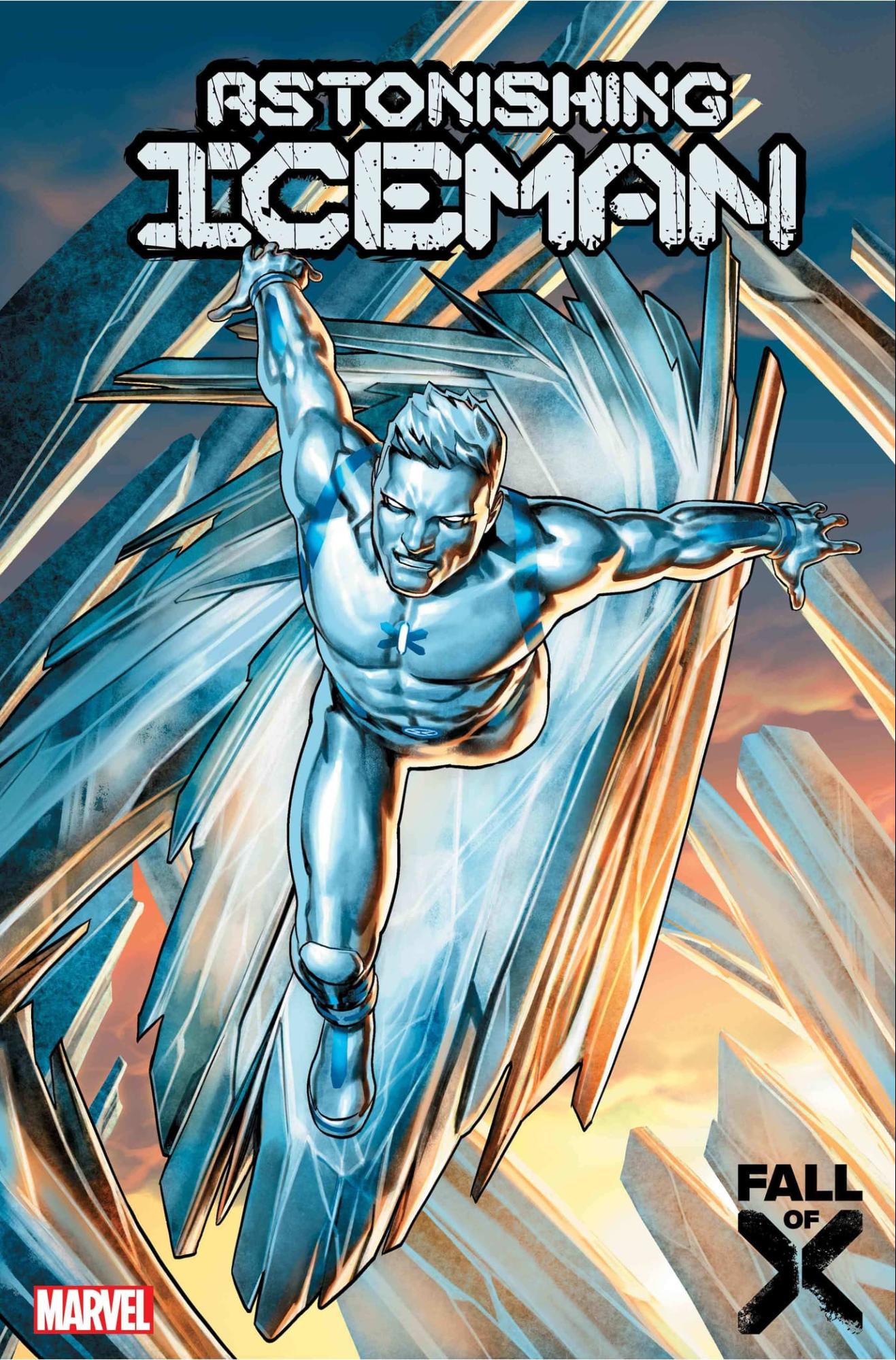
| Elite | Iceman | Bobby Drake | Cryokinesis (thermal control) | X-Men #1 (1963) |
| Elite | Exodus | Bennet du Paris | Telekinesis / telepathy | X-Factor #92 (1993) |
| Elite | Elixir | Josh Foley | Biokinesis (healing/harming) | New Mutants vol. 2 #5 (2004) |
| Elite | Kid Omega | Quentin Quire | Telepathy | New X-Men #134 (2003) |
What Actually Makes a Mutant “Omega-Level”
For decades, “Omega-level” was a marketing adjective more than a rule — writers slapped it on anyone who looked scary. Jonathan Hickman’s House of X/Powers of X (2019) finally pinned it down. Marvel’s official definition: an Omega-level mutant is “a mutant whose dominant power is deemed to register — or reach — an undefinable upper limit of that power’s specific classification.”
Three things follow from that wording, and most “power rankings” online get all three wrong:
- It’s about the ceiling, not the current output. An Omega mutant’s power has no theoretical maximum. That’s why Iceman — who spent decades as a joke — is Omega-level: his potential to control thermal energy is effectively limitless, even if he rarely pushes it.
- It’s power-specific, and usually one per classification. Plenty of mutants control magnetism, but only Magneto is Omega-level at it. Jean Grey is a fearsome telekinetic, yet only her telepathy carries the Omega tag.
- It is not the same as “most dangerous.” Apocalypse, Cable, Cyclops and Wolverine are world-shaking threats and none are Omega-level. Raw menace and an uncapped power ceiling are different things.
In the Krakoan era this stopped being trivia. Omega-level mutants were designated a strategic natural resource — assets to be protected, cultivated and, inevitably, fought over. If you want the wider picture of Marvel and DC’s heaviest hitters, see our ranking of the most powerful comic book characters.
The Reality-Bending Tier: Power Without a Rulebook
At the very top sit the mutants whose abilities don’t just use physics — they rewrite it. Ranking these three against each other is genuinely hard, because each has, in canon, remade reality on a scale that makes “strong” an understatement.
Legion (David Haller)
Charles Xavier’s son may be the single most dangerous mutant alive. Legion’s dissociative mind houses hundreds of personalities, and each one can manifest a distinct, often Omega-tier power — telepathy, telekinesis, time manipulation, matter transmutation. In Age of X-Man and Legion he has restructured entire realities. His only real limiter is himself: a mind at war with its own passengers.
Proteus (Kevin MacTaggert)
Moira MacTaggert’s son warps reality itself, twisting matter and energy to whim. His catch — that he burns out organic host bodies and is historically vulnerable to metal — is the only reason the X-Men have ever survived him. Given a durable enough vessel, Proteus is a world-ending event.
Jamie Braddock
Captain Britain and Psylocke’s brother perceives reality as “strings” he can pluck and re-knot, editing people and events like code. His instability has kept him from consistently dominating, but at his focused peak he operates on a near-cosmic tier.
The Apex Tier: Textbook Omega Powerhouses
Jean Grey
Marvel has repeatedly positioned Jean as the definitive Omega-level telepath — able to read, rewrite and shatter minds at will, and to lift her telekinesis to city-leveling force. Note the important distinction: her telepathy is the Omega power; the Phoenix Force is a separate cosmic entity, not a mutant ability. Even without the firebird, Jean belongs at the top.

Vulcan (Gabriel Summers)
The third Summers brother, now styling himself Monarch, absorbs and redirects virtually any form of energy — and can override the electrical activity of other mutants’ brains to switch their powers off. That’s what makes Vulcan so dangerous against other Omegas: he doesn’t out-muscle them, he unplugs them.
Mister M (Absolon Mercator)
One of the most underrated names on the list, Mister M manipulates matter and energy down to the subatomic level, reshaping molecular structures and even restoring lost mutant powers after M-Day. His low profile has less to do with his ceiling and more to do with how rarely writers use him.
The Elite Tier: Iconic, Confirmed, and Frequently Underestimated
Magneto
The Master of Magnetism can wield a planet’s entire electromagnetic field — triggering earthquakes, redirecting the poles, ripping the iron from a person’s blood. Magnetism touches everything, which is exactly why his Omega status has never been in doubt. If you enjoy magnetism-adjacent powerhouses, our best electricity superheroes list covers the lightning-slingers who play in a similar sandbox.
Storm
Ororo Munroe’s atmokinesis was formally recognized as Omega-level in the Krakoan era, and it’s Storm herself who gave us the guiding principle of this whole list: a fight between Omega mutants is decided by “versatility,” not raw wattage. She can drop temperatures to absolute-zero cold, summon continent-scale storms, and manipulate the atmosphere of an entire planet.
Iceman
The poster child for “your potential is the whole point.” Bobby Drake can convert his body into living ice, reconstitute himself from ambient moisture (making him functionally unkillable), and manipulate thermal energy across vast ranges. Modern stories finally treat him as the omega-tier force he always was.
Exodus, Elixir & Kid Omega
Rounding out the confirmed roster: Exodus, the ancient Acolyte, is an Omega-level telekinetic and formidable telepath. Elixir‘s gold-skinned biokinesis lets him heal or unmake organic matter at the cellular level — he has restarted stopped hearts and, in the wrong mood, rotted enemies where they stand. Kid Omega (Quentin Quire), the mohawked provocateur, is a telepath whose ceiling keeps climbing with every appearance.
The Original Take: Why “Ranked by Power” Is the Wrong Question
Nearly every list online — CBR, Popverse, Looper, ComicBook.com — sorts these mutants “weakest to strongest” as if Omega power were a single number you could compare. That framing quietly contradicts Marvel’s own text, and it’s why those lists never agree with each other.
Here’s the expert correction. Marvel deliberately built the Omega definition around a ceiling, not a score. Every mutant on this page has, by definition, an undefinable upper limit. So asking “is Iceman stronger than Magneto?” is a category error — it’s like asking whether infinity is bigger in miles or in kilograms. Their powers aren’t on the same axis. Storm said the quiet part out loud in X-Men: Red: these fights come down to versatility, control, and imagination, not who has the higher power reading.
That reframing produces a genuinely different ranking than the raw-power lists. Watch how it reshuffles the board:
- Iceman rises, Elixir falls. On a raw-output chart Elixir’s cell-level control looks terrifying, but it’s narrow — it does one thing to organic matter. Iceman’s thermal control is a Swiss-army knife: offense, defense, resurrection, mobility. Versatility wins.
- Vulcan out-ranks flashier bricks. A mutant who can switch off your powers beats a mutant who merely hits hard. Control over the battlefield trumps tonnage.
- The “weak” Omegas were never weak. Iceman and Storm spent decades written as mid-tier because writers used a fraction of their ceiling. The Omega label didn’t buff them — it exposed a scripting failure. That’s the real story the power-ranking listicles miss: Omega status is often a correction of past under-writing, not a new power boost.
So use tiers, not a leaderboard. The reality-benders (Legion, Proteus, Braddock) sit apart because they change the rules of the fight rather than winning it — and even among them, the winner is whoever keeps their mind together longest. That, not a damage number, is the honest way to rank Omegas. It’s the same “versatility over voltage” logic that makes ranking cosmic threats like Marvel’s most powerful symbiotes so contentious.
Collector’s Corner: Key First-Appearance Issues
For collectors, the Omega roster is a mixed bag of Silver Age blue-chips and affordable modern keys. A few standouts worth knowing before you hit the back-issue bins:
- X-Men #1 (Marvel, 1963) — The origin of the franchise and the debut of Jean Grey, Iceman and Magneto in one book. A genuine grail, and one of the most valuable Silver Age comics in the hobby.
- Giant-Size X-Men #1 (Marvel, 1975) — First Storm (and the “All-New, All-Different” team). A cornerstone Bronze Age key that has climbed steadily as Storm’s profile has risen.
- Uncanny X-Men #119 (Marvel, 1979) — First cameo of Proteus; his full reveal follows in the next issues. An underrated horror-tinged arc and a sneaky-good spec pick.
- New Mutants #25 (Marvel, 1985) — First appearance of Legion, arguably the most powerful mutant on this list — and a book that got a second wind from the FX Legion TV series.
- House of X #1 (Marvel, 2019) — Not a first appearance, but the issue that defined Omega-level canon. The modern key that gives this entire list its rulebook.
Honorable Mentions & The “Beyond-Omega” Debate
Several hugely powerful mutants are not on the official House of X #1 chart, which regularly sparks arguments. A few deserve a note:
- Franklin Richards — Son of Reed and Sue Richards, he has created entire pocket universes. He’s routinely called “beyond-Omega,” though his mutant status has itself been retconned back and forth.
- Nate Grey (X-Man) — A reality-warping alternate-timeline son of Cyclops and Jean, powerful enough to reshape the world in Age of X-Man.
- Hope Summers & Apocalypse — Frequently listed by fans, but not part of the confirmed twelve on the original data page. Powerful, canon-adjacent, and endlessly debatable.
“Beyond-Omega” is a fan/descriptive term for mutants whose ceilings are effectively cosmic — not a separate official rank. It’s a useful shorthand, not a Marvel classification.
Frequently Asked Questions
Who is the most powerful Omega-level mutant?
By versatility and demonstrated feats, the reality-warpers — Legion, Proteus and Jamie Braddock — sit at the top, because they rewrite reality rather than just overpower it. Legion in particular can manifest dozens of Omega-tier powers at once. If you count “beyond-Omega” mutants, Franklin Richards (who has built universes) tops nearly every list.
Is Wolverine an Omega-level mutant?
No. Wolverine is an elite fighter with an extraordinary healing factor, but his abilities have a defined limit — they don’t reach the “undefinable upper limit” the Omega definition requires. He is one of Marvel’s most dangerous mutants, but he is not Omega-level.
How many official Omega-level mutants are there?
Twelve mutants were explicitly confirmed as Omega-level on the data page in House of X #1 (2019): Jean Grey, Iceman, Magneto, Storm, Legion, Proteus, Jamie Braddock, Vulcan, Mister M, Exodus, Elixir and Kid Omega. Others (Franklin Richards, Nate Grey, Hope Summers) are frequently cited by fans but were not part of that confirmed list.
Can a mutant have more than one Omega-level power?
It’s rare. The Omega label attaches to a single dominant power — Jean Grey is Omega-level for telepathy, not telekinesis, for example. Legion is the notable exception: his many personalities can each manifest a different Omega-tier ability, effectively giving him multiple.
What does “beyond-Omega” mean?
It’s an informal, fan-driven term for mutants whose power can warp reality on a cosmic scale — such as Nate Grey or Franklin Richards. It is not an official Marvel classification like Omega-level; it’s simply a useful way to describe the handful of mutants who blow past even the Omega ceiling.
The Bottom Line
The Omega-level classification finally gave the X-Men universe a real rulebook for its top-tier power — and, more importantly, revealed that “strongest” was always the wrong question. These twelve mutants share an uncapped ceiling; what separates them is control, creativity and versatility, exactly as Storm argued. Read them as tiers, not a leaderboard, and the roster snaps into focus. For more heavy hitters, jump to our ranking of the broader most powerful comic book characters, or see how the elemental heavyweights stack up in our top fire superheroes list.
Sources
- Comic Book Club – Omega Level Mutants: The Complete List
- Screen Rant – What Is “Omega Level”? Marvel’s Mutant Power Scale, Explained
- CBR – All Of Marvel’s Omega-Level Mutants, Ranked By Power