What Is Haki in One Piece? A Complete Guide to the 3 Types
If you have watched or read One Piece for any length of time, you have felt the shift. Somewhere around Marineford, the fights stopped being about who ate the flashiest Devil Fruit and started being about something invisible, something the strongest characters all share. That something is Haki, and understanding it is the single biggest key to understanding how power actually works in Eiichiro Oda’s world.
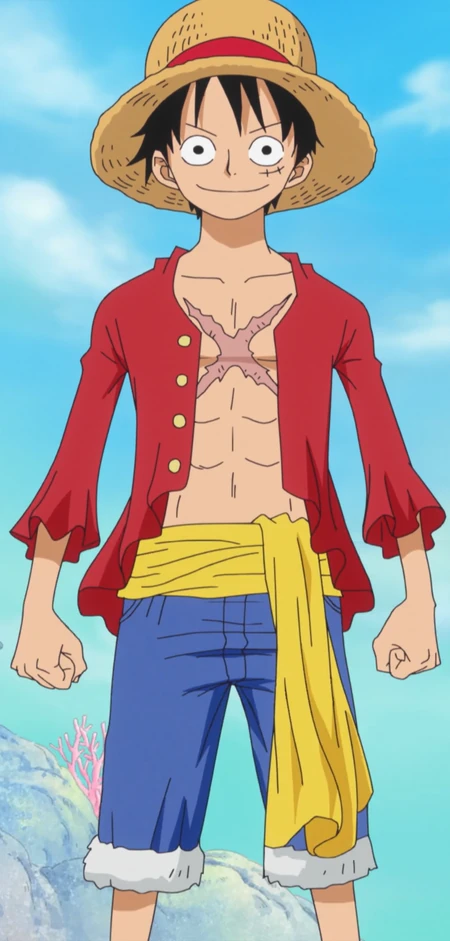
So, what is Haki? Haki is a spiritual energy present in all living beings, drawn from a person’s willpower and ambition. Most people never awaken it. Those who do can sense the unseen, harden their bodies into invisible armor, and, in rare cases, bend the will of others through sheer force of spirit. There are three types.
What Is Haki? The Short Answer
The word “Haki” (覇気) literally translates to “ambition” or “will,” and that translation tells you almost everything about how it functions. Unlike a Devil Fruit, which grants a specific supernatural ability the moment it is eaten, Haki is not something you find or acquire. It is a dormant power that already exists inside every creature in the One Piece universe. The trick is waking it up.
Silvers Rayleigh, the man who trained Monkey D. Luffy in the art, gave the cleanest definition of what Haki demands of its user. Strength, he explained, comes from “the act of not doubting.” Haki is willpower made physical. The stronger and more unwavering a person’s ambition, the stronger their Haki becomes. This is why history’s titans, from Gol D. Roger to the Four Emperors, all wield it at a level ordinary fighters cannot touch.
How Haki Works
Most people in the world of One Piece live and die without ever knowing Haki exists. It typically stays dormant until one of two things happens: relentless, deliberate training, or a life-threatening crisis that forces the spirit to respond. Luffy’s Haki, for instance, first flickered to life during the Battle of Marineford, one of the most traumatic moments of his life, before Rayleigh spent two years teaching him to control it on Rusukaina Island.
Once awakened, Haki behaves less like a magic spell and more like a muscle. It grows with use, it can be refined into increasingly precise techniques, and, crucially, it is finite. Overusing Haki depletes it, leaving the user temporarily exhausted and unable to call on it until it regenerates. This limitation is what keeps Haki from being a simple “I win” button. Even a master can be worn down, out-lasted, and beaten.
The reason Haki matters so much in combat comes down to one property: it interacts directly with the spirit rather than the body. That means it can touch things ordinary attacks cannot, which brings us to why the three types each solve a different problem.
The Three Types of Haki
Every Haki user has access to some combination of three distinct colors, as the manga calls them. Two of the three can be developed by anyone willing to train hard enough. The third cannot be learned at all. Here is how they compare at a glance before we break each one down.
| Type (Japanese name) | Core function | Who can learn it? | Notable users |
|---|---|---|---|
| Observation Haki (Kenbunshoku) | Sense presence, emotion, intent, and strength; predict attacks | Anyone, with training | Luffy, Katakuri, Fujitora, Otohime |
| Armament Haki (Busoshoku) | Invisible armor; harden and empower body and weapons; strike intangible foes | Anyone, with training | Luffy, Zoro, Rayleigh, the Marine Admirals |
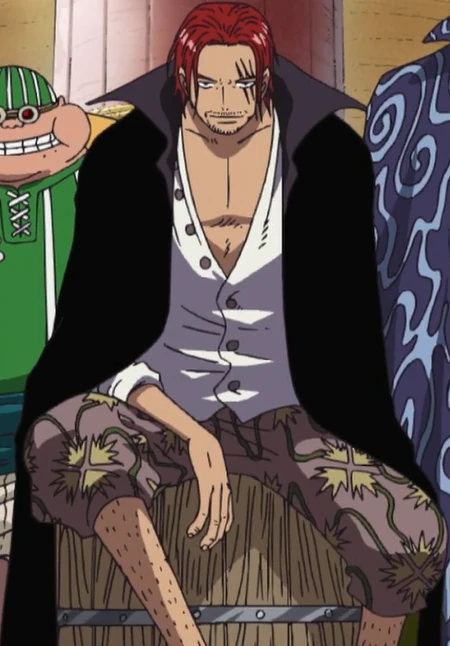
| Conqueror’s Haki (Haoshoku) | Overwhelm the will of others; dominate crowds; infuse attacks | Innate only, roughly one in a million | Roger, Shanks, Luffy, Kaido, Big Mom |
Observation Haki (Kenbunshoku Haki)
Observation Haki is the sensory type, functioning as a genuine sixth sense. At its most basic, it lets a user detect the presence and location of people nearby, even ones they cannot see. This is why blind swordsman Admiral Fujitora can fight at the very top of the Marines without ever opening his eyes. From there it deepens into sensing an opponent’s emotions, gauging their raw strength without a single blow exchanged, and reading the intent behind a movement a split second before it happens. Rayleigh trained Luffy to dodge bullets blindfolded using exactly this skill.
Armament Haki (Busoshoku Haki)
Armament Haki is the workhorse of combat and, arguably, the most important type to master. It lets a user coat their body, or a specific limb, or a weapon, in an invisible spiritual armor that both hardens their defense and dramatically strengthens their attacks. After the time skip it visibly manifests as a jet-black sheen on the affected area. Zoro imbues his blades with it; Luffy hardens his fists with it. Its single most important property, however, is that it lets a fighter strike the intangible. We will come back to why that changes everything.
Conqueror’s Haki (Haoshoku Haki)
Conqueror’s Haki, also called the Color of the Supreme King, is the rarest and most mythologized of the three. Only about one person in a million is born with it, and it cannot be taught, only refined once discovered. A user projects their willpower outward to overwhelm the will of anyone weaker-minded around them, often knocking them unconscious on the spot. Shanks once used it to frighten off a Sea King. When two Conqueror’s users clash, the collision of their wills can visibly split the sky. Roger, Whitebeard, Kaido, Big Mom, and Luffy all belong to this exclusive club.
Advanced and Awakened Haki
The Wano arc pulled back the curtain on a higher tier of Haki that separates the Emperors from everyone else. Each of the three types has an advanced form that only the most accomplished users ever reach.
Advanced Observation blossoms into Future Sight, the ability to briefly perceive an opponent’s next move before it lands. Charlotte Katakuri used it to counter Luffy attack for attack until Luffy, remarkably, developed the same power mid-fight. Shanks is said to see roughly ten seconds ahead, an almost unfair advantage. The rarest branch of this type is the Voice of All Things, the ability to hear the voices of ancient creatures and objects like the Poneglyphs, shared only by Roger, Oden, Momonosuke, and Luffy.
Advanced Armament introduces emission, sometimes called Ryuo, which lets a user project their Haki beyond their own skin to strike without physical contact. Its most fearsome application is internal destruction: pushing the Haki through an opponent’s own defenses to shatter them from the inside, bypassing even the toughest external armor.
Advanced Conqueror’s Haki, revealed in the war for Wano, is the game-changer. A master can coat their attacks and weapons in Conqueror’s Haki, wrapping their strikes in a crackling black-and-red aura. This “infusion” is one of the very few things capable of meaningfully wounding monsters like Kaido, whose bodies shrug off ordinary Armament. It is, in essence, the top of the mountain, and it deserves its own discussion.
Common Misconceptions About Haki
Because Haki was introduced gradually and its rules were revealed piecemeal over hundreds of chapters, a few persistent misunderstandings have taken root among newer fans.
“Haki is a Devil Fruit power.” It is the opposite. Haki is completely independent of Devil Fruits; it comes from within, and eating a Fruit has no bearing on whether you can use it. In fact, some of the strongest Haki users, including Roger, Shanks, and Mihawk, have no Devil Fruit at all.
“Only the good guys, or only pirates, have it.” Haki is used across every faction. Marine Admirals, Revolutionaries, Warlords, and Emperors all rely on it. It is a universal power system, not a hero’s trait.
“Conqueror’s Haki just makes people faint.” The fainting is the flashy, low-level application. The truly decisive use is offensive infusion, and mastering that is what separates a strong pirate from an Emperor.
“Haki is unlimited.” Far from it. Every user has a finite reserve that drains with use and must recover. Endurance and efficiency matter as much as raw power.
The Great Equalizer: How Haki Lets Fruitless Fighters Rule the Seas
Here is the insight that reframes the entire power structure of One Piece, and it is the reason Haki is Oda’s most important storytelling tool. Devil Fruits create wildly unfair matchups. A Logia user like Crocodile or Enel can turn their body into sand or lightning, becoming literally intangible. Against an ordinary fighter, that is unbeatable. Punches pass through them. They cannot be cut, gripped, or grounded. Early in the series, a Logia looked like an unclimbable wall.
Armament Haki demolishes that wall. Because it acts on the spirit, a Haki-coated fist connects with a Logia’s real body no matter what element they have become. Suddenly the sand man bleeds and the lightning man can be grabbed. This is the equalizer at work: Haki hands non-Fruit fighters a tool that neutralizes the single greatest advantage a Devil Fruit can offer. It is no accident that the three most feared fighters without Fruits, Roger, Shanks, and Mihawk, sit at the absolute apex of the world. Roger conquered the Grand Line and became Pirate King relying on Haki alone, defeating Devil Fruit powerhouses like Whitebeard’s crew through will and skill rather than a flashy ability. Take a look at how these fighters stack up against the field in our ranking of the strongest One Piece characters, and the pattern is impossible to miss.
But the equalizer story does not end with parity. When advanced Conqueror’s Haki infusion was revealed in Wano, it did something more radical: it moved the entire power ceiling. For most of the series, the question was “how do fruitless fighters keep up?” Conqueror’s infusion flipped it to “what can even touch an Emperor?” Kaido was built as a wall so durable that ordinary Armament, the very technique that once cracked open the Logia problem, barely scratched him. The only reliable answer was Conqueror’s Haki wrapped around a strike, a technique reserved for the one-in-a-million wills of Roger, Whitebeard, Kaido, Big Mom, and finally Luffy. In one arc, Oda redefined the top of his own hierarchy, turning Conqueror’s Haki from a crowd-control gimmick into the currency of true monsters. It is a masterclass in escalation that lets a fistfighter in a straw hat stand toe to toe with a dragon, and it is exactly why Haki belongs on any list of the strongest anime characters ever conceived. For the wider picture across every medium, our ranking of the most powerful comic book characters puts that ceiling in perspective.
Frequently Asked Questions About Haki
Can anyone learn Haki?
Almost. Observation and Armament Haki are dormant in every living creature and can be awakened by anyone with sufficient willpower and training, which is why entire groups like the Marines and the Kozuki retainers wield them. Conqueror’s Haki is the exception: it cannot be learned or taught. You are either born with it, roughly one person in a million, or you are not.
Which type of Haki is the strongest?
There is no single “strongest” type because they do different jobs, but Conqueror’s Haki is the rarest and, at its advanced level, the most decisive in a fight. That said, a master of Armament and Observation with no Conqueror’s Haki, like Rayleigh or Zoro pre-Wano, can still defeat almost anyone. Mastery matters more than the color.
Is Haki stronger than a Devil Fruit?
They are not strictly ranked against each other, but Haki is often positioned as the great equalizer. It lets fighters bypass a Devil Fruit’s defenses, including the intangibility of Logia types, which is why fruitless legends like Gol D. Roger and Shanks reached the very top. The strongest characters combine both.
How did Luffy learn Haki?
Luffy’s Haki first surfaced instinctively during the Marineford war, then Silvers Rayleigh trained him formally over two years on Rusukaina Island. He later developed advanced forms during his fights against Charlotte Katakuri and Kaido, culminating in his mastery of advanced Conqueror’s Haki infusion.
What is Conqueror’s Haki infusion?
It is the advanced application of Conqueror’s Haki in which a user coats their body or weapon in it, wrapping strikes in a black-and-red aura. Revealed during the Wano arc, this technique is one of the only reliable ways to damage top-tier fighters like Kaido, and it effectively raised the power ceiling of the entire series.
Haki is the quiet backbone of One Piece. It rewards will over luck, effort over inheritance, and it is the reason a rubber-limbed dreamer can trade blows with the strongest creatures alive. For more on the fighters who define these tiers, explore our full rankings of the strongest Marvel villains and see how ambition-driven power systems compare across universes. You can also dig deeper into the source material on the official One Piece reference and the series creator Eiichiro Oda.