The simplest Hellboy reading order is the four Hellboy Omnibus volumes in numerical order: Seed of Destruction, Strange Places, The Wild Hunt and Hellboy in Hell. That is Mike Mignola’s complete core story, in order, in four books. Everything else — B.P.R.D., Abe Sapien, Witchfinder — is optional expansion.
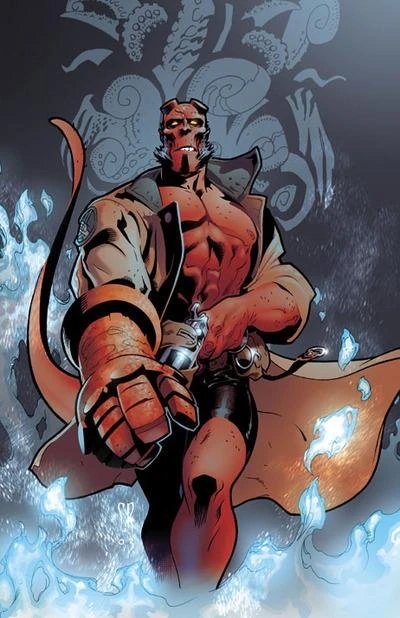
The Hellboy reading order in four books
| # | Omnibus | Collects |
|---|---|---|
| 1 | Hellboy Omnibus Vol. 1: Seed of Destruction | Seed of Destruction, Wake the Devil, plus “Wolves of St. August,” “The Chained Coffin” and “Almost Colossus” |
| 2 | Hellboy Omnibus Vol. 2: Strange Places | Conqueror Worm, Strange Places, Into the Silent Sea, plus “The Right Hand of Doom,” “Box Full of Evil” and “Being Human” |
| 3 | Hellboy Omnibus Vol. 3: The Wild Hunt | Darkness Calls, The Wild Hunt, The Storm and the Fury, plus “The Mole” |
| 4 | Hellboy Omnibus Vol. 4: Hellboy in Hell | Hellboy in Hell: The Descent and The Death Card |
Read them 1, 2, 3, 4. That is the whole answer for most people, and if you stop reading this article here you will have a good time.
The trap: chronological order
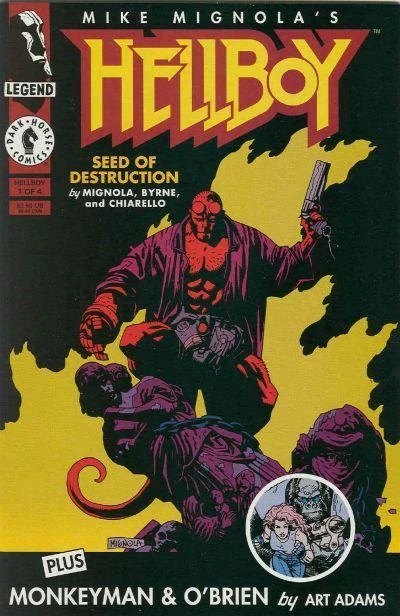
The omnibus editions were assembled in story-chronological order rather than publication order, which sounds tidier and creates the single biggest mistake new Hellboy readers make.
Mignola wrote Hellboy in a very particular way: a long spine of major storylines, punctuated by dozens of short stories set decades earlier — Hellboy in Mexico in 1956, Hellboy in a Norwegian church in 1961, Hellboy meeting a talking corpse in rural England. Those shorts are among the best comics he ever made. They are also, structurally, digressions written to be read as digressions, after you already know who this character is.
Sorting them into their in-story years and reading everything in date order front-loads a newcomer with a stack of moody folkloric shorts before they have any reason to care about the guy in them. The omnibus editions handle this sensibly — they keep the spine intact and slot the shorts in around it — but if you find a fan-made “complete chronological” list online and follow it literally, you will spend your first two hundred pages confused about why nothing is happening. On a first read, follow the spine.
What actually happens across the four books
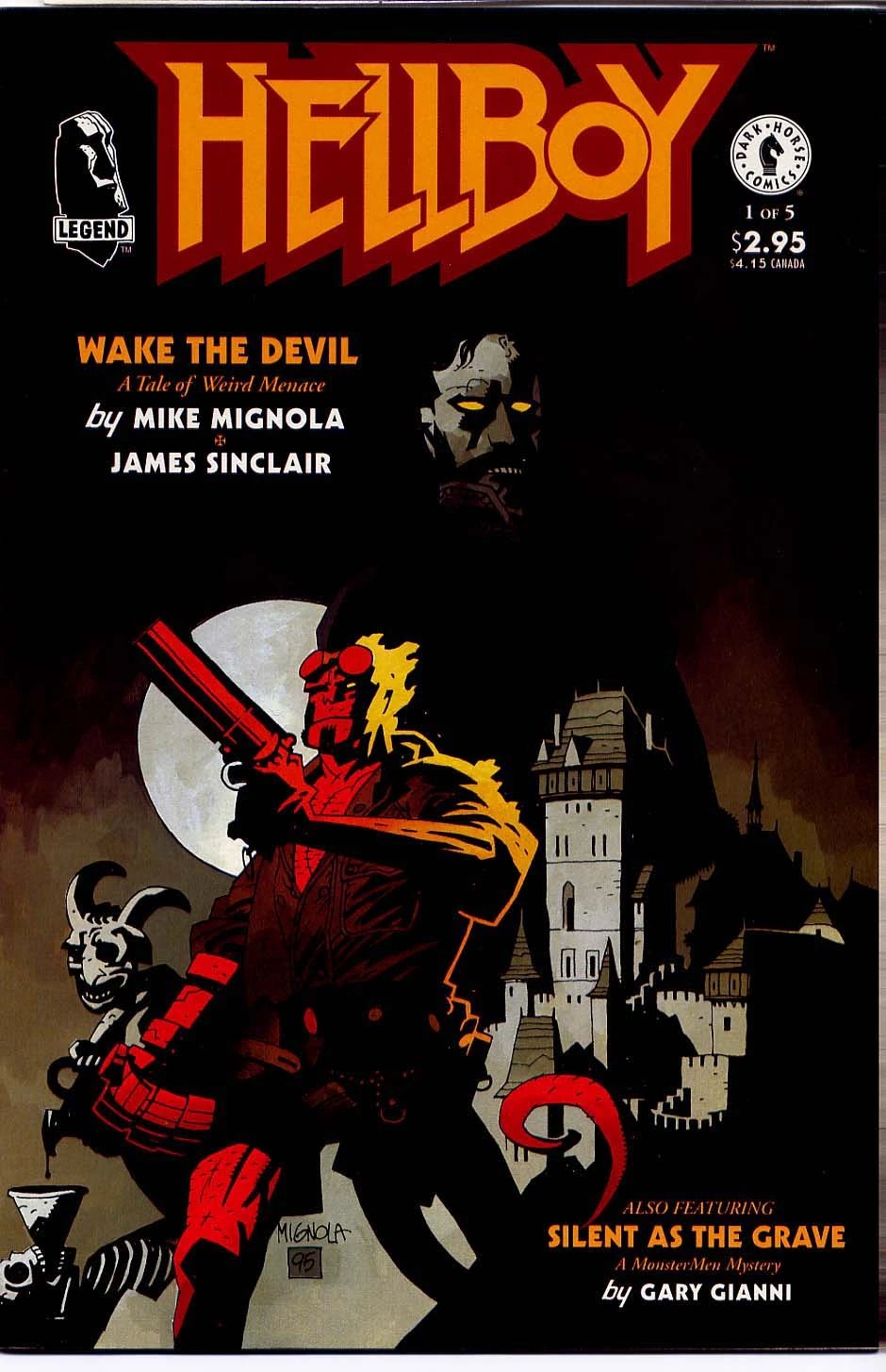
Without spoiling the endings, the shape is worth knowing because it explains why the reading order matters so much.
Volume 1 is Hellboy as a working paranormal investigator for the Bureau for Paranormal Research and Defense — Nazi occultists, Rasputin, a frog monster or two. It reads like a monster-of-the-month book with an unusually good artist.
Volume 2 is where the trick becomes visible. The stories start circling one question — what Hellboy is for, and what the right hand of stone bolted to his arm is meant to do — and the answer is not one he wants.
Volume 3 is the payoff, and it is a genuine structural swing: the book stops being about a detective and becomes about a reluctant king. This is also where Hellboy leaves the B.P.R.D. behind, which is why the spinoff series exists at all.
Volume 4, Hellboy in Hell, is Mignola drawing again after years of writing-only, and it is the reason the whole thing works. Most long-running comics do not get endings. This one does, written and drawn by its creator, and it is quiet, strange and complete.
After the four books: what to read next, in priority order
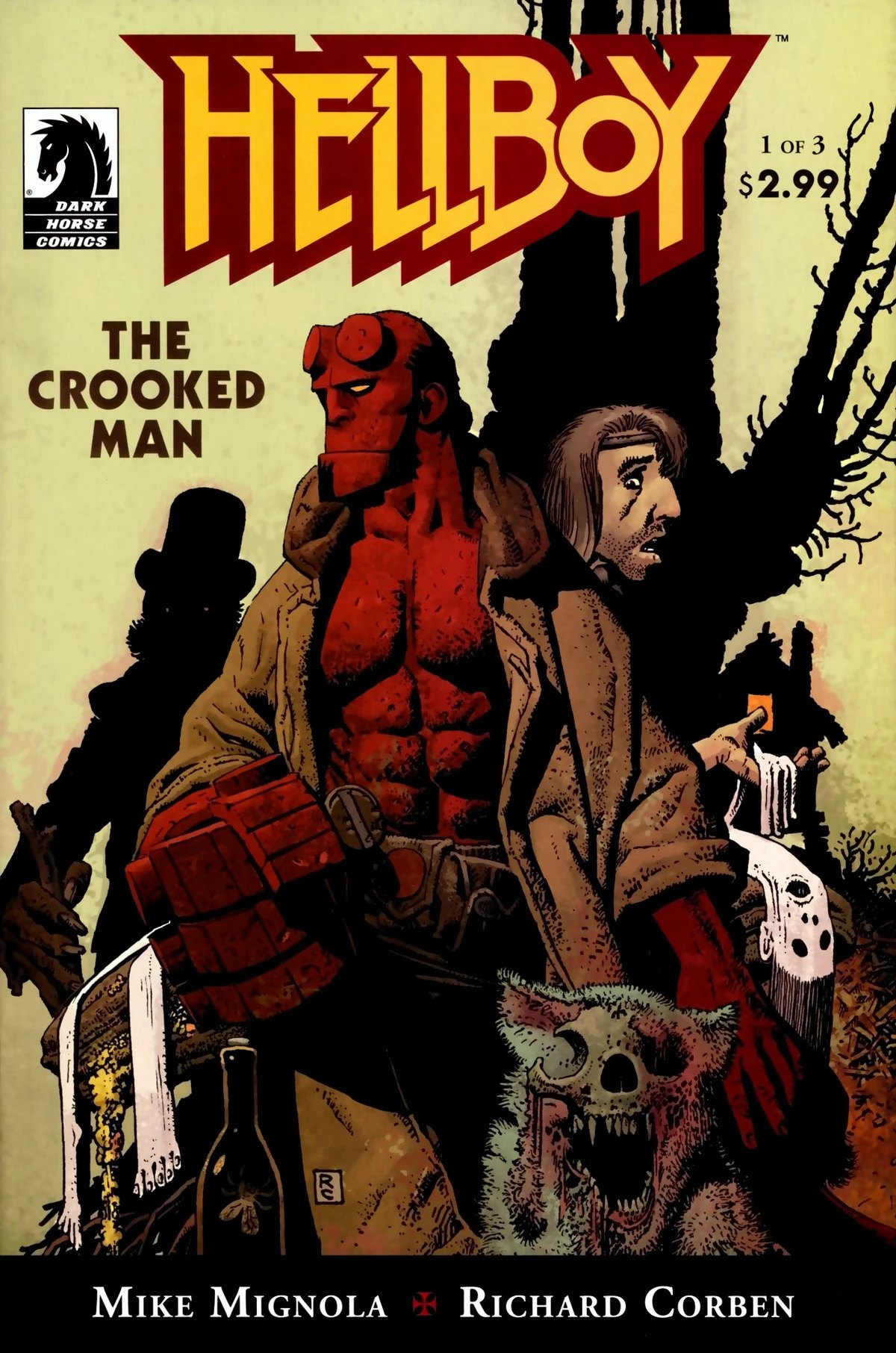
The Hellboy universe is large — well over a hundred collected volumes across all its lines. This is the order we would tackle it in.
1. B.P.R.D.: Plague of Frogs
The essential spinoff. When Hellboy walks away from the Bureau, B.P.R.D. follows the people he left behind, and it quickly becomes the more ambitious book of the two — a slow-motion apocalypse told across a decade. The Plague of Frogs collections are the first four arcs and the correct entry point. Written by Mignola with John Arcudi and drawn largely by Guy Davis.
2. B.P.R.D.: Hell on Earth
The direct continuation, running parallel to Hellboy Omnibus volumes 3 and 4. If you want the full picture of what is happening to the world while Hellboy is elsewhere, this is it.
3. Witchfinder and Lobster Johnson
Period spinoffs — Victorian occult investigation and 1930s pulp vigilantism respectively. Both are self-contained, both are good, and neither is required. Start with Witchfinder: In the Service of Angels.
4. Abe Sapien
Reads best after Plague of Frogs, because its whole premise depends on where that story leaves its title character.
One honest caveat that most reading-order guides skip: not everything has been collected into omnibus format. Several standalone short stories set in Hellboy’s past exist only in the older trade paperbacks or in the oversized Hellboy Library Edition hardcovers. If you are a completist, the library editions are the more thorough format; if you just want the story, the omnibuses are cheaper and sufficient.
A note on the movies
Guillermo del Toro’s Hellboy (2004) and Hellboy II: The Golden Army (2008) are loved, and they are not adaptations of these books. They take the character, the Bureau and the general vibe and build original stories around them. Reading the comics will not spoil the films and watching the films will not prepare you for the comics. They are separate pleasures.
If you are buying these
The omnibuses are large-format softcovers and hold up to rereading, but they are not collector items and should not be treated as an investment. If you are getting into comics as a hobby more broadly, our comic collecting guide covers what actually holds value, and our grading explainer covers CGC and CBCS. Hellboy’s rogues gallery also earns a mention in our list of the greatest comic book villains.
Frequently Asked Questions
What is the best Hellboy reading order?
Read the four Hellboy Omnibus volumes in numerical order: Vol. 1 Seed of Destruction, Vol. 2 Strange Places, Vol. 3 The Wild Hunt, and Vol. 4 Hellboy in Hell. That covers the complete core Hellboy story written by Mike Mignola.
Where should I start with Hellboy?
Hellboy Omnibus Vol. 1: Seed of Destruction. It collects the first two major storylines plus three short stories and is the intended entry point. If you would rather sample first, the original Seed of Destruction trade paperback is the four-issue miniseries that started everything in 1994.
Do I need to read B.P.R.D. as well?
No, but it is the best of the spinoffs. B.P.R.D. follows the Bureau after Hellboy leaves it, and the Plague of Frogs collections are the entry point. Read it after Hellboy Omnibus Vol. 2 or Vol. 3, once Hellboy has separated from the team.
Should I read Hellboy in chronological order?
Not on a first read. Mignola wrote dozens of short stories set decades before the main storyline, and reading everything sorted by in-story date front-loads those digressions before you know the character. The omnibus editions already balance this sensibly, so just follow them.
Are the Hellboy movies based on the comics?
Loosely. Guillermo del Toro’s Hellboy (2004) and Hellboy II: The Golden Army (2008) use the character and the Bureau but tell original stories rather than adapting specific arcs. Reading the comics does not spoil the films or vice versa.
Sources: omnibus contents per Comic Book Treasury’s omnibus breakdown and Dark Horse’s published collection listings; series and creator credits via Dark Horse Comics.