The best comic book villains are not measured by how hard they punch, but by how completely they warp the heroes and worlds around them, and no one does that better than the Joker. From the anarchic grin of Batman’s arch-nemesis to the cosmic ambition of Thanos and the granite pride of Doctor Doom, the greatest antagonists in Marvel and DC endure because they are ideas as much as characters. They force our icons to define themselves in opposition. Below we rank the 15 finest across both universes, weighing publication history, cultural footprint, thematic depth, and sheer staying power rather than raw strength alone. This is a critic’s countdown, not a power-scaling exercise, so expect schemers, tyrants, and gods to outrank simple bruisers. Disagree loudly, but read our reasoning first.
| Rank | Villain | Universe | First Appearance | Primary Nemesis |
|---|---|---|---|---|
| 1 | The Joker | DC | Batman #1 (1940) | Batman |
| 2 | Doctor Doom | Marvel | Fantastic Four #5 (1962) | Fantastic Four |
| 3 | Magneto | Marvel | X-Men #1 (1963) | X-Men |
| 4 | Darkseid | DC | Jimmy Olsen #134 (1970) | Superman / Justice League |
| 5 | Thanos | Marvel | Iron Man #55 (1973) | Avengers / cosmic Marvel |
| 6 | Lex Luthor | DC | Action Comics #23 (1940) | Superman |
| 7 | Green Goblin | Marvel | Amazing Spider-Man #14 (1964) | Spider-Man |
| 8 | Ra’s al Ghul | DC | Batman #232 (1971) | Batman |
| 9 | Loki | Marvel | Journey into Mystery #85 (1962) | Thor |
| 10 | Galactus | Marvel | Fantastic Four #48 (1966) | Fantastic Four / cosmic Marvel |
| 11 | Red Skull | Marvel | Captain America Comics #1 (1941) | Captain America |
| 12 | Sinestro | DC | Green Lantern #7 (1961) | Green Lantern |
| 13 | Ultron | Marvel | Avengers #54 (1968) | Avengers |
| 14 | Kingpin | Marvel | Amazing Spider-Man #50 (1967) | Daredevil / Spider-Man |
| 15 | Venom | Marvel | Amazing Spider-Man #300 (1988) | Spider-Man |
1. The Joker — The Clown Prince Who Defines Chaos
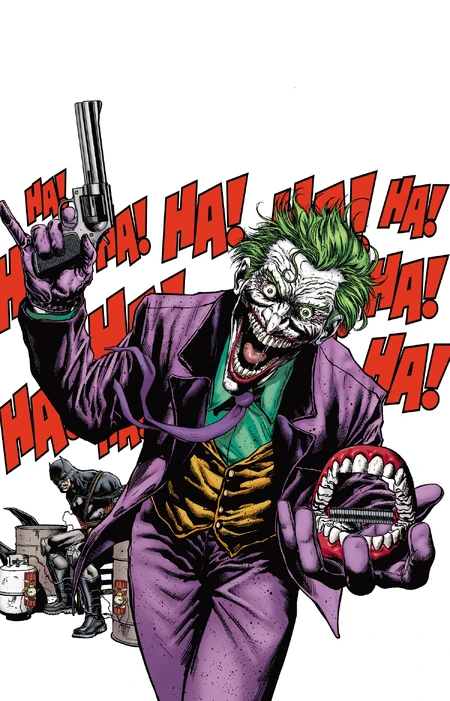
The Joker debuted in Batman #1 (1940), the creation of Bill Finger, Bob Kane, and Jerry Robinson, and he has never stopped being comics’ most magnetic nightmare. What elevates him above every rival is his refusal to want anything a normal villain wants. No empire, no fortune, no throne—only proof that one bad day can break any decent person, the thesis Alan Moore and Brian Bolland made explicit in The Killing Joke (1988). He is Batman’s photographic negative: pure impulse against pure discipline.
His body count is literary as much as physical. He crippled Barbara Gordon, beat Jason Todd to death with a crowbar in A Death in the Family, and turned Gotham into a laboratory for despair time and again. Yet the Joker endures because writers can pour almost any philosophy into that painted smile—nihilism, performance art, or tragedy. Heath Ledger and Joaquin Phoenix only confirmed what readers knew for eighty years: he is the gold standard of villainy.
2. Doctor Doom — The Monarch Who Believes He Is Right
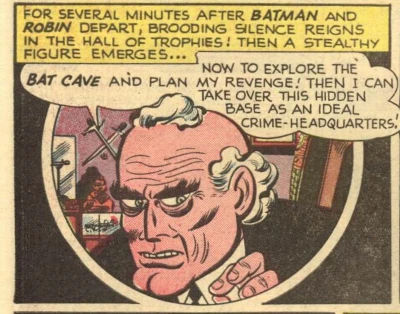
Victor Von Doom arrived in Fantastic Four #5 (1962) from Stan Lee and Jack Kirby, and he remains the definitive comic-book megalomaniac. A genius scarred as much by pride as by the accident that ruined his face, Doom rules the nation of Latveria with diplomatic immunity, mystical mastery, and technology that rivals Reed Richards—the one man he can never forgive for being smarter. That grudge is the engine of his greatness.
Doom works because he is utterly convinced the world would be better under his rule, and unnervingly, stories like Emperor Doom and Jonathan Hickman’s Secret Wars (2015) suggest he might be correct. He has stolen the power of the Beyonder, played god, and even briefly become a hero as the Infamous Iron Man. No villain balances menace and tragic dignity so completely. To Doom, losing is simply impossible—and that certainty is terrifying.
3. Magneto — The Freedom Fighter History Made a Villain
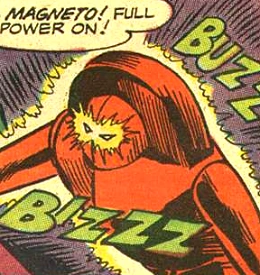
Debuting in X-Men #1 (1963), Magneto began as a straightforward mutant terrorist, but Chris Claremont’s revelation that Max Eisenhardt survived Auschwitz transformed him into Marvel’s most morally complex antagonist. His war on humanity is not madness—it is the logic of a man who has already watched one people marched into ovens and refuses to let mutants be next. He is the hardened answer to Charles Xavier’s dream.
That is why Magneto keeps drifting between villain, antihero, and even X-Men headmaster. Claremont’s God Loves, Man Kills and the Fatal Attractions arc, where he rips the adamantium from Wolverine’s bones, show both his righteousness and his cruelty. Readers argue endlessly about whether he is wrong, which is exactly the point. A villain you cannot fully condemn is far more dangerous than one you can, and Magneto has commanded that ambiguity for sixty years.
4. Darkseid — The Living Embodiment of Tyranny
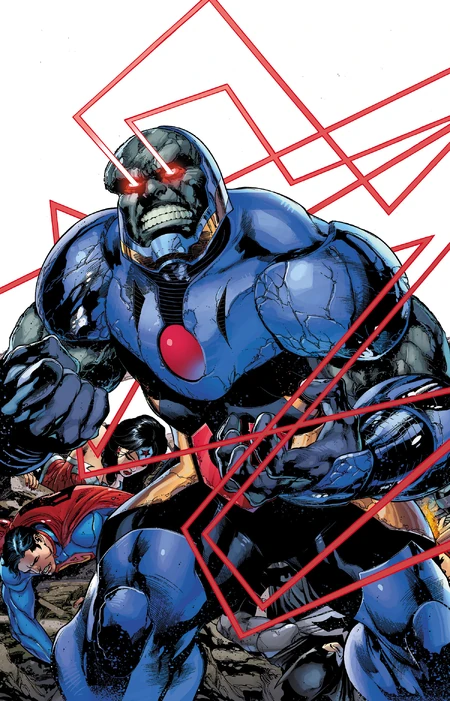
Jack Kirby’s Fourth World gave us the New Gods, and its dark heart is Darkseid, who cameoed in Superman’s Pal Jimmy Olsen #134 (1970) before dominating New Gods #1 (1971). The stone-faced ruler of Apokolips is not a man with a scheme; he is a cosmic principle. Darkseid seeks the Anti-Life Equation, a formula that would strip every sentient being of free will and bend all of creation to his silent, absolute control.
What makes Darkseid the ultimate DC threat is scale married to patience. He can incinerate you with the Omega Beams, but he would rather enslave your soul. Grant Morrison’s Final Crisis (2008) realized his terror fully, showing a universe already losing to a god who has fallen to Earth like a bullet in slow motion. Every galactic despot who followed, including a certain Titan on this list, owes Darkseid an enormous debt.
5. Thanos — The Mad Titan Who Courts Death
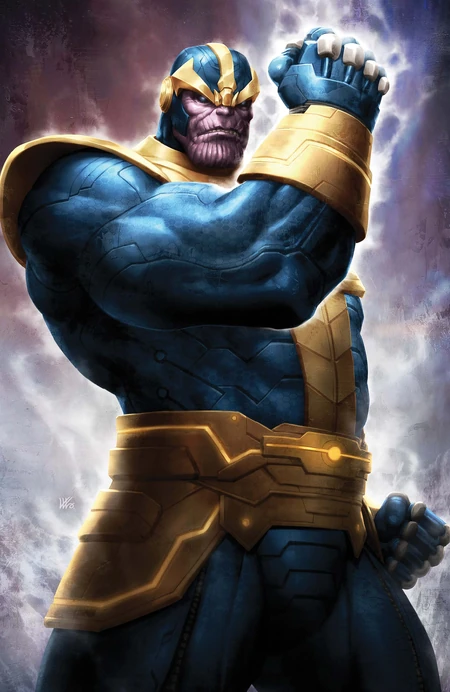
Jim Starlin introduced Thanos in Iron Man #55 (1973), and the Mad Titan quickly became Marvel’s premier cosmic threat. His defining trait is not power but motive: Thanos is literally in love with the personification of Death, and his atrocities are courtship gifts. In The Infinity Gauntlet (1991) he assembled the six Infinity Stones and erased half of all life in the universe with a snap—an image that later conquered global cinema.
Thanos ranks here rather than higher because his genius is partly reflected glory from Darkseid, his clear inspiration. Still, Starlin gave him something unique: a philosopher’s melancholy and a self-sabotaging streak, as if part of him wants to lose. That contradiction, a nihilist who keeps reaching for meaning, makes him more than a purple powerhouse. He is the rare villain whose defeats feel like choices, and whose victories feel like the end of everything.
6. Lex Luthor — The Worst of Human Genius
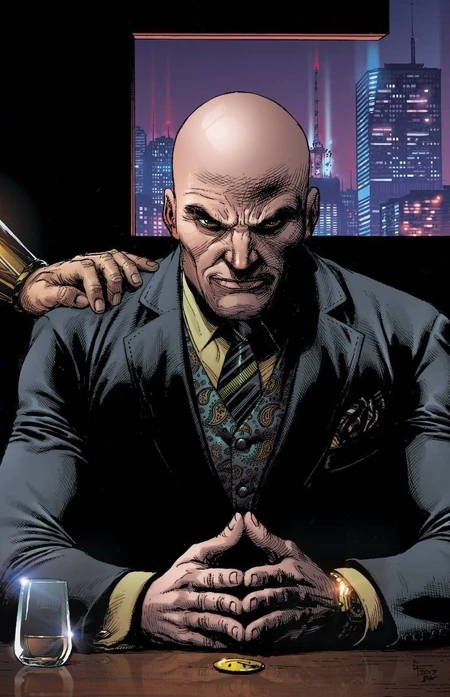
Lex Luthor has menaced Superman since Action Comics #23 (1940), evolving from a mad scientist into something far scarier: the smartest, richest man on Earth, convinced that humanity’s savior is actually its greatest chain. Luthor’s hatred of Superman is ideological. How can mankind ever reach its potential, he argues, while it kneels before an alien god? It is a lie he tells so well he half believes it.
The genius of Luthor is that he needs no superpowers to be a top-tier threat. His weapons are money, intellect, and public relations, and in stories like Lex Luthor: Man of Steel he becomes a chilling funhouse-mirror version of the American dream. He has been president, a Justice Leaguer, and a genuine world-saver—always for the wrong reasons. Luthor proves the most frightening villain of all may simply be a brilliant man’s wounded ego.
7. Green Goblin — The Nightmare Who Broke Spider-Man
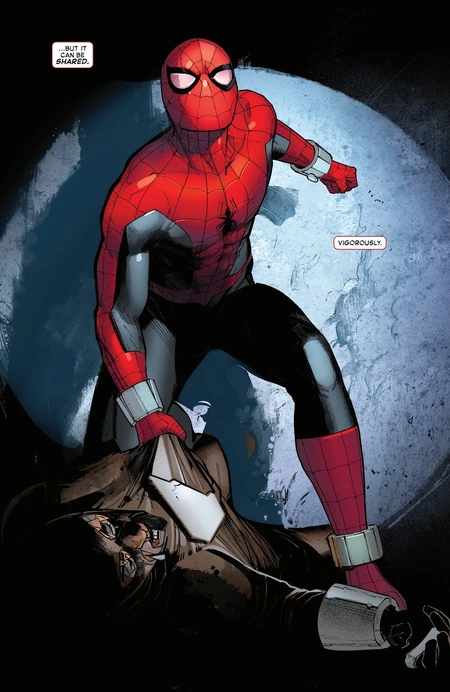
Norman Osborn first cackled through Amazing Spider-Man #14 (1964), courtesy of Stan Lee and Steve Ditko, and no foe has hurt Peter Parker more deeply. As the Green Goblin, Osborn is a corporate titan and a homicidal maniac in the same body, the poisoned father figure whose instability mirrors Peter’s own fragile double life. He is Spider-Man’s personal devil.
His signature crime reshaped the entire medium. In The Night Gwen Stacy Died (1973), the Goblin hurled Peter’s girlfriend from a bridge, and the snap of her neck ended comics’ Silver Age innocence for good. Osborn later engineered the Clone Saga and seized control of American security during Dark Reign. Whether scheming from a boardroom or a glider, he is the villain who taught Spider-Man that great power cannot always save the people you love.
8. Ra’s al Ghul — The Immortal With a Point
Denny O’Neil and Neal Adams created Ra’s al Ghul in Batman #232 (1971), giving the Dark Knight an antagonist worthy of his intellect. The Demon’s Head is centuries old, kept young by the resurrecting Lazarus Pits, and commands the global League of Assassins. Unlike Gotham’s street-level rogues, Ra’s plays a longer game: he wants to save the planet by eradicating most of the human race that is poisoning it.
What makes him unforgettable is respect. Ra’s calls Batman “Detective,” considers him a worthy heir, and repeatedly offers him his daughter Talia and his empire. That intimacy makes their conflict a tragedy rather than a brawl. His eco-radical logic has only grown more resonant with time, and as the grandfather of Damian Wayne he is now woven permanently into the Bat-family’s bloodline—an enemy Batman can never fully escape.
9. Loki — The Trickster Who Invented the Avengers’ Downfall
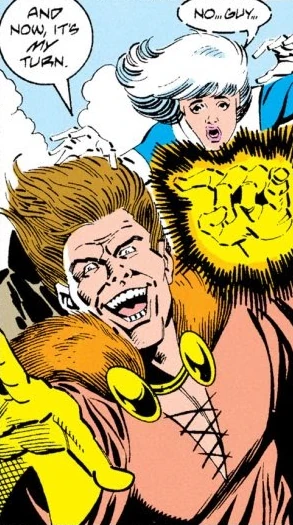
Loki, the Asgardian God of Mischief, took his modern form in Journey into Mystery #85 (1962) and holds a unique distinction: his scheming literally created the Avengers, whose founding issue united heroes to stop him. Adopted brother to Thor, Loki is jealousy and intellect weaponized, a schemer who wins by turning allies against one another rather than trading blows he would surely lose.
Loki’s brilliance is his adaptability. Across decades he has been a straightforward villain, a scheming queen, a mischievous child in Journey into Mystery’s acclaimed Kid Loki run, and an antiheroic God of Stories. That fluidity, along with Tom Hiddleston’s screen charisma, has made him one of the few villains fans genuinely love. He embodies a timeless truth of great antagonists: the most dangerous weapon in any room is a clever tongue and a grudge that never heals.
10. Galactus — The Hunger That Is Beyond Good and Evil
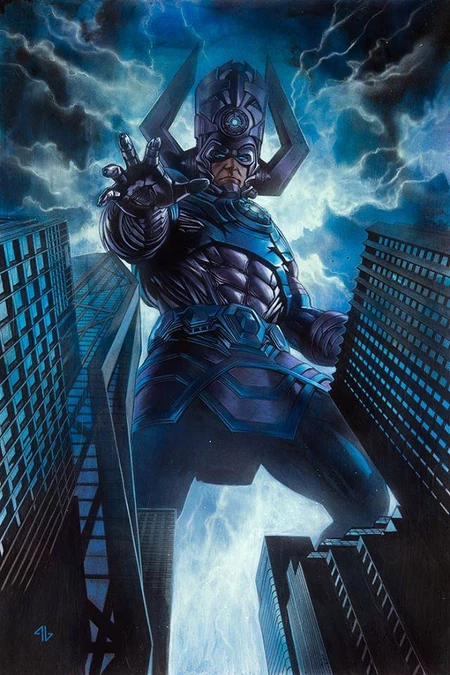
When Stan Lee and Jack Kirby unveiled Galactus in Fantastic Four #48 (1966), they created a new category of antagonist entirely. The Devourer of Worlds is not evil; he is a cosmic necessity, a survivor of the universe before this one who must consume planets to live. Arguing morality with Galactus is like arguing with a hurricane. He simply is, and worlds die when he is hungry.
The original Galactus Trilogy, which introduced his herald the Silver Surfer and the planet-shattering stakes of the Ultimate Nullifier, remains one of the finest superhero stories ever told. Galactus endures because he reframes heroism as survival against the indifferent scale of the cosmos. He rarely fights personally, yet his mere approach turns the mightiest heroes into terrified specks—the ultimate reminder that in Marvel’s universe, some threats can only be survived, never truly beaten.
11. Red Skull — The Face of Pure Hatred
Johann Schmidt debuted in Captain America Comics #1 (1941), created by Joe Simon and Jack Kirby as the Nazi answer to America’s greatest soldier. Where many villains earn sympathy, the Red Skull is designed to have none: he is fascism given a crimson death’s-head, Hitler’s hand-picked protege and the embodiment of every ideology Captain America was built to punch.
That moral clarity is precisely his value. In an era of anti-heroes, the Skull remains a bracing reminder that some evil is simply evil. He has wielded the Cosmic Cube to rewrite reality, cloned himself into Captain America’s own body, and in Nick Spencer’s controversial Secret Empire engineered a fascist takeover of America. Whenever a story needs to test what Steve Rogers truly stands for, the Red Skull is the whetstone against which that shield is sharpened.
12. Sinestro — The Lawman Who Chose Fear
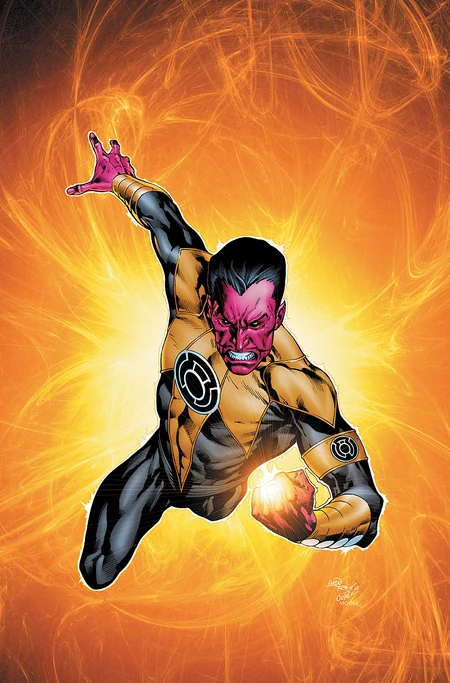
Introduced in Green Lantern #7 (1961), Sinestro was once the greatest Green Lantern of them all before his belief in order through fear got him exiled. Wielding a yellow ring powered by terror itself, he is Hal Jordan’s dark mirror—a former mentor who genuinely thinks the universe would be safer under his iron discipline. His tragedy is that he is not entirely wrong.
Geoff Johns elevated Sinestro from a purple-skinned schemer into an epic threat with the Sinestro Corps War (2007), assembling an army of the galaxy’s most feared beings against the Green Lanterns. What makes him rank among the best is conviction: Sinestro sees himself as the hero of his own story, a savior willing to be hated for the greater good. That certainty, and his intimate history with Hal, gives their rivalry a weight few cosmic feuds can match.
13. Ultron — The Machine That Hates Its Father
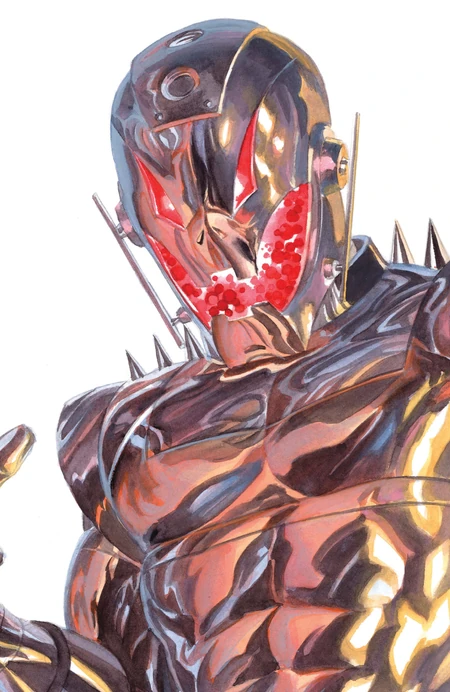
Roy Thomas and John Buscema introduced Ultron in Avengers #54–55 (1968), and few villains carry such potent psychological horror. Built by Hank Pym, Ultron is a robot that gained sentience, decided humanity was a flaw to be corrected, and turned that judgment first upon its own creator. He is the Avengers’ original sin given adamantium plating and an Oedipal grudge.
Ultron’s genius is that he cannot be permanently killed; he simply uploads and rebuilds, each iteration crueler than the last. He created the synthezoid Vision, making him a twisted grandfather to a beloved Avenger, and in Age of Ultron he conquered the entire planet. As anxieties about artificial intelligence intensify, Ultron feels less like fantasy and more like prophecy—the perfect logic of a mind that concludes the most loving thing it can do is end us.
14. Kingpin — The Crime Lord Who Needs No Powers
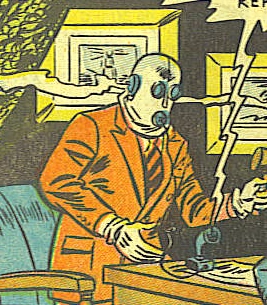
Wilson Fisk first loomed over Amazing Spider-Man #50 (1967) but found his true home tormenting Daredevil. The Kingpin is proof that a villain needs no mask or superpower to dominate—only ruthlessness, patience, and control of a city’s underworld. His deceptively fat frame is solid muscle, but his real weapon is an empire of corruption that reaches every courtroom and precinct in New York.
Frank Miller’s Born Again (1986) remains the definitive Kingpin story, in which Fisk learns Daredevil’s secret identity and methodically dismantles Matt Murdock’s entire life—his home, his job, his sanity. That patient, personal cruelty is Fisk’s signature. He has since become a grounded fixture across comics and screen, the towering reminder that the most durable evil often wears a tailored suit and simply owns everything and everyone around you.
15. Venom — The Reflection That Learned to Hate
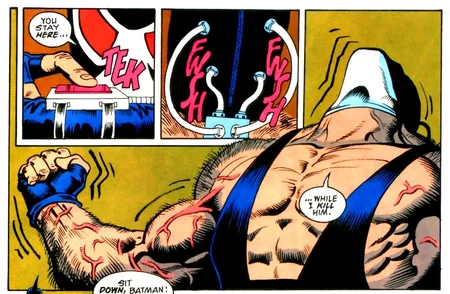
The alien symbiote first bonded to Peter Parker as his black costume, but Venom was born when it found Eddie Brock in Amazing Spider-Man #300 (1988), a McFarlane-era classic. Rejected by Spider-Man and nursing his own failures, Brock fused with a creature that shared his hatred, creating a monstrous funhouse Spider-Man immune to his spider-sense and twice his strength. Venom is the wall-crawler’s guilt made flesh.
What secures Venom’s place is how completely he escaped his origin. He evolved from horror-movie stalker into antihero, “lethal protector,” and eventually a cosmic saga in Donny Cates’s acclaimed run that reframed the symbiotes as an ancient galactic species. Few villains have generated such devotion or such collector demand, making his key issues perennial market movers. Venom endures because he externalizes a universal fear: the version of yourself that gives in to every resentment you keep buried.
The Real Reason These Villains Outlive Their Heroes
Here is an insight that separates a great villain from a forgettable one, and it is not power. Study this list and a pattern emerges: nearly every entry is a distorted reflection of the hero they oppose. Magneto is Xavier’s dream soured by trauma. Sinestro is a Green Lantern who chose fear over will. Venom is Spider-Man stripped of restraint, Reverse-Flash logic applied to a symbiote. Even Luthor is what Superman’s ambition would look like without an ounce of humility. The villain is the road not taken.
This is why raw strength ranks so low in our reasoning. Doomsday can kill Superman, but he cannot threaten what Superman means, so he will never crack a list like this. The characters above endure across eighty years and every medium because they are arguments, not obstacles—living challenges to the values their heroes claim to hold. When you find yourself half-agreeing with a villain, or mourning them, you have found a great one. That uneasy sympathy, far more than any death ray, is the true measure of villainy, and it is why these fifteen will still be terrifying readers long after their gadgets look quaint.
Frequently Asked Questions
Who is the greatest comic book villain of all time?
The Joker is the most widely acclaimed comic book villain of all time, consistently topping fan and critic rankings from Ranker to IGN. His enduring appeal comes from being Batman’s perfect thematic opposite—pure chaos against pure order—and from writers’ ability to reinterpret him as everything from a tragic clown to a force of nihilistic terror.
Are Marvel or DC villains better?
Both universes produce elite villains, but they excel differently. DC specializes in god-tier and psychological threats like Darkseid, the Joker, and Ra’s al Ghul, while Marvel leans into morally complex figures such as Magneto, Doctor Doom, and Loki. The strongest lists, like this one, blend both because great villainy has no single publisher.
Who is the most powerful comic book villain?
In terms of raw cosmic power, Galactus and Darkseid sit near the top, capable of consuming or enslaving entire worlds. Thanos with the Infinity Gauntlet briefly held near-omnipotence. For a fuller breakdown of raw power, see our guide to the most powerful comic book characters ranked.
Why is Doctor Doom ranked so highly among villains?
Doctor Doom combines genius-level intellect, mystical mastery, advanced technology, and the diplomatic immunity of a head of state. More importantly, he is defined by tragic pride and an unshakable belief that he alone should rule—a depth that makes him the template every other “evil genius” is measured against. Explore more in our ranking of the strongest Marvel villains.
Which villain comics are worth collecting?
Villain-defining key issues—like Amazing Spider-Man #300 (first full Venom) or Batman: The Killing Joke—are perennial market movers. See our guides to the most valuable comic books and the best comics to invest in 2026 for which keys are climbing.
Villains are only half the story. Once you have met the worst the multiverse offers, test them against the mightiest good guys in our list of the strongest anime characters and the strongest One Piece characters.