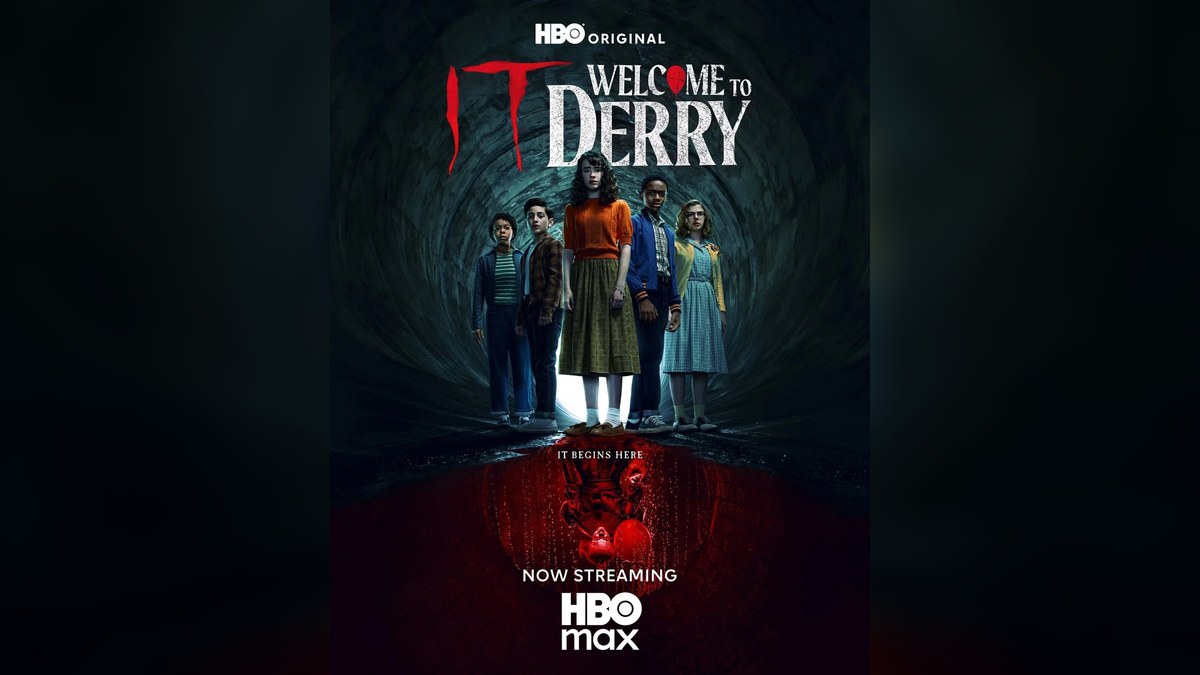
IT: Welcome to Derry season 2 was confirmed by HBO on August 17, 2026. The Stephen King prequel jumps back to 1935 for the massacre of the Bradley Gang, with Brad Caleb Kane taking over as sole showrunner and Andy and Barbara Muschietti staying on as executive producers.
What HBO actually confirmed
The renewal was announced on August 17, 2026, roughly eight months after the first season finished airing. Sarah Aubrey, head of original programming at HBO Max, framed it as an expansion rather than a continuation: “We are excited to return to the chilling world of Derry and to further expand on Andy and Barbara Muschietti’s horrifically iconic adaptation.”
Three concrete things came with it. Season 2 is set in 1935. Its centrepiece is the Bradley Gang massacre, described by HBO as the story of a group of Depression-era bank robbers who stop in Derry to buy ammunition and meet something considerably worse. And Brad Caleb Kane is now sole showrunner, having shared the job with Jason Fuchs on season 1. Reporting on the renewal is at TVLine and Deadline, with HBO citing season 1 as one of the top four series premieres globally in HBO Max history.
What HBO did not give: a premiere date, a production start, or a cast list. Nothing has been announced about which season 1 performers return, and given a 27-year jump backwards in time, the honest answer is that most of them structurally cannot. Treat any cast list you see circulating today as speculation.
What the Bradley Gang massacre is
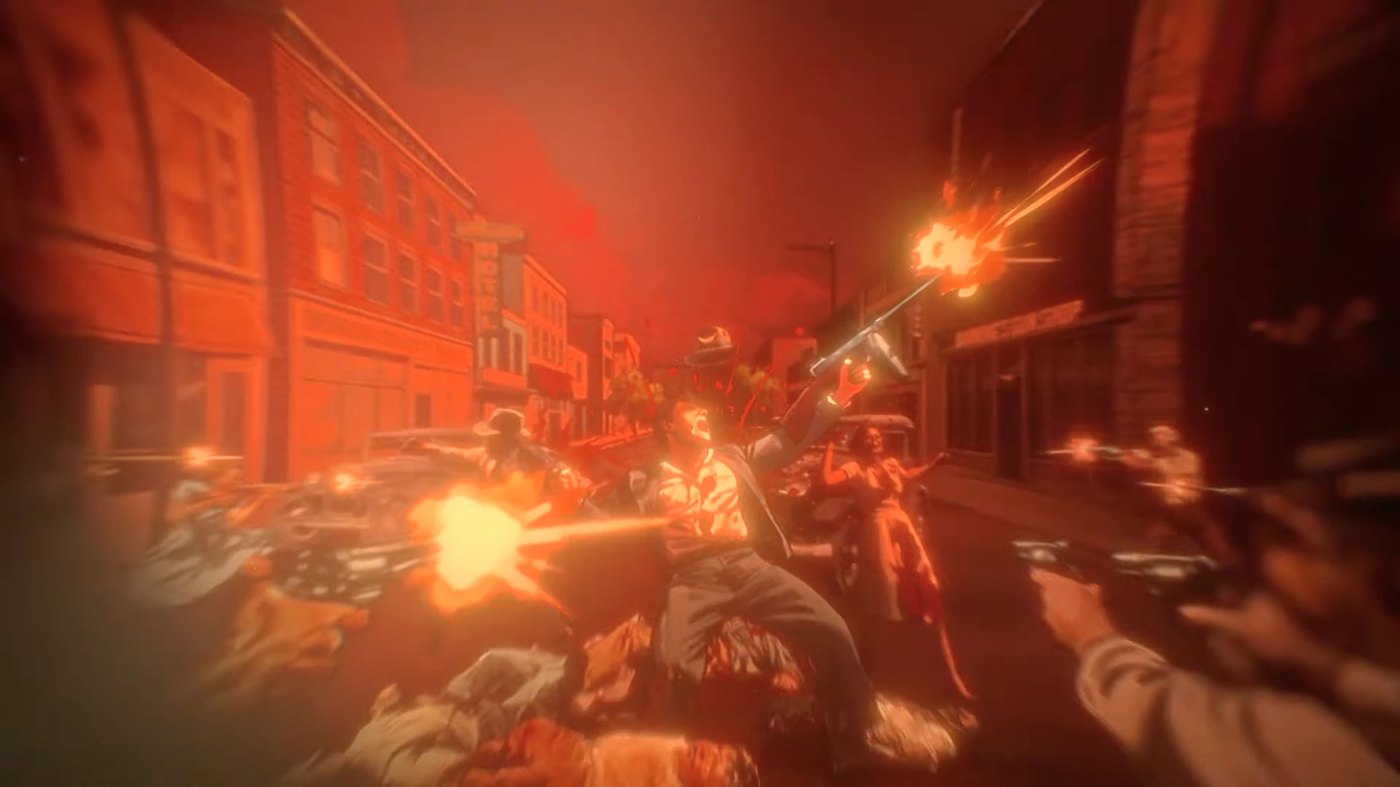
Novel spoilers in this section. In King’s It, Derry’s history is delivered through interludes written by Mike Hanlon, each documenting an atrocity the town has agreed not to remember. The Bradley Gang is the first of them. A crew of outlaws hiding from federal attention rolls into Derry, and the town’s own men — ordinary, respectable men — gun them down in broad daylight on a main street, then close ranks and never speak of it again.
The important thing for the show is what the massacre is for in the novel. Pennywise does not commit it. Derry does. The creature’s contribution is influence and appetite; the trigger-pulling is human, and the silence afterwards is the town’s. That is the mechanism the whole book runs on, and it is the hardest thing to dramatise, because it requires a season whose villains are largely the people you have been asked to sympathise with. Season 1 already tried this with the burning of the Black Spot. Season 2 has to do it again, in daylight, with guns.
The show has quietly moved King’s own dates
Here is the part almost nobody covering the renewal has mentioned, and it is the most revealing thing about how this series is being built.
Andy Muschietti has described the three-season plan as tracking Pennywise’s feeding cycles: 1962, then 1935, then 1908. Those years are exactly 27 apart, which is the interval the creature sleeps between awakenings. It is a clean, elegant grid. The novel is neither clean nor elegant, and the difference tells you something.
| Derry atrocity | Date in King’s novel | Date in the series | Season |
|---|---|---|---|
| Kitchener Ironworks explosion, during an Easter egg hunt | 15 April 1906 | 1908 | Season 3 (planned) |
| The Bradley Gang massacre | 1929 | 1935 | Season 2 (confirmed) |
| The burning of the Black Spot | 1930 | 1962 | Season 1 (aired) |
In the book, the Ironworks goes up in 1906, the Bradley Gang dies in 1929 and the Black Spot burns in 1930. King’s atrocities do broadly sit inside the creature’s awakenings — but the awakenings themselves are irregular, running roughly and not exactly 27 years apart, and, crucially, two of the three big interludes fall inside the same one. The Bradley Gang and the Black Spot are months apart, not decades. They belong to a single feeding.
That is a problem if you are building a television series where one awakening equals one season. You have three signature atrocities and only two cycles to put them in. The show’s solution was to prise them apart: keep the Bradley Gang roughly where it sits in the 1930s, and move the Black Spot forward a full cycle — thirty-two years, from 1930 to 1962 — so it gets a season to itself. Then nudge the Bradley Gang from 1929 to 1935 so the arithmetic between the two comes out at exactly 27.
The result is that Welcome to Derry has straightened King’s ragged chronology into a perfect grid, and split one of his awakenings across two seasons of television. Both changes cut both ways. Moving the Black Spot into the early 1960s is what gave season 1 its entire political register — a different America, a different military, a different kind of deniability than 1930 Maine offered. And moving the Bradley Gang to 1935 is arguably an improvement on the source: 1929 is the opening weeks of the Depression, while 1935 sits squarely in the public-enemy era of Dillinger and Barrow, when Depression-era bank robbers were a national fixation rather than a novelty. HBO’s own logline leans on precisely that framing.
The cost is fidelity, and readers should know it is being paid. Anyone coming to season 2 from the novel expecting the interlude they remember will find it relocated by six years, severed from the fire it originally shared a cycle with, and rebuilt to serve a television architecture King did not write.
What the showrunner change signals
Jason Fuchs developed the series and co-ran season 1 with Brad Caleb Kane; he is not returning in that capacity. Kane now runs it alone, with the Muschiettis still executive producing and Andy Muschietti having directed the season’s most demanding hour.
It would be irresponsible to read a falling-out into that, and nobody has reported one. The more likely reading is scheduling: single-showrunner structures are the norm once a series has found its shape, and the renewal was reportedly held back not by doubt about the ratings but by waiting on the creative pitch for the new era. A season that changes decade, cast and cultural backdrop wholesale is closer to a new pilot than a second year, and HBO waited to see it before ordering.
When will season 2 air?
Unknown, and worth being blunt about. Season 1 premiered in late October 2025 after a long production run, and a renewal granted in August 2026 with no announced production start makes a 2027 premiere the realistic expectation rather than anything sooner. We will update this piece when HBO gives a window rather than guessing at one now.
For context on how the first season landed, see our coverage of the Welcome to Derry premiere ratings, our breakdown of how the show connects Pennywise to the wider King universe, and the original release date, cast and plot guide.
Frequently Asked Questions
Has IT: Welcome to Derry been renewed for season 2?
Yes. HBO confirmed the renewal on August 17, 2026.
When is IT: Welcome to Derry season 2 set?
1935, during the Great Depression. It is the second of three planned eras, each set 27 years apart to match Pennywise’s feeding cycle: 1962 for season 1, 1935 for season 2 and 1908 for the planned third season.
What is the Bradley Gang massacre?
An event from Stephen King’s novel It, recorded in one of Mike Hanlon’s interludes, in which a gang of outlaws passing through Derry is gunned down in the street by the town’s own residents, who then never speak of it again. HBO’s logline describes them as Depression-era bank robbers who stop in Derry to buy ammunition.
Who is running IT: Welcome to Derry season 2?
Brad Caleb Kane is sole showrunner. He shared the role with Jason Fuchs on season 1. Andy and Barbara Muschietti remain executive producers.
Does IT: Welcome to Derry season 2 have a release date?
No. HBO announced the renewal without a premiere date, production start or cast. Given no production start has been confirmed, a 2027 premiere is the realistic expectation.