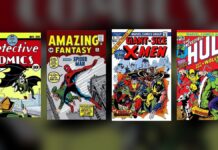
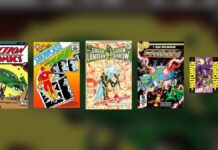
A variant cover is an alternate cover printed for the same comic issue. Publishers use them to drive retailer orders, most often through ratio incentives: a 1:25 variant means a shop receives one variant copy for every 25 standard copies it orders. Variants frequently sell for more than the standard cover — but not for the reason most collectors assume.
Walk into a comic shop on new-release day and a single issue may be sitting on the shelf under six different covers at six different prices. This guide explains what each type is, how the ratio system actually works, and why the number in “1:100” tells you far less about scarcity than it appears to.
The Main Types of Variant Cover
| Type | How you get it | Typical scarcity |
|---|---|---|
| Cover A / standard | Ordered freely by any shop | The baseline print run |
| Ratio / incentive variant | Shop must order a set number of standard copies | Set by the ratio and orders |
| Retailer exclusive | Commissioned and sold by one shop or chain | Usually a stated print run |
| Convention exclusive | Sold at a specific show | Limited, often numbered |
| Publisher / editorial variant | Ordered like a standard cover, no ratio attached | Roughly as common as Cover A |
| Sketch or blank variant | Ordered normally; blank for commissions | Common blank, unique once drawn on |
| Second printing | Reprint after the first sells out | Depends entirely on demand |
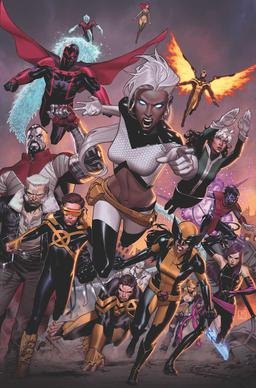
How Ratio Variants Actually Work
The ratio is a condition placed on the retailer, not a promise made to you. In a 1:25 offer, a shop that orders 25 copies of the standard cover qualifies for one copy of the variant. Order 100 and they qualify for four. Order 24 and they get none.
Two consequences follow immediately, and both are easy to miss:
- The publisher is buying orders, not creating scarcity. The point of the incentive is to push shops into ordering more of the standard cover than they otherwise would.
- The shop has already paid for the variant in the form of 25 standard copies it now has to sell. That is why ratio variants carry a large markup at the counter — the shop is recovering the cost of qualifying.
The Ratio Is Not a Print Run — and That Is Where Collectors Get Burned
Here is the mistake that costs people money. Collectors treat the ratio as a rarity ranking, as though 1:100 always means scarcer than 1:25. It does not. A ratio is a proportion of orders, so the number of copies that exist depends entirely on how many orders there were:
copies in existence ≈ total standard orders ÷ the ratio number
Run that formula across books of different sizes and the ranking falls apart:
| Scenario | Standard copies ordered | Ratio | Variant copies that exist |
|---|---|---|---|
| Major event #1 | 300,000 | 1:25 | ~12,000 |
| Major event #1 | 300,000 | 1:100 | ~3,000 |
| Mid-list ongoing | 20,000 | 1:25 | ~800 |
| Small indie launch | 4,000 | 1:25 | ~160 |
| Small indie launch | 4,000 | 1:100 | ~40 |
Read the middle of that table carefully. A 1:100 variant of a huge book (~3,000 copies) is roughly seventy-five times more common than a 1:100 of a small indie title (~40 copies). And a humble 1:25 on the mid-list book (~800) is scarcer than the 1:100 on the event book. The ratio, on its own, ranks nothing at all.
Which raises the obvious question: can you just look up the order numbers? Until recently, roughly. Diamond published monthly sales charts that let collectors estimate print runs, and the archive at Comichron still holds them. But Diamond stopped publishing those monthly charts after April 2022, and Comichron now describes the era of distributor sales data as — for the moment — over.
So for anything published in the last few years, the denominator in that formula is simply not public. The ratio is the only number you are handed, and it is the wrong one. In practice that means judging a modern variant on what you can observe instead: how many copies are actually listed for sale, what they have sold for recently, and whether the artist or character has durable demand.
From One Alternate Cover to 253 on a Single Issue
Variants barely existed for the first five decades of the comic book, because newsstand distribution had no way to handle them. They arrive with the direct market. The first comic marketed with a variant cover was The Man of Steel #1 in 1986, which shipped with two John Byrne covers — one for the newsstand and a special direct-market edition for comic shops.
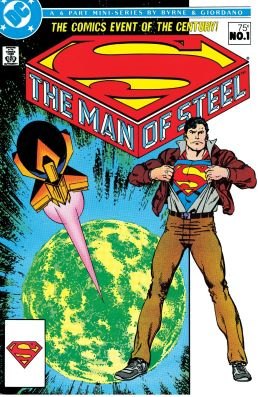
The 1990s speculator boom industrialised the idea. Publishers began producing embossed and foil “chase” covers at deliberate ratios — one incentive copy per 25 to 50 regular copies ordered — and convention exclusives arrived alongside them.
The era’s cautionary tale is X-Men #1 in 1991. It shipped with five variant covers and sold over 8.1 million copies, which remains a record. It is also, for exactly that reason, one of the most common comics on earth: collectors bought all five covers, kept them carefully, and produced a permanent glut. Five covers did not make it rare. They made it enormous.
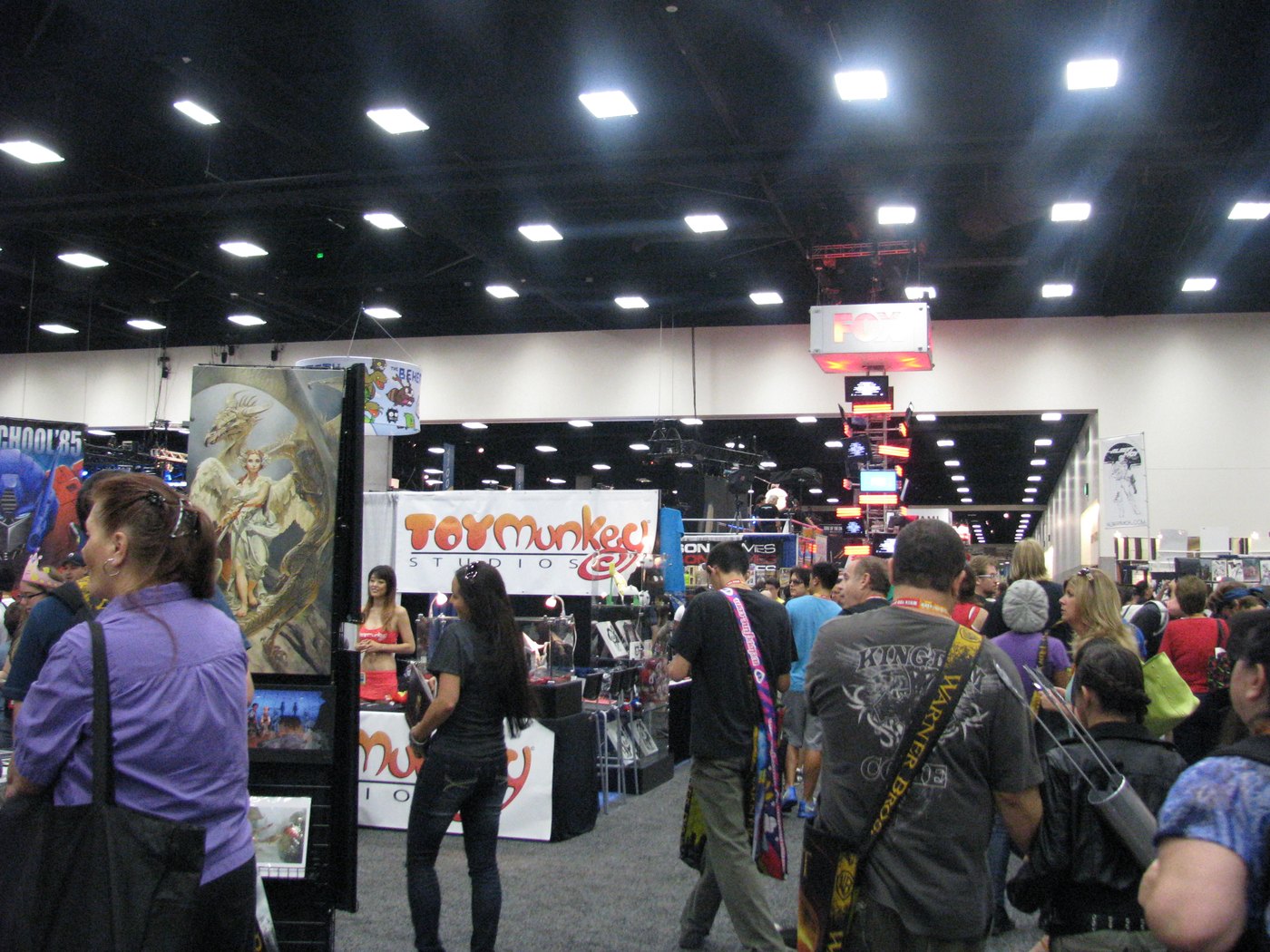
The practice has not gone uncriticised inside the industry. In 2014 Chuck Rozanski of Mile High Comics publicly objected to convention exclusives, arguing that attendees were buying them purely to flip on eBay and estimating his own losses at conventions in the tens of thousands. Mile High withdrew from San Diego Comic-Con in 2017.
When a Variant Is Worth Buying
Strip away the ratio and a few things genuinely do predict whether a variant holds value:
- The issue is a key on its own merits. A variant of a genuine key issue inherits that demand. A variant of a forgettable issue inherits nothing.
- The artist has a following. Cover artists with dedicated collector bases carry their own market independent of the story inside.
- Supply is observably thin. Count the active listings. If there are eighty copies for sale on a book that came out last month, it is not scarce whatever the ratio says.
- You would want it anyway. The variant most likely to disappoint you financially is the one you bought only because it was numbered.
And one clear warning sign: if a variant’s entire pitch is its ratio, you are being sold a number rather than a comic. That is precisely the case where the arithmetic above is most likely to be working against you.
Frequently Asked Questions
Are variant covers worth more than regular covers?
Often, but not automatically. A variant is worth more when the issue is already in demand and the variant is genuinely harder to find. A variant of an unremarkable issue usually settles near the price of the standard cover, and sometimes below it once the initial markup wears off.
What does 1:25 mean on a comic variant?
It means a retailer received one copy of that variant for every 25 copies of the standard cover they ordered. It describes a condition placed on shops, not a print run. The number of copies that exist depends on how many standard copies were ordered in total, which for recent comics is not public information.
Is a 1:100 variant always rarer than a 1:25?
No. Rarity depends on orders divided by the ratio. A 1:100 variant of a book with 300,000 orders yields roughly 3,000 copies, while a 1:25 variant of a book with 20,000 orders yields roughly 800. The smaller ratio number can easily be the scarcer book.
What was the first variant cover?
The Man of Steel #1 in 1986 is generally credited as the first comic marketed with a variant cover, with two John Byrne covers — one for newsstands and a special direct-market edition for comic shops. Variants were impractical before the direct market existed.
If you are working out what a variant in your collection is actually worth, condition matters as much as the cover: start with our guide to grading comic books, and see where to sell comics when you are ready to move them.