A key issue comic is any issue the collecting market treats as significant — most often a first appearance, a first issue, a major death, a costume change or a landmark story event. Key status is not printed anywhere on the book. It is a consensus held by price guides, graders and dealers, and it can be revised.
That last point is the one worth internalising before you spend money. Collectors talk about keys as though they were a property of the comic, like page count. They are not. They are a label applied from outside, by people with an interest in the market. This guide covers what counts as a key, how to check whether an issue really is one, and a case where two issues published a month apart sit in completely different price brackets purely because of how each one is labelled.
What Makes a Comic a Key Issue
Keys are usually sorted into a handful of categories. The examples below are the ones dealers reach for because everyone recognises them:
| Type of key | What it means | Classic example |
|---|---|---|
| First appearance | A character debuts anywhere in the issue | Detective Comics #27 — Batman |
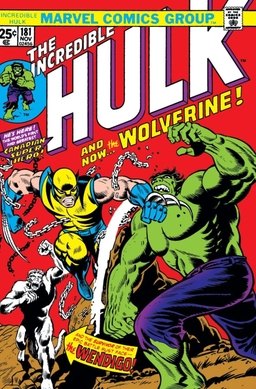
| First full appearance | The character appears properly, not in a single panel | The Incredible Hulk #181 — Wolverine |
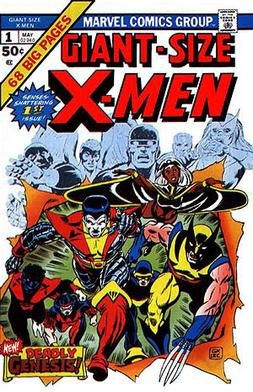
| First issue | The launch of a title or a major relaunch | Giant-Size X-Men #1 — the new team |
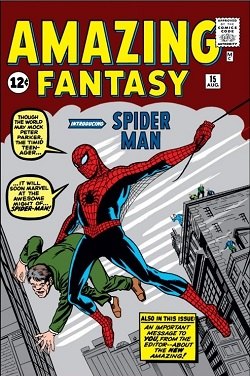
| Origin issue | The character’s backstory is told for the first time | Amazing Fantasy #15 — Spider-Man |
| Major event | A death, a resurrection or a status-quo change | Superman #75 — the death of Superman |
| Costume or element debut | A new suit, weapon or power first appears | Secret Wars #8 — the black Spider-Man suit |
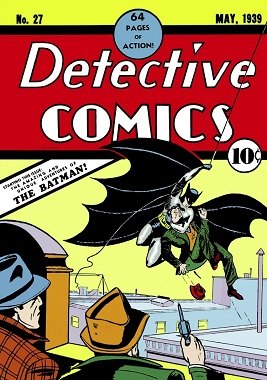
Notice what all of these have in common: they are facts about what happens inside the issue, not about the physical object. Two copies of the same key in wildly different condition are both keys. That is why grading and key status are separate questions that multiply together rather than substituting for each other.
Cameo, First Full, and the Distinction That Moves the Most Money
The single most confusing thing for new collectors is that a character can have more than one “first” appearance, and the market prices them very differently.
- Cameo appearance — the character shows up briefly, often in a final panel, sometimes only partly visible.
- First full appearance — the character appears properly in the story, usually in costume and doing something.
- Cover appearance — the character is on the front, which the market rewards separately again.
When those land in the same issue, there is no argument. When they land in different issues, collectors have to decide which one is the key, and there is no authority that can settle it for them.
The Wolverine Case: Two Firsts, Two Very Different Prices
Wolverine is the cleanest illustration of how much rests on a classification nobody can appeal. He turns up in the last panel of The Incredible Hulk #180 (Oct. 1974), then fights the Hulk and the Wendigo across the whole of #181 (Nov. 1974), which also puts him on the cover.
So which issue is the first appearance? It depends entirely on who you ask. CGC, the largest grading company, describes #181 as the first full appearance following a cameo in the previous issue, which treats #180 as the debut and #181 as the first proper one. Other references lead with #181 outright. Marvel has more recently pushed for #180 as the first appearance and for retiring the word “cameo” altogether.
Nothing about either comic has changed since 1974. Only the labelling is in motion — and the labelling is worth an enormous amount. A CGC 9.8 copy of #181 sold for $146,000 at ComicLink in October 2022, a sale CGC reported itself. Copies of #180 in the same grade have never traded in that bracket, despite being the earlier book.
That is the practical lesson, and it generalises well beyond Wolverine. A key designation is an opinion published by an organisation with a commercial interest in the hobby. Completed sale prices are what buyers actually did. When the two disagree — and here they have disagreed for decades — the sale prices are the better guide to what you can resell for.
Not All Keys Age the Same Way
Here is a distinction that almost no key list makes, and that matters a great deal if you are buying to hold. The categories of key differ in how durable they are, because they rest on different kinds of fact.
A first appearance is a publishing fact. Once an issue is the first place a character appeared, nothing in a future comic can undo it. The character can be killed, rebooted, retconned or handed to someone else, and the issue is still where they started.
A major-event key is a story fact, and story facts get reversed. Comics undo deaths, restore costumes and walk back status-quo changes as a matter of routine. When an event is undone, the issue that contained it does not stop existing, but the reason collectors cared about it weakens — it becomes a key to a thing that no longer stands.
So two books that look equally “key” on a list can carry very different risk. This is not a rule about which will be worth more; plenty of event keys hold value on nostalgia alone. It is a rule about which kind of claim you are betting on. A first appearance is a bet on a character staying popular. An event key is a bet on a story staying important, which is a bet on editorial decisions nobody has made yet.
Minor Keys, and Why Most “Keys” Are Not Worth Much
Every issue is the first appearance of something. Somewhere there is a first appearance of Calendar Man, and it is not going to fund a holiday. Whether a key is worth anything depends on demand for the thing it is first, not on the fact of being first.
Three filters do most of the work:
- Does anyone outside comics know the character? Screen adaptations move keys more than any other single factor.
- How many copies survive in high grade? A modern first appearance with a large print run can be a genuine key and still be cheap, because near-mint copies are everywhere.
- Is the demand durable or news-driven? Casting rumours spike prices for weeks. Sustained popularity holds them for decades.
That third filter is where most speculative money is lost, and it is a well-enough understood pattern that CGC publishes its own explainer on comic speculation. A character gets announced for a film, the first appearance triples, the film slips two years or is cancelled, and the price returns to roughly where it started — except now you paid the peak. Our guide to the comics actually worth buying works through which demand has held up over time.
How to Check Whether an Issue Is Actually a Key
A workable process, in order:
- Identify the issue precisely. Title, number, and cover date from the indicia. Reprints and later printings are easy to mistake for the original.
- Check two independent key references, not one. If they disagree about which issue is the key, that disagreement is itself information — expect a split market.
- Look at completed sale prices, not asking prices. What sellers list a book for and what buyers pay are different numbers, often by a lot.
- Compare like grades. A price for a CGC 9.6 tells you almost nothing about a raw copy with a spine roll.
- Check for variants and printings. A first appearance in a second printing is usually worth a fraction of the first.
If you are working through a collection you inherited rather than buying, start by dating the books, which narrows how likely a key is to be valuable before you research any individual issue.
Frequently Asked Questions
What does “key issue” mean in comics?
It means the collecting market considers that specific issue significant, usually because of a first appearance, a first issue, an origin story or a major event. There is no official body that designates keys. Price guides, grading companies and dealers converge on a rough consensus, and that consensus occasionally changes.
Is a cameo appearance a first appearance?
It depends who you ask, which is exactly the problem. A cameo is usually a brief single-panel appearance. Some references count it as the first appearance and label the next issue the first full appearance; others reverse the emphasis. Where a character has both, the market has historically paid much more for the first full appearance, though the gap varies by character.
Are all key issues valuable?
No. Every comic is the first appearance of something, and most of those somethings have no following. Value comes from demand for the character or event combined with scarcity in high grade. A modern key with a large print run can be genuinely significant and still sell for cover price.
How do I find out if my comic is a key issue?
Identify the exact title, issue number and cover date from the indicia, then check it against at least two key references and look up completed sale prices for copies in similar condition. Use sold prices rather than listings, and make sure you are comparing the same printing.
Keys are only half the pricing question — condition is the other half. Read our guide to grading comic books, and if you are just getting started, Comic Collecting 101 covers buying, storage and the mistakes that cost beginners the most.