Quick TakeArticle at a glance
- Every Clayface in DC Comics is a different person — the name has been worn by nine characters across 86 years of Batman comics, and the new DC movie starring Tom Rhys Harries uses only one of them.
- Karlo didn't get actual shapeshifting powers until decades later, when later stories retconned him into absorbing the DNA of the other Clayfaces below, finally making him a "real" one.
- Matt Hagen is the Clayface most people actually know, and the one the new DCU film adapts.
Last updated November 4, 2026
Every Clayface in DC Comics is a different person — the name has been worn by nine characters across 86 years of Batman comics, and the new DC movie starring Tom Rhys Harries uses only one of them. If you walked out of the theater wondering who Matt Hagen is and why the comics have so many other guys made of clay, here’s every version, in the order they showed up.

Basil Karlo: The Original Clayface (1940)
The first Clayface wasn’t made of clay at all. Basil Karlo debuted in Detective Comics #40 (June 1940), created by Bill Finger and Bob Kane, as a washed-up horror actor who snapped after finding out a studio was remaking his signature film without him — and started murdering the new cast in a mask styled after his old role. Karlo didn’t get actual shapeshifting powers until decades later, when later stories retconned him into absorbing the DNA of the other Clayfaces below, finally making him a “real” one. (Full publication history on Wikipedia.)
Matt Hagen: The One in the 2026 Movie
Matt Hagen is the Clayface most people actually know, and the one the new DCU film adapts. He first appeared in Detective Comics #298 (December 1961), created by Bill Finger and Sheldon Moldoff, as a treasure hunter who stumbled into a radioactive pool of protoplasm in a cave and came out able to reshape his body like clay — though in the comics, he needed a special cream to hold a human face. The movie changes that origin: Tom Rhys Harries plays Hagen as a Gotham actor disfigured by a crime boss, who turns to an experimental treatment that restores his looks but costs him his grip on reality. “I spent a lot of time with my dialect coach, Sonia Fields, prior to shooting,” Harries told DC.com of building the character, describing how code-switching accents helped separate Hagen’s old identity from the thing he becomes. The film opened at No. 1 with roughly $24-25 million domestically its first weekend (October 25-26, 2026) and an A- CinemaScore. NPR’s review praised the early stretch, when “Clayface’s horror elements work well… as Matt starts having trouble keeping his symmetrical…facial features” intact, but found the film “does so too tentatively” overall.
Preston Payne: The Clayface Who Didn’t Want It
Preston Payne, introduced in Detective Comics #478 (August 1978) by Len Wein and Marshall Rogers, is arguably the most tragic version. A scientist with a degenerative disease, Payne used a blood sample from Matt Hagen trying to cure himself — and instead became a monster whose touch melts anyone he cares about. Unlike Karlo or Hagen, Payne never wanted to hurt anyone; most of his stories are built around him trying and failing to control it.
Sondra Fuller and Cassius Payne: The Clayface Family
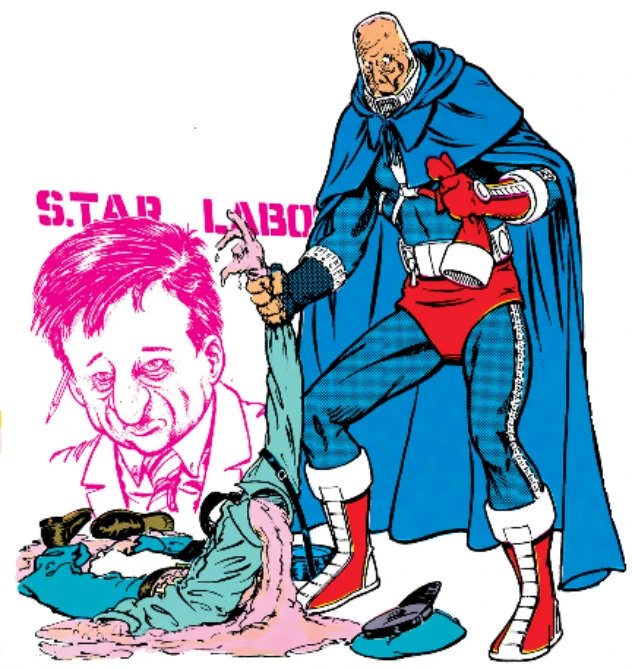
Sondra Fuller, better known as Lady Clay, debuted in The Outsiders #21 (July 1987) from Mike W. Barr and Jim Aparo as an operative for the criminal organization Kobra, given permanent shapeshifting powers and the ability to copy other people’s abilities. She later paired with Preston Payne, and their son Cassius “Clay” Payne — introduced in Batman: Shadow of the Bat #27 (May 1994) by Alan Grant and Bret Blevins — is the only Clayface who was never human to begin with, born with both parents’ powers combined.
The Rest of the List
Four more characters have carried the name with far less page time: Peter Malley, a government scientist who fused with a Clayface skin sample in 1997’s Batman #550; Todd Russell, an amnesiac ex-soldier introduced in 2001’s Catwoman #1; Johnny Williams, a firefighter transformed by a chemical plant explosion in 2004’s Batman: Gotham Knights #60; and an unnamed Japanese operative who appeared in 2011’s Batman Incorporated #6. None have had the staying power of the five above, but they’re why “nine Clayfaces” is the number comics fans actually argue about.
Every Clayface, Side by Side
| Character | First appearance | How they got the powers | Defining trait |
|---|---|---|---|
| Basil Karlo | Detective Comics #40 (1940) | Retconned shapeshifter, originally just a masked actor | Driven by jealousy and obsession with his old fame |
| Matt Hagen | Detective Comics #298 (1961) | Radioactive protoplasm pool (movie: an experimental treatment) | The version most people picture; stars in the 2026 film |
| Preston Payne | Detective Comics #478 (1978) | Hagen’s blood sample, used to try to cure himself | Doesn’t want his powers; his touch kills |
| Sondra Fuller | The Outsiders #21 (1987) | Transformed by Kobra’s technology | Can copy other people’s powers, not just shapes |
| Cassius Payne | Shadow of the Bat #27 (1994) | Born to Payne and Fuller | The only Clayface never human to begin with |
Our Batman villains ranking has more on where Clayface lands next to the rest of Gotham’s rogues, and if you want the storylines rather than the character list, we’ve also ranked the best Clayface comics separately.
FAQ
Which Clayface is in the 2026 movie?
Matt Hagen, played by Tom Rhys Harries. The film keeps his name and his shapeshifting but reinvents his origin as a disfigured actor turning to an experimental treatment, rather than the comics’ cave of radioactive protoplasm.
Who was the first Clayface?
Basil Karlo, introduced in Detective Comics #40 in June 1940. He didn’t have real powers at first — he was a deranged actor in a mask — and only gained actual shapeshifting abilities in much later retcons.
How many Clayfaces are there in DC Comics?
Nine named or implied characters have used the identity: Basil Karlo, Matt Hagen, Preston Payne, Sondra Fuller, Cassius Payne, Peter Malley, Todd Russell and Johnny Williams, plus an unnamed operative who appeared briefly in 2011.
Is Clayface a Batman villain or a sympathetic character?
Both, depending which one. Basil Karlo and Matt Hagen are played as straightforward villains in most stories, while Preston Payne is written as someone who hates what he’s become — his powers kill the people he’s close to whether he wants them to or not.