Comic book ages are the five eras collectors use to date and price back issues: the Golden Age (1938–1956), Silver Age (1956–1970), Bronze Age (1970–1985), Copper Age (1985–1992) and Modern Age (1992–present). The boundaries are dealer and price-guide conventions rather than official history, which is why collectors argue about them constantly.
If you have a box of old comics in a closet, the age is the first thing a dealer will work out, because it narrows everything else — likely print run, paper stock, how the book was sold, and how many copies plausibly survived. This guide gives you the dates, the events each boundary is pinned to, and the part most explainers leave out: why the lines sit where they do, and what an age label is actually worth when you are pricing a book.
The Comic Book Ages at a Glance
| Age | Usual dates | Common start marker | What actually changed |
|---|---|---|---|
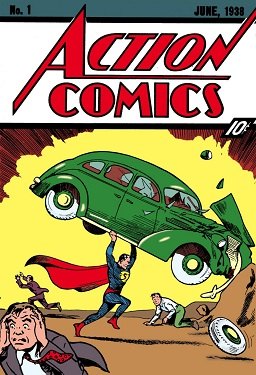
| Golden Age | 1938–1956 | Action Comics #1 (June 1938) | The superhero is invented; comics are a mass newsstand product |
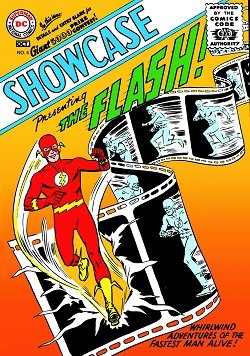
| Silver Age | 1956–1970 | Showcase #4 (Oct. 1956) | Superheroes return under the Comics Code; Marvel builds its universe |
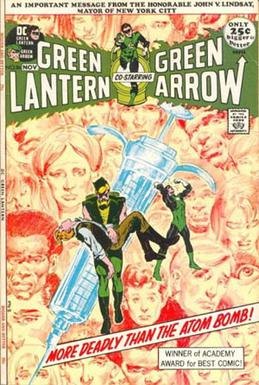
| Bronze Age | 1970–1985 | Green Lantern #76 (Apr. 1970) | Darker, socially engaged stories; the Code loosens |
| Copper Age | 1985–1992 | Crisis on Infinite Earths (1985) | Direct-market comic shops overtake newsstands; adult prestige titles |
| Modern Age | 1992–present | Image Comics founded (Feb. 1992) | Creator ownership, the speculator crash, and today’s market |
Golden Age (1938–1956): The Industry Invents Itself
The Golden Age opens with the debut of Superman in Action Comics #1, cover-dated June 1938. The superhero went from one character to an entire publishing category inside four years: Batman followed in 1939, the original Flash in 1940, and Captain America and Wonder Woman both in 1941.
What ends the Golden Age is not a comic. It is a moral panic. Fredric Wertham’s Seduction of the Innocent appeared in the spring of 1954 and argued that comics drove juvenile delinquency; the US Senate subcommittee on juvenile delinquency held hearings that April and June. By October 1954, as the Comic Book Legal Defense Fund records, publishers had formed the Comics Magazine Association of America and adopted a regulatory code of their own. Crime and horror lines were gutted. The superhero survived mostly at DC, and in a much tamer form.

For collectors this is the practical takeaway: Golden Age books were printed on cheap wartime pulp, sold on newsstands, and thrown away. Paper drives destroyed enormous quantities. Survival rates are tiny, which is why so much of the high end of the market sits in this era.
Silver Age (1956–1970): Superheroes Come Back
Showcase #4, cover-dated October 1956, introduced a new Flash — Barry Allen — and proved the superhero could sell again under the Code. That single issue is the cleanest boundary in the whole system, and it is the one almost nobody disputes.
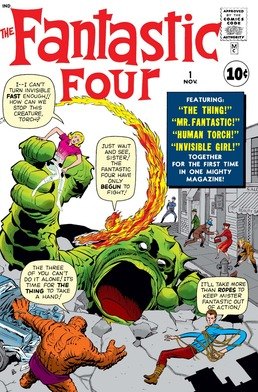
DC restarted the genre; Marvel redefined it. Stan Lee and Jack Kirby launched Fantastic Four #1 in November 1961 and built out from there — joined by Steve Ditko on Amazing Fantasy #15 the following year — into a shared universe of characters who argued, went broke and had visible personal problems. Almost every Marvel property in cinemas today has a first appearance inside this fourteen-year stretch.
Bronze Age (1970–1985): Comics Grow Up
The Bronze Age has no single opening issue. Wikipedia’s own summary is blunt about it: there is no one event that heralds the beginning, only a cluster of changes around 1970. The one most often cited is Green Lantern #76 (April 1970), which paired Green Lantern with Green Arrow and pointed the book at racism, poverty and political corruption.
Two structural things happen underneath the storytelling. The Comics Code was substantially revised in 1971, a revision that relaxed the restrictions on crime comics and lifted the ban on horror outright. And the direct market — selling non-returnable to specialist shops rather than returnable to newsstands — starts up and begins to change what publishers are willing to print.
Copper Age (1985–1992): The Age Nobody Agrees Exists
The Copper Age is the contested one. Plenty of dealers use it; plenty of price guides do not, folding 1985–1992 into either a late Bronze Age or an early Modern Age. Some writers substitute a “Dark Age” running from roughly 1986 into the mid-1990s instead.
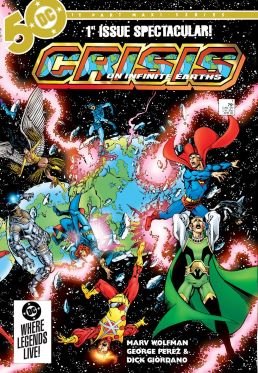
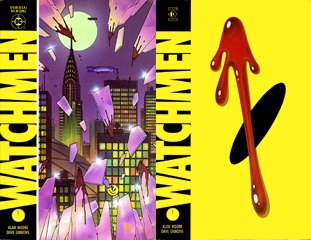
Whatever you call it, the period is easy to recognise. Crisis on Infinite Earths rebuilt DC’s continuity from scratch in 1985. Watchmen and The Dark Knight Returns arrived in 1986 and made “comics for adults” a commercial category. And comic shops finished overtaking newsstands as the way comics reached readers.
Modern Age (1992–Present): Thirty-Four Years and Counting
The usual Modern Age marker is February 1992, when seven of Marvel’s best-selling artists left to found Image Comics and put creator ownership at the centre of the industry. The speculator bubble that had inflated through the late 1980s burst shortly afterwards, and the market that emerged — smaller, shop-based, collector-driven — is broadly the one we still have.
Why the Boundaries Are Argued About
Here is the thing most guides skip. The comic book ages were not declared by anyone. They were named backwards, by dealers and price guides who needed shorthand for sorting stock, and they stuck because they were useful for pricing. That origin explains every argument you will ever see about them.
Each boundary is really three boundaries wearing one label, and they do not line up:
- A content clock — when the stories changed. This puts the Copper Age at 1986, with Watchmen and The Dark Knight Returns.
- A distribution clock — when the way comics reached readers changed. The newsstand-to-direct-market handover is a slow slide across the whole of the 1980s, with no clean date at all.
- A corporate clock — when the publishing landscape changed. That gives you 1985 for Crisis, or 1992 for Image.
Ask three collectors where the Copper Age starts and you will often get three answers because they are reading three different clocks. None of them is wrong. The system simply pretends there is one boundary where there are several, and the disagreement is a feature of the vocabulary, not a failure of the people using it.
The same logic tells you which boundaries are stable. Showcase #4 is rarely disputed because all three clocks agree: the stories changed, the genre revived commercially, and a specific issue did it. The Bronze Age start is fuzzier because only the content clock moved sharply. The Copper Age is the worst case, which is exactly why it is the one people refuse to recognise.
The Modern Age Has Broken the Naming System
Run the arithmetic on the conventional dates and something odd falls out. The Modern Age is now far longer than any era it was named alongside:
| Age | Span | Length |
|---|---|---|
| Golden | 1938–1956 | 18 years |
| Silver | 1956–1970 | 14 years |
| Bronze | 1970–1985 | 15 years |
| Copper | 1985–1992 | 7 years |
| Modern | 1992–2026 | 34 years |
Thirty-four years is longer than the Golden and Bronze Ages put together, and roughly two and a half Silver Ages. A category that broad has stopped doing the job the others do. “Silver Age” tells a dealer a great deal about a book’s likely scarcity; “Modern Age” covers everything from a 1993 chromium-cover glut book to a comic that shipped this week.
That is why you will increasingly see collectors slice the Modern Age up informally — talking about the 1990s speculator era, the 2000s, or post-2010 books as separate markets, without agreeing on names for any of them. If a new age label ever settles, expect it to be named the same way all the others were: retroactively, by the people who need to price the stock.
What an Age Label Tells You About Value
An age is a proxy, not a price. What it actually encodes is four physical and commercial facts that do drive value:
- Print run and paper — older books were printed on cheaper stock that browns and goes brittle.
- Distribution — newsstand copies were handled, returnable and often destroyed; direct-market copies went to collectors who kept them.
- Survival rate — the single biggest driver. Millions of Golden Age comics were pulped; almost every copy of a 1993 print-run book still exists.
- Grade distribution — a high-grade Golden Age book is genuinely rare, whereas near-mint Modern Age copies are the default.
So “it’s Silver Age” is a useful first filter and a terrible final answer. Two Silver Age books from the same month can differ by four orders of magnitude depending on whether either is a key issue. Once you know the age, the questions that actually set the price are what happens in the issue and what condition it is in — which is where grading comes in.
Frequently Asked Questions
How many comic book ages are there?
Most collectors use five: Golden, Silver, Bronze, Copper and Modern. Some price guides use only four, merging the Copper Age into the Bronze or Modern Age, and the Overstreet guide also recognises earlier pre-1938 periods such as the Victorian and Platinum Ages for newspaper-strip collections and early comic magazines.
What age is my comic book from?
Check the cover date, which is usually printed on the front or in the indicia inside. Then match it against the ranges above: 1938–1956 Golden, 1956–1970 Silver, 1970–1985 Bronze, 1985–1992 Copper, 1992 onward Modern. Books printed within a year or two of a boundary are genuinely ambiguous and different dealers will file them differently.
Is the Copper Age real?
It is real in the sense that many dealers, graders and collectors use it, but it is not universally recognised. Because the period 1985–1992 is when comics changed in several ways at once — content, distribution and publisher landscape — there is no single defensible boundary, so some guides simply decline to draw one.
Does a comic’s age determine what it is worth?
No, though it strongly influences the range. Age is shorthand for print run, paper quality, distribution and survival rate. Within any age, whether the issue is a key and what condition it is in matter far more. A common Silver Age issue in poor shape may be worth a few dollars while a key from the same month is worth thousands.
Once you can date a book, the next step is working out whether it matters. Start with our beginner guide to comic collecting, then read up on what makes an issue a key and which books are worth buying now.