Quick TakeArticle at a glance
- The best Thor comic storylines all do the same thing: they take a character whose basic premise is "invincible god with a magic hammer" and find a way to make him lose anyway, whether that's his worthiness, his memory, his life, or his own name.
- Walt Simonson's four-year run from 1983 to 1987 is still the gold standard — across its 46 issues it created Beta Ray Bill, turned Thor into a frog for three issues, and delivered the Surtur Saga, one of the few Marvel event stories a single writer-artist pulled off solo.
- Thor has technically died and come back at least twice in the comics, in 2004's Ragnarok and again when Jane Foster picked up the hammer in 2014 — the hammer, not the title, has been the real main character since 1962.
The best Thor comic storylines treat Mjolnir as a test, not a trophy. Across more than sixty years the character has been unmasked as unworthy, killed off entirely, rebuilt from scratch, and handed to someone who isn’t even named Thor — and the stories that do it best are the ones that remember a god who never loses isn’t actually interesting. These seven are where to start.
“The Stone Men From Saturn” (1962)
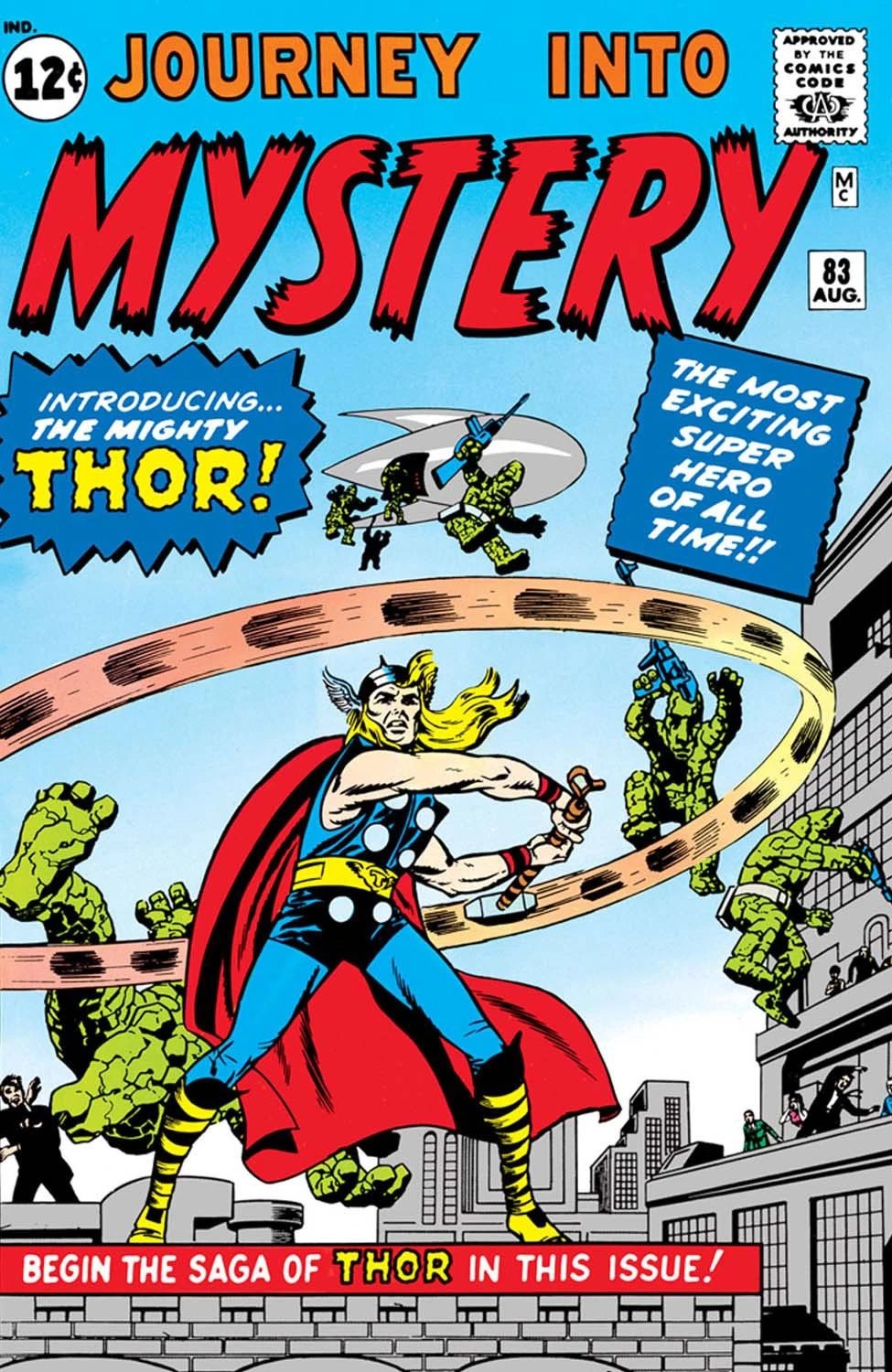
Thor’s entire introduction runs thirteen pages. Stan Lee plotted it, Larry Lieber scripted it, and Jack Kirby drew it for Journey Into Mystery #83 in 1962: disabled doctor Donald Blake stumbles on a cave in Norway, finds a cane that transforms into an enchanted hammer, and becomes the Asgardian god of thunder in time to stop an alien invasion. It’s about as compressed as a superhero origin gets.
It’s not a sophisticated comic by modern standards, but it’s the one every other entry on this list is reacting to or rebuilding, and it’s short enough to read in one sitting before anything else here.
The Ballad of Beta Ray Bill (1983)
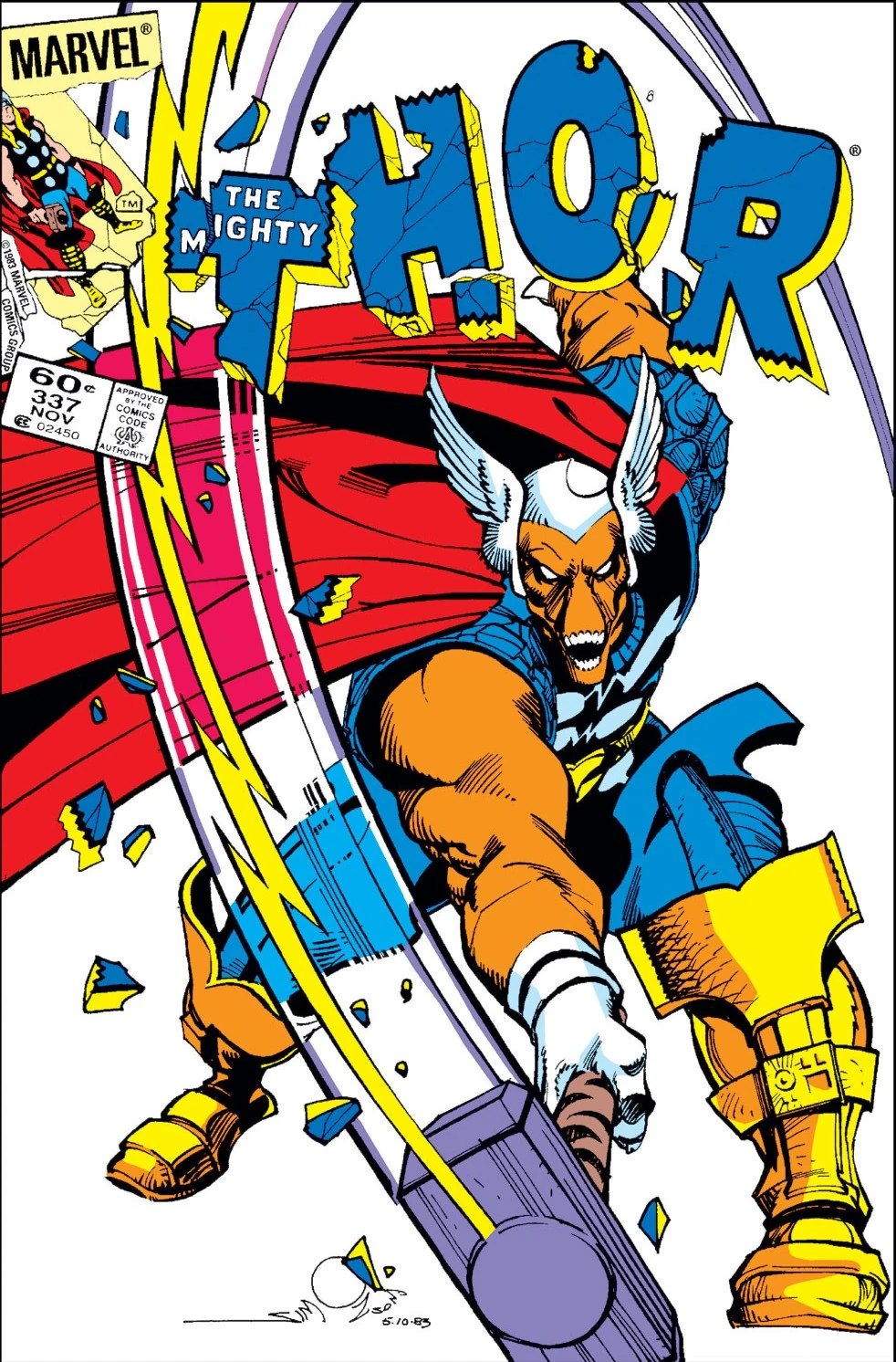
Walt Simonson wrote and drew every issue of his own Thor run, and Beta Ray Bill’s introduction in Thor #337 is where it announced itself. Bill is an alien Korbinite warrior who duels Thor for the right to wield Mjolnir — and wins, becoming the first non-Asgardian ever judged worthy of the hammer. Odin ends up forging him a second hammer, Stormbreaker, rather than take it from him.
It’s the story that proved “worthy” was never about being Thor specifically, which is the idea every later hammer-passing story on this list — Jane Foster included — is quietly built on top of.
The Surtur Saga (1984-1985)
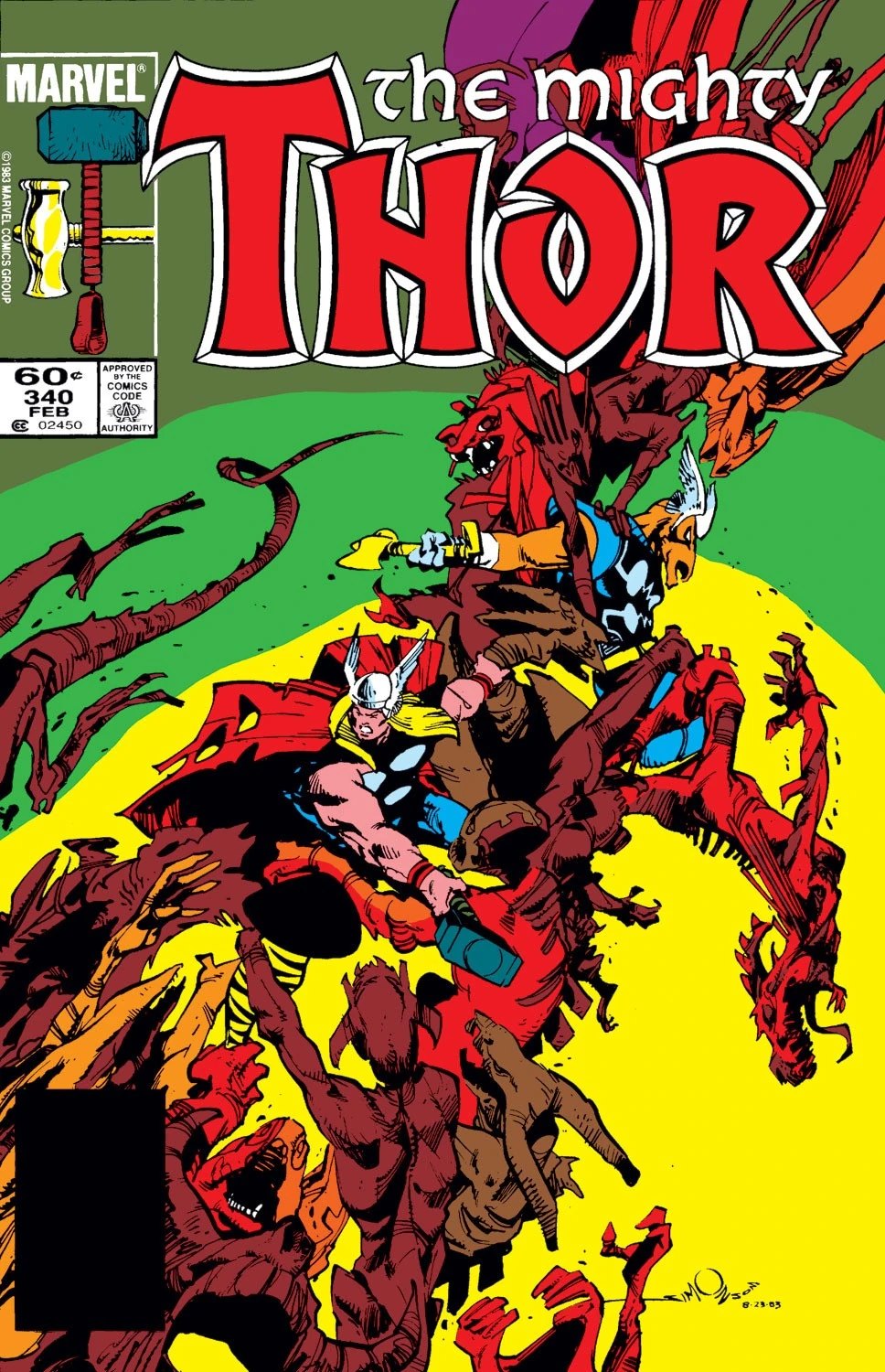
Simonson followed Beta Ray Bill directly with the Surtur Saga, running from Thor #340 through #353: the fire giant Surtur forges a sword called Twilight specifically to burn Asgard to the ground and trigger Ragnarok, and it takes Thor, Odin, and practically every god in the Nine Realms to stop him. It’s the culmination of everything Simonson had been building for a year, with art he was still drawing himself.
What makes it hold up is that Simonson never lets the scale swallow the character work — the same writer-artist who staged the end of the world here spent three issues a year later, #364-366, turning Thor into an actual frog and somehow made that work as a real Thor story too.
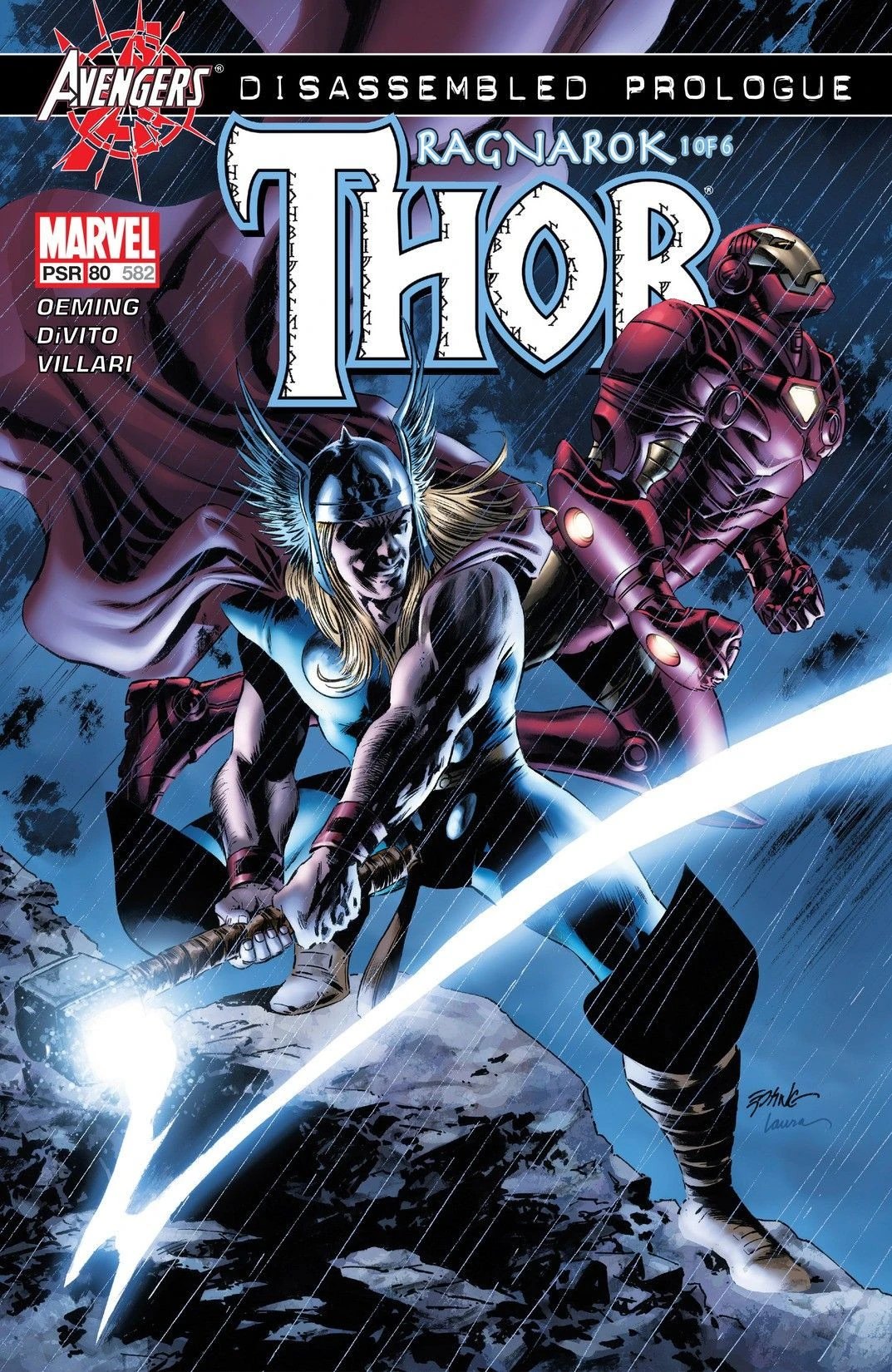
Ragnarok (2004)
Michael Avon Oeming closed out Thor’s second ongoing series with an arc, running Thor Vol. 2 #80-85, that did something the title had never actually done before: it ended Asgard for real. Loki strikes a deal to revive Surtur, Asgard and its gods are wiped out, and Thor destroys the Loom of Fate itself to stop the cycle from repeating — ending his own series along with every other Asgardian’s life except his own.
It’s a genuinely bleak final issue for a character who’d been published continuously since 1962, and it’s worth reading specifically because almost nothing about it gets undone quietly — the very next relaunch has to deal with Thor as the literal last god standing.
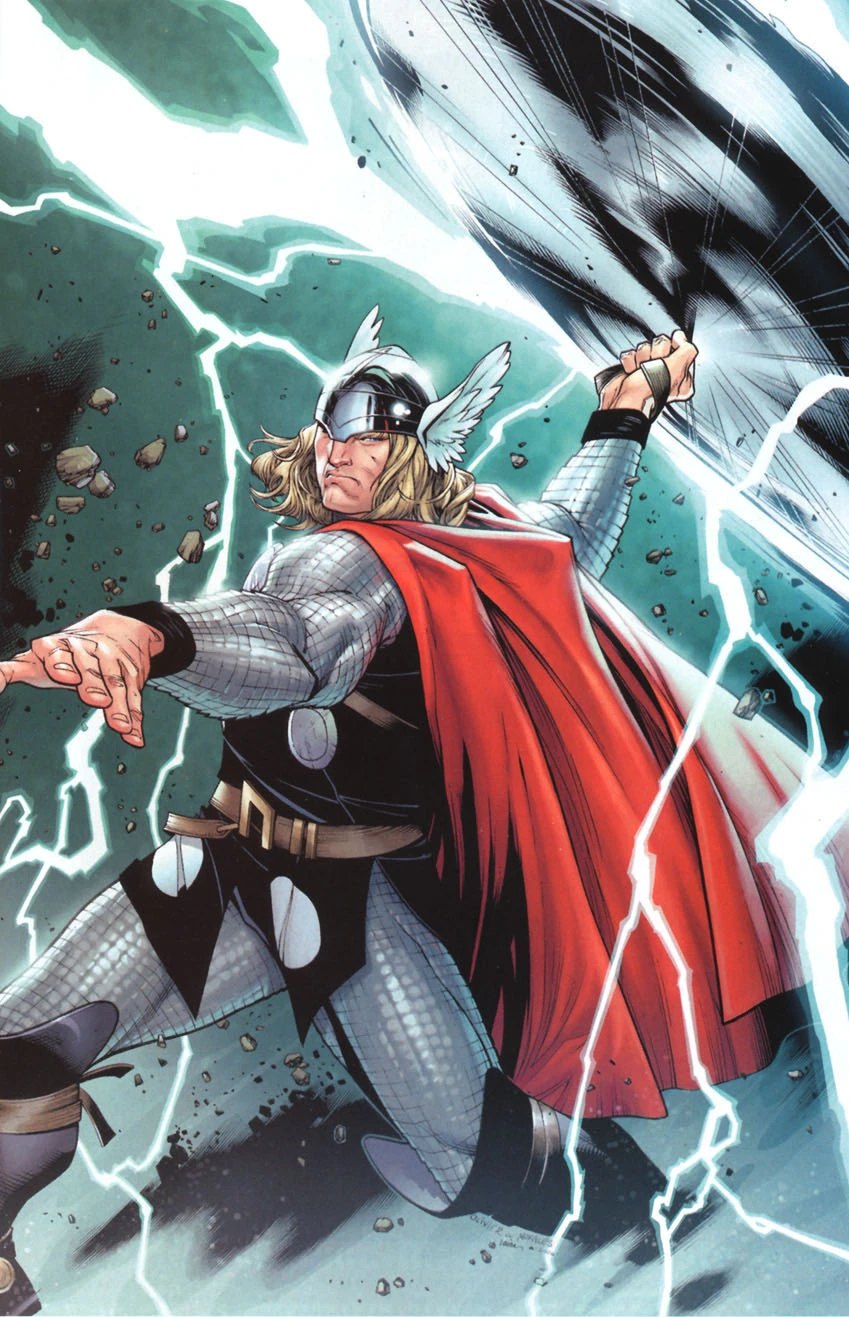
J. Michael Straczynski’s Thor (2007)
Three years after Ragnarok ended the character, J. Michael Straczynski and Olivier Coipel relaunched Thor Vol. 3 with Donald Blake calling out to Thor from the void of nonexistence, bringing him back to rebuild Asgard — not in the Nine Realms, but floating above a small Oklahoma town called Broxton. The culture-clash premise of literal Norse gods landing in rural America could’ve been a one-joke idea, and JMS mostly plays it straight instead.
It’s the rare resurrection story that actually earns the word: Thor doesn’t just come back, he has to figure out what an Asgard with no home in Asgard even looks like.
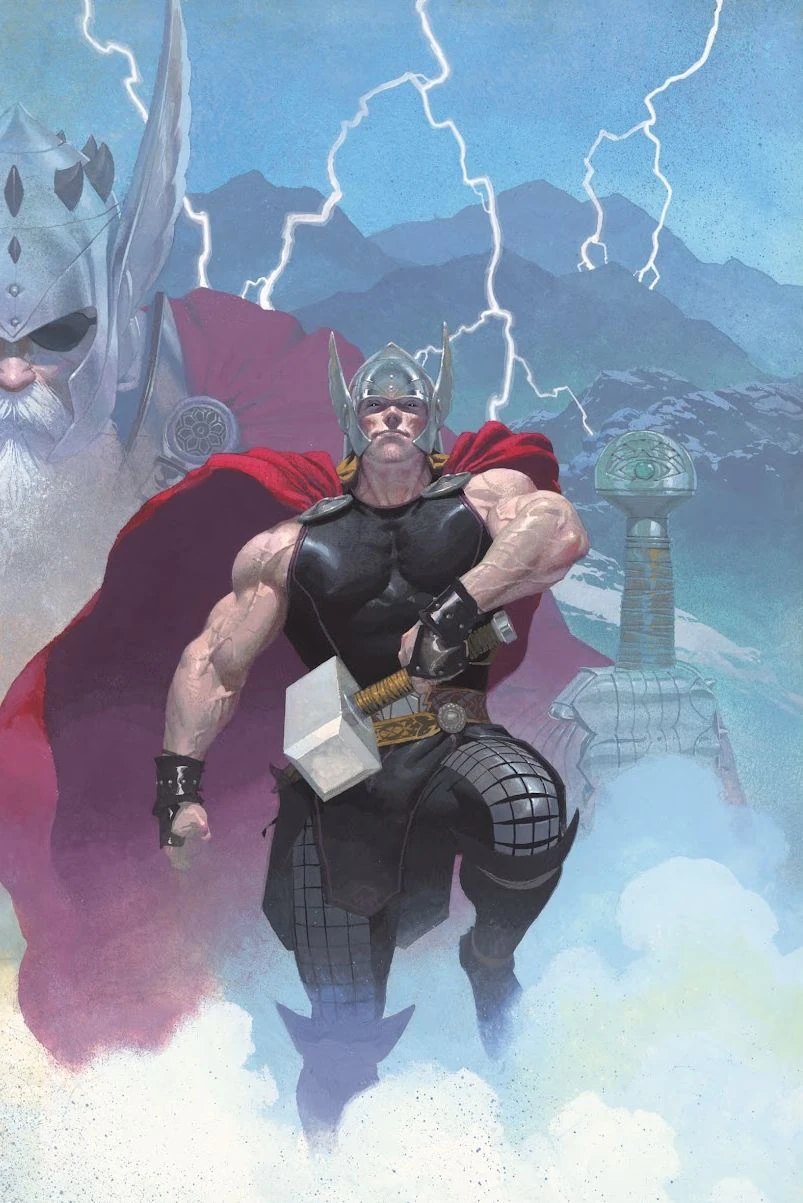
The God Butcher / Godbomb (2012-2013)
Jason Aaron and Esad Ribic‘s eleven-issue opening arc on Thor: God of Thunder introduced Gorr the God Butcher, a villain whose entire goal is ending the concept of godhood across the universe. The story jumps between three different Thors — young, present-day, and an aged All-Father king — fighting Gorr across different eras simultaneously, and it’s the version of the character most readers who only know the MCU’s Thor: Love and Thunder actually recognize, since Gorr was adapted directly from this run.
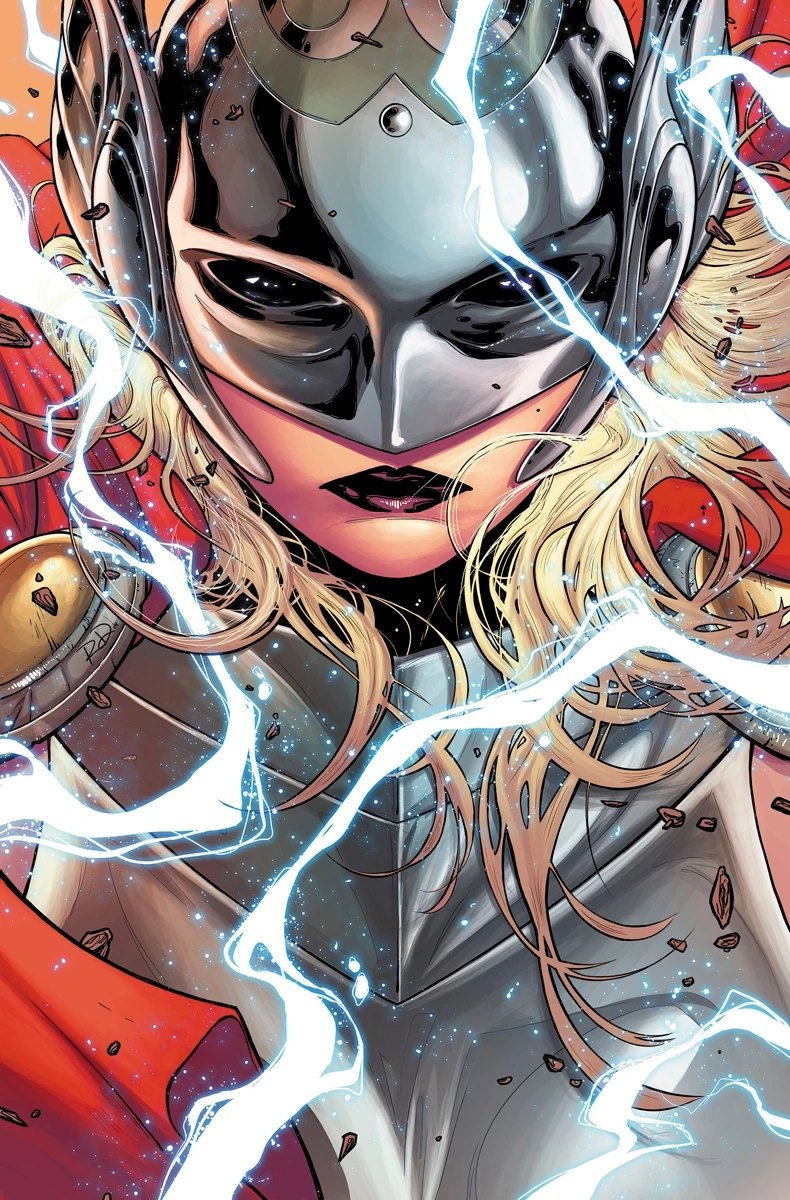
Jane Foster Becomes Thor (2014)
After the 2014 “Original Sin” event, Nick Fury whispers something to Thor that leaves him unable to lift Mjolnir, and Jason Aaron and Russell Dauterman launched a new Thor Vol. 4 with a mystery woman wielding the hammer instead, revealed in issue #8 to be Jane Foster — Thor’s on-and-off love interest since the character’s earliest stories, now fighting cancer in her human identity while carrying godhood as Thor.
It’s the direct descendant of what Beta Ray Bill proved thirty years earlier, pushed all the way: the hammer was never actually about being named Thor, and this run is the one that finally made that the entire point of the title instead of a one-issue twist.
| Storyline | Year(s) | Writer | Artist |
|---|---|---|---|
| “The Stone Men From Saturn” | 1962 | Stan Lee & Larry Lieber | Jack Kirby |
| The Ballad of Beta Ray Bill | 1983 | Walt Simonson | Walt Simonson |
| The Surtur Saga | 1984-1985 | Walt Simonson | Walt Simonson |
| Ragnarok | 2004 | Michael Avon Oeming | Andrea Di Vito |
| Thor Vol. 3 relaunch | 2007 | J. Michael Straczynski | Olivier Coipel |
| The God Butcher / Godbomb | 2012-2013 | Jason Aaron | Esad Ribic |
| Jane Foster becomes Thor | 2014 | Jason Aaron | Russell Dauterman |
Why Thor Keeps Getting Rebuilt Instead of Just Continuing
No other major Marvel hero has had his entire premise dismantled and rebuilt this many times. Spider-Man’s core setup from 1962 is still basically intact; Thor’s has been rewritten by a near-death-and-resurrection in 2004, a literal address change to Oklahoma in 2007, and a complete change of who’s holding the hammer in 2014. The throughline across all seven of these is that Mjolnir’s worthiness enchantment isn’t a gimmick, it’s the mechanism that lets every new creative team ask the same question from a different angle — is Thor a title, a person, or a test — without ever having to reboot the character from zero.
That same mechanism is why Thor: Love and Thunder could put Jane Foster under the hammer in 2022 — a film that went on to earn $760.9 million worldwide — without it reading as a gimmick to longtime readers. The comics had already spent eight years making the argument. If you want the object both stories keep fighting over, Mjolnir’s full rules are broken down here, and if Thor is your entry point into Marvel’s wider line, this is the place to figure out where to go next.
Frequently Asked Questions
What is the best Thor comic storyline to start with?
“The Stone Men From Saturn” (1962) is the character’s entire origin in thirteen pages. For a modern jumping-on point with no 1960s-era dialogue, Thor: God of Thunder’s The God Butcher (2012) needs no prior Thor reading at all.
Is Jane Foster still Thor in the comics?
She has moved in and out of the role multiple times since 2014, alternating with the Odinson depending on the current creative team, and currently holds her own separate title rather than the main Thor book.
Does the Thor: Love and Thunder movie follow the comics closely?
Loosely. It borrows Jane Foster’s hammer and her cancer diagnosis from Jason Aaron’s run and Gorr the God Butcher’s design and motivation from the God Butcher arc, but it compresses and changes both characters’ stories substantially.
What’s the difference between Thor’s hammer Mjolnir and Stormbreaker?
Mjolnir is Thor’s original weapon, forged by the dwarf Eitri and the dwarves of Nidavellir and enchanted by Odin so only the worthy can lift it. Stormbreaker was forged by the same dwarves from the same Uru metal specifically for Beta Ray Bill in the 1983 storyline above, since Bill had already proven himself worthy of Mjolnir but needed his own weapon.
Last updated October 4, 2026.